
Augsburg
86 Augsburg, Germany
Augsburg | Plärrer & Christkindlesmarkt 2026
Augsburg is a city that remarkably easily connects Roman heritage, Fugger splendor, water engineering, and modern event culture. Those searching for Augsburg will find not only historical landmarks but also folk festivals, Christmas spirit, football, ice hockey, a zoo, and a vibrant everyday life in a city with over 300,000 inhabitants. The Augsburg water management system has been part of the UNESCO World Heritage since 2019, the Fuggerei is considered the oldest existing social housing complex in the world, and the Town Hall Square with the Perlach Tower and Golden Hall continues to shape the image of the city center today. Additionally, there are strong seasonal highlights such as the Plärrer, the Christkindlesmarkt, and sports events with FC Augsburg or Augsburg Panthers. ([statistikinteraktiv.augsburg.de](https://statistikinteraktiv.augsburg.de/Interaktiv/JSP/main.jsp%3Bjsessionid%3D7739F64E320671A4DFAAD806DE8B179A?area=Sozialmonitoringbezirk&detailView=true&id=SMB02&mode=Detailansicht&utm_source=openai))
For visitors, Augsburg is therefore more than just a stopover. The city is a destination for weekends, family outings, cultural trips, and event days. Those who plan their visit to the city strategically benefit from compact routes, clear parking and public transport options, and a city center that clusters many highlights closely together. Augsburg describes itself touristically as a city with a Mediterranean old town feel, strong water references, and an extraordinary density of sights. This overview connects the most important search topics around Augsburg with reliable facts and organizes them into a practical, search engine-friendly city text. ([augsburg.de](https://www.augsburg.de/kultur/sehenswuerdigkeiten/?utm_source=openai))
Augsburg's History, Inhabitants, and UNESCO Water
Augsburg is one of the historically most complex cities in southern Germany. The city looks back on its Roman roots as Augusta Vindelicum; thus, its history extends far beyond the Middle Ages. Today, Augsburg simultaneously stands for trade, Renaissance, industry, education, and urban development. This depth is particularly visible in the Augsburg water management system, which was added to the UNESCO World Heritage list in 2019. This system tells not only of canals, wells, and waterworks but of a city where water has been a driving force for craftsmanship, supply, and prosperity for centuries. The city explicitly understands its history as a combination of a Roman provincial capital, Fugger tradition, and modern metropolis. ([augsburg.de](https://www.augsburg.de/aktuelles-aus-der-stadt/detail/roemisches-augsburg-per-app-erkunden?utm_source=openai))
The landscape of monuments also makes the historical density tangible. According to the city, around 1,074 individual monuments are protected, and about 4,500 buildings are part of a monument ensemble. This is remarkable for a city of this size and explains why Augsburg offers new historical details at almost every corner during a stroll through the center, the Lechviertel, or the old trade routes. The municipal statistics report a registered population of 308,407 people for 2025; the official population count as of December 31, 2024, was 301,105. This scale fits Augsburg's role as the third-largest city in Bavarian Swabia and as an urban center with high cultural and economic significance. ([augsburg.de](https://www.augsburg.de/buergerservice-rathaus/wohnen-und-bauen/denkmalschutz/?utm_source=openai))
The historical identity in Augsburg has not become museum-like but is present in everyday life. The city also utilizes its World Heritage digitally, for example, through the app Augusta Vindelicum, which playfully introduces visitors to Roman Augsburg. At the same time, history is consciously conveyed in many places in a modern way, such as through thematic tours, monument days, or interactive map applications related to the World Heritage. Particularly exciting is that Augsburg is more than just a collection of monuments: it is a city where political, economic, and social history intertwines. Those interested will find not only sights here but a dense historical narrative that spans from antiquity to the present. ([augsburg.de](https://www.augsburg.de/aktuelles-aus-der-stadt/detail/roemisches-augsburg-per-app-erkunden?utm_source=openai))
Plärrer 2026 and the Great Folk Festival Season
When it comes to the word Plärrer, Augsburg immediately thinks of anticipation, rides, festival tents, and folk festival atmosphere. According to the city, the Augsburg Plärrer is the largest folk festival in Bavarian Swabia and combines tradition with a modern fair atmosphere. The dates for 2026 have already been officially set: the Easter Plärrer runs from April 5 to 19, and the Autumn Plärrer from August 28 to September 13. Celebrations take place at the Kleinen Exerzierplatz, a location that has stood for spring, late summer, and family programs for years. The official announcement emphasizes the mix of high-tech rides, nostalgic showman operations, and Bavarian coziness in the festival tents. ([augsburg.de](https://www.augsburg.de/freizeit/feste-und-maerkte/plaerrer/?utm_source=openai))
The Plärrer is not just an event for Augsburg but a part of the annual rhythm. Besides the fun factor, it is also socially and historically important because generations come together here, and the character of the city as a festival and meeting place becomes visible. In 2026, in addition to classic visitor days, there will also be special program points such as senior or family days as part of the official schedule. The city also points out its own regulations for order and safety. This shows: The Plärrer is professionally organized, large in audience, and deeply rooted in local culture. Therefore, those searching for Augsburg Plärrer 2026 are not looking for just any folk festival, but one of the most significant events in the southern German festival calendar. ([augsburg.de](https://www.augsburg.de/freizeit/feste-und-maerkte/plaerrer/?utm_source=openai))
Additionally, the Augsburg folk festival season includes other events in the districts. The Göggingen Spring Festival traditionally opens the series, followed later by the Lechhauser Kirchweih. The city explicitly aligns these festivals with the Plärrer, demonstrating how strongly Augsburg's celebration culture is spread throughout the year. This is a plus, especially for families, day visitors, and regional outings: one finds not only a large occasion but several opportunities to experience the city with rides, music, food, and sociability. Those planning a visit should note that the parking situation changes, especially around folk festivals and major city center events. This is a practical hint for many search queries regarding Augsburg Plärrer, Augsburg Parking, or Augsburg Weather: The experience is weather-dependent but organizationally very well prepared. ([augsburg.de](https://www.augsburg.de/freizeit/feste-und-maerkte/stadtteilfeste?utm_source=openai))
Christkindlesmarkt, City Market, and Seasonal Highlights
The Augsburg Christkindlesmarkt is one of the most famous Advent experiences in the city and stretches across several central squares in the city center. Officially, it takes place around the Town Hall Square, Martin Luther Square, Philippine Welser Street, Maximilian Street, and in front of St. Moritz Church. The city reported around one million visitors from Germany and abroad for the market in 2025. This shows how strongly the Christmas market acts as an image factor for Augsburg: it combines lights, scenery, culinary delights, and city life into an experience that goes far beyond mere shopping atmosphere. For search queries regarding Augsburg Christmas Market, this is the most important seasonal anchor of the city. ([augsburg.de](https://www.augsburg.de/freizeit/feste-und-maerkte/christkindlesmarkt?utm_source=openai))
Equally important for the daily city feeling is the Augsburg City Market. It is over 90 years old, covers around 10,000 square meters, and hosts more than 100 vendors. Thus, it is not only a shopping place but a stage for regional products, fresh food, and authentic city atmosphere. Those experiencing Augsburg should not see the city market as a side show but as part of the authentic city experience. Here, it becomes clear that Augsburg not only has historical sights but also vibrant everyday places where enjoyment, city identity, and local supply meet. ([augsburg.de](https://www.augsburg.de/freizeit/feste-und-maerkte/stadtmarkt?utm_source=openai))
Augsburg also thrives throughout the year on additional cultural and leisure formats. The city announces concerts and cultural events for summer 2026 at the open-air stage at the Red Gate, and the theme of water plays a prominent role in municipal events repeatedly. At the same time, the Augsburg Zoo shows how well family and leisure destinations are integrated into the city: it is located at Brehmplatz, offers tickets and guided tours, and supports conservation projects with each ticket sale. This offer is complemented by the Augsburg Puppet Theater, which has been performing in the Holy Spirit Hospital since 1948 and whose museum has attracted visitors since 2001. Thus, very different but closely interconnected leisure themes arise in Augsburg throughout the year. ([augsburg.de](https://www.augsburg.de/augsburgbewegt-lang-lebe-kultur/veranstaltungen?utm_source=openai))
Fuggerei, Town Hall, and Perlachturm
No text about Augsburg is complete without the Fuggerei. The oldest existing social housing complex in the world was founded in 1521 by Jakob Fugger and is still inhabited today. The site has 67 houses with 142 apartments and its own church; around 150 needy Augsburg citizens live there for a symbolic annual rent of 0.88 euros and three daily prayers. Additionally, there are museums that explain the history of living, the residents, and the idea of the foundation. This is precisely why the Fuggerei is one of the most sought-after motifs of Augsburg, as it uniquely combines history, social idea, and present. ([fugger.de](https://www.fugger.de/fuggerei?utm_source=openai))
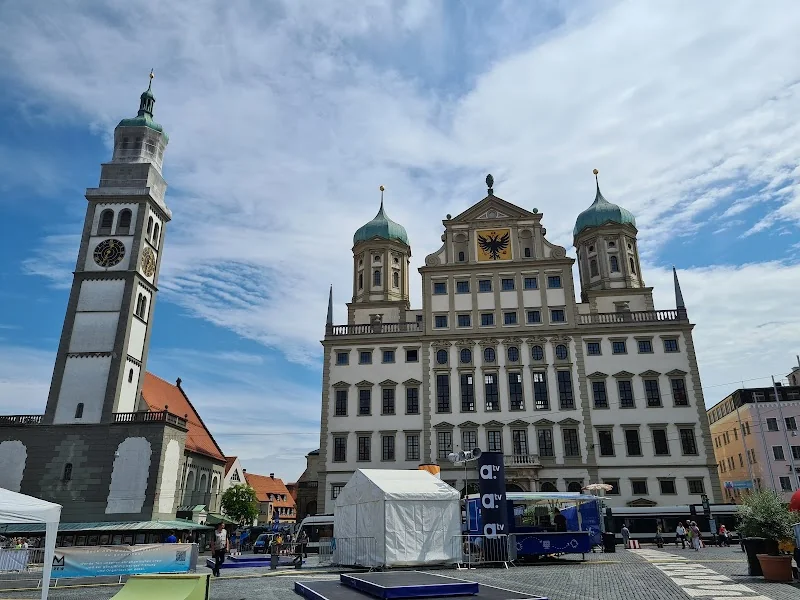
The Town Hall and the Perlachturm are also more than just pretty backdrops. The Town Hall is considered one of the most significant secular buildings of the Renaissance north of the Alps, and together with the Perlachturm, it forms the city's landmark. The Perlachturm itself has roots dating back to 989; the current expansion is mainly from Elias Holl in the early 17th century. Currently, the tower is closed for renovation, with a reopening expected no earlier than 2027. The Town Hall Square ensemble, complemented by the Augustus Fountain and the surrounding old town, creates the image of a city that visibly showcases Renaissance, water, and trade in an extraordinarily dense form. ([augsburg.de](https://www.augsburg.de/kultur/sehenswuerdigkeiten/perlachturm/perlachturm-das-wahrzeichen?utm_source=openai))
For guests, the old town with its alleys, canals, and squares is a strong argument. The city and the tourism organization describe Augsburg as a place with a Mediterranean flair and many bridges that make the water heritage palpable in everyday life. Those who want to systematically explore the city will find daily city tours that follow the traces of Fugger, Mozart, Brecht, and the UNESCO World Heritage. This is a good example of how Augsburg conveys its major themes not individually but as a cohesive route. For visitors, this means: one can connect social historical spaces, Renaissance architecture, and the World Heritage water in one day without long distances or complicated planning. ([augsburg.de](https://www.augsburg.de/kultur/sehenswuerdigkeiten/?utm_source=openai))
FC Augsburg, Augsburg Panthers, and Sports in the City
Sports are a central part of Augsburg's city identity. FC Augsburg plays its home games at the WWK ARENA, and the club provides its official app with match schedules, news, mobile tickets, membership cards, and other features. The DFL schedules for the Bundesliga season 2025/26 show that home games and away dates are continuously updated; for fans, the ticket shop, calendar service, and match day information are therefore particularly important. The service around the stadium is also well developed: trams and shuttles run for home games, and the club publishes specific information about getting there and attending the stadium. Those searching for Augsburg FC, Augsburg Hamburg, or Augsburg Bochum usually mean exactly these match day information, which can change quickly and should always be checked for updates. ([fcaugsburg.de](https://www.fcaugsburg.de/page/fca-app-129?utm_source=openai))
The Augsburg Panthers are just as much a part of the city as football. The ice hockey club plays at the Curt-Frenzel-Stadion, which, according to official representations, is one of the most well-known ice hockey venues in Germany. The stadium offers 6,179 seats, including standing and seating areas, as well as extensive hospitality and accessibility areas. The distinctive roof and facade design has given the building its own urban characteristic, and the location is right in the middle of Augsburg. For many fans, the CFS is therefore not just a sports venue but an urban experience with a short journey and special atmosphere. The Augsburg Panthers also use the stadium for public training sessions and special events, further strengthening the bond between the club and the city. ([aev-panther.de](https://www.aev-panther.de/cfs/cfs.html?utm_source=openai))
In summary, FC Augsburg and Augsburg Panthers show how closely city, sport, and event culture are interconnected. Augsburg is thus not only a historical and tourist city but also a place where match days, fan culture, and community become visible. Search queries regarding tables, opponents, or home games are therefore not coincidental but expressions of a very vibrant local sports interest. ([fcaugsburg.de](https://www.fcaugsburg.de/page/fca-app-129?utm_source=openai))
Travel, Parking, and Practical Tips in Augsburg
Those visiting Augsburg by car should be familiar with the parking structure of the city center. The city speaks of 18 parking garages in the city center and an additional seven free park-and-ride spaces on the outskirts, from which buses or trams run into the city center. Additionally, there is a parking guidance system and real-time information on the occupancy of parking garages. This is particularly helpful during major events, shopping evenings, or holidays when the city center becomes noticeably busier. Special regulations apply to the park-and-ride lot at the Plärrer site during the Plärrer, and parking conditions also change around the Christkindlesmarkt. Therefore, those searching for Augsburg Parking will find many options in the city but should plan rather than improvise in the center. ([augsburg.de](https://www.augsburg.de/parken?utm_source=openai))
Augsburg is often most relaxed without a car. Official sources frequently recommend public transport, bicycles, or park-and-ride for city center destinations, the zoo, or the puppet theater. This fits well with the city's structure, as Augsburg is a city of short distances in many areas. The Town Hall Square, Fuggerei, Maximilian Street, City Market, and other destinations can be easily connected on foot, while parks and water locations provide additional green and quiet breaks. This is particularly suitable for families, culture enthusiasts, and day visitors, especially in nice weather. Those who keep an eye on the weather, opening hours, and seasonal dates can tailor their visit very precisely to their own interests: spring for the Plärrer, Advent for the Christkindlesmarkt, summer for culture and city strolls, and throughout the year for Fuggerei, zoo, and old town. ([puppenkiste.com](https://www.puppenkiste.com/?utm_source=openai))
Sources:
- City of Augsburg - Sights
- City of Augsburg - Plärrer
- City of Augsburg - Christkindlesmarkt
- City of Augsburg - Parking in Augsburg
- Fuggerei - Official Website of the Fugger
- Augsburg Zoo - Official Website
- Augsburger Puppet Theater - Official Homepage
- FC Augsburg - Official FCA App
- Augsburger Panther - The CFS
Mehr anzeigenWeniger anzeigen
Augsburg | Plärrer & Christkindlesmarkt 2026
Augsburg is a city that remarkably easily connects Roman heritage, Fugger splendor, water engineering, and modern event culture. Those searching for Augsburg will find not only historical landmarks but also folk festivals, Christmas spirit, football, ice hockey, a zoo, and a vibrant everyday life in a city with over 300,000 inhabitants. The Augsburg water management system has been part of the UNESCO World Heritage since 2019, the Fuggerei is considered the oldest existing social housing complex in the world, and the Town Hall Square with the Perlach Tower and Golden Hall continues to shape the image of the city center today. Additionally, there are strong seasonal highlights such as the Plärrer, the Christkindlesmarkt, and sports events with FC Augsburg or Augsburg Panthers. ([statistikinteraktiv.augsburg.de](https://statistikinteraktiv.augsburg.de/Interaktiv/JSP/main.jsp%3Bjsessionid%3D7739F64E320671A4DFAAD806DE8B179A?area=Sozialmonitoringbezirk&detailView=true&id=SMB02&mode=Detailansicht&utm_source=openai))
For visitors, Augsburg is therefore more than just a stopover. The city is a destination for weekends, family outings, cultural trips, and event days. Those who plan their visit to the city strategically benefit from compact routes, clear parking and public transport options, and a city center that clusters many highlights closely together. Augsburg describes itself touristically as a city with a Mediterranean old town feel, strong water references, and an extraordinary density of sights. This overview connects the most important search topics around Augsburg with reliable facts and organizes them into a practical, search engine-friendly city text. ([augsburg.de](https://www.augsburg.de/kultur/sehenswuerdigkeiten/?utm_source=openai))
Augsburg's History, Inhabitants, and UNESCO Water
Augsburg is one of the historically most complex cities in southern Germany. The city looks back on its Roman roots as Augusta Vindelicum; thus, its history extends far beyond the Middle Ages. Today, Augsburg simultaneously stands for trade, Renaissance, industry, education, and urban development. This depth is particularly visible in the Augsburg water management system, which was added to the UNESCO World Heritage list in 2019. This system tells not only of canals, wells, and waterworks but of a city where water has been a driving force for craftsmanship, supply, and prosperity for centuries. The city explicitly understands its history as a combination of a Roman provincial capital, Fugger tradition, and modern metropolis. ([augsburg.de](https://www.augsburg.de/aktuelles-aus-der-stadt/detail/roemisches-augsburg-per-app-erkunden?utm_source=openai))
The landscape of monuments also makes the historical density tangible. According to the city, around 1,074 individual monuments are protected, and about 4,500 buildings are part of a monument ensemble. This is remarkable for a city of this size and explains why Augsburg offers new historical details at almost every corner during a stroll through the center, the Lechviertel, or the old trade routes. The municipal statistics report a registered population of 308,407 people for 2025; the official population count as of December 31, 2024, was 301,105. This scale fits Augsburg's role as the third-largest city in Bavarian Swabia and as an urban center with high cultural and economic significance. ([augsburg.de](https://www.augsburg.de/buergerservice-rathaus/wohnen-und-bauen/denkmalschutz/?utm_source=openai))
The historical identity in Augsburg has not become museum-like but is present in everyday life. The city also utilizes its World Heritage digitally, for example, through the app Augusta Vindelicum, which playfully introduces visitors to Roman Augsburg. At the same time, history is consciously conveyed in many places in a modern way, such as through thematic tours, monument days, or interactive map applications related to the World Heritage. Particularly exciting is that Augsburg is more than just a collection of monuments: it is a city where political, economic, and social history intertwines. Those interested will find not only sights here but a dense historical narrative that spans from antiquity to the present. ([augsburg.de](https://www.augsburg.de/aktuelles-aus-der-stadt/detail/roemisches-augsburg-per-app-erkunden?utm_source=openai))
Plärrer 2026 and the Great Folk Festival Season
When it comes to the word Plärrer, Augsburg immediately thinks of anticipation, rides, festival tents, and folk festival atmosphere. According to the city, the Augsburg Plärrer is the largest folk festival in Bavarian Swabia and combines tradition with a modern fair atmosphere. The dates for 2026 have already been officially set: the Easter Plärrer runs from April 5 to 19, and the Autumn Plärrer from August 28 to September 13. Celebrations take place at the Kleinen Exerzierplatz, a location that has stood for spring, late summer, and family programs for years. The official announcement emphasizes the mix of high-tech rides, nostalgic showman operations, and Bavarian coziness in the festival tents. ([augsburg.de](https://www.augsburg.de/freizeit/feste-und-maerkte/plaerrer/?utm_source=openai))
The Plärrer is not just an event for Augsburg but a part of the annual rhythm. Besides the fun factor, it is also socially and historically important because generations come together here, and the character of the city as a festival and meeting place becomes visible. In 2026, in addition to classic visitor days, there will also be special program points such as senior or family days as part of the official schedule. The city also points out its own regulations for order and safety. This shows: The Plärrer is professionally organized, large in audience, and deeply rooted in local culture. Therefore, those searching for Augsburg Plärrer 2026 are not looking for just any folk festival, but one of the most significant events in the southern German festival calendar. ([augsburg.de](https://www.augsburg.de/freizeit/feste-und-maerkte/plaerrer/?utm_source=openai))
Additionally, the Augsburg folk festival season includes other events in the districts. The Göggingen Spring Festival traditionally opens the series, followed later by the Lechhauser Kirchweih. The city explicitly aligns these festivals with the Plärrer, demonstrating how strongly Augsburg's celebration culture is spread throughout the year. This is a plus, especially for families, day visitors, and regional outings: one finds not only a large occasion but several opportunities to experience the city with rides, music, food, and sociability. Those planning a visit should note that the parking situation changes, especially around folk festivals and major city center events. This is a practical hint for many search queries regarding Augsburg Plärrer, Augsburg Parking, or Augsburg Weather: The experience is weather-dependent but organizationally very well prepared. ([augsburg.de](https://www.augsburg.de/freizeit/feste-und-maerkte/stadtteilfeste?utm_source=openai))
Christkindlesmarkt, City Market, and Seasonal Highlights
The Augsburg Christkindlesmarkt is one of the most famous Advent experiences in the city and stretches across several central squares in the city center. Officially, it takes place around the Town Hall Square, Martin Luther Square, Philippine Welser Street, Maximilian Street, and in front of St. Moritz Church. The city reported around one million visitors from Germany and abroad for the market in 2025. This shows how strongly the Christmas market acts as an image factor for Augsburg: it combines lights, scenery, culinary delights, and city life into an experience that goes far beyond mere shopping atmosphere. For search queries regarding Augsburg Christmas Market, this is the most important seasonal anchor of the city. ([augsburg.de](https://www.augsburg.de/freizeit/feste-und-maerkte/christkindlesmarkt?utm_source=openai))
Equally important for the daily city feeling is the Augsburg City Market. It is over 90 years old, covers around 10,000 square meters, and hosts more than 100 vendors. Thus, it is not only a shopping place but a stage for regional products, fresh food, and authentic city atmosphere. Those experiencing Augsburg should not see the city market as a side show but as part of the authentic city experience. Here, it becomes clear that Augsburg not only has historical sights but also vibrant everyday places where enjoyment, city identity, and local supply meet. ([augsburg.de](https://www.augsburg.de/freizeit/feste-und-maerkte/stadtmarkt?utm_source=openai))
Augsburg also thrives throughout the year on additional cultural and leisure formats. The city announces concerts and cultural events for summer 2026 at the open-air stage at the Red Gate, and the theme of water plays a prominent role in municipal events repeatedly. At the same time, the Augsburg Zoo shows how well family and leisure destinations are integrated into the city: it is located at Brehmplatz, offers tickets and guided tours, and supports conservation projects with each ticket sale. This offer is complemented by the Augsburg Puppet Theater, which has been performing in the Holy Spirit Hospital since 1948 and whose museum has attracted visitors since 2001. Thus, very different but closely interconnected leisure themes arise in Augsburg throughout the year. ([augsburg.de](https://www.augsburg.de/augsburgbewegt-lang-lebe-kultur/veranstaltungen?utm_source=openai))
Fuggerei, Town Hall, and Perlachturm
No text about Augsburg is complete without the Fuggerei. The oldest existing social housing complex in the world was founded in 1521 by Jakob Fugger and is still inhabited today. The site has 67 houses with 142 apartments and its own church; around 150 needy Augsburg citizens live there for a symbolic annual rent of 0.88 euros and three daily prayers. Additionally, there are museums that explain the history of living, the residents, and the idea of the foundation. This is precisely why the Fuggerei is one of the most sought-after motifs of Augsburg, as it uniquely combines history, social idea, and present. ([fugger.de](https://www.fugger.de/fuggerei?utm_source=openai))
The Town Hall and the Perlachturm are also more than just pretty backdrops. The Town Hall is considered one of the most significant secular buildings of the Renaissance north of the Alps, and together with the Perlachturm, it forms the city's landmark. The Perlachturm itself has roots dating back to 989; the current expansion is mainly from Elias Holl in the early 17th century. Currently, the tower is closed for renovation, with a reopening expected no earlier than 2027. The Town Hall Square ensemble, complemented by the Augustus Fountain and the surrounding old town, creates the image of a city that visibly showcases Renaissance, water, and trade in an extraordinarily dense form. ([augsburg.de](https://www.augsburg.de/kultur/sehenswuerdigkeiten/perlachturm/perlachturm-das-wahrzeichen?utm_source=openai))
For guests, the old town with its alleys, canals, and squares is a strong argument. The city and the tourism organization describe Augsburg as a place with a Mediterranean flair and many bridges that make the water heritage palpable in everyday life. Those who want to systematically explore the city will find daily city tours that follow the traces of Fugger, Mozart, Brecht, and the UNESCO World Heritage. This is a good example of how Augsburg conveys its major themes not individually but as a cohesive route. For visitors, this means: one can connect social historical spaces, Renaissance architecture, and the World Heritage water in one day without long distances or complicated planning. ([augsburg.de](https://www.augsburg.de/kultur/sehenswuerdigkeiten/?utm_source=openai))
FC Augsburg, Augsburg Panthers, and Sports in the City
Sports are a central part of Augsburg's city identity. FC Augsburg plays its home games at the WWK ARENA, and the club provides its official app with match schedules, news, mobile tickets, membership cards, and other features. The DFL schedules for the Bundesliga season 2025/26 show that home games and away dates are continuously updated; for fans, the ticket shop, calendar service, and match day information are therefore particularly important. The service around the stadium is also well developed: trams and shuttles run for home games, and the club publishes specific information about getting there and attending the stadium. Those searching for Augsburg FC, Augsburg Hamburg, or Augsburg Bochum usually mean exactly these match day information, which can change quickly and should always be checked for updates. ([fcaugsburg.de](https://www.fcaugsburg.de/page/fca-app-129?utm_source=openai))
The Augsburg Panthers are just as much a part of the city as football. The ice hockey club plays at the Curt-Frenzel-Stadion, which, according to official representations, is one of the most well-known ice hockey venues in Germany. The stadium offers 6,179 seats, including standing and seating areas, as well as extensive hospitality and accessibility areas. The distinctive roof and facade design has given the building its own urban characteristic, and the location is right in the middle of Augsburg. For many fans, the CFS is therefore not just a sports venue but an urban experience with a short journey and special atmosphere. The Augsburg Panthers also use the stadium for public training sessions and special events, further strengthening the bond between the club and the city. ([aev-panther.de](https://www.aev-panther.de/cfs/cfs.html?utm_source=openai))
In summary, FC Augsburg and Augsburg Panthers show how closely city, sport, and event culture are interconnected. Augsburg is thus not only a historical and tourist city but also a place where match days, fan culture, and community become visible. Search queries regarding tables, opponents, or home games are therefore not coincidental but expressions of a very vibrant local sports interest. ([fcaugsburg.de](https://www.fcaugsburg.de/page/fca-app-129?utm_source=openai))
Travel, Parking, and Practical Tips in Augsburg
Those visiting Augsburg by car should be familiar with the parking structure of the city center. The city speaks of 18 parking garages in the city center and an additional seven free park-and-ride spaces on the outskirts, from which buses or trams run into the city center. Additionally, there is a parking guidance system and real-time information on the occupancy of parking garages. This is particularly helpful during major events, shopping evenings, or holidays when the city center becomes noticeably busier. Special regulations apply to the park-and-ride lot at the Plärrer site during the Plärrer, and parking conditions also change around the Christkindlesmarkt. Therefore, those searching for Augsburg Parking will find many options in the city but should plan rather than improvise in the center. ([augsburg.de](https://www.augsburg.de/parken?utm_source=openai))
Augsburg is often most relaxed without a car. Official sources frequently recommend public transport, bicycles, or park-and-ride for city center destinations, the zoo, or the puppet theater. This fits well with the city's structure, as Augsburg is a city of short distances in many areas. The Town Hall Square, Fuggerei, Maximilian Street, City Market, and other destinations can be easily connected on foot, while parks and water locations provide additional green and quiet breaks. This is particularly suitable for families, culture enthusiasts, and day visitors, especially in nice weather. Those who keep an eye on the weather, opening hours, and seasonal dates can tailor their visit very precisely to their own interests: spring for the Plärrer, Advent for the Christkindlesmarkt, summer for culture and city strolls, and throughout the year for Fuggerei, zoo, and old town. ([puppenkiste.com](https://www.puppenkiste.com/?utm_source=openai))
Sources:
- City of Augsburg - Sights
- City of Augsburg - Plärrer
- City of Augsburg - Christkindlesmarkt
- City of Augsburg - Parking in Augsburg
- Fuggerei - Official Website of the Fugger
- Augsburg Zoo - Official Website
- Augsburger Puppet Theater - Official Homepage
- FC Augsburg - Official FCA App
- Augsburger Panther - The CFS
Augsburg | Plärrer & Christkindlesmarkt 2026
Augsburg is a city that remarkably easily connects Roman heritage, Fugger splendor, water engineering, and modern event culture. Those searching for Augsburg will find not only historical landmarks but also folk festivals, Christmas spirit, football, ice hockey, a zoo, and a vibrant everyday life in a city with over 300,000 inhabitants. The Augsburg water management system has been part of the UNESCO World Heritage since 2019, the Fuggerei is considered the oldest existing social housing complex in the world, and the Town Hall Square with the Perlach Tower and Golden Hall continues to shape the image of the city center today. Additionally, there are strong seasonal highlights such as the Plärrer, the Christkindlesmarkt, and sports events with FC Augsburg or Augsburg Panthers. ([statistikinteraktiv.augsburg.de](https://statistikinteraktiv.augsburg.de/Interaktiv/JSP/main.jsp%3Bjsessionid%3D7739F64E320671A4DFAAD806DE8B179A?area=Sozialmonitoringbezirk&detailView=true&id=SMB02&mode=Detailansicht&utm_source=openai))
For visitors, Augsburg is therefore more than just a stopover. The city is a destination for weekends, family outings, cultural trips, and event days. Those who plan their visit to the city strategically benefit from compact routes, clear parking and public transport options, and a city center that clusters many highlights closely together. Augsburg describes itself touristically as a city with a Mediterranean old town feel, strong water references, and an extraordinary density of sights. This overview connects the most important search topics around Augsburg with reliable facts and organizes them into a practical, search engine-friendly city text. ([augsburg.de](https://www.augsburg.de/kultur/sehenswuerdigkeiten/?utm_source=openai))
Augsburg's History, Inhabitants, and UNESCO Water
Augsburg is one of the historically most complex cities in southern Germany. The city looks back on its Roman roots as Augusta Vindelicum; thus, its history extends far beyond the Middle Ages. Today, Augsburg simultaneously stands for trade, Renaissance, industry, education, and urban development. This depth is particularly visible in the Augsburg water management system, which was added to the UNESCO World Heritage list in 2019. This system tells not only of canals, wells, and waterworks but of a city where water has been a driving force for craftsmanship, supply, and prosperity for centuries. The city explicitly understands its history as a combination of a Roman provincial capital, Fugger tradition, and modern metropolis. ([augsburg.de](https://www.augsburg.de/aktuelles-aus-der-stadt/detail/roemisches-augsburg-per-app-erkunden?utm_source=openai))
The landscape of monuments also makes the historical density tangible. According to the city, around 1,074 individual monuments are protected, and about 4,500 buildings are part of a monument ensemble. This is remarkable for a city of this size and explains why Augsburg offers new historical details at almost every corner during a stroll through the center, the Lechviertel, or the old trade routes. The municipal statistics report a registered population of 308,407 people for 2025; the official population count as of December 31, 2024, was 301,105. This scale fits Augsburg's role as the third-largest city in Bavarian Swabia and as an urban center with high cultural and economic significance. ([augsburg.de](https://www.augsburg.de/buergerservice-rathaus/wohnen-und-bauen/denkmalschutz/?utm_source=openai))
The historical identity in Augsburg has not become museum-like but is present in everyday life. The city also utilizes its World Heritage digitally, for example, through the app Augusta Vindelicum, which playfully introduces visitors to Roman Augsburg. At the same time, history is consciously conveyed in many places in a modern way, such as through thematic tours, monument days, or interactive map applications related to the World Heritage. Particularly exciting is that Augsburg is more than just a collection of monuments: it is a city where political, economic, and social history intertwines. Those interested will find not only sights here but a dense historical narrative that spans from antiquity to the present. ([augsburg.de](https://www.augsburg.de/aktuelles-aus-der-stadt/detail/roemisches-augsburg-per-app-erkunden?utm_source=openai))
Plärrer 2026 and the Great Folk Festival Season
When it comes to the word Plärrer, Augsburg immediately thinks of anticipation, rides, festival tents, and folk festival atmosphere. According to the city, the Augsburg Plärrer is the largest folk festival in Bavarian Swabia and combines tradition with a modern fair atmosphere. The dates for 2026 have already been officially set: the Easter Plärrer runs from April 5 to 19, and the Autumn Plärrer from August 28 to September 13. Celebrations take place at the Kleinen Exerzierplatz, a location that has stood for spring, late summer, and family programs for years. The official announcement emphasizes the mix of high-tech rides, nostalgic showman operations, and Bavarian coziness in the festival tents. ([augsburg.de](https://www.augsburg.de/freizeit/feste-und-maerkte/plaerrer/?utm_source=openai))
The Plärrer is not just an event for Augsburg but a part of the annual rhythm. Besides the fun factor, it is also socially and historically important because generations come together here, and the character of the city as a festival and meeting place becomes visible. In 2026, in addition to classic visitor days, there will also be special program points such as senior or family days as part of the official schedule. The city also points out its own regulations for order and safety. This shows: The Plärrer is professionally organized, large in audience, and deeply rooted in local culture. Therefore, those searching for Augsburg Plärrer 2026 are not looking for just any folk festival, but one of the most significant events in the southern German festival calendar. ([augsburg.de](https://www.augsburg.de/freizeit/feste-und-maerkte/plaerrer/?utm_source=openai))
Additionally, the Augsburg folk festival season includes other events in the districts. The Göggingen Spring Festival traditionally opens the series, followed later by the Lechhauser Kirchweih. The city explicitly aligns these festivals with the Plärrer, demonstrating how strongly Augsburg's celebration culture is spread throughout the year. This is a plus, especially for families, day visitors, and regional outings: one finds not only a large occasion but several opportunities to experience the city with rides, music, food, and sociability. Those planning a visit should note that the parking situation changes, especially around folk festivals and major city center events. This is a practical hint for many search queries regarding Augsburg Plärrer, Augsburg Parking, or Augsburg Weather: The experience is weather-dependent but organizationally very well prepared. ([augsburg.de](https://www.augsburg.de/freizeit/feste-und-maerkte/stadtteilfeste?utm_source=openai))
Christkindlesmarkt, City Market, and Seasonal Highlights
The Augsburg Christkindlesmarkt is one of the most famous Advent experiences in the city and stretches across several central squares in the city center. Officially, it takes place around the Town Hall Square, Martin Luther Square, Philippine Welser Street, Maximilian Street, and in front of St. Moritz Church. The city reported around one million visitors from Germany and abroad for the market in 2025. This shows how strongly the Christmas market acts as an image factor for Augsburg: it combines lights, scenery, culinary delights, and city life into an experience that goes far beyond mere shopping atmosphere. For search queries regarding Augsburg Christmas Market, this is the most important seasonal anchor of the city. ([augsburg.de](https://www.augsburg.de/freizeit/feste-und-maerkte/christkindlesmarkt?utm_source=openai))
Equally important for the daily city feeling is the Augsburg City Market. It is over 90 years old, covers around 10,000 square meters, and hosts more than 100 vendors. Thus, it is not only a shopping place but a stage for regional products, fresh food, and authentic city atmosphere. Those experiencing Augsburg should not see the city market as a side show but as part of the authentic city experience. Here, it becomes clear that Augsburg not only has historical sights but also vibrant everyday places where enjoyment, city identity, and local supply meet. ([augsburg.de](https://www.augsburg.de/freizeit/feste-und-maerkte/stadtmarkt?utm_source=openai))
Augsburg also thrives throughout the year on additional cultural and leisure formats. The city announces concerts and cultural events for summer 2026 at the open-air stage at the Red Gate, and the theme of water plays a prominent role in municipal events repeatedly. At the same time, the Augsburg Zoo shows how well family and leisure destinations are integrated into the city: it is located at Brehmplatz, offers tickets and guided tours, and supports conservation projects with each ticket sale. This offer is complemented by the Augsburg Puppet Theater, which has been performing in the Holy Spirit Hospital since 1948 and whose museum has attracted visitors since 2001. Thus, very different but closely interconnected leisure themes arise in Augsburg throughout the year. ([augsburg.de](https://www.augsburg.de/augsburgbewegt-lang-lebe-kultur/veranstaltungen?utm_source=openai))
Fuggerei, Town Hall, and Perlachturm
No text about Augsburg is complete without the Fuggerei. The oldest existing social housing complex in the world was founded in 1521 by Jakob Fugger and is still inhabited today. The site has 67 houses with 142 apartments and its own church; around 150 needy Augsburg citizens live there for a symbolic annual rent of 0.88 euros and three daily prayers. Additionally, there are museums that explain the history of living, the residents, and the idea of the foundation. This is precisely why the Fuggerei is one of the most sought-after motifs of Augsburg, as it uniquely combines history, social idea, and present. ([fugger.de](https://www.fugger.de/fuggerei?utm_source=openai))
The Town Hall and the Perlachturm are also more than just pretty backdrops. The Town Hall is considered one of the most significant secular buildings of the Renaissance north of the Alps, and together with the Perlachturm, it forms the city's landmark. The Perlachturm itself has roots dating back to 989; the current expansion is mainly from Elias Holl in the early 17th century. Currently, the tower is closed for renovation, with a reopening expected no earlier than 2027. The Town Hall Square ensemble, complemented by the Augustus Fountain and the surrounding old town, creates the image of a city that visibly showcases Renaissance, water, and trade in an extraordinarily dense form. ([augsburg.de](https://www.augsburg.de/kultur/sehenswuerdigkeiten/perlachturm/perlachturm-das-wahrzeichen?utm_source=openai))
For guests, the old town with its alleys, canals, and squares is a strong argument. The city and the tourism organization describe Augsburg as a place with a Mediterranean flair and many bridges that make the water heritage palpable in everyday life. Those who want to systematically explore the city will find daily city tours that follow the traces of Fugger, Mozart, Brecht, and the UNESCO World Heritage. This is a good example of how Augsburg conveys its major themes not individually but as a cohesive route. For visitors, this means: one can connect social historical spaces, Renaissance architecture, and the World Heritage water in one day without long distances or complicated planning. ([augsburg.de](https://www.augsburg.de/kultur/sehenswuerdigkeiten/?utm_source=openai))
FC Augsburg, Augsburg Panthers, and Sports in the City
Sports are a central part of Augsburg's city identity. FC Augsburg plays its home games at the WWK ARENA, and the club provides its official app with match schedules, news, mobile tickets, membership cards, and other features. The DFL schedules for the Bundesliga season 2025/26 show that home games and away dates are continuously updated; for fans, the ticket shop, calendar service, and match day information are therefore particularly important. The service around the stadium is also well developed: trams and shuttles run for home games, and the club publishes specific information about getting there and attending the stadium. Those searching for Augsburg FC, Augsburg Hamburg, or Augsburg Bochum usually mean exactly these match day information, which can change quickly and should always be checked for updates. ([fcaugsburg.de](https://www.fcaugsburg.de/page/fca-app-129?utm_source=openai))
The Augsburg Panthers are just as much a part of the city as football. The ice hockey club plays at the Curt-Frenzel-Stadion, which, according to official representations, is one of the most well-known ice hockey venues in Germany. The stadium offers 6,179 seats, including standing and seating areas, as well as extensive hospitality and accessibility areas. The distinctive roof and facade design has given the building its own urban characteristic, and the location is right in the middle of Augsburg. For many fans, the CFS is therefore not just a sports venue but an urban experience with a short journey and special atmosphere. The Augsburg Panthers also use the stadium for public training sessions and special events, further strengthening the bond between the club and the city. ([aev-panther.de](https://www.aev-panther.de/cfs/cfs.html?utm_source=openai))
In summary, FC Augsburg and Augsburg Panthers show how closely city, sport, and event culture are interconnected. Augsburg is thus not only a historical and tourist city but also a place where match days, fan culture, and community become visible. Search queries regarding tables, opponents, or home games are therefore not coincidental but expressions of a very vibrant local sports interest. ([fcaugsburg.de](https://www.fcaugsburg.de/page/fca-app-129?utm_source=openai))
Travel, Parking, and Practical Tips in Augsburg
Those visiting Augsburg by car should be familiar with the parking structure of the city center. The city speaks of 18 parking garages in the city center and an additional seven free park-and-ride spaces on the outskirts, from which buses or trams run into the city center. Additionally, there is a parking guidance system and real-time information on the occupancy of parking garages. This is particularly helpful during major events, shopping evenings, or holidays when the city center becomes noticeably busier. Special regulations apply to the park-and-ride lot at the Plärrer site during the Plärrer, and parking conditions also change around the Christkindlesmarkt. Therefore, those searching for Augsburg Parking will find many options in the city but should plan rather than improvise in the center. ([augsburg.de](https://www.augsburg.de/parken?utm_source=openai))
Augsburg is often most relaxed without a car. Official sources frequently recommend public transport, bicycles, or park-and-ride for city center destinations, the zoo, or the puppet theater. This fits well with the city's structure, as Augsburg is a city of short distances in many areas. The Town Hall Square, Fuggerei, Maximilian Street, City Market, and other destinations can be easily connected on foot, while parks and water locations provide additional green and quiet breaks. This is particularly suitable for families, culture enthusiasts, and day visitors, especially in nice weather. Those who keep an eye on the weather, opening hours, and seasonal dates can tailor their visit very precisely to their own interests: spring for the Plärrer, Advent for the Christkindlesmarkt, summer for culture and city strolls, and throughout the year for Fuggerei, zoo, and old town. ([puppenkiste.com](https://www.puppenkiste.com/?utm_source=openai))
Sources:
- City of Augsburg - Sights
- City of Augsburg - Plärrer
- City of Augsburg - Christkindlesmarkt
- City of Augsburg - Parking in Augsburg
- Fuggerei - Official Website of the Fugger
- Augsburg Zoo - Official Website
- Augsburger Puppet Theater - Official Homepage
- FC Augsburg - Official FCA App
- Augsburger Panther - The CFS
Upcoming Events
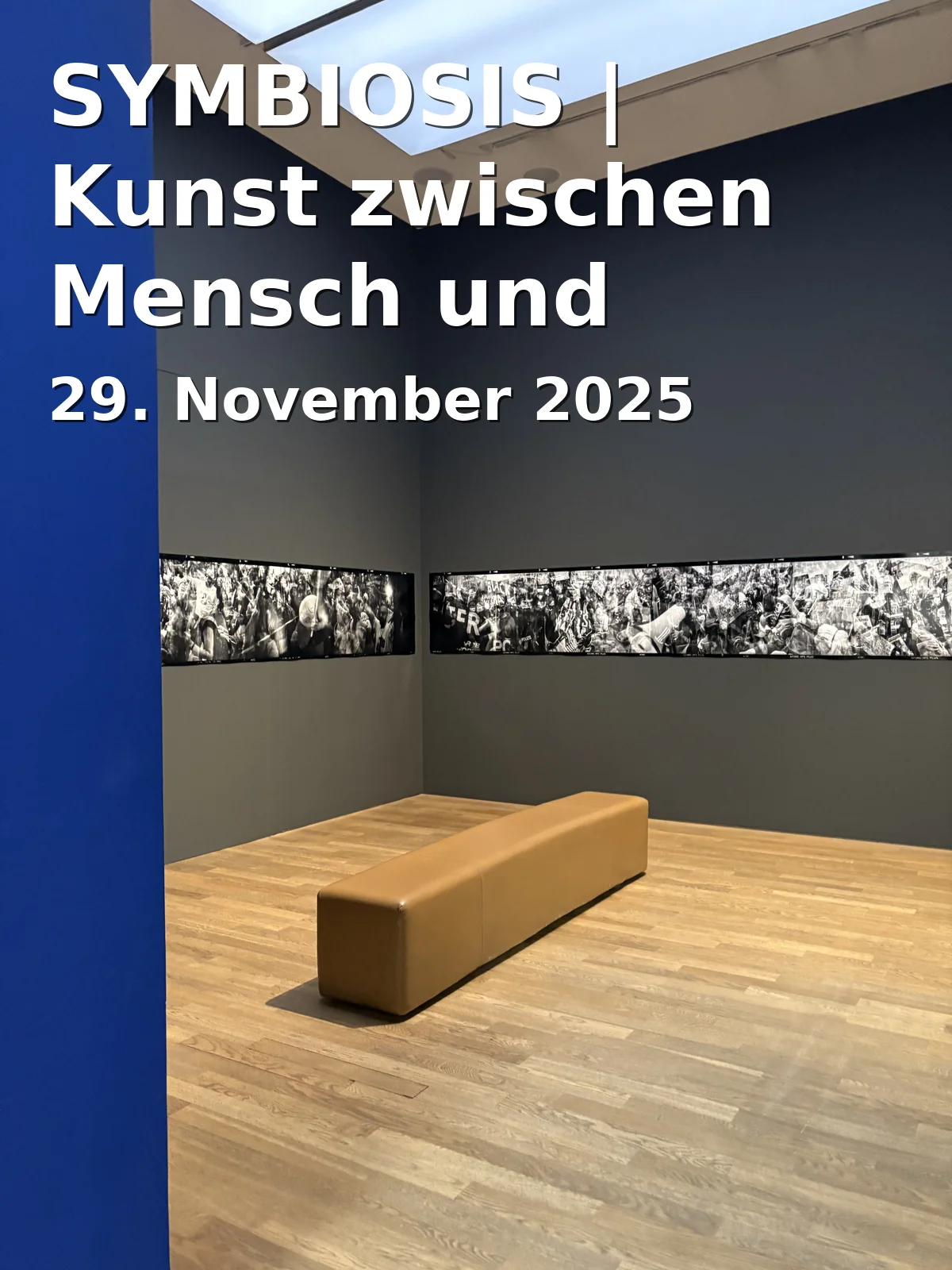
SYMBIOSIS | Art between Humans and Nature
A quiet, powerful art experience in the Glaspalast: SYMBIOSIS connects nature, material, and contemporary art impressively. #Augsburg
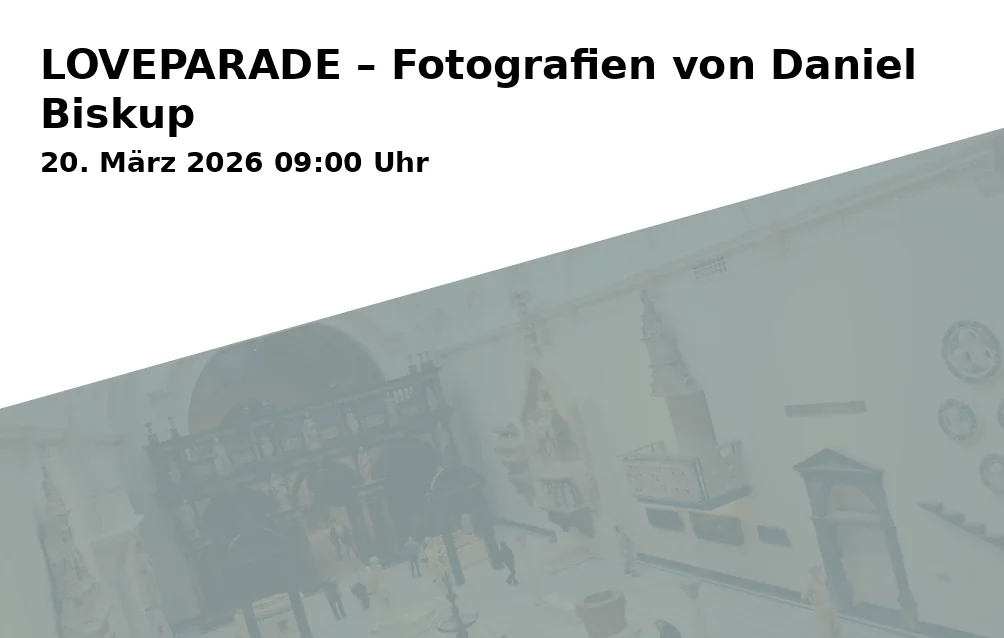
LOVEPARADE – Photographs by Daniel Biskup
A powerful visual journey into the breakthrough of the 90s: Daniel Biskup's Loveparade photographs at tim Augsburg show energy, freedom, and zeitgeist. #Augsburg #Photography
CELEBRATING FASHION Talbot Runhof in Paris
Couture, shine, and design culture at tim Augsburg: Talbot Runhof showcases over 100 looks full of sophistication. Until 25.10.2026. #FashionHistory

Everything is Art – Artist Portraits by Daniel Biskup
In the Schaezlerpalais, photography becomes an encounter: Daniel Biskup presents artist portraits full of proximity, history, and expression. 11.07.–11.10.2026. #Augsburg #Art
Müllers Malsaal
Caricature, theater perspective, and Augsburg in fine lines: Discover Müllers Malsaal at the Schaezlerpalais. Free admission, come visit now! #Augsburg

Water - Source of Life
See water anew in Annahof Augsburg: Photoreports, spirituality, and climate questions in a powerful traveling exhibition. Free entry. #Augsburg #Water
Set Up and Excluded – Jewish Sports Life in Augsburg and Swabia
A moving exhibition at the Maximilianmuseum Augsburg: Jewish sports life, exclusion, and memory culture meet strong regional stories. #Augsburg
Traveling Exhibition "What I Wore..."
Art, enlightenment, and empathy come together in Augsburg: What I Wore... showcases moving stories behind clothing. September 13–27, 2026, admission free. #Augsburg #Art
FUNZONE FUNDAYS in Augsburg: Play, Fun and Donation for Families
Play, Fun and Donation in Augsburg: FUNZONE FUNDAYS bring families into indoor adventure from September 21–25, 2026. For only 8 euros per experience. #FamilyTime #Augsburg
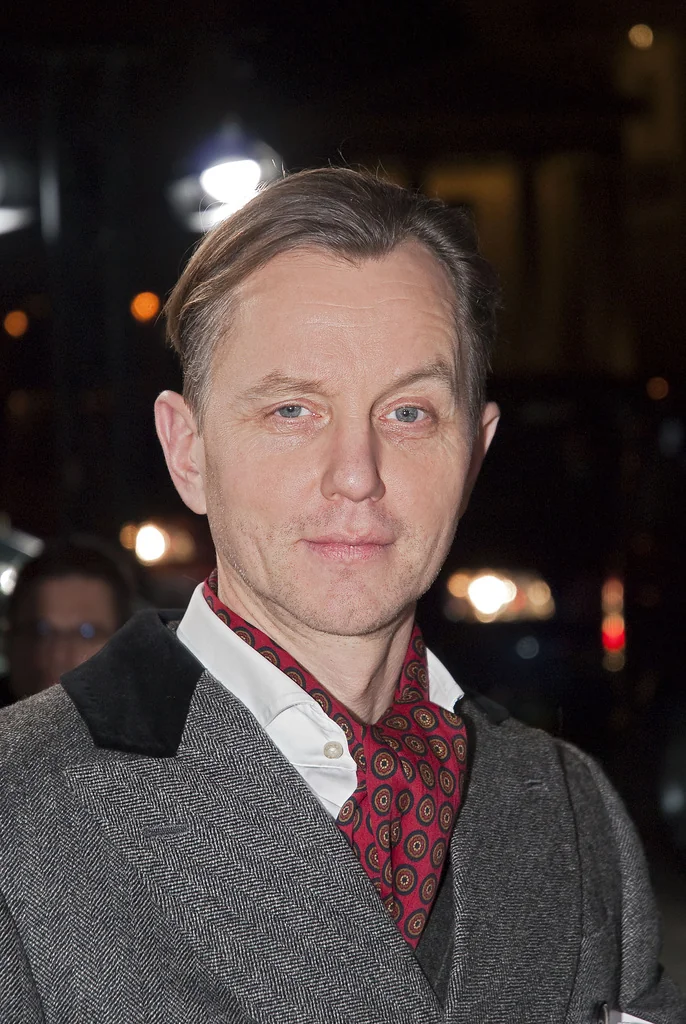
Max Raabe & Palast Orchester
Augsburg gets an evening full of style and swing: Max Raabe & Palast Orchester bring Hummel stroking to Kongress am Park. 21.09.2026, from 69.90 €. #Augsburg
Frequently Asked Questions
Reviews
No reviews found