Uli Hoeneß
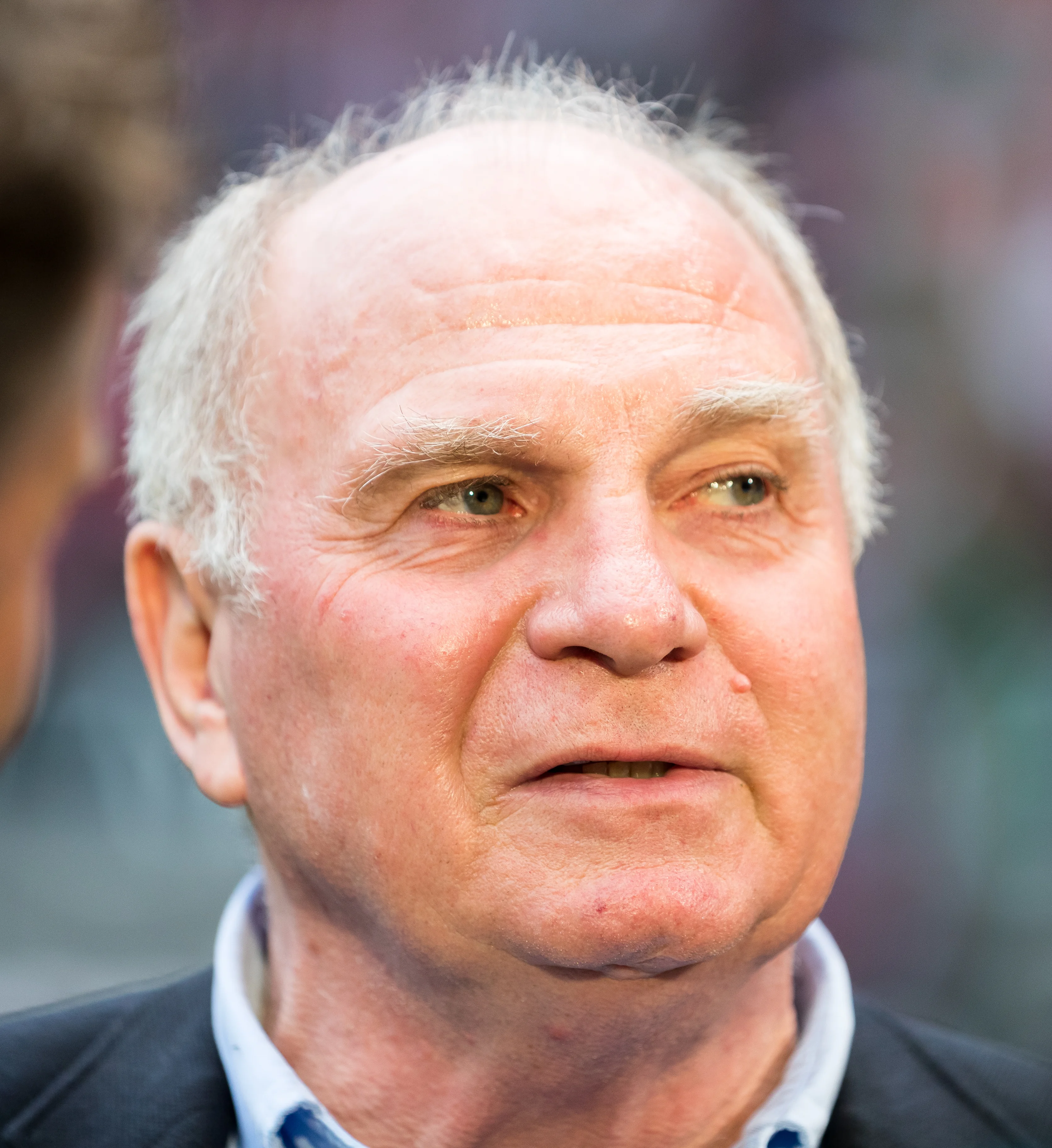
Image from Wikipedia
Image from Wikipedia
Uli Hoeneß – the defining figure of FC Bayern between player euphoria, management instinct, and awareness of power
An exceptional figure in German football
Uli Hoeneß is one of the most influential personalities in the history of German football. As a player, he won nearly all major titles in club football with FC Bayern Munich in the 1970s, including several German championships and three European Cups, and with the national team, he became European Champion in 1972 and World Champion in 1974. After the early end of his active career, he made the transition to management at the age of 27 and shaped the club like few others over decades. ([fcbayern.com](https://fcbayern.com/de/club/historie/hall-of-fame/uli-hoeness?utm_source=openai))
The story of Uli Hoeneß is one of a rise that goes far beyond individual titles. From a young striker from Ulm, he became a club architect who repositioned FC Bayern in sports, economics, and media. His biography combines success, disruption, return, and authority into one of the most distinctive careers in European football. ([fcbayern.com](https://fcbayern.com/de/club/historie/hall-of-fame/uli-hoeness?utm_source=openai))
Biography: From Ulm to Munich
Ulrich "Uli" Hoeneß was born on January 5, 1952, in Ulm. He grew up in a conservative and Catholic environment and was introduced to football at an early age before he made his way into professional sports. The early stages of his career led him to a club that would define both his career and later his life's work: FC Bayern Munich. ([de.wikipedia.org](https://de.wikipedia.org/wiki/Uli_Hoene%C3%9F?utm_source=openai))
As an active player, Hoeneß was known for his speed, presence, and goal instinct. In the Bayern team of the 1970s, he formed an ensemble with international and national outstanding players, leading the club to the pinnacle of European football. His record as a national and club player makes it clear that his significance did not begin in an administrative role, but rather grew on the pitch. ([munzinger.de](https://www.munzinger.de/register/portrait/biographien/_/01/000002167?utm_source=openai))
Playing career: Titles, goals, and an early farewell
With FC Bayern, Hoeneß won the German championship three times and the European Cup three times; the Intercontinental Cup was added in 1976. In the German national team, he celebrated the European Championship title in 1972 and the World Cup victory in 1974. These successes made him a symbol of the golden generation of German football. ([fcbayern.com](https://fcbayern.com/en/club/fcb-club/uli-hoeness?utm_source=openai))
His active career ended in 1979 due to injuries at the age of just 27. This abrupt cut lends his biography a special drama: The injured professional did not become a sidelined player, but a shaper behind the scenes. His transition into management felt like a second career that even surpassed his athletic influence. ([fcbayern.com](https://fcbayern.com/de/club/historie/hall-of-fame/uli-hoeness?utm_source=openai))
The manager: Building work, structure, and economic power
In 1979, Hoeneß took over as the manager of FC Bayern Munich at the age of 27. In the following decades, he played a major role in transforming a debt-ridden and sportingly inconsistent club into a financially stable and internationally successful team. FC Bayern itself describes this era as the most successful in its history. ([fcbayern.com](https://fcbayern.com/de/club/historie/hall-of-fame/uli-hoeness?utm_source=openai))
His work was not limited to transfers and squad planning. Hoeneß also shaped the club's self-understanding, strengthened marketing, media presence, and economic structures, and was early on seen as a visionary and initiator. Under his sports leadership, the club became a brand with global appeal, while its sports dominance in Germany persisted for years. ([fcbayern.com](https://fcbayern.com/de/club/fcb-ev/uli-hoeness?utm_source=openai))
President, resignation, and return to club leadership
From 2009, Hoeneß served as the president of FC Bayern Munich. Additionally, he took on important supervisory roles during the club's development into a corporation. In 2014, he resigned from his positions following a conviction for tax evasion but returned to leadership in 2016 after an early release from prison. ([de.wikipedia.org](https://de.wikipedia.org/wiki/Uli_Hoene%C3%9F?utm_source=openai))
Until 2019, he again held the presidency; since declining to run for re-election, he has been a regular supervisory board member and honorary president. This development illustrates the special position he continues to hold within the club today: as an honorary figure, a critical observer, and a historical reference point at the same time. ([de.wikipedia.org](https://de.wikipedia.org/wiki/Uli_Hoene%C3%9F?utm_source=openai))
Discography of success: Titles, milestones, and sporting reception
Hoeneß does not have a classical music discography, but his "career record" reads like a catalog of sporting grand events. As a player, he collected titles in club football and the national team; as a manager, he shaped FC Bayern into one of the most successful clubs in Europe. The official club history, the DFB, and other biographical sources particularly highlight the combination of sporting success and organizational competence. ([fcbayern.com](https://fcbayern.com/de/club/historie/hall-of-fame/uli-hoeness?utm_source=openai))
Critical reception and public perception of Hoeneß have always been ambivalent. On one hand, he was seen as a doer who steered the club towards success with a firm hand and clear instincts; on the other hand, his public statements, concentration of power, and subsequent legal transgressions polarized opinion. This tension between admiration and criticism still shapes the perception of his persona today. ([bundesliga.com](https://www.bundesliga.com/en/bundesliga/videos/watch/watch-uli-hoenes-the-man-who-made-bayern-a-giant-of-the-game-7rXfaKpU?utm_source=openai))
Style, leadership, and cultural influence
Hoeneß's leadership style has often been described as direct, emotional, and uncompromising. In management, he relied on authority, a close bond with the club, and a clear vision of how a top club should function. This not only shaped internal processes but also the public debate regarding power, responsibility, and success in German football. ([fcbayern.com](https://fcbayern.com/de/club/fcb-ev/uli-hoeness?utm_source=openai))
Culturally, Hoeneß became a figure against whom large parts of the football community pushed back. He represents the transformation of professional football in Germany: from regionally rooted clubs to global brands with enormous media reach. The fact that his name remains present in club documentaries, anniversary films, and current debates shows the lasting impact of his work. ([fcbayern.com](https://fcbayern.com/fcbayerntv/de/video/2022/01/sonderausstellung-mensch-uli---ein-leben-fuer-den-fc-bayern-eroeffnet?utm_source=openai))
Current role and public presence
Even after the end of his presidency, Hoeneß remains a voice of significance. Official and media sources continue to show him in interviews, club formats, and public discussions surrounding FC Bayern. His presence is no longer operational but remains symbolically strong: as an honorary president and as a man whose assessments are regarded in the club and Bundesliga circles. ([bayern.de](https://www.bayern.de/auf-eine-weiss-blaue-tasse-ministerpraesident-dr-markus-soeder-und-uli-hoeness/?utm_source=openai))
This mix of historical authority and current opinion strength makes his persona particularly intriguing. Hoeneß is not a marginal figure of the past but a name that continues to shape the discourse about FC Bayern and German football to this day. ([fcbayern.com](https://fcbayern.com/en/club/fcb-club/uli-hoeness?utm_source=openai))
Conclusion: Why Uli Hoeneß continues to fascinate
Uli Hoeneß captivates because his biography has turned an exception into a rule: player, title collector, manager, president, honorary president. He embodies success in its purest yet most contradictory form. Anyone wanting to understand the story of FC Bayern cannot overlook Hoeneß. ([fcbayern.com](https://fcbayern.com/de/club/historie/hall-of-fame/uli-hoeness?utm_source=openai))
His career shows how sporting excellence can transform into institutional power. The tension throughout this life's work lies exactly therein: between triumph and criticism, between identification and distance, between club legend and public friction figure. Uli Hoeneß therefore remains one of the most shaping personalities in German football – and a name that continues to provide conversation material to this day. ([de.wikipedia.org](https://de.wikipedia.org/wiki/Uli_Hoene%C3%9F?utm_source=openai))
Official channels of Uli Hoeneß:
- Instagram: no official profile found
- Facebook: no official profile found
- YouTube: no official profile found
- Spotify: no official profile found
- TikTok: no official profile found
Sources:
- FC Bayern Munich – Hall of Fame: Uli Hoeneß
- FC Bayern Munich – Honorary President Uli Hoeneß
- FC Bayern Munich (English) – Uli Hoeneß
- DFB Datacenter – Uli Hoeneß
- Munzinger Biography – Uli Hoeneß
- Kicker – Player Profile Uli Hoeneß
- bundesliga.com – Watch: Uli Hoeneß, the man who made Bayern a giant of the game
- Wikipedia: Uli Hoeneß – Image and text source