
Stephanie Knauer
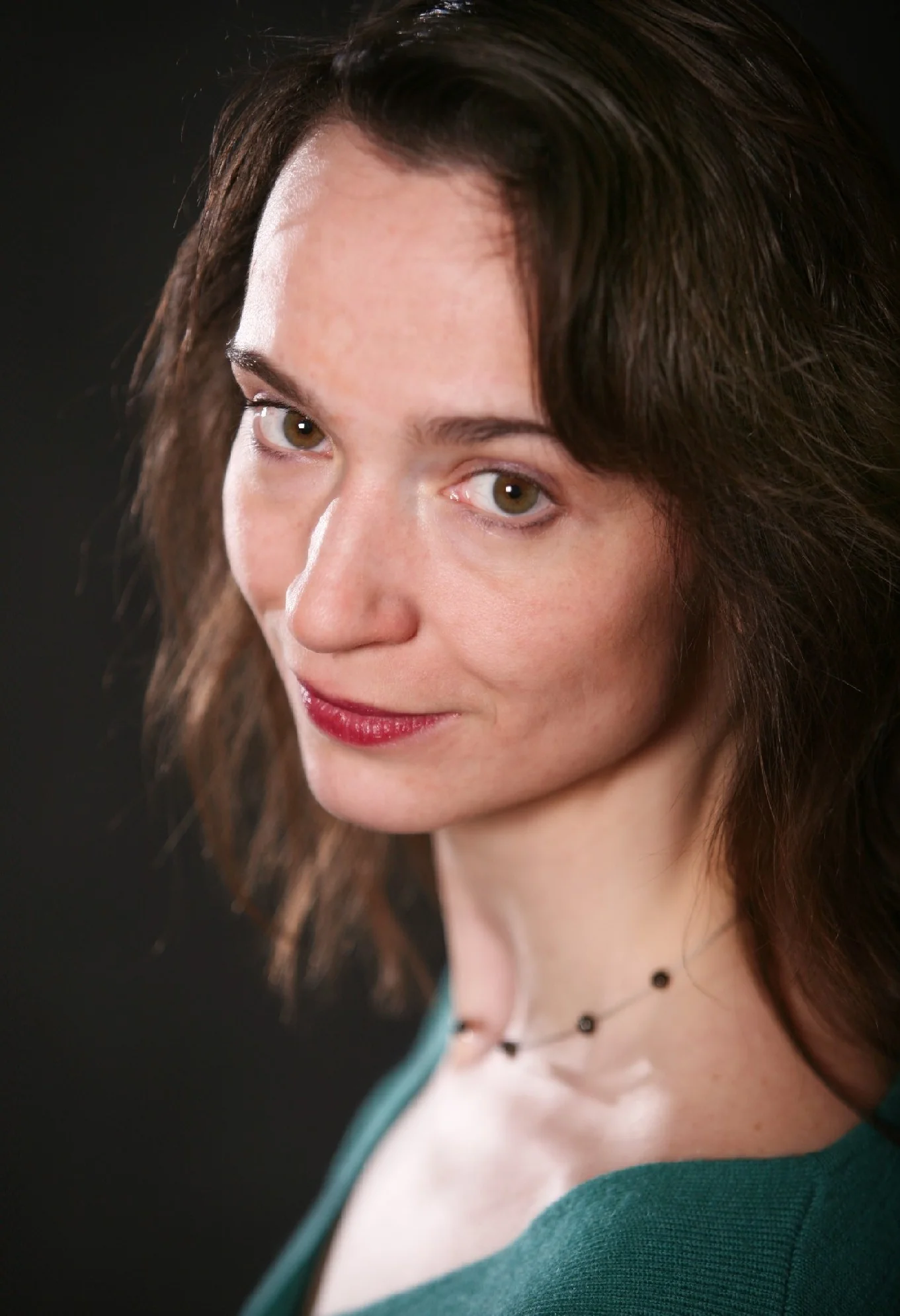
Image from Wikipedia
Image from Wikipedia
Stephanie Knauer: The Versatile Pianist from Augsburg Bridging Classical, Jazz, and Musical Nuance
An Artist with a Clear Profile and Great Stylistic Range
Born in Augsburg in 1971, Stephanie Knauer represents a musical career that seamlessly combines classical training, vibrant stage presence, and journalistic reflection. As a pianist, journalist, and educator, she moves effortlessly between the concert stage, teaching, and cultural journalism. Her artistic profile is characterized by versatility, historical sensitivity, and a strong affinity for repertoire that demands fine tonal colors and stylistic precision.
The name Stephanie Knauer is closely connected to the Augsburg music scene, yet her repertoire extends far beyond local contexts. She works convincingly in classical music as well as contemporary music and jazz, accompanying vocal and instrumental parts, playing on fortepianos and harpsichords, and performing in chamber music formations. This range makes her a musician whose artistic development has consistently stemmed from curiosity, discipline, and stylistic openness.
Biography: Education, Competition Experience, and Pedagogical Practice
After graduating from the Maria Stern School of Music in Augsburg, Stephanie Knauer began her studies at the Augsburg/Nuremberg University of Music in 1991. She graduated with distinction in 2001, followed by a master's degree in 2003. During her training, she gained experience in international competitions and scholarships; receiving the Richard Wagner Scholarship in 1999 marked an early acknowledgment in her career.
Important for her artistic development were also the masterclasses in fortepiano and harpsichord. This specialization indicates a broad historical awareness that remains evident in her later work. Between 2003 and 2008, she taught collaborative piano and practical piano playing at the Augsburg/Nuremberg University of Music; from the winter semester of 2009/2010, she resumed her teaching position at the Leopold Mozart Center of the University of Augsburg, where she taught compulsory piano and practical piano playing.
Career Development: From Solo Playing to Stylistic Multilingualism
Stephanie Knauer has turned her artistic focus to song accompaniment and is now a member of various ensembles in the jazz sector. At the same time, she regularly performs classical music and is one of the few female pianists allowed to play on Johann Andreas Stein's fortepiano at the Leopold Mozart House in Augsburg. This connection between historical performance practice and contemporary concert practice significantly shapes her artistic self-understanding.
Additionally, she participates in opera and music theater productions, conducts a choir, and performs solo on cruise ships. In 2015, she presented the concert series "Klassik im Kloster" at the Grünen Woche in Berlin with other artists. Her recent projects also reflect her affinity for scenic and conceptual formats, such as in series like "Sound & Body" or in chamber music programs that intertwine repertoire history with contemporary presentation forms.
Repertoire and Musical Identity: Between Baroque, Romanticism, and Jazz
Stephanie Knauer’s repertoire speaks a clear language. Her solo focal points include sonatas, suites, fugues, and concertante forms by Scarlatti, Bach, Haydn, Leopold Mozart, Mozart, Beethoven, Schubert, Schumann, Brahms, Chopin, Liszt, Gershwin, Ravel, and Debussy. This selection showcases a pianist who understands classical form consciousness, poetic sound culture, and virtuosic architecture not as opposing forces, but as interconnected forms of expression.
Particularly distinctive is her approach to Leopold Mozart and historical performance practice. The renowned complete works for piano and harpsichord solo also belong to her field of work, along with romantic masterpieces and impressionistic sound painting. Furthermore, her repertoire encompasses song programs, arias from the 16th century, vocal music from the Latin American Baroque, Spanish repertoire by Manuel de Falla, as well as contemporary music and chanson. This breadth not only indicates stylistic openness but also a serious engagement with diverse musical syntax, articulation, and sound aesthetics.
Ensembles, Song Accompaniment, and Chamber Music Formats
A crucial part of Stephanie Knauer's work lies in collaborative piano and playing with other musicians. She mainly accompanies singers, low strings, brass instruments, and guitar, which has fostered a deep understanding of musical balance, breath control, and transparency in instrumentation. Especially in song accompaniment, her ability to both support and interpret is highly evident.
Among her groups is the band "Miss Otis Regrets," which combines classic swing numbers, Broadway and musical hits, as well as ventures into pop and chanson. In the bar-piano arena or at social events, she also shows a sensitive instinct for atmosphere and audience dynamics. These projects highlight that she does not treat music as a museum piece, but rather as a living, communicative art form that takes different spaces and listening habits seriously.
Historical Instruments and Interpretative Authority
A particular focus of her work is the exploration of the fortepiano and historically informed performance practice. The fact that she is permitted to perform on the original Stein fortepiano at the Augsburg Mozart House underscores her connection to a tradition-conscious yet exploratory music culture. Here, technical control merges with stylistic precision and a fine awareness of the tonal colors of past eras.
Recordings and audio samples document her stylistic flexibility: Bach, Mozart, Liszt, Debussy, or Caccini do not appear in her context as isolated monuments, but rather as part of a thoughtfully curated repertoire. Thus, the artistic development of Stephanie Knauer can also be interpreted as an ongoing expansion: from classical training through historically informed practice to genre-crossing programs incorporating jazz and entertainment elements.
Journalism and Cultural Context: Musical Thinking with Her Own Voice
Alongside her concert activities, Stephanie Knauer works as a freelance writer and journalist for agencies, newspapers, and magazines. This dual perspective sharpens her view of music not only as a performer but also as an observant expert. Her journalistic work indicates that she describes musical processes, repertoire issues, and cultural-political contexts from within the practice.
Authority arises precisely from this: Knauer knows not only the stage but also the discourse surrounding it. Her writings and her artistic work point to a profound understanding of musical production, program design, and aesthetic contexts. The connection of practice and reflection constitutes a significant part of her profile as an artist and cultural mediator.
Press Voices, Resonance, and Artistic Impact
The available press paints a picture of a pianist who works with passion, concentration, and interpretive consistency. A report on a concert in Stadtbergen highlighted her ability to reveal even difficult, complex sonata worlds with tension and expressiveness. Such resonance points to a musician whose playing does not rely on superficial effects but on musical substance, dramatic control, and tonal accuracy.
The presentation of historical and stylistically open programs has also generated noticeable attention in the sources. Whether in the Mozart House, Schaezlerpalais, St. Anna, or in chamber music series: Stephanie Knauer appears as an artist who not only plays works but also enriches programs with content. This aspect makes her cultural influence in the Augsburg region particularly prominent: she conveys repertoire not as a sequence of pieces but as a living narrative of musical history.
Current Projects and Artistic Presence
Recent documents continue to showcase Stephanie Knauer as an active concert pianist with close ties to Augsburg and a broad understanding of projects. In 2021 and 2022, her website features formats emphasizing live culture in public spaces, thematic concert series, and chamber music collaborations. The audio samples also document a consistent presence in classical music, contemporary music, and jazz, complemented by performances with voice, trumpet, harpsichord, and organ.
Her current work does not come across as a single chapter of her career but rather as a consistently developed artist model. Pedagogy, journalism, concert activities, and repertoire maintenance interconnect. This is precisely where her sustainable relevance lies: Stephanie Knauer embodies musical competence without stylistic narrowing and for a musical career that convincingly consolidates experience, knowledge, and stage practice.
Conclusion: Why Stephanie Knauer Remains Compelling
Stephanie Knauer is an artist who shapes a clear identity from her versatility. Her work combines classical tradition, historical performance practice, chamber music finesse, and open contemporary culture into a credible, independent profile. Attending her concerts offers not just piano playing but real-time musical thinking.
It is this mixture of depth, stylistic knowledge, and communicative presence that makes her exciting. Encountering Stephanie Knauer on stage is rewarding because she does not merely manage music but breathes life into it. Her repertoire, experience, and sensitivity to sound and context invite audiences to experience her live.
Official Channels of Stephanie Knauer:
- Instagram: No official profile found
- Facebook: No official profile found
- YouTube: No official profile found
- Spotify: No official profile found
- TikTok: No official profile found
Sources:
- Wikipedia – Stephanie Knauer
- Stephanie Knauer, Augsburg – Official Website
- Stephanie Knauer, Augsburg – The Pianist / Repertoire
- Stephanie Knauer, Augsburg – Audio Samples
- neue musikzeitung – Author Profile Stephanie Knauer
- Press Voices / Press PDF – Stephanie Knauer
- Wikipedia: Image and Text Source
Upcoming Events
Hammerklavier Recital at Schaezlerpalais
Enjoy music from the 18th century played by Stephanie Knauer on 27.09.2026 at Schaezlerpalais Augsburg.
Between Worlds: Stephanie Knauer – Solo Piano
A fine piano evening in Augsburg: Stephanie Knauer connects classical, jazz, and modernity in St. Anna. 16.10.2026, tickets from 20 Euros. #Augsburg #Concert