
Sinfonieorchester Basel
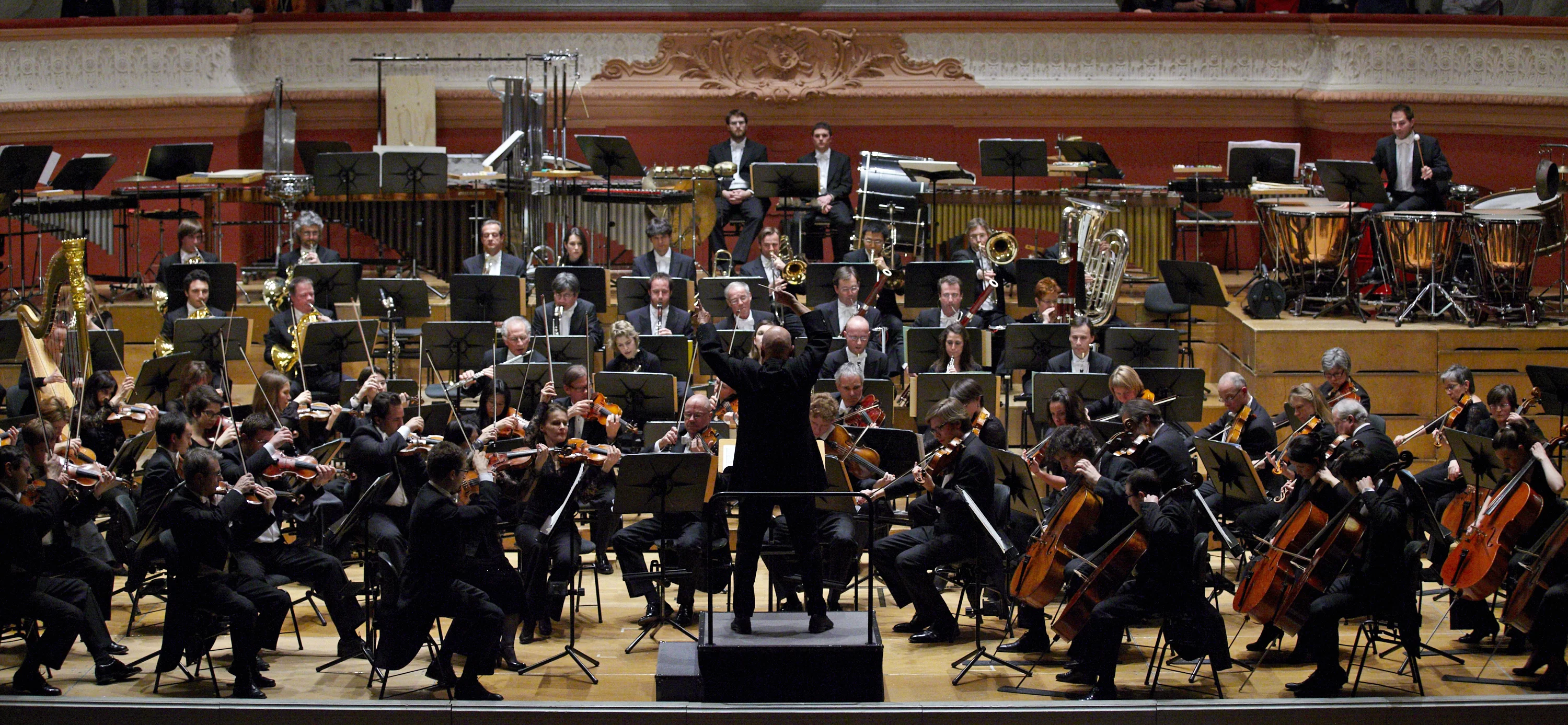
Image from Wikipedia
Image from Wikipedia
Sinfonieorchester Basel – Sound Culture, Tradition, and New Musical Horizons
An Orchestra with History, Present, and Extraordinary Radiance
The Sinfonieorchester Basel is among the oldest and most renowned orchestras in Switzerland. Since its founding in 1876, it has shaped the musical life of the Basel region with an artistic presence that extends far beyond the city. As the resident orchestra of the Stadtcasino Basel and a permanent opera orchestra institution at the Theater Basel, the ensemble blends symphonic tradition with vibrant stage practice.
With more than 100 musicians from around 25 nations, the orchestra represents international diversity, precise ensemble work, and a tonal signature characterized by transparency, flexibility, and stylistic range. In the 2025/26 season, the orchestra will celebrate its 150th anniversary while simultaneously opening a new chapter in its musical career with an ambitious Mahler cycle. This combination of historical depth and contemporary curiosity makes the Sinfonieorchester Basel one of the most exciting cultural institutions in the European classical scene.
Biography: From Basel's Orchestral Tradition to a Modern Elite Ensemble
The history of the Sinfonieorchester Basel is closely linked to the musical development of the city. For decades, influential conductors have shaped the profile of the ensemble, including Johannes Brahms, Felix Weingartner, Gustav Mahler, Wilhelm Furtwängler, Otto Klemperer, Pierre Boulez, Armin Jordan, and Dennis Russell Davies. This lineage shows that the orchestra has never only been a performing entity but has always been a place for artistic engagement and stylistic development.
A significant turning point occurred in 2012 when the orchestra parted ways with its long-term organizer, Allgemeine Musikgesellschaft Basel, and established its own subscription series. This allowed the ensemble to gain programmatic independence and refine its artistic profile. Since the 2016/17 season, Ivor Bolton has held the musical direction; from the 2025/26 season, Markus Poschner will take over as the new chief conductor, marking the beginning of a new artistic awakening.
Career and Artistic Development: Basel's Sound Body Between Concert Hall and Opera Pit
The musical career of the Sinfonieorchester Basel is not confined to the concert hall. In addition to its own symphonic concerts and guest performances at home and abroad, the ensemble regularly participates in ballet and opera productions at the Theater Basel. It is precisely in this dual role that much of its stage presence lies: the orchestra thinks symphonically while simultaneously acting theatrically, dramatically, and scenically versatile.
The official orchestra biography emphasizes the high sound culture and artistic excellence of the ensemble. The repertoire spans from the Viennese classical era through romanticism to the most recent modernity. Additionally, there are numerous world premieres of significant works from the 20th and 21st centuries, as well as close collaboration with the Paul Sacher Foundation and other partner institutions to promote contemporary music. This ensures that the orchestra does not merely dwell on the masterpieces of the past but actively shapes the present.
Change of Chief Conductor and the Mahler Cycle as a New Guiding Theme
With Markus Poschner, a new phase begins in the 2025/26 season. The orchestra regards this change in chief conductorship not merely as a personnel decision but as a programmatic reorientation. The season opening for 2025/26 is marked by Gustav Mahler, whose Second Symphony kickstarts a Mahler cycle planned over five years, set to encompass all symphonies by 2030.
This cycle is more than a repertoire decision. It connects to the historical relationship between Gustav Mahler and the orchestra while also signaling a commitment to long-term artistic planning. The recording of Mahler's Second Symphony documents this beginning as the first artistic testimony of a major project and illustrates how the Sinfonieorchester Basel shapes its modern identity from tradition, repertoire awareness, and interpretative decisiveness.
Discography: From Saint-Saëns to Mahler
The discography of the Sinfonieorchester Basel strikingly documents the ensemble's stylistic range. Notable recordings include Camille Saint-Saëns: Symphonic Poems, Charles Koechlin: The Seven Stars' Symphony op. 132, and Igor Stravinsky: Le Sacre du printemps. These productions showcase an orchestra that masters the grand symphonic canon as confidently as rarely performed and colorfully complex works.
The official CD overview and streaming offerings also feature recent releases such as Dvořák: Symphonic Poems, Paul Hindemith: Amor & Psyche - Mathis der Maler - Die vier Temperamente, as well as Chausson recordings from 2025 and 2026. This reveals a clear profile: The Sinfonieorchester Basel does not seek quick effects but rather a deeper engagement with the repertoire, sound differentiation, and careful production.
Notably, the new Mahler recording Gustav Mahler: Symphony No. 2, "Resurrection Symphony," released on April 8, 2026, on the Prospero Classical label, documents the beginning of the Basel Mahler Cycle, combining the live atmosphere from the Stadtcasino Basel with a transparent, structured interpretation. The production featuring Nikola Hillebrand, Wiebke Lehmkuhl, and the MDR Radio Choir Leipzig underscores the orchestra's commitment to creating reference recordings with dramatic depth.
Musical Style: Sound Transparency, Precision, and Dramatic Breadth
The Sinfonieorchester Basel cultivates a style that prioritizes sonic clarity and inner balance. The official texts particularly highlight the transparent sound language, making even complex scores legible. Particularly in romantic and late romantic literature, the orchestra demonstrates a differentiation that places dynamics, tone balance, and phrasing into a compelling relationship.
This aesthetic stance is also evident in recent projects. The orchestra works with a finely tuned orchestral culture, where composition, arrangement, and musical dramaturgy do not appear as abstract concepts, but as lived practice. Whether Mahler, Saint-Saëns, Dvořák, or Stravinsky: the ensemble seeks the inner architecture of a work and translates it into a concentrated, vibrant performance.
Cultural Influence: Basel as a Musical Resonance Space
The cultural influence of the Sinfonieorchester Basel deeply permeates the city and the region. As a significant cultural institution, it enhances the musical life in Basel not only through concerts but also through music education, community music, and programs for children and adolescents. Formats like maxi.musik and other inclusive offerings demonstrate that the orchestra does not view youth work as an addition but as part of its artistic self-conception.
Internationally, the ensemble is also held in high regard. Tours have taken it to major musical centers in Europe, the UK, and Asia. Awards and honors confirm this status, including the German Record Critics' Award for Camille Saint-Saëns – Poèmes Symphoniques and for Charles Koechlin – The Seven Stars' Symphony op. 132, as well as a Pizzicato Supersonic Award for Igor Stravinsky – Le Sacre du printemps. Such distinctions not only mark quality but also relevance in the international classical discourse.
Current Projects and Releases: Anniversary, New Formats, New Perspectives
The 2025/26 season is rich with projects that further sharpen the orchestra's profile. Alongside the Mahler cycle, the official press release announces new chamber music and concert formats, including Relaxed Performance, Chamber Music at Picassoplatz, as well as Poschner's Passion and Poschner Tries. These formats represent programmatic openness that connects the classical concert with new listening situations and educational approaches.
The ongoing releases and concert projects showcase an ensemble in constant motion. The CD release for Mahler's Second Symphony, the new anniversary season, and the long-term direction through to 2030 combine to form a consistent image: The Sinfonieorchester Basel works not in isolated instances, but in artistic lines. This is where its strength lies as an orchestra with historical authority and contemporary relevance.
Conclusion: An Orchestra with Depth, Character, and Future
The Sinfonieorchester Basel captivates because it treasures tradition not as a museum exhibit but as a vibrant presence. It fuses historical dignity with programmatic courage, opera and concert practice with sonic precision, and local roots with international visibility. Those who listen to this orchestra experience not just a repertoire but a distinct musical stance.
Especially in the anniversary season, this powerful combination is evident. The new Mahler cycle, the outstanding recordings, and the intensive concert work make the ensemble a sound body of great radiance. A visit is definitely worthwhile – live, the Sinfonieorchester Basel unfolds that energy, depth, and elegance that define its special position in European musical life.
Official Channels of Sinfonieorchester Basel:
- Instagram: https://www.instagram.com/sinfonieorchesterbasel
- Facebook: https://www.facebook.com/sinfonieorchesterbasel
- YouTube: https://www.youtube.com/user/SinfonieBasel
- Spotify: https://open.spotify.com/intl-de/artist/6IHkZ4mLQr4dLxiSJr3yJ8
- TikTok: No official profile found
Sources:
- Sinfonieorchester Basel – Official Website
- Sinfonieorchester Basel – Press area
- Sinfonieorchester Basel – Career
- Sinfonieorchester Basel – New Mahler CD
- Sinfonieorchester Basel – Orchestra Biography (PDF)
- Apple Music – Sinfonieorchester Basel
- Spotify – Sinfonieorchester Basel
- Wikipedia – Sinfonieorchester Basel