
Queen (Band)
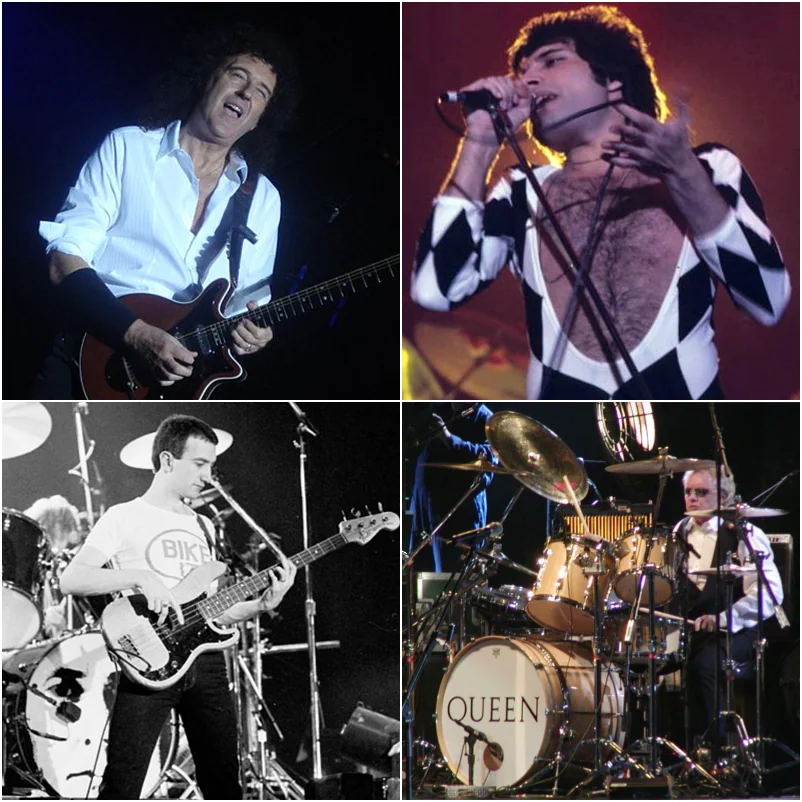
Image from Wikipedia
Image from Wikipedia
Queen – The British rock band that turned stadiums into art forms
A band with grand gestures, radical diversity, and immortal anthems
Queen is one of the most influential rock bands in music history. Founded in 1970, the British group combined opera, hard rock, glam, pop, prog, and theatrical staging into a distinctive sound that remains instantly recognizable to this day. The classic lineup of Freddie Mercury, Brian May, Roger Taylor, and John Deacon remained stable for over two decades and became the foundation of an exceptionally cohesive music career. ([en.wikipedia.org](https://en.wikipedia.org/wiki/Queen_%28band%29))
What sets Queen apart from many contemporaries is not only their commercial success but the uncompromising idea that rock music can simultaneously be spectacular, emotional, virtuosic, and appealing to the masses. The band wrote songs that established themselves as stadium anthems, radio classics, and cultural reference points all at once. With titles like Bohemian Rhapsody, We Will Rock You, We Are the Champions, Another One Bites the Dust, and The Show Must Go On, Queen crafted a repertoire that has endured across generations. ([en.wikipedia.org](https://en.wikipedia.org/wiki/Queen_%28band%29))
The Beginnings: From London to the International Rock League
Queen formed in London from musicians who came from diverse educational and artistic backgrounds. Freddie Mercury, Brian May, and Roger Taylor founded the band, and John Deacon joined in 1971, completing the quartet. Early on, the group demonstrated an unusually close musical collaboration: all four members participated in songwriting and contributed significant songs. ([en.wikipedia.org](https://en.wikipedia.org/wiki/Queen_%28band%29))
The debut album Queen was released in 1973, followed by Queen II in 1974. The international breakthrough was accelerated by Sheer Heart Attack in the same year, before A Night at the Opera in 1975 propelled the band into a different league. Especially Bohemian Rhapsody became a turning point: the song united ballad, operatic elements, and hard rock in a way that changed the listening habits of the pop world. ([britannica.com](https://www.britannica.com/topic/Queen-British-rock-group?utm_source=openai))
The Breakthrough: Bohemian Rhapsody and the Birth of the Modern Music Video
Bohemian Rhapsody was not only a worldwide hit but also a media event. The song spent nine weeks at number one in the UK, returned to the top in 1991 following Freddie Mercury's death, and has been marked as a milestone in the band's official chronicles. The accompanying promo video is considered one of the earliest and most stylistically influential music videos ever and helped redefine the visual language of pop culture. ([britannica.com](https://www.britannica.com/topic/Queen-British-rock-group?utm_source=openai))
Queen understood early on that a great song thrives not only on arrangement but also on presentation. The band relied on dramatic contrasts, dense harmonies, cutting guitar lines, and a stage where performance itself became a work of art. This blend of composition, production, and visual impact made Queen pioneers of a multimedia rock aesthetic. ([britannica.com](https://www.britannica.com/topic/Queen-British-rock-group?utm_source=openai))
Songwriting as a Collaborative Effort: Four Voices, One Distinct Profile
A central feature of Queen’s musical career is its unusual democratic structure in songwriting. Freddie Mercury wrote songs like We Are the Champions and Bohemian Rhapsody, Brian May shaped We Will Rock You and The Show Must Go On, John Deacon contributed some of the biggest hits with Another One Bites the Dust and I Want to Break Free, while Roger Taylor highlighted his own contributions with Radio Ga Ga and A Kind of Magic. This polyphonic approach made Queen stylistically agile but never arbitrary. ([en.wikipedia.org](https://en.wikipedia.org/wiki/Queen_%28band%29))
It is precisely this mix of individual signatures and collective dramaturgy that gave the band its extraordinary range. Between hard riffing, multi-part choruses, pop sensibility, and theatrical elevation, they created a repertoire that worked both in stadiums and studios. The sound architecture of Queen still thrives on layering, harmonic work, and a keen sense of tension arcs. ([britannica.com](https://www.britannica.com/topic/Queen-British-rock-group?utm_source=openai))
Discography, Successes, and Chart Dominance
Queen's discography is extensive: 15 studio albums, 10 live albums, numerous compilations, soundtracks, and singles document a long and productive career. After their breakthrough in 1974, all subsequent studio albums reached number one on the charts, signaling the band's continuous reach across multiple stylistic phases. In the UK charts, Queen recorded six number-one singles and ten number-one albums; Queen’s Greatest Hits became the best-selling album in the UK. ([en.wikipedia.org](https://en.wikipedia.org/wiki/Queen_discography))
Among the most notable sales records is Another One Bites the Dust, which sold millions and is considered the best-selling Queen single. The band's live presence was also remarkable: Queen performed over 700 concerts in 16 years, solidifying their reputation as a premier live attraction. The combination of hits, touring strength, and lasting album presence made the group a commercial anomaly in rock. ([en.wikipedia.org](https://en.wikipedia.org/wiki/Queen_%28band%29?utm_source=openai))
Stylistic Complexity: Between Glam Rock, Hard Rock, and Operatic Gesture
Queen’s style is hard to reduce to a single genre. Britannica describes the band as a fusion of heavy metal, glam rock, and camp theatrical elements, driven by Freddie Mercury's flamboyant stage presence and Brian May's layered guitar arrangements. This very synthesis produced the Queen sound: opulent, precise, melodic, and yet full of energy. ([britannica.com](https://www.britannica.com/topic/Queen-British-rock-group?utm_source=openai))
Brian May's guitar playing gives many songs their unmistakable shine. His multi-layered arrangements, which often resemble an orchestra of guitars, combine with the multi-part vocals at the center of the Queen cosmos. Roger Taylor’s drumming brings pressure and dynamism, John Deacon's bass lines create melodic stability, and Mercury's voice anchors it all with an extraordinary emotional range. ([britannica.com](https://www.britannica.com/topic/Queen-British-rock-group?utm_source=openai))
Cultural Influence: From Sports Arenas to Pop History
Queen became significant not just on the charts but also in the collective memory. Songs like We Will Rock You and We Are the Champions became universal rituals of success, self-assertion, and collective euphoria. These tracks function in stadiums, films, advertising campaigns, and pop retrospectives because they create an immediate sense of community. ([britannica.com](https://www.britannica.com/topic/Queen-British-rock-group?utm_source=openai))
The band also shaped visual pop culture. The Queen logo designed by Freddie Mercury, featuring the zodiac signs of the members and a royal motif, has long become a symbol of stylish rock iconography. Furthermore, Queen is considered one of the most bootlegged bands and has generated an enormous fan culture worldwide, underscoring the group's exceptional status far beyond classic sales success. ([en.wikipedia.org](https://en.wikipedia.org/wiki/Queen_%28band%29))
Current Projects and Late Catalog Maintenance
Queen remains present even in the 21st century. In 2024 and 2025, the band focused on the elaborate remastering of their debut album, which has been officially reissued as Queen I. The band described the release as a brand-new 2024 rebuild, featuring restored recordings, a new sequence, demos, live material, and an expanded box set edition. This maintenance of the catalog shows how strongly Queen curates its own history and translates it into the present. ([queenonline.com](https://www.queenonline.com/news/queen-i-watch-keep-yourself-alive-official-video-remastered?utm_source=openai))
In 2026, the official band website also announced a remastered, expanded reissue of Queen II, including a collector’s edition and brand-new mix. Such projects highlight that Queen does not merely archive its back catalog, but treats it as a living part of brand and music culture. In parallel, new official videos, reissues, and digital campaigns regularly appear on the band's channels. ([queenonline.com](https://www.queenonline.com/news/queen-ii-seven-seas-of-rhye-2026-mix-official-visualizer?utm_source=openai))
Contracts, Rights, and the Economic Size of the Queen Catalog
Economically, Queen remains a heavyweight. In mid-2024, it was reported that the rights to music, merchandise, and various ancillary rights had been sold to Sony Music Publishing for $1.27 billion. This amount is regarded as the largest ever paid in the industry and underscores the enduring market value of the Queen catalog. ([en.wikipedia.org](https://en.wikipedia.org/wiki/Queen_%28band%29?utm_source=openai))
The deal is more than just a number: it shows that Queen functions not only nostalgically but is a global asset corpus with lasting cultural and commercial resonance. Few rock bands connect streaming presence, repertoire value, live legend, and marketing strength so consistently. This is precisely where the group’s special authority lies in the modern music business. ([en.wikipedia.org](https://en.wikipedia.org/wiki/Queen_%28band%29?utm_source=openai))
Conclusion: Why Queen Continues to Captivate
Queen remains fascinating because the band did not pit opposites against each other but transformed them into a triumphant whole: art and pop, virtuosity and catchiness, excess and precision. Their songs are not just hits but musical events with high recognition and remarkable lasting impact. Those who listen to Queen experience rock music in its maximum form: theatrical, melodic, emotional, and exhilarating. ([britannica.com](https://www.britannica.com/topic/Queen-British-rock-group?utm_source=openai))
Especially live, this legacy unfolds its greatest power. Queen has proven over decades that great songs can sound even bigger on stage. Anyone who has the opportunity to experience official releases, historical live recordings, or contemporary Queen productions should take it: Few bands have shaped the idea of the rock anthem as enduringly as Queen. ([queenonline.com](https://www.queenonline.com/news/watch-queen-the-greatest-live-episode-100?utm_source=openai))
Official Channels of Queen (Band):
- Instagram: https://Queen.lnk.to/Instagram
- Facebook: https://Queen.lnk.to/Facebook
- YouTube: https://Queen.lnk.to/SubscribeQRM
- Spotify: no official profile found
- TikTok: no official profile found
Sources:
- Queen Online - Official Band Website
- Queen I Official - Official Release Page
- Official Charts Company - Queen Artist Page
- Britannica - Queen, British rock group
- Wikipedia - Queen (Band)
- Wikipedia - Queen Discography
- Queen Online News - Queen I / Keep Yourself Alive 2024
- Queen Online News - Queen II 2026 Mix
- Queen Online News - Bohemian Rhapsody 1 Billion Views
- Queen - Official Facebook Page