
Milo Rau
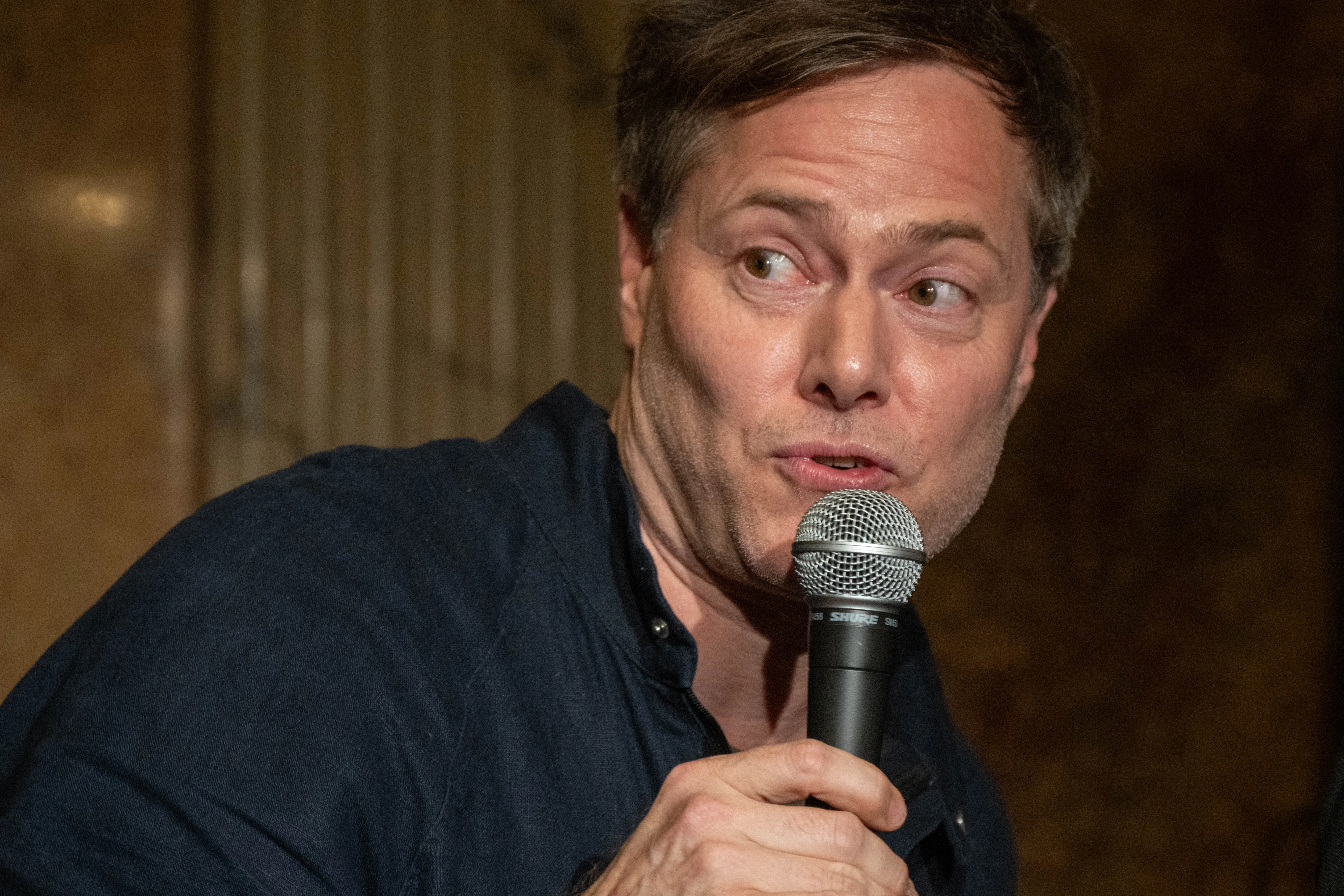
Image from Wikipedia
Image from Wikipedia
Milo Rau – the political theater maker between stage, film, and public debate
An artist who understands theater as a societal force
Milo Rau, born in 1977 in Bern, is one of the defining voices of contemporary European theater. The Swiss director, playwright, essayist, and former journalist has made a name for himself with works that combine documentary precision, political sharpness, and striking stage visuals. His artistic development has long revolved around real conflicts, power dynamics, and the question of how theater impacts society. ([de.wikipedia.org](https://de.wikipedia.org/wiki/Milo_Rau?utm_source=openai))
Biography: Education, Thinking, and Early Influences
Rau studied sociology, Romance studies, and German studies in Paris, Berlin, and Zurich, among others under Pierre Bourdieu and Tzvetan Todorov. This humanities background is still palpable in his work today, as his productions conceptualize conflicts not only aesthetically but also historically, socially, and politically. Early on, he worked as a writer for the Neue Zürcher Zeitung and developed a documentary approach to the stage from journalistic observation. ([salzburgerfestspiele.at](https://www.salzburgerfestspiele.at/a/milo-rau?utm_source=openai))
His path to theater did not follow the classic route of a director from the repertory machine but rather represented a search movement between reportage, essay, and production. From 2002, he became active as a playwright, author, and director in Switzerland and internationally. In 2007, he founded the IIPM – International Institute of Political Murder – a production company that has since become synonymous with his artistic endeavors. ([en.wikipedia.org](https://en.wikipedia.org/wiki/Milo_Rau?utm_source=openai))
The artistic breakthrough: documentary theater with political explosive power
Rau's international breakthrough is closely associated with a form of documentary theater that not only quotes real events, eyewitness accounts, and historical research but also dramatizes them. Works like Hate Radio, The Civil Wars, Agora, and Orest in Mosul have made him visible at major houses and festivals. The Wiener Festwochen, which has showcased his works for years, has become a kind of resonance space for his aesthetic and political radicality. ([orf.at](https://orf.at/stories/3302857/?utm_source=openai))
His method is characterized by addressing social conflicts not abstractly but transferring them into concrete situations, bodies, and voices. As a result, his projects often involve affected individuals, experts, laypeople, or those from the real constellations he examines. This approach creates productions that serve as stage, tribunal, and space for thought simultaneously. ([republik.ch](https://www.republik.ch/2024/07/02/kultur-ist-immer-das-erste-opfer-rechter-regierungen?utm_source=openai))
Significant works and international recognition
Rau's well-known projects include The Civil Wars, Hate Radio, Five Easy Pieces, Compassion. The History of the Machine Gun, Empire, Orest in Mosul, and The New Gospel. These productions have been shown at renowned stages and festivals throughout Europe and have sparked extensive discussion due to their transgression of aesthetic boundaries and the transformation of politically charged themes into strongly structured visual and textual spaces. His works have received critical awards in over ten countries. ([salzburgerfestspiele.at](https://www.salzburgerfestspiele.at/a/milo-rau?utm_source=openai))
In 2018, Rau received the European Theatre Prize for his body of work. In 2019, he was awarded the first honorary doctorate from the Theatre Department of Lund University, followed by an honorary doctorate from Ghent University in 2020. Such accolades not only reflect his reach but also the institutional recognition of an artist who considers theater a public tool. ([salzburgerfestspiele.at](https://www.salzburgerfestspiele.at/a/milo-rau?utm_source=openai))
Current projects: Wiener Festwochen, debate formats, and new productions
Since 2024, Milo Rau has shaped the festival scene as the artistic director of the Wiener Festwochen with a distinct political fingerprint. Under his leadership, formats such as the “Free Republic of Vienna,” the “Vienna Trials,” and the global debate tour Resistance Now! have been launched. For 2025 and 2026, the orientation of the Festwochen has been further described as a large-scale crossover and discourse project. ([orf.at](https://orf.at/stories/3302857/?utm_source=openai))
As a director, Rau remains productive as well. In 2024, he produced Medea’s Children at NTGent, while projects like Burgtheater in an adaptation of Elfriede Jelinek and The Pelicot Trial are expected to generate international attention in 2025. Reviews and festival announcements indicate an artist who continues to work at the intersection of art, public, and conflict. ([schaefersphilippen.de](https://www.schaefersphilippen.de/kuenstler_in/milo-rau/?utm_source=openai))
As early as 2020, The New Gospel as a theater and film project in Matera generated significant interest; the film's premiere took place in the context of the Biennale in Venice. This connection of theater, film, and documentary approach remains a core aspect of his work. Rau conceives of production not as a completed stage event but as an open-ended cultural intervention. ([schaefersphilippen.de](https://www.schaefersphilippen.de/kuenstler_in/milo-rau/?utm_source=openai))
Style and aesthetics: between research, reconstruction, and moral intensification
Rau's style is characterized by documentary research, political analysis, and a clear, often consistent visual language. His productions work with reconstructions, testimonies, archetypal conflict figures, and precisely composed ensemble situations. As a result, a theater is created that does not decorate but rather irritates, questions, and demands responsibility. ([zeit.de](https://www.zeit.de/2024/22/wien-milo-rau-theater-intendant?utm_source=openai))
This is particularly evident in works that address real trials, religious conflicts, or systems of violence. Rau's art is seen as a space where historical truth, subjective experience, and public debate intersect. This is precisely where the authority of his works lies: They treat societal wounds not as a backdrop but as subjects of rigorous stage analysis. ([zeit.de](https://www.zeit.de/2024/22/wien-milo-rau-theater-intendant?utm_source=openai))
Discography in the broader sense: catalog of works instead of a pop catalog
Milo Rau does not have a classic music or pop discography; his oeuvre consists of plays, film projects, essays, and festival formats. Key entries in his catalog include Amnesia, Hate Radio, The Civil Wars, Five Easy Pieces, Empire, Orest in Mosul, and The New Gospel. Therefore, those searching for his “discography” will find an artistic archive of contemporary conflicts rather than a list of songs. ([dewiki.de](https://www.dewiki.de/Lexikon/Milo_Rau?utm_source=openai))
The repertoire of the Wiener Festwochen under his leadership also appears to continue this line of thinking in larger public contexts. The festival season becomes an artistic laboratory where debate, performance, music, language, and political analysis coexist. This very polyphony has made Milo Rau one of the most discussed cultural figures in European theater. ([festwochen.at](https://www.festwochen.at/en/milo-rau?utm_source=openai))
Cultural influence and public perception
Milo Rau is regarded as one of the most controversial yet influential figures in contemporary theater. His works regularly incite discussions about artistic freedom, moral responsibility, representation, and political impact. The presence of his productions in venues such as the Schaubühne, the Munich Kammerspiele, NTGent, and the Wiener Festwochen demonstrates the institutional reach of his artistic approach. ([schaefersphilippen.de](https://www.schaefersphilippen.de/kuenstler_in/milo-rau/?utm_source=openai))
Press reviews describe him as a director who works with a strong grip on reality and memory, viewing the stage as a societal negotiation space. This consistency makes his name a focal point in international theater reporting. Rau represents a theater that does not soothe but instead takes a stand. ([epd-film.de](https://www.epd-film.de/personen/milo-rau-0?utm_source=openai))
Conclusion: Why Milo Rau remains fascinating
Milo Rau connects intellectual sharpness, political urgency, and formal experimental zeal into a distinctive artistic signature. His projects demonstrate how powerful theater can be when it combines research, stance, and aesthetic radicality. Those seeking contemporary culture beyond the ordinary will find in his work one of the most exciting places in European contemporary art. ([salzburgerfestspiele.at](https://www.salzburgerfestspiele.at/a/milo-rau?utm_source=openai))
Just because Rau does not gloss over real conflicts but brings them to visibility, each new production remains an event with resonance. His artistic development is that of a consistent boundary walker between stage, film, and political public life. Experiencing Milo Rau live means seeing theater as a present experience – intense, contentious, and sustainable. ([festwochen.at](https://www.festwochen.at/en/milo-rau?utm_source=openai))
Official channels of Milo Rau:
- Instagram: No official profile found
- Facebook: No official profile found
- YouTube: No official profile found
- Spotify: No official profile found
- TikTok: No official profile found