
Markus Wolf
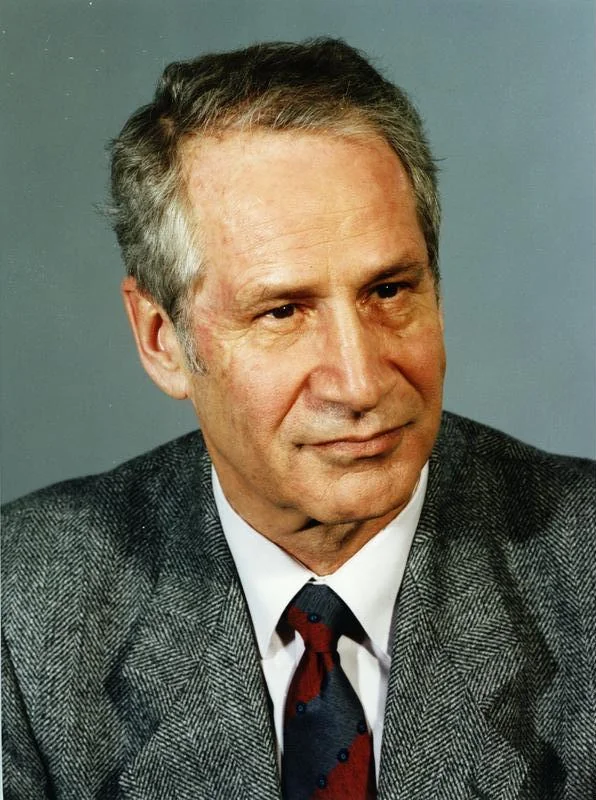
Image from Wikipedia
Image from Wikipedia
Markus Wolf – The Man Without a Face and the Power of Invisibility
A Political Biography Between Exile, Intelligence Service, and Later Public Myth
Markus Johannes "Mischa" Wolf was one of the most influential and yet most mystified figures in the history of the GDR. Born on January 19, 1923, in Hechingen and died on November 9, 2006, in Berlin, he led Division A, the foreign intelligence service of the Ministry for State Security, from 1952 to 1986. His name stands for an extraordinary career in the shadows, for political influence, operational power, and a public legacy that took on a completely different dimension after the end of the GDR. ([de.wikipedia.org](https://de.wikipedia.org/wiki/Markus_Wolf))
Background, Exile, and Political Shaping
Wolf's biography began in an intellectual and politically charged household. He was the son of the Jewish doctor and writer Friedrich Wolf, and his brother Konrad Wolf's family is also among the great names of German cultural and contemporary history. Emigration to the Soviet Union, attending school there, and returning to Germany after World War II shaped a political socialization that remained closely tied to communist ideology, party allegiance, and a self-understanding of a historical mission. ([tagesspiegel.de](https://www.tagesspiegel.de/politik/der-spion-der-gerne-redet-966337.html))
After the war, Wolf returned to Berlin in May 1945 and initially made a career in the Communist Party of Germany and later in the Socialist Unity Party of Germany. Sources portray him as a highly intelligent, educated, and disciplined official who internalized the logic of the new state early on. His career combined personal loyalty, political toughness, and thinking in power structures, which decisively shaped his later role in the intelligence service. ([de.wikipedia.org](https://de.wikipedia.org/wiki/Markus_Wolf))
The Rise in the Intelligence Service
From September 1951, Wolf participated in the establishment of the first foreign intelligence service of the GDR, the Institute for Economic Research. In 1952, he became its head and, at just 29 years old, was at the helm of a global network of agents with 4,600 full-time employees, over 10,000 unofficial collaborators, and 1,500 spies in the Federal Republic of Germany. In 1953, the structure was integrated into the Ministry for State Security, and from Main Division XV, Main Administration A was formed in 1956, which then served as the central foreign intelligence service of the GDR. ([de.wikipedia.org](https://de.wikipedia.org/wiki/Markus_Wolf))
Wolf rose to the rank of Major General and served as the chief of espionage and First Deputy of the Minister for State Security, first under Ernst Wollweber and later under Erich Mielke. His particular focus was on economic espionage in the Federal Republic and influencing West German politics through targeted disinformation aimed at destabilization. This combination of operational efficiency and strategic thinking made him a key figure in the East-West conflict. ([de.wikipedia.org](https://de.wikipedia.org/wiki/Markus_Wolf))
The "Man Without a Face" and the Staging of Invisibility
For decades, Markus Wolf was scarcely photographed in the West, earning him the nickname "Man Without a Face." It wasn't until 1979 that the Federal Intelligence Service identified him in a photograph from Stockholm; this image made him known to the West German public and was disseminated by Der Spiegel. This late visibility was more than just a journalism or intelligence story: it became part of his legend because Wolf nearly turned the art of invisibility into a political brand. ([de.wikipedia.org](https://de.wikipedia.org/wiki/Markus_Wolf))
In newspaper reports and retrospectives on his biography, Wolf appears as a secondary figure, pulling the strings from the background and achieving enormous impact precisely in that role. Der Tagesspiegel described him as a former man in the background who began a second career as an author, interview partner, and talk show guest after the Wende. This public transformation illustrates how strongly his image as an intelligence chief remained anchored in collective memory and how skillfully he later shaped this role himself. ([tagesspiegel.de](https://www.tagesspiegel.de/politik/der-spion-der-gerne-redet-966337.html))
Latter Years, Breaks, and Public Debates
In 1986, at his own request, Wolf was put on leave and was released from the MfS in November of the same year. Shortly thereafter, he began writing his first book, Die Troika, which was published in 1989 and described in sources as surprisingly self-critical. The publication marked a transition from operational intelligence chief to a publishing contemporary witness who no longer merely managed his own past but publicly interpreted it. ([de.wikipedia.org](https://de.wikipedia.org/wiki/Markus_Wolf))
In 1989, Wolf spoke at the large demonstration on November 4 at Alexanderplatz, five days before the opening of the Wall. He spoke about reforms of a renewed socialism but was booed by the audience, which dramatically highlighted the historical weight of his persona. The years following the Wende brought investigations, arrest warrants, extradition and criminal proceedings, as well as public controversies about the legal and moral evaluation of his actions. ([de.wikipedia.org](https://de.wikipedia.org/wiki/Markus_Wolf))
Writer, Contemporary Witness, and Controversial Icon
After the end of the GDR, Wolf was perceived not only as a former intelligence chief but also as an author and political commentator. Reports highlight that he worked on his interpretation of the past in talk shows, interviews, and memoirs, presenting himself as a controlled, self-assured, and intellectually trained voice. It is this mix of distance, self-assertion, and selective openness that made him equally interesting to historians, journalists, and a broad audience. ([tagesspiegel.de](https://www.tagesspiegel.de/politik/der-spion-der-gerne-redet-966337.html))
At the same time, his role in the Stasi and the GDR system remained highly controversial. Sources emphasize that he represented economic espionage, political influence, and strategic disinformation and often evaded deep engagement with the responsibilities of the system. This is precisely where his enduring appeal as a historical figure arises: Wolf embodies power in secrecy, ideological consistency, and the difficulty of morally categorizing political biographies retrospectively. ([de.wikipedia.org](https://de.wikipedia.org/wiki/Markus_Wolf))
Historical Influence and Aftermath
Markus Wolf remains one of the most discussed figures in German-German contemporary history because he embodies the convergence of intelligence history, the Cold War, media myth, and political memory. His career illustrates how strongly the GDR relied on professional intelligence, infiltration, and operational elites, and how closely personal biography and state reasons were intertwined. At the same time, the later debates about him document that historical figures live on not only through their actions but also through their self-representation and media resurgence. ([de.wikipedia.org](https://de.wikipedia.org/wiki/Markus_Wolf))
Anyone who engages with Markus Wolf encounters not a simple hero or a simple villain but a historically complex figure who shaped the Cold War in secrecy and returned to the public space after 1989. He remains fascinating because his biography tightly interweaves power, loyalty, control, and late discourse. His story warrants attention because it demonstrates how deeply political systems can interfere with personal lives and how long their shadows remain in memory. ([de.wikipedia.org](https://de.wikipedia.org/wiki/Markus_Wolf))
Conclusion
Markus Wolf is still one of the most fascinating figures in German post-war history: a man of the apparatus who worked in the shadows, reinvented himself after the Wende, and thus became a lasting object of projection. Anyone wanting to understand his biography recognizes therein the mechanics of intelligence, ideology, and historical self-interpretation with exceptional clarity. It is precisely this mix of power, myth, and contradiction that makes him so compelling even today. ([de.wikipedia.org](https://de.wikipedia.org/wiki/Markus_Wolf))
Official Channels of Markus Wolf:
- Instagram: No official profile found
- Facebook: No official profile found
- YouTube: No official profile found
- Spotify: No official profile found
- TikTok: No official profile found
Sources:
- Wikipedia – Markus Wolf
- Der Tagesspiegel – Politics: The Spy Who Likes to Talk
- B.Z. – Markus Wolf
- Chronik der Wende – Biography Markus Wolf
- Wikipedia: Image and text source
Upcoming Events
Schäftlarner Concerts 2026: Haffner, Vienna and Wolf
Classics in a unique sound space: The Schäftlarner Concerts invite you to Schäftlarn on June 13, 2026. Mozart, Haydn and violin, starting at 25 €. #Classics
SUMMER GALA
A summer evening full of classical music and opera in the Residenz Munich: the gala combines great voices, fine sonic moments, and historic flair. June 21, 2026, doors open at 6 PM. #Munich #Classical
Harpsichord/Organ & Violin
An evening full of baroque elegance in the Asam Church Munich: Harpsichord/Organ and Violin in the historic sound space. 22.07.2026, 20:00. #Classical