
Jiří Georg Dokoupil
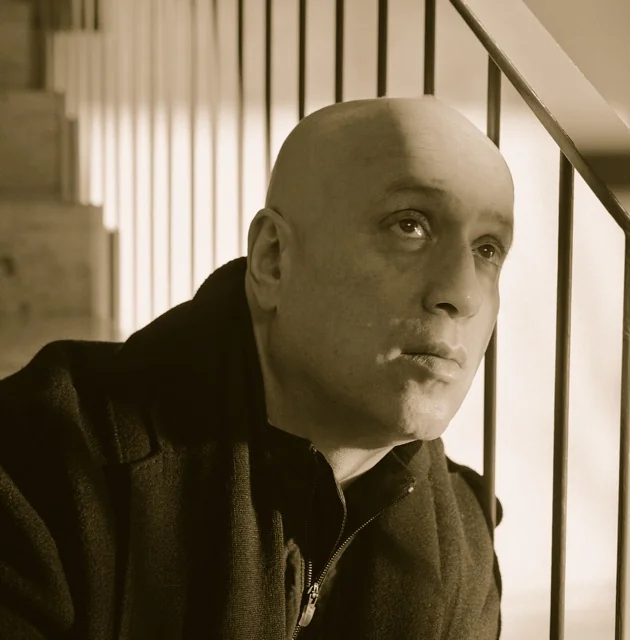
Image from Wikipedia
Image from Wikipedia
Jiří Georg Dokoupil – The Radical Inventor of Painting
An Artist Between Departure, Experiment, and Iconic Visual Language
Jiří "Georg" Dokoupil, born on June 3, 1954, in Krnov, is one of the most individualistic and influential figures in contemporary German-Czech art. As a painter, draftsman, and graphic artist, he became known in the 1980s as a representative of the Junge Wilden and developed an early attitude that evades any fixed stylistic drawer. His work stands for permanent renewal, for material research, and for a visual language where chance, control, and performative gesture intertwine. ([de.wikipedia.org](https://de.wikipedia.org/wiki/Ji%C5%99%C3%AD_Georg_Dokoupil?utm_source=openai))
Biography: Origins, Migration, and Artistic Influence
Dokoupil's life path is closely tied to European history in the second half of the 20th century. In 1968, his family left Czechoslovakia and moved to West Germany; this experience of rupture and reorientation also shapes the restlessness of his oeuvre. From 1976 to 1978, he studied in Cologne, Frankfurt am Main, and at Cooper Union in New York under Hans Haacke, thus in an environment that combined conceptual art, critique, and intellectual rigor. ([de.wikipedia.org](https://de.wikipedia.org/wiki/Ji%C5%99%C3%AD_Georg_Dokoupil?utm_source=openai))
From this starting point, an artist emerged who did not rely on recognizability in the conventional sense but rather on productive transformation. Already in the early 1980s, he was involved with Walter Dahn and other protagonists in the debates surrounding the New Wild Painting. The group was linked to the gallerist Paul Maenz, who organized Dokoupil's first solo exhibition in 1982 and thereby prepared the way for his international breakthrough. ([en.wikipedia.org](https://en.wikipedia.org/wiki/Ji%C5%99%C3%AD_Georg_Dokoupil?utm_source=openai))
Career: From Young Wild Man to International Stardom
Dokoupil's career quickly shifted from the local scene to an international context. In 1982, he was shown at documenta 7 in Kassel, a milestone that firmly established his position in contemporary art. In 1983/84, he served as a visiting professor at the State Academy of Art in Düsseldorf; since 1989, he has taught at the Círculo de Bellas Artes in Madrid. These stops demonstrate not only recognition but also his status as an artist whose practice radiates beyond the studio into teaching and theory. ([galerieklueser.com](https://www.galerieklueser.com/kuenstler/jiri-georg-dokoupil/?utm_source=openai))
The sources describe his work as "protean" and stylistically pluralistic: Dokoupil shifts between neo-expressionism, constructive elements, and pop references without permanently adhering to any one direction. It is precisely this openness that makes him a singular figure who perceives painting not as a genre but as an open field. His international presence is evident in numerous museum and gallery exhibitions across Europe, North and South America, and Asia. ([galeriemartinakaiser.de](https://www.galeriemartinakaiser.de/de/kuenstler/jiri-georg-dokoupil/pressetext.html?utm_source=openai))
Working Method: Material, Chance, and Radical Processes
Dokoupil's artistic development is primarily a story of method. Since the mid-1980s, he has replaced traditional tools like brushes with unusual techniques: soap bubbles, soot, candle smoke, whips, or other experimental mediums become intermediaries of the image. This practice gives his works a peculiar tension between control and unpredictability, between material precision and fleeting events. ([neumeister.com](https://www.neumeister.com/fileadmin/user_upload/pdf/MO65_Contemporary_Art.pdf?utm_source=openai))
He is especially known for his soap bubble images, which connect his name worldwide with a very specific imaging technique. Later groups of works, such as candle images, film images, smoke images, or motifs featuring leopards, child figures, and whips, show how consistently he perceives image production as an experiment. Art, for him, does not arise from a single signature but from the ongoing shift of technique, motif, and surface effect. ([kerberverlag.com](https://www.kerberverlag.com/de/buecher/dokoupil?utm_source=openai))
Current Projects and Exhibitions: New Works, New Spaces
Even in the 2020s, Dokoupil remains active and present. In 2024, the exhibition "Venetian Bubbles" in Venice showcased new glass sculptures that translated his well-known soap bubble images into three-dimensional forms and expanded his experimental practice into new materials. The exhibition was part of the 60th Venice Biennale and was conceived as a further development of his longstanding work on the connection of play, material, and image. ([cultura.gov.it](https://cultura.gov.it/evento/venetian-bubbles-evento-espositivo-dellartista-jiri-georg-dokoupil-in-contemporanea-con-la-60o-mostra-internazionale-darte-la-biennale-di-venezia?utm_source=openai))
For 2025, his official artist page has announced the exhibition "On the Road to Paradise," which is set to run from July 25 to October 25, 2025, presenting new works that draw on forms and themes from 2000 to 2005. The current project situation shows no retreat, but rather a renewed condensation of his artistic language: retrospection for Dokoupil is never nostalgia but rather material for new image discoveries. ([dokoupil.art](https://www.dokoupil.art/news/on-the-road-to-paradise/?utm_source=openai))
Discography? Not a Musician, but a Visual Work with Iconic Recognizability
As Jiří Georg Dokoupil is not a musician but a visual artist, he does not possess a discography in the musical sense. However, his oeuvre fulfills a similar function to a formative catalog history: it consolidates central phases of work, series, and motifs that make his development traceable. Key groups include the soap bubble images, candle images, film images, smoke images, and various figurative experiments that bear his artistic signature over decades. ([kerberverlag.com](https://www.kerberverlag.com/de/buecher/dokoupil?utm_source=openai))
The presence in museums and collections also underscores this importance. The official artist profile cites institutions such as Museum Ludwig in Cologne, the National Gallery in Berlin, the Centre Pompidou in Paris, and the Reina Sofía in Madrid, among others, where works are represented. Such venues mark not just a story of market success but the sustainable reception of an artist who shifts the boundaries between painting, graphics, and material art. ([dokoupil.art](https://www.dokoupil.art/bio/?utm_source=openai))
Critical Reception and Cultural Influence
Art critics describe Dokoupil as one of the most atypical artists of his generation. His refusal to settle on a permanent style has often been interpreted as a strength: he established his own canon beyond obligatory content and a rigid visual language. Exhibitions like "Obsessive Painting – A Retrospective on the New Wilds" have made him a prominent figure of that movement, which revitalized German painting in the 1980s. ([galeriemartinakaiser.de](https://www.galeriemartinakaiser.de/de/kuenstler/jiri-georg-dokoupil/pressetext.html?utm_source=openai))
His cultural influence extends beyond the German art scene. The combination of pop, neo-expressionism, concept-driven experimentation, and material-related curiosity has made him internationally appealing to galleries, museums, and collectors. Moreover, receiving the Lovis Corinth Prize in 2012 confirms his position as an artist whose work is not only original but also art-historically relevant. ([kerberverlag.com](https://www.kerberverlag.com/de/buecher/dokoupil?utm_source=openai))
Conclusion: Why Jiří Georg Dokoupil Continues to Fascinate Today
Jiří Georg Dokoupil remains intriguing because he understands painting as an open adventure. His career connects historical ruptures, academic training, international recognition, and an uncompromising spirit of experimentation that keeps each work in motion. Those who visit his exhibitions experience art as a process: sensual, adventurous, and full of formal surprises. A visit is always particularly worthwhile if you want to see how far painting can transcend its own rules. ([galerieklueser.com](https://www.galerieklueser.com/kuenstler/jiri-georg-dokoupil/?utm_source=openai))
Official Channels of Jiří Georg Dokoupil:
- Instagram: No official profile found
- Facebook: No official profile found
- YouTube: No official profile found
- Spotify: No official profile found
- TikTok: No official profile found