
Gilda Sahebi
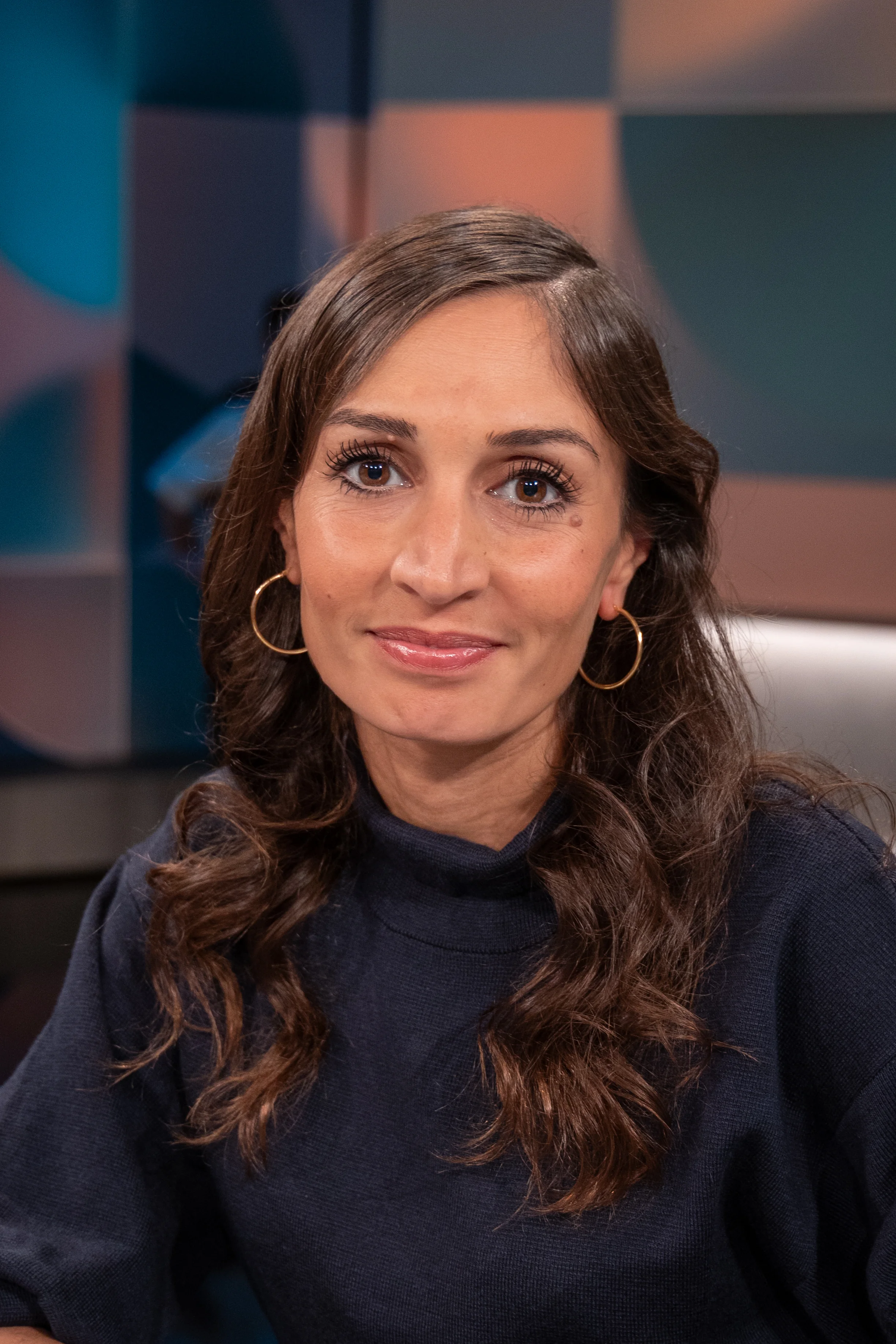
Image from Wikipedia
Image from Wikipedia
Gilda Sahebi – Sharp Analyst, Clear Voice, Influential Journalist Bridging Politics, Society, and Iran
A German-Iranian Intellectual with Analytical Force
Gilda Sahebi, born in 1984 in Tehran and raised in Germany, is one of the most pointed journalistic voices in the German-speaking world. As a doctor, political scientist, author, and podcaster, she combines medical, social, and political perspectives into a remarkably clear form of public analysis. Her work focuses on authoritarian systems, racism, social polarization, and German domestic and foreign policy. In doing so, she has established herself as a prominent commentator who contextualizes complex developments in an understandable, precise, and clear manner without rhetorical smoke screens. ([de.wikipedia.org](https://de.wikipedia.org/wiki/Gilda_Sahebi?utm_source=openai))
Biographical Roots: Between Tehran and Berlin
Sahebi's biography is closely tied to the Iranian-German experience of migration, belonging, and political observation. Sources describe her as being born in Iran, growing up in Germany, and currently living in Berlin. This dual anchoring also influences her journalistic work: she observes political power dynamics not from the distance of mere commentary but from a perspective that takes cultural and historical fractures into account. This is a central part of her authority as a journalist and author. ([taz.de](https://taz.de/programm/2023/tazlab2023/de/speakers/1988.html?utm_source=openai))
Education, Expertise, and Journalistic Style
Gilda Sahebi is a trained doctor and studied political science. This rare combination of scientific, social theoretical, and journalistic training imparts a particular rigor to her arguments and a clear orientation towards verifiable connections in her writings. She writes as a freelance journalist for outlets including taz, Der Spiegel, and ARD, covering topics such as antisemitism, racism, women's rights, the Middle East, medicine, and science. Her profile combines expertise with a clear stance against oversimplification and reductionism. ([taz.de](https://taz.de/programm/2023/tazlab2023/de/speakers/1988.html?utm_source=openai))
Career: From Contextualizing Political Conflicts to Public Debate
Sahebi is now more than just an author of individual articles. Her career reflects a development towards a publicly visible interpretative authority present in media, books, forums, and podcasts alike. At taz events and in talk formats, she is presented as a journalist, moderator, and analytical interlocutor who comments on political conflicts with great precision. She has established herself as a recognizable voice, especially in debates about Iran, racism, and polarization. ([taz.de](https://taz.de/programm/2026/tazlab2026/de/events/1775.html?utm_source=openai))
Public Presence in Leading Media
Her journalistic reach extends from taz to Der Spiegel to ARD contributions. At taz, she is not only recognized as an author but also as a discussion partner in events and analyses regarding racism, feminist movements, and the Middle East. This indicates a journalistic profile that is continuously rooted in discourse. Sahebi’s texts and appearances show a clear line: reading social conflicts not as headline events, but as structural processes. ([taz.de](https://taz.de/Gilda-Sahebi/%21a55413/?utm_source=openai))
“Our Sword is Love” and Reporting on Iran
With her book Our Sword is Love, Sahebi brought the feminist revolt in Iran to the forefront of a broad German audience. taz described the work as an analysis of the protests following the death of Jina Mahsa Amini, highlighting that Sahebi contextualizes the role of music, the feminist perspective, and the long history of oppression. The book marks an important point in her development: from analytical commentator to author who translates political present into historical and cultural contexts. ([taz.de](https://taz.de/Die-feministische-Revolte-im-Iran/%21vn5914667/?utm_source=openai))
Current Projects: Book, Podcast, and Public Debate
Among Sahebi’s current projects is the weekly political podcast Gilda con Arne, which she co-hosts with Arne Semsrott. The format is described by taz as critical, sharp, and independent, demonstrating how naturally Sahebi now also works in the audio realm. Furthermore, she has been invited to events, interviews, and debates in 2024 and 2025 as a voice on polarization, loss of empathy, and social cohesion. Her current work is thus not limited to one publication channel but is media-spanning. ([taz.de](https://taz.de/programm/2026/tazlab2026/de/events/1775.html?utm_source=openai))
“How We Teach Each Other Racism” and the Diagnosis of the Present
In 2024, her non-fiction book How We Teach Each Other Racism was published, presented by taz as an analysis of German thought and racist structures. Sahebi elucidates the historical lines stretching back to the German Empire and connects these with current debates about citizenship, migration, and Middle Eastern policy. The reception shows that she does not merely comment but formulates a structural diagnosis that is recognized in public discourse. The book strengthens her position as an author with a clear socio-political profile. ([taz.de](https://taz.de/taz-Talk-meets-Buchmesse-Leipzig-2024/%21vn5992335/?utm_source=openai))
Discography? None – But a Strong Development of Published Works
In the classical music journalism sense, Gilda Sahebi has no discography, no hit singles, and no chart successes. Her work consists of articles, essays, conversations, books, and podcast episodes. This very difference makes her interesting: her “publications” do not follow the logic of the pop market but rather that of the political public. Those searching for a discography find in Sahebi instead a consistent development of her body of work, condensed into themes, language, and media reach. ([taz.de](https://taz.de/Gilda-Sahebi/%21a55413/?utm_source=openai))
Themes, Stance, and Critical Reception
Her emphases are clearly outlined: antisemitism, racism, women’s rights, authoritarian systems, Middle Eastern policy, medicine, and science. The Goethe-Institut describes her as an important public voice for human rights and political freedom; other media emphasize that she precisely describes social division and loss of empathy. She is critically received especially where she challenges established interpretations and understands polarization not as a fringe phenomenon but as a core problem of modern public life. ([goethe.de](https://www.goethe.de/ins/se/de/ver.cfm?event_id=27239446&utm_source=openai))
Style and Impact: Analytical, Sharp, Understandable
Sahebi’s journalistic style thrives on clarity, condensation, and controlled linguistic sharpness. She focuses on analysis over pathos, structure over buzzwords, and contextualization over mere escalation. This makes her contributions accessible to a broad audience while also being intellectually substantial. Her public impact arises from this rare combination of intellectual discipline and political appeal. ([taz.de](https://taz.de/taz-Talk-meets-Buchmesse-Leipzig-2024/%21vn5992335/?utm_source=openai))
Cultural Influence and Resonance
Her influence is evident in her repeated presence on panels, talk formats, and cultural policy debates. Sahebi represents a form of journalism that does not separate migration experience, medical knowledge, and political analysis but rather productively connects them. This helps sharpen the German discourse on racism, Iran, and polarization both linguistically and thematically. Her work is particularly impactful where differentiation is more important than loudness. ([goethe.de](https://www.goethe.de/ins/se/de/ver.cfm?event_id=27239446&utm_source=openai))
Conclusion: One of the Most Important Analytical Voices of Her Generation
Gilda Sahebi combines biographical experience, academic competence, and journalistic precision into an impressive public figure. She is compelling because she does not smooth out complex political issues but rather makes them visible in their full historical and societal depth. Those wishing to understand how power, racism, polarization, and freedom movements are interconnected will find in her a reliable, intelligent, and uncompromising voice. Her texts, books, and conversations merit intense reading – and her public appearances absolutely deserve attention. ([taz.de](https://taz.de/programm/2023/tazlab2023/de/speakers/1988.html?utm_source=openai))
Official Channels of Gilda Sahebi:
- Instagram: https://www.instagram.com/gilda_sahebi/
- Facebook: No official profile found
- YouTube: No official profile found
- Spotify: No official profile found
- TikTok: No official profile found
Sources:
Upcoming Events
10. Peace Summer School Augsburg 2026 - Making Peace Together