
Gerard Bunk
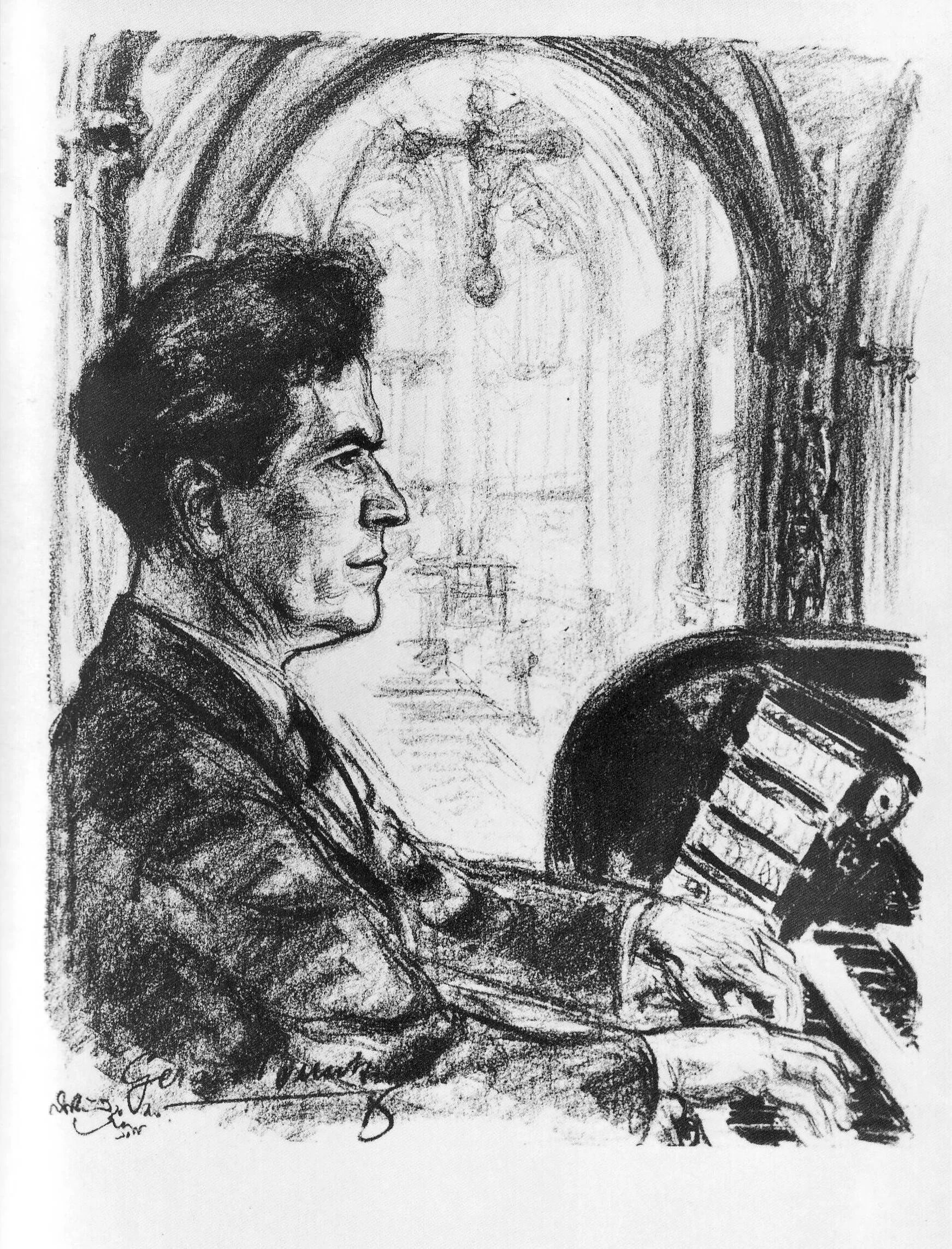
Image from Wikipedia
Image from Wikipedia
Gerard Bunk – the sonorous organist between late Romanticism, reform ideals, and musical authority
An exceptional musician of European organ culture
Gerard Bunk (* March 4, 1888 in Rotterdam; † September 13, 1958 in Kamen) ranks among the most notable organists, pianists, harpsichordists, choir directors, and composers of the 20th century. His music career connects Dutch education, German concert practice, and an artistic development that made him a formative figure in organ culture. Particularly in Dortmund, he shaped a repertoire and sound ideal over decades that is still regarded as a reference for late Romantic organ art. ([de.wikipedia.org](https://de.wikipedia.org/wiki/Gerard_Bunk))
Early education and pianistic influence
Bunk's path began at the Rotterdam Conservatory of the Maatschappij tot Bevordering der Toonkunst, where he studied from 1901 and focused on the piano. Influential were his training under Anton Verheij as well as stays in Hull and London, before moving to Bielefeld in 1906 to work with Hans Hermann. In 1907, he became a piano teacher at the conservatory in Bielefeld, while he mainly learned the organ autodidactically. This combination of a pianistic foundation and self-driven initiative as an organist became a core part of his artistic signature. ([de.wikipedia.org](https://de.wikipedia.org/wiki/Gerard_Bunk))
It became apparent early on that Bunk was not only an instrumentalist but also a musical creator with a pronounced stage presence. He gave his first organ concert on June 20, 1907, at the Bielefeld synagogue; in the following years, he performed there and at the Neustadt Mary Church in cyclical concert series. Pianism remained a lasting resonance chamber for his work: both contemporary and later voices emphasized that his technique, articulation, and finger dexterity essentially grew out of piano playing. ([de.wikipedia.org](https://de.wikipedia.org/wiki/Gerard_Bunk))
The breakthrough in Dortmund
The critical career step came on May 5, 1910, when Bunk stepped in for Karl Straube at the first concert of the Dortmund Max-Reger Festival and alternated with Max Reger at the new Walcker organ of St. Reinoldi. Reger subsequently recommended him to the Dortmund Hüttner Conservatory, where Bunk taught piano and later also organ. For the young musician, the sonic splendor of St. Reinoldi became a life goal; here he shaped his vision of the organ as a total work of art comprising architecture, registration, and interpretative discipline. ([de.wikipedia.org](https://de.wikipedia.org/wiki/Gerard_Bunk))
From 1912, Bunk initially served as an organist at the Old Catholic Crimea Chapel, and from 1920 at St. Petri in Dortmund. By 1925, he reached the pinnacle of his career when he became the organist at St. Reinoldi and concurrently the conductor of the Bach Association. The Walcker organ there was considered a reference instrument of the Alsatian organ reform; on it, Bunk realized an expansive concert practice that was closely followed by both experts and the press. ([de.wikipedia.org](https://de.wikipedia.org/wiki/Gerard_Bunk))
Organ celebrations, radio, and public impact
From 1929, Bunk held the famous bi-weekly organ celebrations in Dortmund, where he performed a large part of the then-known organ literature. This earned him a reputation as one of the leading organ artists of his time; the press referred to him as “the living history of the organ.” His authority was based not only on virtuosity but also on a rare blend of repertoire knowledge, sound thinking, and historical depth. ([de.wikipedia.org](https://de.wikipedia.org/wiki/Gerard_Bunk))
Bunk was also present on the radio: From the beginnings of radio, he was heard in broadcasts from the Reichsender Köln, the Reichsender Berlin, and Radio Hilversum, often from the Reinoldikirche. Additionally, he participated in chamber music formations such as the Dortmund Trio and accompanied numerous soloists, including well-known singers, violinists, and cellists. This breadth made him a sought-after musician who remarkably connected concert hall, church, radio, and chamber music. ([de.wikipedia.org](https://de.wikipedia.org/wiki/Gerard_Bunk))
Compositional profile: Late Romanticism with a personal signature
As a composer, Bunk found his strongest impact in his organ works. Albert Schweitzer praised the Legend op. 29 early on as a connection between Mendelssohn and César Franck, highlighting its calm, sculptural structure. Wolfgang Stockmeier later described an unmistakable personal style that utilizes the technical possibilities of late Romantic harmony without resorting to mere effects. In Bunk's work, a composer emerges who does not merely preserve tradition but continues it in a controlled manner. ([de.wikipedia.org](https://de.wikipedia.org/wiki/Gerard_Bunk))
Some of his important organ compositions include the Introduction, Variations, and Fugue on an Old Dutch Folk Song op. 31, the Sonata in F minor op. 32, the Passacaglia in A minor op. 40, the Marche festivale op. 43, the Pièce héroïque op. 49, the Eight Character Pieces op. 54, the Fantasy in C minor op. 57, as well as the Music for Organ op. 81. Additionally, there are choral works like The 1st Psalm op. 47, Christmas Legend op. 72, and the motets Blessed are the Poor and Should I not sing to my God. The repertoire showcases an artist skillfully navigating between liturgical function, concert ambition, and compositional substance. ([de.wikipedia.org](https://de.wikipedia.org/wiki/Gerard_Bunk))
Style, sound language, and musical development
Bunk's musical development is closely linked to the sound ideal of the German and Dutch organ reform. His work at St. Reinoldi coincided with an organ whose disposition, five manuals, and sonic variety were considered pioneering. Bunk did not use this instrument merely as a medium but as an artistic partner, illuminating its register colors, stratifications, and dynamic ranges dramaturgically during his organ celebrations. ([de.wikipedia.org](https://de.wikipedia.org/wiki/Gerard_Bunk))
His relationship with modernity is particularly revealing. After the premiere of the Symphony in C minor op. 75 in 1925, he initially limited his compositional output, possibly also in light of the stylistic shift towards new music. Instead of radicalizing aesthetically, he sharpened the expressiveness of his late Romantic language and responded during World War II with the oratorio Great is God's Glory, which articulates his faith in monumental sound language. This very attitude makes Bunk culturally and historically interesting: he embodies a compositional thought that intertwines tradition, contemporary history, and personal conviction. ([de.wikipedia.org](https://de.wikipedia.org/wiki/Gerard_Bunk))
War years, reconstruction, and late recognition
The destruction of St. Reinoldi on May 23, 1943, temporarily ended the organ celebrations. After the war, Bunk conducted the Bach Association on concert tours through Rhineland and Westphalia and continued his work at the Dortmund Nicolaikirche. In 1952, he obtained a newly constructed organ for the Gold Hall of the Dortmund Westfalenhalle, and in 1954, he resumed the organ celebrations on a small interim organ in the partially rebuilt Reinoldikirche. These later years showcase a musician who, even after loss and upheaval, created cultural continuity. ([de.wikipedia.org](https://de.wikipedia.org/wiki/Gerard_Bunk))
In 1958, he received the bronze Reinoldus plaque from the city of Dortmund; that same year, he passed away in Kamen. His significance being increasingly recognized today is not only due to archival work but also to the enduring quality of his organ works and the historical role he played in concert life and church music. Schott Music describes him as one of the great organ artists of the first half of the 20th century, and this status continues to shape his reception history to this day. ([schott-music.com](https://www.schott-music.com/en/person/gerard-bunk))
Discography, editions, and contemporary reception
In a narrower sense, Gerard Bunk does not have a pop or chart discography, but rather a catalog of works and a history of editions that remains particularly relevant for organists and church musicians. Several main works are available in modern editions from Bärenreiter, Butz, Möseler, and other publishers; Schott lists selected works and emphasizes his position in the organ music repertoire. Thus, Bunk's name lives on less through hit singles than through interpretative practice, sheet music editions, and the ongoing rediscovery by organists. ([de.wikipedia.org](https://de.wikipedia.org/wiki/Gerard_Bunk))
No current projects or new releases for 2024 or 2025 could be verified for an artist who passed away in 1958 according to the checked sources. Instead, the focus remains on archive maintenance, new editions, and scholarly reception. This is precisely where the sustainable strength of his oeuvre lies: it remains productive as it is probed anew in concert halls, in worship, and in musicological research. ([de.wikipedia.org](https://de.wikipedia.org/wiki/Gerard_Bunk))
Cultural influence and historical significance in music
Gerard Bunk represents a rare combination of instrumental sovereignty, stylistic discipline, and public impact. His significance extends beyond Dortmund, as he took the organ seriously as a concert instrument, liturgical instrument, and medium of aesthetic reflection. His work reflects the tense decades between the Empire, Weimar Republic, Nazi era, war, and reconstruction. ([de.wikipedia.org](https://de.wikipedia.org/wiki/Gerard_Bunk))
For enthusiasts of romantic and neo-romantic organ music, Bunk offers a fascinating access point to the music history of the 20th century. His works combine formal clarity, harmonic tension, and sonic richness without tipping into mere nostalgia. Those who experience his music live do not just hear a composer, but a whole chapter of European organ culture in concentrated form. ([schott-music.com](https://www.schott-music.com/en/person/gerard-bunk))
Conclusion: An organist of rare brilliance
Gerard Bunk fascinates because his biography consolidates virtuosity, didactic authority, compositional independence, and cultural-historical depth. He was not just a name in interpretation but a creator of sound spaces, repertoire, and musical memory. Those who listen to his organ works or trace his historical role discover an artist with extraordinary stage presence and lasting brilliance. His music deserves immediate engagement – best experienced where its architecture is most impactful: live at the organ. ([de.wikipedia.org](https://de.wikipedia.org/wiki/Gerard_Bunk))
Official channels of Gerard Bunk:
- Instagram: no official profile found
- Facebook: no official profile found
- YouTube: no official profile found
- Spotify: no official profile found
- TikTok: no official profile found