
André Rieu
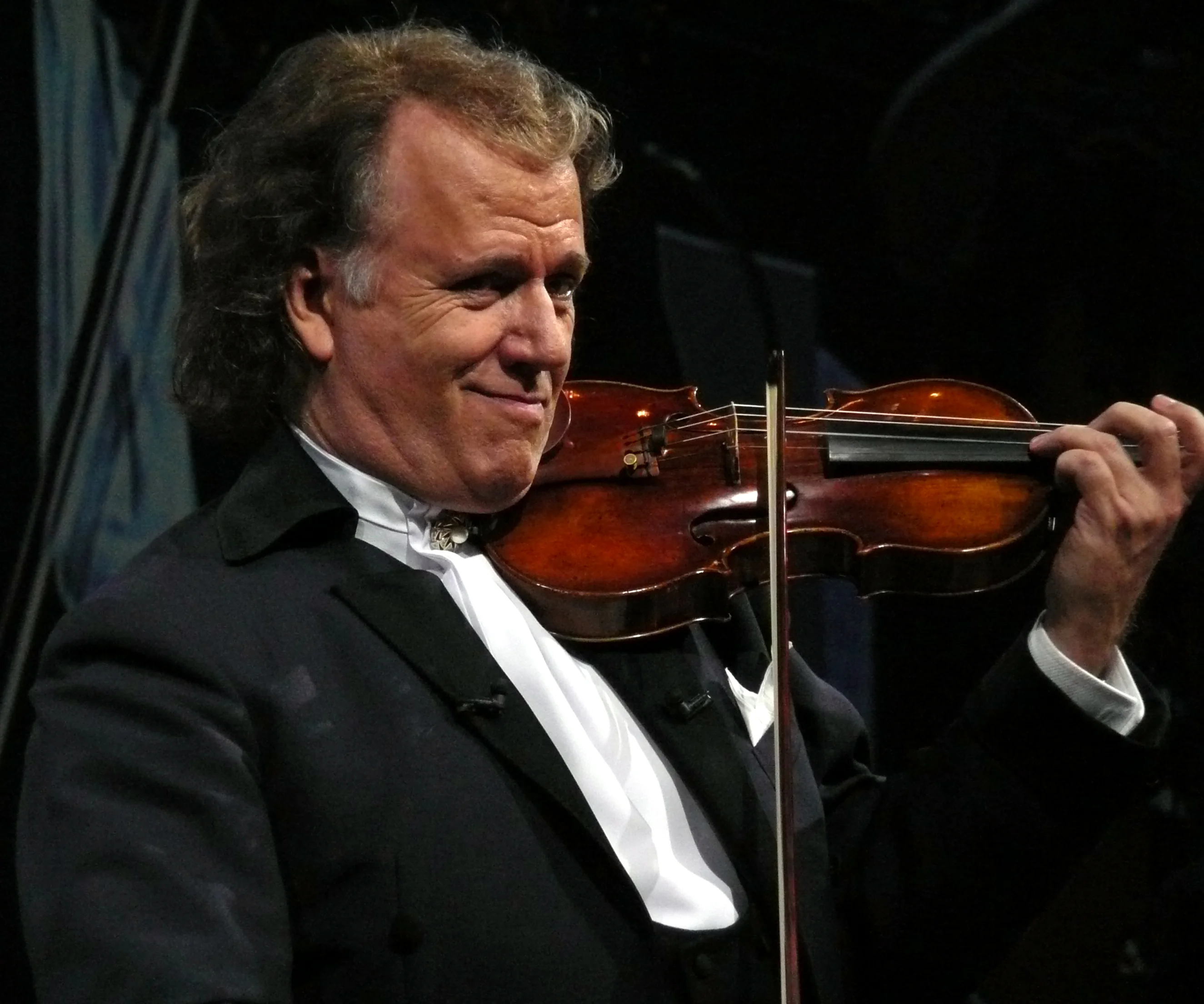
Image from Wikipedia
Image from Wikipedia
André Rieu: The Violinist Who Catapulted the Waltz into the 21st Century
A Sound Event Between Classical Music, Show, and Global Pop Culture
André Léon Marie Nicolas Rieu, born on October 1, 1949, in Maastricht, is one of the few classical musicians who have transformed a niche into a global mass phenomenon. As a violinist, orchestra conductor, arranger, and music producer, he has built a music career that combines virtuosity with audience-friendly presentation. His artistic development demonstrates how consistently he merges classical traditions with emotional immediacy, accessible arrangements, and a remarkably strong stage presence. ([de.wikipedia.org](https://de.wikipedia.org/wiki/Andr%C3%A9_Rieu?utm_source=openai))
From Maastricht to the World: The Early Years and Musical Shaping
Rieu's journey begins in a musical environment that prioritized discipline and passion early on. He received his first violin lessons in 1954; schooling, studies, and systematic instruction shaped his approach to music over the years. In 1977, he graduated with honors from the Conservatory in Brussels, an important testament to the craft foundation of his later career. ([andrerieu.com](https://www.andrerieu.com/de/uber-andre/meine-biografie))
The biographical line is clear: it was not quick fame, but years of hard work that shaped the artist. Even before André Rieu became internationally visible as a solo brand, he gained experience as a violinist in the Limburg Symphony Orchestra and with the Maastricht Salon Orchestra, which he founded in 1978. This phase provided him with the orchestral thinking that later defined his productions: richness of sound, accessibility, and a wide repertoire spanning waltzes, opera, operetta, and popular melodies. ([press.andrerieu.com](https://press.andrerieu.com/biography/))
The Breakthrough: The Second Waltz as the Start of a Global Success Story
The real breakthrough came in 1994 with the recording of Shostakovich's "Second Waltz," which Rieu himself describes as a turning point in his career. With this piece, he initially succeeded in the Netherlands, and later in Europe, North and South America, Australia, South Africa, and Asia, reaching an audience that perceived classical music not as a distant realm but as a shared experience. The success of this recording marked the moment when the violinist from Maastricht became an international cultural actor. ([andrerieu.com](https://www.andrerieu.com/de/uber-andre/meine-biografie))
Importantly, it is not just the repertoire but the dramaturgy behind it. Rieu understood early on that a waltz, when arranged correctly, with emotional melodic guidance and audience-effective presentation, can wield the same attraction as a pop event. This is precisely where his uniqueness lies: he translates classical forms into a language that resonates with large halls, open-air stages, and television audiences alike. ([press.andrerieu.com](https://press.andrerieu.com/about-andre-rieu/))
Johann Strauss Orchestra: An Orchestra as a Trademark
In 1987, Rieu founded the Johann Strauss Orchestra, which has become his artistic center to this day. Starting with just twelve musicians, the orchestra has grown significantly over the years; today, up to 50 musicians perform with him on major stages. The first public performance followed in 1988, and from this formation developed one of the most successful live brands in the realm of classical music. ([press.andrerieu.com](https://press.andrerieu.com/biography/))
This orchestra is more than just a backing ensemble. It is part of André Rieu's artistic identity, as it embodies his arrangements, his understanding of the show, and his closeness to the audience. In the concerts, composition, interpretation, and staging merge into a format that makes classical music feel alive and emotionally present rather than museum-like. ([andrerieu.com](https://www.andrerieu.com/en?utm_source=openai))
Discography: Albums, Live Moments, and International Chart Presence
André Rieu's discography is extensive and remarkably productive: 38 studio albums, 4 live albums, 14 compilations, 6 Christmas albums, 4 singles, 47 video albums, and 5 box sets are documented. According to official and biographical sources, he has sold over 40 million recordings; his most successful album is "Strauß & Co." with over three million units sold. These figures highlight that his career is not based on single hits, but on a long-term, internationally viable release strategy. ([de.wikipedia.org](https://de.wikipedia.org/wiki/Andr%C3%A9_Rieu/Diskografie))
Among the defining releases are "From Holland with Love" along with later programs that have further expanded the Rieu model: romantic collections, Christmas productions, and live-documented concert evenings from spectacular venues. The discography shows a clear profile: Rieu works with recognizability, melodic connection, and carefully curated concert concepts that navigate between entertainment, classical music, and festival culture. ([press.andrerieu.com](https://press.andrerieu.com/biography/))
Current Projects: New Releases and Tour Formats
Even in 2024 and 2025, André Rieu remains highly visible. His album "The Sound of Heaven" was released on December 6, 2024, combining classical masterpieces, romantic melodies, and evergreen hits; according to the official description, it includes music from "The Phantom of the Opera," "The Sound of Music," and "West Side Story," as well as film scores from "Star Wars" and "Titanic." This release perfectly aligns with his profile as an arranger who reframes popular repertoire with orchestral elegance. ([andrerieu.com](https://andrerieu.com/en/about-andre/discography/the-sound-of-heaven?utm_source=openai))
For 2025, his official platform also points to "Thank You, Johann Strauss!," a commemorative publication on the occasion of Johann Strauss's 200th birthday. In parallel, extensive tour plans are in preparation for 2026 and 2027, including concerts in Europe, Maastricht, Amsterdam, Antwerp, and other cities. The current relevance of his work is also reflected in how he organizes live experiences, album releases, and cinema or DVD formats within a cohesive ecosystem. ([linktr.ee](https://linktr.ee/andrerieu))
Style and Impact: Why André Rieu is More Than a Waltz Star
André Rieu has made classical music more accessible without devaluing it. His style thrives on clear arrangements, a warm sound language, and the conscious opening of the repertoire to film themes, musical numbers, traditional melodies, and popular classics. His concerts function like grand emotional narratives, where the waltz becomes a universal gesture, and the orchestra serves as the engine of collective enthusiasm. ([press.andrerieu.com](https://press.andrerieu.com/about-andre-rieu/))
Historically, Rieu can be seen as a mediator between salon music, concert halls, and event culture. He modernized the image of the classical orchestra by placing humor, audience closeness, and spectacular concert venues at the forefront. This very blend has granted him a special status: in Billboard contexts, he is regarded as a highly successful classical live act, and his sales figures as well as awards impressively document this exceptional position. ([press.andrerieu.com](https://press.andrerieu.com/about-andre-rieu/))
Awards, Records, and Cultural Influence
The list of his accolades is long: over 500 platinum and 270 gold awards, several World Music Awards, Dutch Export Awards, Golden Tuning Forks, Classic BRIT Awards, an ECHO, and many others trace the path of an artist who connects economic reach with cultural visibility. In the UK, he achieved a historic success with the highest-charting classical album of the century according to official sources. In Australia, he was listed for years as the best-selling music artist in the classical sector. ([andrerieu.com](https://www.andrerieu.com/de/uber-andre/awards))
His cultural influence extends beyond mere sales figures. Rieu transformed classical music into a social, emotional communal experience, thereby opening the genre to an audience that rarely seeks engagement with symphonic or waltz traditions. This is precisely where his authority lies: he represents a form of classical music that does not distance itself but embraces closeness, ritual, and joy in the direct musical moment. ([press.andrerieu.com](https://press.andrerieu.com/about-andre-rieu/))
Conclusion: A World Artist with a Distinctive Signature
André Rieu remains fascinating because he has rewritten the rules of the classical stage without denying his roots. His career combines virtuosity, entrepreneurial spirit, staging, and a deep understanding of the emotional potential of melody and orchestral sound. Those who want to see how classical music functions today as a grand, vibrant show should experience André Rieu live. ([press.andrerieu.com](https://press.andrerieu.com/about-andre-rieu/))
Official Channels of André Rieu:
- Instagram: https://www.instagram.com/andrerieu/
- Facebook: https://www.facebook.com/andrerieu/
- YouTube: https://www.youtube.com/user/AndreRieuTV
- Spotify: https://open.spotify.com/
- TikTok: https://www.tiktok.com/@andrerieu
- Threads: https://www.threads.net/@andrerieu
Sources:
- André Rieu Official - My Biography
- André Rieu Press Room - About André Rieu
- André Rieu Press Room - Biography
- André Rieu Official - Awards
- André Rieu Official - The Sound of Heaven
- André Rieu Official Fanshop - The Sound of Heaven 2024 CD with bonus DVD
- Linktree - andrerieu Official
- Facebook - André Rieu
- YouTube - André Rieu Official Channel
- Wikipedia: Image and text source
Upcoming Events
André Rieu's 2026 Summer Concert: Viva Maastricht!
André Rieu – Concert in Cologne