
Judengasse 3, Binswangen
Judengasse 3, 86637 Binswangen, Germany
Synagogue Binswangen | Tours & Events
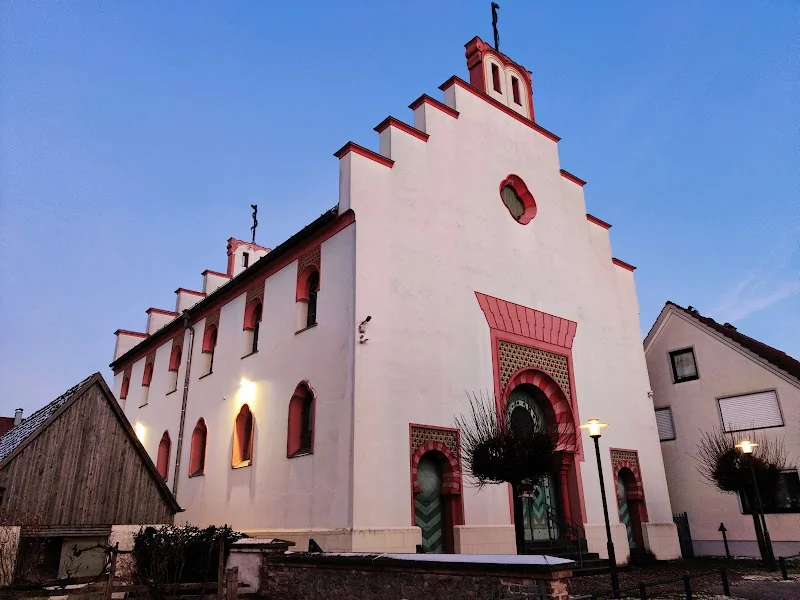
The Old Synagogue Binswangen at Judengasse 3 is much more than a historical building. It is a place where the Jewish history of the village remains visible, where memory is preserved, and where culture takes place again today as a matter of course. Those looking for a synagogue in Binswangen will find here not an anonymous sight, but a house with a clear identity: a former house of worship that has been extensively restored after the severe disruptions of the 20th century and now serves as a meeting place, place of learning, and event space. The special charm lies in this connection of architectural history, village memory, and vibrant use. Visitors can tour the house free of charge by prior arrangement, book guided tours, and, if desired, also include the Jewish cemetery on the outskirts of Buttenwiesen. This makes the synagogue a compact but very dense access point to Jewish rural life in Bavarian Swabia. Regional sources also emphasize the extraordinary architectural significance: The building is among the earliest historicist synagogues with neo-Moorish elements in Germany and continues to shape the townscape of Binswangen to this day. ([synagoge-binswangen.de](https://www.synagoge-binswangen.de/alte-synagoge/fuehrungen/))
Visits by Appointment and Guided Tours
For many visitors, the question of visiting is the most important one, and here the Old Synagogue Binswangen offers a very clear solution. The Friends of the Synagogue Binswangen announce that the house can be visited by prior arrangement; admission is free. The contact point is the office of the Friends at the Dillingen District Office, and fixed office hours are provided on Monday, Tuesday, Thursday, and Friday between 8 AM and 12 PM. This is particularly helpful for practical planning, as one is not dependent on a classic daily museum opening but can coordinate the visit specifically. Those who choose a guided tour will receive additional expert accompaniment. According to the official website, the office arranges tours by competent individuals if needed, and upon request, the film “Preserving the Shul…” can also be shown, which explains the history of the Jews in Binswangen and Swabia as well as the development of the synagogue. This is what makes the visit so valuable: one not only sees rooms but also understands the historical depth of the place. For groups, school classes, or associations, it is also interesting that the visit can be combined with a tour of the Jewish cemetery on the outskirts of Buttenwiesen. This connection creates a larger historical context and makes the synagogue an ideal starting point for a thematic tour. Since the official website recommends clear prior arrangements, early scheduling is advisable, especially if multiple people are coming or if there is a desire for a thematic guided tour. ([synagoge-binswangen.de](https://www.synagoge-binswangen.de/alte-synagoge/fuehrungen/))
Concerts, Readings, and Exhibitions at the Old Synagogue
The Old Synagogue Binswangen is today not only a place of remembrance but also an active cultural center. The Friends explicitly describe the use as diverse: concerts, readings, exhibitions, ceremonial events, and school activities including lessons take place here. The building can even be rented for private events for a fee, which underscores its role as a lively place in the village and region. This dual function is particularly remarkable: the synagogue remains visible as a monument but is not museum-like and frozen, rather it continues to be used in a responsible framework. In recent event announcements, the range is particularly evident. For instance, a cappella pop and jazz with JABEC, klezmer and remembrance concepts with the ensemble Feygele, as well as a jubilee concert with Duo Burstein & Legnani have been part of the program. The Binswangen community also publishes event notices for the Old Synagogue, confirming that the place remains integrated into current cultural life. Thematically, this use fits very well with the history of the house: music, readings, and exhibitions are formats that allow for concentration and closeness, while respectfully making the memory of Jewish life visible. Therefore, those looking for a synagogue in Binswangen with real cultural added value will find here not just a pure memorial site, but a place where the present and the past come together. This is equally attractive for visitors, schools, associations, and culture enthusiasts and explains why the Old Synagogue is known far beyond the community. ([synagoge-binswangen.de](https://www.synagoge-binswangen.de/alte-synagoge/fuehrungen/))
The History of the Jewish Community in Binswangen
The history of the synagogue cannot be understood without the Jewish community of Binswangen. The official page of the Friends mentions the first evidence of Jews in Binswangen for the years 1525, 1531, and 1536. Later, a Jewish cemetery was established in 1663, and at the beginning of the 19th century, the community experienced a phase of significant growth and self-organization. For 1808, the sources indicate 69 Jewish households with 291 individuals who lived in Binswangen primarily from trade and local economic relations. The old synagogue, first mentioned in 1609, had ultimately become too small, which is why the community decided in 1833 to build a new “school” on the site of the old synagogue. The inauguration of the new house of worship took place in 1837. This date is significant not only for Binswangen but also for Jewish architectural history in Southern Germany, as the building was later recognized as an important historicist and neo-Moorish structure. The dark turning point came on the night of the pogrom from November 9 to 10, 1938, when the interior was looted and destroyed. The fact that the building itself did not catch fire was attributed by the Friends to the close construction and the resulting fire hazard. In the following years, the house was used for various purposes, including as a storage and depot space, before it came into the possession of the Dillingen District in 1987. After extensive renovation, it was reopened in 1996 as the Old Synagogue Binswangen. This sequence of flourishing, persecution, loss, and recovery continues to shape the place today and makes it an important space of remembrance for Jewish life in Swabia. ([synagoge-binswangen.de](https://www.synagoge-binswangen.de/juedisches-leben/in-binswangen/))
Architecture in Neo-Moorish Style and Monument Value
Architecturally, the Synagogue Binswangen is among the most remarkable synagogue buildings in Bavaria. The house was built in 1836/37 and is considered one of the earliest historicist synagogues with neo-Moorish stylistic elements in regional and professional sources. The House of Bavarian History describes that the master mason Michael Christa from Zusamaltheim created the building plan and that government building inspector Eduard Rüber revised the design, presumably at the request of the Royal Building Commission. The Munich synagogue, designed in the classical style by Jean Baptiste Métivier, served as a model. From this combination of local craftsmanship and supra-regional models emerged a structure that appeared very unusual in its surroundings at the time and is precisely why it stands out to this day. Regional tourism and monument protection sources emphasize that the former synagogue is now considered the oldest neo-Moorish synagogue in Germany. This classification explains why the building is important not only for Jewish history but also for architectural history and monument preservation. The monument value lies not only in the external form but also in the readability of history: the building stands on the site of an older synagogue, was desecrated after the pogrom night, later used as a storage room and magazine, and was only regained as a place of dignified remembrance after restoration. It is precisely in this layering of construction phases that the quality of the place becomes evident. Therefore, those standing before the synagogue today see not only a beautiful historical building but also a rare example of how architecture, religious history, and regional memory are interconnected. ([hdbg.eu](https://hdbg.eu/juedisches_leben/synagoge/binswangen/109))
Jewish Cemetery and Places of Remembrance in the Area
The Old Synagogue is not the only place in Binswangen where Jewish history becomes visible. The Friends point out that a visit to the Jewish cemetery on the outskirts of Buttenwiesen can also be booked upon request. This broadens the view of Jewish rural Judaism, as the house of worship, cemetery, and former residence together create a multifaceted historical picture. The network of Historical Synagogue Sites in Bavarian Swabia also lists Binswangen as a former network site, thereby emphasizing the significance of the location for regional memory culture. The website of Dillinger Land additionally highlights that the history and townscape of Binswangen have been strongly shaped by Judaism and that the Schillinghaus, as the former business and residential house of the Baldauf family, is also among the visible traces. Thus, in Binswangen, there is no isolated individual site but an ensemble of memory, architectural culture, and local history. Those interested in Jewish history can particularly well understand how Jewish life has shaped the daily life, trade, and self-understanding of a village over centuries. At the same time, the place shows how important contemporary mediation is: Without explained tours, supplementary guided tours, and reliable information, many of these traces would be overlooked. This is precisely why the combination of synagogue, cemetery, Schillinghaus, and regional historical mediation is so strong. It makes the Old Synagogue Binswangen a suitable destination for school projects, historical walks, and culture-interested visitors who wish to understand not just a building but an entire network of remembrance. ([synagoge-binswangen.de](https://www.synagoge-binswangen.de/alte-synagoge/fuehrungen/))
Directions, Address, and Practical Tips for Visiting
For directions, the official address is particularly clear: Judengasse 3, 86637 Binswangen. This address is provided by both the Friends and the House of Bavarian History, giving visitors reliable orientation. It is also practically important that the Old Synagogue is not organized as a freely accessible permanent museum but can be visited by prior arrangement. This automatically results in the best process for visitors: First, coordinate an appointment with the office, then plan the guided tour or individual visit, and if necessary, also include the film or the cemetery tour. For inquiries, the office of the Friends at the Dillingen District Office is responsible, reachable by phone at 09071 51-145; as an email contact, Lydia.Edin@landratsamt.dillingen.de is provided, available during office hours Monday, Tuesday, Thursday, and Friday from 8 AM to 12 PM. This information is particularly useful if a group is traveling, a school appointment is desired, or one wants to attend a cultural event. The location in the town is very well suited for a historical tour, as further traces of Jewish history have been preserved in Binswangen, and the entire environment has the character of a developed place of remembrance. Those preparing for the visit should therefore not only plan for the synagogue itself but also allow enough time for the context: read history, book a tour, include the cemetery and other places of remembrance, and perhaps end with attending an event. This is how the Old Synagogue Binswangen unfolds its full effect as a place where information, atmosphere, and memory meaningfully connect. ([synagoge-binswangen.de](https://www.synagoge-binswangen.de/alte-synagoge/fuehrungen/))
Sources:
- Friends of the Synagogue Binswangen e.V. - Tours
- Friends of the Synagogue Binswangen e.V. - Jewish Life in Binswangen
- Dillingen District Office - Synagogue Binswangen
- House of Bavarian History - Binswangen (Synagogue)
- Network of Historical Synagogue Sites in Bavarian Swabia - Binswangen
- Dillinger Land - Binswangen
Show moreShow less
Synagogue Binswangen | Tours & Events
The Old Synagogue Binswangen at Judengasse 3 is much more than a historical building. It is a place where the Jewish history of the village remains visible, where memory is preserved, and where culture takes place again today as a matter of course. Those looking for a synagogue in Binswangen will find here not an anonymous sight, but a house with a clear identity: a former house of worship that has been extensively restored after the severe disruptions of the 20th century and now serves as a meeting place, place of learning, and event space. The special charm lies in this connection of architectural history, village memory, and vibrant use. Visitors can tour the house free of charge by prior arrangement, book guided tours, and, if desired, also include the Jewish cemetery on the outskirts of Buttenwiesen. This makes the synagogue a compact but very dense access point to Jewish rural life in Bavarian Swabia. Regional sources also emphasize the extraordinary architectural significance: The building is among the earliest historicist synagogues with neo-Moorish elements in Germany and continues to shape the townscape of Binswangen to this day. ([synagoge-binswangen.de](https://www.synagoge-binswangen.de/alte-synagoge/fuehrungen/))
Visits by Appointment and Guided Tours
For many visitors, the question of visiting is the most important one, and here the Old Synagogue Binswangen offers a very clear solution. The Friends of the Synagogue Binswangen announce that the house can be visited by prior arrangement; admission is free. The contact point is the office of the Friends at the Dillingen District Office, and fixed office hours are provided on Monday, Tuesday, Thursday, and Friday between 8 AM and 12 PM. This is particularly helpful for practical planning, as one is not dependent on a classic daily museum opening but can coordinate the visit specifically. Those who choose a guided tour will receive additional expert accompaniment. According to the official website, the office arranges tours by competent individuals if needed, and upon request, the film “Preserving the Shul…” can also be shown, which explains the history of the Jews in Binswangen and Swabia as well as the development of the synagogue. This is what makes the visit so valuable: one not only sees rooms but also understands the historical depth of the place. For groups, school classes, or associations, it is also interesting that the visit can be combined with a tour of the Jewish cemetery on the outskirts of Buttenwiesen. This connection creates a larger historical context and makes the synagogue an ideal starting point for a thematic tour. Since the official website recommends clear prior arrangements, early scheduling is advisable, especially if multiple people are coming or if there is a desire for a thematic guided tour. ([synagoge-binswangen.de](https://www.synagoge-binswangen.de/alte-synagoge/fuehrungen/))
Concerts, Readings, and Exhibitions at the Old Synagogue
The Old Synagogue Binswangen is today not only a place of remembrance but also an active cultural center. The Friends explicitly describe the use as diverse: concerts, readings, exhibitions, ceremonial events, and school activities including lessons take place here. The building can even be rented for private events for a fee, which underscores its role as a lively place in the village and region. This dual function is particularly remarkable: the synagogue remains visible as a monument but is not museum-like and frozen, rather it continues to be used in a responsible framework. In recent event announcements, the range is particularly evident. For instance, a cappella pop and jazz with JABEC, klezmer and remembrance concepts with the ensemble Feygele, as well as a jubilee concert with Duo Burstein & Legnani have been part of the program. The Binswangen community also publishes event notices for the Old Synagogue, confirming that the place remains integrated into current cultural life. Thematically, this use fits very well with the history of the house: music, readings, and exhibitions are formats that allow for concentration and closeness, while respectfully making the memory of Jewish life visible. Therefore, those looking for a synagogue in Binswangen with real cultural added value will find here not just a pure memorial site, but a place where the present and the past come together. This is equally attractive for visitors, schools, associations, and culture enthusiasts and explains why the Old Synagogue is known far beyond the community. ([synagoge-binswangen.de](https://www.synagoge-binswangen.de/alte-synagoge/fuehrungen/))
The History of the Jewish Community in Binswangen
The history of the synagogue cannot be understood without the Jewish community of Binswangen. The official page of the Friends mentions the first evidence of Jews in Binswangen for the years 1525, 1531, and 1536. Later, a Jewish cemetery was established in 1663, and at the beginning of the 19th century, the community experienced a phase of significant growth and self-organization. For 1808, the sources indicate 69 Jewish households with 291 individuals who lived in Binswangen primarily from trade and local economic relations. The old synagogue, first mentioned in 1609, had ultimately become too small, which is why the community decided in 1833 to build a new “school” on the site of the old synagogue. The inauguration of the new house of worship took place in 1837. This date is significant not only for Binswangen but also for Jewish architectural history in Southern Germany, as the building was later recognized as an important historicist and neo-Moorish structure. The dark turning point came on the night of the pogrom from November 9 to 10, 1938, when the interior was looted and destroyed. The fact that the building itself did not catch fire was attributed by the Friends to the close construction and the resulting fire hazard. In the following years, the house was used for various purposes, including as a storage and depot space, before it came into the possession of the Dillingen District in 1987. After extensive renovation, it was reopened in 1996 as the Old Synagogue Binswangen. This sequence of flourishing, persecution, loss, and recovery continues to shape the place today and makes it an important space of remembrance for Jewish life in Swabia. ([synagoge-binswangen.de](https://www.synagoge-binswangen.de/juedisches-leben/in-binswangen/))
Architecture in Neo-Moorish Style and Monument Value
Architecturally, the Synagogue Binswangen is among the most remarkable synagogue buildings in Bavaria. The house was built in 1836/37 and is considered one of the earliest historicist synagogues with neo-Moorish stylistic elements in regional and professional sources. The House of Bavarian History describes that the master mason Michael Christa from Zusamaltheim created the building plan and that government building inspector Eduard Rüber revised the design, presumably at the request of the Royal Building Commission. The Munich synagogue, designed in the classical style by Jean Baptiste Métivier, served as a model. From this combination of local craftsmanship and supra-regional models emerged a structure that appeared very unusual in its surroundings at the time and is precisely why it stands out to this day. Regional tourism and monument protection sources emphasize that the former synagogue is now considered the oldest neo-Moorish synagogue in Germany. This classification explains why the building is important not only for Jewish history but also for architectural history and monument preservation. The monument value lies not only in the external form but also in the readability of history: the building stands on the site of an older synagogue, was desecrated after the pogrom night, later used as a storage room and magazine, and was only regained as a place of dignified remembrance after restoration. It is precisely in this layering of construction phases that the quality of the place becomes evident. Therefore, those standing before the synagogue today see not only a beautiful historical building but also a rare example of how architecture, religious history, and regional memory are interconnected. ([hdbg.eu](https://hdbg.eu/juedisches_leben/synagoge/binswangen/109))
Jewish Cemetery and Places of Remembrance in the Area
The Old Synagogue is not the only place in Binswangen where Jewish history becomes visible. The Friends point out that a visit to the Jewish cemetery on the outskirts of Buttenwiesen can also be booked upon request. This broadens the view of Jewish rural Judaism, as the house of worship, cemetery, and former residence together create a multifaceted historical picture. The network of Historical Synagogue Sites in Bavarian Swabia also lists Binswangen as a former network site, thereby emphasizing the significance of the location for regional memory culture. The website of Dillinger Land additionally highlights that the history and townscape of Binswangen have been strongly shaped by Judaism and that the Schillinghaus, as the former business and residential house of the Baldauf family, is also among the visible traces. Thus, in Binswangen, there is no isolated individual site but an ensemble of memory, architectural culture, and local history. Those interested in Jewish history can particularly well understand how Jewish life has shaped the daily life, trade, and self-understanding of a village over centuries. At the same time, the place shows how important contemporary mediation is: Without explained tours, supplementary guided tours, and reliable information, many of these traces would be overlooked. This is precisely why the combination of synagogue, cemetery, Schillinghaus, and regional historical mediation is so strong. It makes the Old Synagogue Binswangen a suitable destination for school projects, historical walks, and culture-interested visitors who wish to understand not just a building but an entire network of remembrance. ([synagoge-binswangen.de](https://www.synagoge-binswangen.de/alte-synagoge/fuehrungen/))
Directions, Address, and Practical Tips for Visiting
For directions, the official address is particularly clear: Judengasse 3, 86637 Binswangen. This address is provided by both the Friends and the House of Bavarian History, giving visitors reliable orientation. It is also practically important that the Old Synagogue is not organized as a freely accessible permanent museum but can be visited by prior arrangement. This automatically results in the best process for visitors: First, coordinate an appointment with the office, then plan the guided tour or individual visit, and if necessary, also include the film or the cemetery tour. For inquiries, the office of the Friends at the Dillingen District Office is responsible, reachable by phone at 09071 51-145; as an email contact, Lydia.Edin@landratsamt.dillingen.de is provided, available during office hours Monday, Tuesday, Thursday, and Friday from 8 AM to 12 PM. This information is particularly useful if a group is traveling, a school appointment is desired, or one wants to attend a cultural event. The location in the town is very well suited for a historical tour, as further traces of Jewish history have been preserved in Binswangen, and the entire environment has the character of a developed place of remembrance. Those preparing for the visit should therefore not only plan for the synagogue itself but also allow enough time for the context: read history, book a tour, include the cemetery and other places of remembrance, and perhaps end with attending an event. This is how the Old Synagogue Binswangen unfolds its full effect as a place where information, atmosphere, and memory meaningfully connect. ([synagoge-binswangen.de](https://www.synagoge-binswangen.de/alte-synagoge/fuehrungen/))
Sources:
- Friends of the Synagogue Binswangen e.V. - Tours
- Friends of the Synagogue Binswangen e.V. - Jewish Life in Binswangen
- Dillingen District Office - Synagogue Binswangen
- House of Bavarian History - Binswangen (Synagogue)
- Network of Historical Synagogue Sites in Bavarian Swabia - Binswangen
- Dillinger Land - Binswangen
Synagogue Binswangen | Tours & Events
The Old Synagogue Binswangen at Judengasse 3 is much more than a historical building. It is a place where the Jewish history of the village remains visible, where memory is preserved, and where culture takes place again today as a matter of course. Those looking for a synagogue in Binswangen will find here not an anonymous sight, but a house with a clear identity: a former house of worship that has been extensively restored after the severe disruptions of the 20th century and now serves as a meeting place, place of learning, and event space. The special charm lies in this connection of architectural history, village memory, and vibrant use. Visitors can tour the house free of charge by prior arrangement, book guided tours, and, if desired, also include the Jewish cemetery on the outskirts of Buttenwiesen. This makes the synagogue a compact but very dense access point to Jewish rural life in Bavarian Swabia. Regional sources also emphasize the extraordinary architectural significance: The building is among the earliest historicist synagogues with neo-Moorish elements in Germany and continues to shape the townscape of Binswangen to this day. ([synagoge-binswangen.de](https://www.synagoge-binswangen.de/alte-synagoge/fuehrungen/))
Visits by Appointment and Guided Tours
For many visitors, the question of visiting is the most important one, and here the Old Synagogue Binswangen offers a very clear solution. The Friends of the Synagogue Binswangen announce that the house can be visited by prior arrangement; admission is free. The contact point is the office of the Friends at the Dillingen District Office, and fixed office hours are provided on Monday, Tuesday, Thursday, and Friday between 8 AM and 12 PM. This is particularly helpful for practical planning, as one is not dependent on a classic daily museum opening but can coordinate the visit specifically. Those who choose a guided tour will receive additional expert accompaniment. According to the official website, the office arranges tours by competent individuals if needed, and upon request, the film “Preserving the Shul…” can also be shown, which explains the history of the Jews in Binswangen and Swabia as well as the development of the synagogue. This is what makes the visit so valuable: one not only sees rooms but also understands the historical depth of the place. For groups, school classes, or associations, it is also interesting that the visit can be combined with a tour of the Jewish cemetery on the outskirts of Buttenwiesen. This connection creates a larger historical context and makes the synagogue an ideal starting point for a thematic tour. Since the official website recommends clear prior arrangements, early scheduling is advisable, especially if multiple people are coming or if there is a desire for a thematic guided tour. ([synagoge-binswangen.de](https://www.synagoge-binswangen.de/alte-synagoge/fuehrungen/))
Concerts, Readings, and Exhibitions at the Old Synagogue
The Old Synagogue Binswangen is today not only a place of remembrance but also an active cultural center. The Friends explicitly describe the use as diverse: concerts, readings, exhibitions, ceremonial events, and school activities including lessons take place here. The building can even be rented for private events for a fee, which underscores its role as a lively place in the village and region. This dual function is particularly remarkable: the synagogue remains visible as a monument but is not museum-like and frozen, rather it continues to be used in a responsible framework. In recent event announcements, the range is particularly evident. For instance, a cappella pop and jazz with JABEC, klezmer and remembrance concepts with the ensemble Feygele, as well as a jubilee concert with Duo Burstein & Legnani have been part of the program. The Binswangen community also publishes event notices for the Old Synagogue, confirming that the place remains integrated into current cultural life. Thematically, this use fits very well with the history of the house: music, readings, and exhibitions are formats that allow for concentration and closeness, while respectfully making the memory of Jewish life visible. Therefore, those looking for a synagogue in Binswangen with real cultural added value will find here not just a pure memorial site, but a place where the present and the past come together. This is equally attractive for visitors, schools, associations, and culture enthusiasts and explains why the Old Synagogue is known far beyond the community. ([synagoge-binswangen.de](https://www.synagoge-binswangen.de/alte-synagoge/fuehrungen/))
The History of the Jewish Community in Binswangen
The history of the synagogue cannot be understood without the Jewish community of Binswangen. The official page of the Friends mentions the first evidence of Jews in Binswangen for the years 1525, 1531, and 1536. Later, a Jewish cemetery was established in 1663, and at the beginning of the 19th century, the community experienced a phase of significant growth and self-organization. For 1808, the sources indicate 69 Jewish households with 291 individuals who lived in Binswangen primarily from trade and local economic relations. The old synagogue, first mentioned in 1609, had ultimately become too small, which is why the community decided in 1833 to build a new “school” on the site of the old synagogue. The inauguration of the new house of worship took place in 1837. This date is significant not only for Binswangen but also for Jewish architectural history in Southern Germany, as the building was later recognized as an important historicist and neo-Moorish structure. The dark turning point came on the night of the pogrom from November 9 to 10, 1938, when the interior was looted and destroyed. The fact that the building itself did not catch fire was attributed by the Friends to the close construction and the resulting fire hazard. In the following years, the house was used for various purposes, including as a storage and depot space, before it came into the possession of the Dillingen District in 1987. After extensive renovation, it was reopened in 1996 as the Old Synagogue Binswangen. This sequence of flourishing, persecution, loss, and recovery continues to shape the place today and makes it an important space of remembrance for Jewish life in Swabia. ([synagoge-binswangen.de](https://www.synagoge-binswangen.de/juedisches-leben/in-binswangen/))
Architecture in Neo-Moorish Style and Monument Value
Architecturally, the Synagogue Binswangen is among the most remarkable synagogue buildings in Bavaria. The house was built in 1836/37 and is considered one of the earliest historicist synagogues with neo-Moorish stylistic elements in regional and professional sources. The House of Bavarian History describes that the master mason Michael Christa from Zusamaltheim created the building plan and that government building inspector Eduard Rüber revised the design, presumably at the request of the Royal Building Commission. The Munich synagogue, designed in the classical style by Jean Baptiste Métivier, served as a model. From this combination of local craftsmanship and supra-regional models emerged a structure that appeared very unusual in its surroundings at the time and is precisely why it stands out to this day. Regional tourism and monument protection sources emphasize that the former synagogue is now considered the oldest neo-Moorish synagogue in Germany. This classification explains why the building is important not only for Jewish history but also for architectural history and monument preservation. The monument value lies not only in the external form but also in the readability of history: the building stands on the site of an older synagogue, was desecrated after the pogrom night, later used as a storage room and magazine, and was only regained as a place of dignified remembrance after restoration. It is precisely in this layering of construction phases that the quality of the place becomes evident. Therefore, those standing before the synagogue today see not only a beautiful historical building but also a rare example of how architecture, religious history, and regional memory are interconnected. ([hdbg.eu](https://hdbg.eu/juedisches_leben/synagoge/binswangen/109))
Jewish Cemetery and Places of Remembrance in the Area
The Old Synagogue is not the only place in Binswangen where Jewish history becomes visible. The Friends point out that a visit to the Jewish cemetery on the outskirts of Buttenwiesen can also be booked upon request. This broadens the view of Jewish rural Judaism, as the house of worship, cemetery, and former residence together create a multifaceted historical picture. The network of Historical Synagogue Sites in Bavarian Swabia also lists Binswangen as a former network site, thereby emphasizing the significance of the location for regional memory culture. The website of Dillinger Land additionally highlights that the history and townscape of Binswangen have been strongly shaped by Judaism and that the Schillinghaus, as the former business and residential house of the Baldauf family, is also among the visible traces. Thus, in Binswangen, there is no isolated individual site but an ensemble of memory, architectural culture, and local history. Those interested in Jewish history can particularly well understand how Jewish life has shaped the daily life, trade, and self-understanding of a village over centuries. At the same time, the place shows how important contemporary mediation is: Without explained tours, supplementary guided tours, and reliable information, many of these traces would be overlooked. This is precisely why the combination of synagogue, cemetery, Schillinghaus, and regional historical mediation is so strong. It makes the Old Synagogue Binswangen a suitable destination for school projects, historical walks, and culture-interested visitors who wish to understand not just a building but an entire network of remembrance. ([synagoge-binswangen.de](https://www.synagoge-binswangen.de/alte-synagoge/fuehrungen/))
Directions, Address, and Practical Tips for Visiting
For directions, the official address is particularly clear: Judengasse 3, 86637 Binswangen. This address is provided by both the Friends and the House of Bavarian History, giving visitors reliable orientation. It is also practically important that the Old Synagogue is not organized as a freely accessible permanent museum but can be visited by prior arrangement. This automatically results in the best process for visitors: First, coordinate an appointment with the office, then plan the guided tour or individual visit, and if necessary, also include the film or the cemetery tour. For inquiries, the office of the Friends at the Dillingen District Office is responsible, reachable by phone at 09071 51-145; as an email contact, Lydia.Edin@landratsamt.dillingen.de is provided, available during office hours Monday, Tuesday, Thursday, and Friday from 8 AM to 12 PM. This information is particularly useful if a group is traveling, a school appointment is desired, or one wants to attend a cultural event. The location in the town is very well suited for a historical tour, as further traces of Jewish history have been preserved in Binswangen, and the entire environment has the character of a developed place of remembrance. Those preparing for the visit should therefore not only plan for the synagogue itself but also allow enough time for the context: read history, book a tour, include the cemetery and other places of remembrance, and perhaps end with attending an event. This is how the Old Synagogue Binswangen unfolds its full effect as a place where information, atmosphere, and memory meaningfully connect. ([synagoge-binswangen.de](https://www.synagoge-binswangen.de/alte-synagoge/fuehrungen/))
Sources:
- Friends of the Synagogue Binswangen e.V. - Tours
- Friends of the Synagogue Binswangen e.V. - Jewish Life in Binswangen
- Dillingen District Office - Synagogue Binswangen
- House of Bavarian History - Binswangen (Synagogue)
- Network of Historical Synagogue Sites in Bavarian Swabia - Binswangen
- Dillinger Land - Binswangen
Upcoming Events
Peace Breakfast
A special morning in Augsburg: guided tour, conversation, and breakfast in the historic ambiance of the Former Synagogue Kriegshaber. #Augsburg #Peace
On Jewish Trails Through Kriegshaber
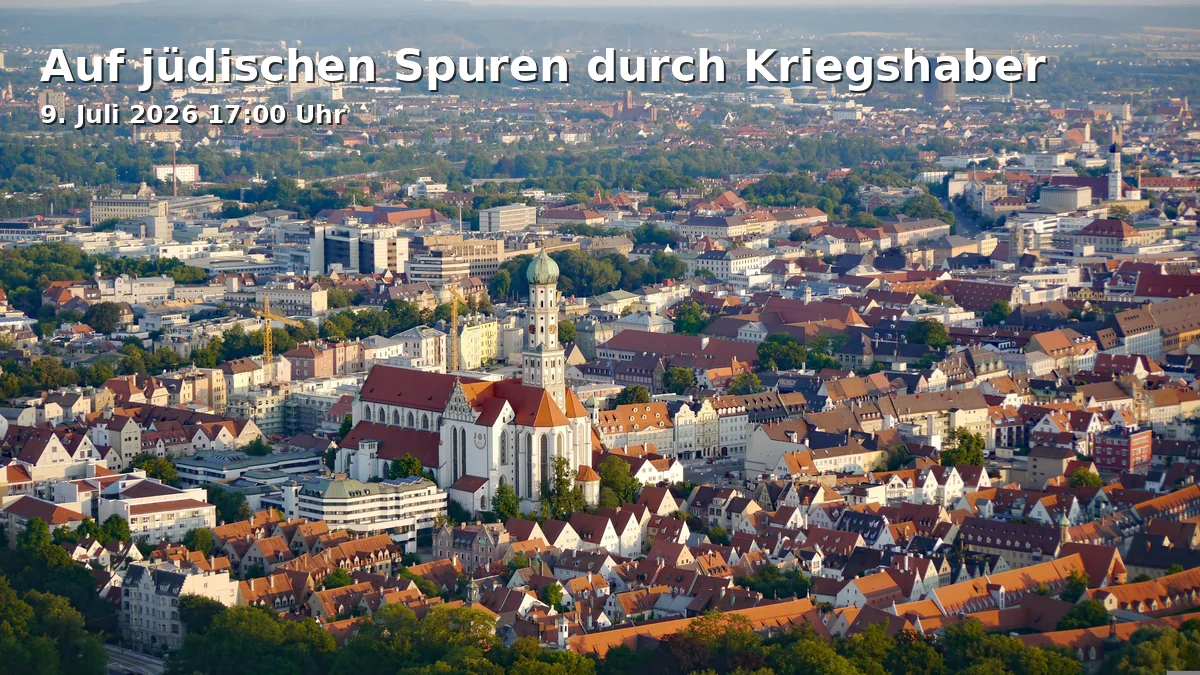
An impressive walk through Kriegshaber: Jewish history, biographies, and memory culture on 09.07.2026. Experience Augsburg anew now. #Augsburg
Small Peace Table
A summer gathering full of peace and encounter in Augsburg-Kriegshaber: Small Peace Table, free admission, no registration, 26.07.2026, 11 AM–2 PM. #Augsburg #PeaceFestival
Peace
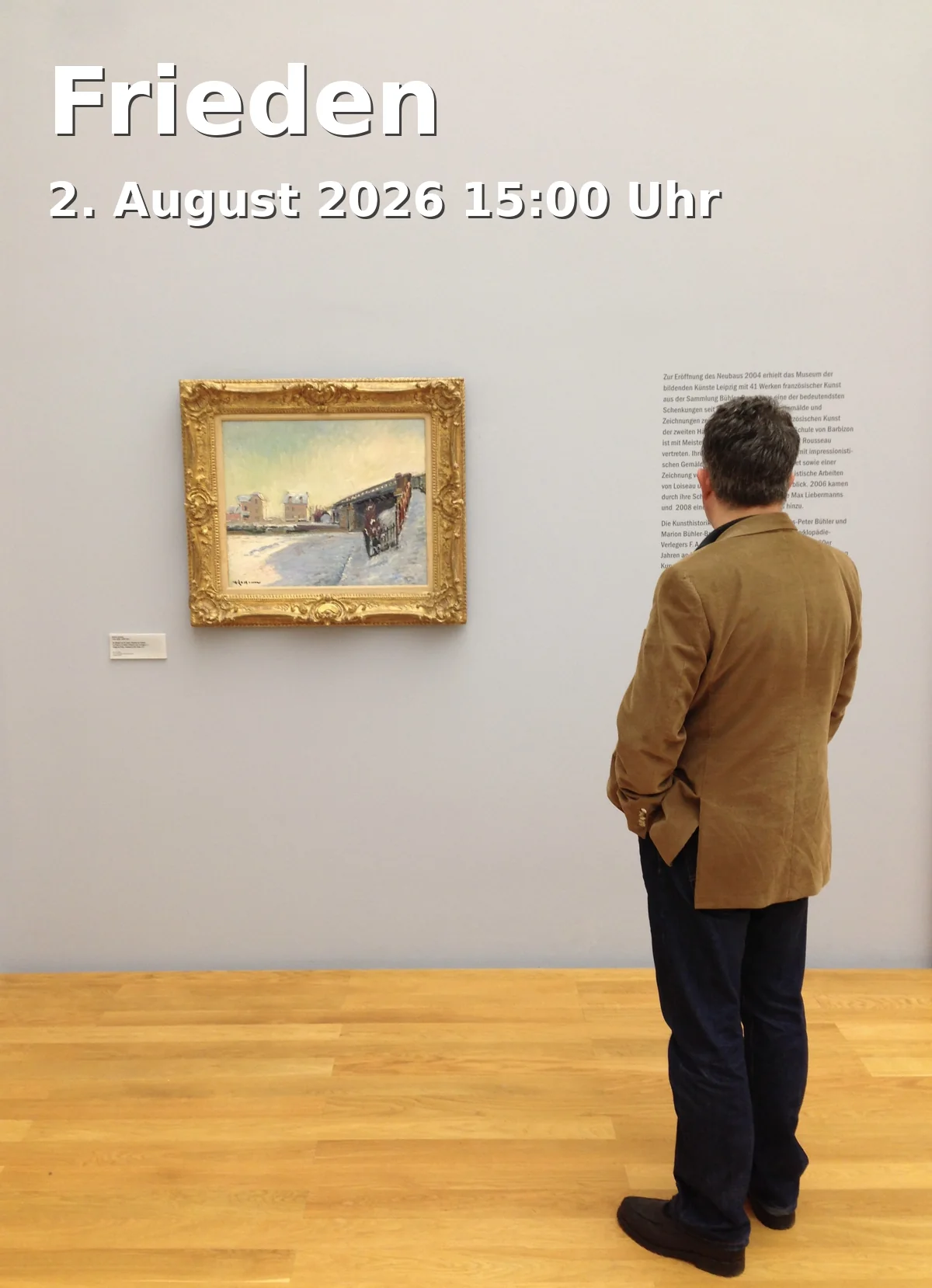
A quiet, impressive excursion in Augsburg: The exhibition Peace connects history, art, and memory in the synagogue space. 02.08.2026, 6 Euros. #Augsburg
Frequently Asked Questions
Reviews
oprea stefan
23. June 2025
Very nice and quiet...
Sabine Jahrisch
26. July 2025
Great place.
Andreas Futschik
22. January 2017
This unique Jewish rural synagogue can be visited by prior telephone appointment with the Dillingen an der Donau district office. It was one of the few Jewish houses of worship not destroyed during Kristallnacht in 1938.
Simone Motus
27. December 2025
Beautiful
Ulrich Kunisch
23. December 2023
Unfortunately, I didn't get a seat. Went there anyway.