
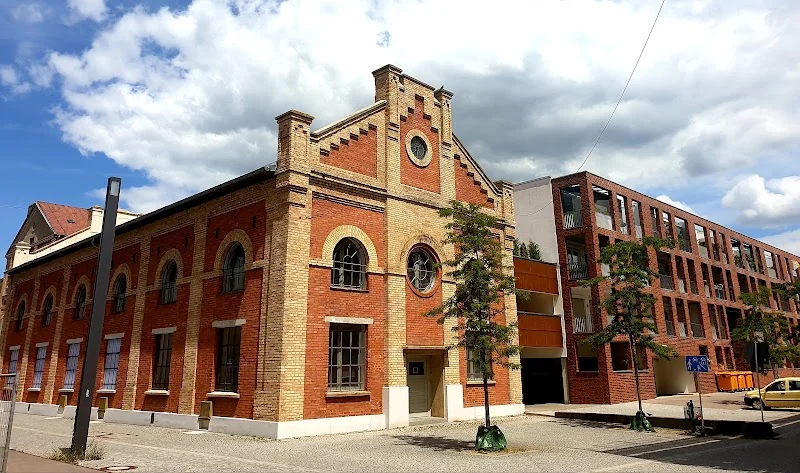
Zur Kammgarnspinnerei 11, Augsburg
Zur Kammgarnspinnerei 11, 86153 Augsburg, Germany
City Archive Augsburg | Opening Hours & Online Research
The City Archive Augsburg is the central point of contact for Augsburg's urban history research and serves as the memory of the city, preserving the written records of the administration and its predecessors. The city describes the collection on the main page as approximately 12,000 running meters of shelf space, while the inventory overview mentions about 13,000 running meters; together, these figures demonstrate the enormous depth of the archive from the oldest documents to the present. Those searching for files, documents, maps, plans, photos, or posters will find not only sources here but also a reading room, a large urban history library, and a continuously growing online offering. The archive is located at Zur Kammgarnspinnerei 11 in the textile district, intentionally in an environment that is now closely associated with culture, research, and urban history. ([augsburg.de](https://www.augsburg.de/kultur/stadtarchiv-augsburg))
For visitors, the City Archive is therefore more than just a classic storage place. It is a research center, a learning location, an event venue, and a point of contact for anyone wanting to see urban history firsthand. Lectures, workshops, exhibitions, and historical documents make the path from archival materials to public communication visible. At the same time, practical utility remains in focus: those who search specifically can prepare online, continue working in the reading room, and pay attention to timely appointments and orders for building files or older collections. This combination of research, service, and programming makes the City Archive Augsburg highly relevant for family research, science, schools, and interested citizens. ([augsburg.de](https://www.augsburg.de/aktuelles-aus-der-stadt/detail/das-jahresprogramm-des-stadtarchivs-steht))
Collections and Online Research
The collections of the City Archive Augsburg are structured in such a way that both historical depth and modern research practices become visible. Officially, about 13,000 running meters of archival materials are mentioned, and the main page also refers to approximately 12,000 running meters of shelf space; in addition, there are files, official books, documents, maps, plans, photos, posters, flyers, brochures, and much more. The material is content-wise divided into three large groups: the older collections up to 1806, the newer collections from the Bavarian period after 1806, and the archival collections, selects, and estates. This third group is particularly exciting for many research projects because it includes photo collections, map and plan collections, and written documentation. Therefore, those searching for the terms City Archive Augsburg collections, photos, or online research will land exactly at the structure relevant for urban history, family research, and local topic research. ([augsburg.de](https://www.augsburg.de/kultur/stadtarchiv-augsburg/die-bestaende))
The online research is not just an additional service but a central access point to the archive. The online archive catalog allows full-text search, field search, and archive plan search; additionally, already digitized archival materials can be viewed, and research results can be managed after creating an account. The archive also honestly points out that not all collections are yet searchable online. Therefore, if one does not find what they are looking for in the first search run, they should broaden their search, use the systematics, or contact the archive directly. A particularly helpful note is that the catalog can also be used to prepare orders for the reading room. For people searching for a specific family name, an old address, a collection of associations, or a historical map, this is a significant advantage: research can begin at home and be deepened in the reading room. ([augsburg.de](https://www.augsburg.de/kultur/stadtarchiv-augsburg/die-bestaende))
The City Archive is also well-equipped for digital content. The city points out that the proportion of digitized archival materials is steadily increasing and can already be viewed online. The help texts and videos additionally explain how to perform simple searches, conduct in-depth research, and save results. This is particularly valuable for users who are working with an archive catalog for the first time, as the paths are not only documented but also explained. The combination of catalog, help videos, explanatory texts, and library holdings makes the City Archive Augsburg a very accessible research location. Those searching for urban historical sources, photos, eyewitness accounts, or documents for a project will find a system that caters to both beginners and experienced researchers. ([augsburg.de](https://www.augsburg.de/kultur/stadtarchiv-augsburg/die-bestaende))
Opening Hours, Reading Room, and Contact
The opening hours of the City Archive Augsburg are clearly oriented towards the use of the reading room. External users cannot come on Mondays; it is open from Tuesday to Thursday from 8:00 AM to 5:00 PM and on Fridays from 8:00 AM to 12:00 PM. At the same time, the archive strongly recommends prior contact to better plan consultation, provision, and work in the reading room. For documents from the older collections up to 1806, timely ordering is even required one to two weeks before the visit. This fits with the working method of an archive, where materials are not simply freely available on the shelf but are retrieved and conservatively managed in advance. Therefore, those using the search terms opening hours, appointment, or email are primarily looking for a well-organized usage concept, not for a spontaneous walk-in offer. ([augsburg.de](https://www.augsburg.de/kultur/stadtarchiv-augsburg))
The contact structure is also designed for targeted inquiries. On the contact page, the archive lists an archive management, a dedicated contact for archival materials and general inquiries, as well as a separate contact for building file inspections. A contact form is provided for general concerns; for building files, there is additionally a dedicated hotline. It is important to note that no information about building files is given under the phone number for archival materials. This separation facilitates processing and prevents misunderstandings when, for example, a scientific inquiry, a family research question, or a building file request is simultaneously in the room. For groups such as school classes or university seminars, prior registration is explicitly required so that the archive can prepare support in the reading room. ([augsburg.de](https://www.augsburg.de/kultur/stadtarchiv-augsburg/kontakt?utm_source=openai))
It is also practical that the use of the archive is not limited to classic in-person visits. Those preparing a search can use online research, secure results, and then work specifically with signatures in the reading room. This is particularly helpful for research projects with multiple sources or for longer family research, as it reduces travel time and borrowing effort. The archive consciously formulates its usage rules so that consultation, waiting times, and provision can be better managed. This is precisely where the difference between a general information counter and a professionally managed archive becomes evident: it is not just about opening hours but about the best possible use of sources without unnecessarily burdening the collections. ([augsburg.de](https://www.augsburg.de/kultur/stadtarchiv-augsburg))
Annual Program, Exhibitions, and Lectures
The annual program of the City Archive Augsburg is an important part of the institution's public profile. For 2026, the city announces exhibitions, lectures, city walks, workshops, and other actions that provide insights into the history of Augsburg in very different ways. The focus is on the transformation of the Augsburg cityscape over the past 100 years, which will be highlighted in two exhibitions. Additionally, there is a special anniversary: the City Archive has been located in the textile district for ten years, which will be celebrated with an open house on October 10. Another central theme is the 750-year-old Augsburg municipal law, which is considered the oldest legal document of the city and will be displayed in the archive's rooms in February. For interested parties, the annual program is therefore much more than just a list of dates; it is a thematic key to the house's focal points. ([augsburg.de](https://www.augsburg.de/aktuelles-aus-der-stadt/detail/das-jahresprogramm-des-stadtarchivs-steht))
Even the program from the previous year shows how broad the spectrum is. For 2025, lecture evenings, house and city tours, source readings, exhibitions, film evenings, creative workshops, seminars, and social media formats have been announced. The City Archive does not only work in the classic reading room mode but actively communicates history outward. Particularly appealing are formats where archive staff bring a historical topic to life using original sources or where urban history engages in dialogue with current research. This mix is important for the search interest in programs, events, exhibitions, and the annual program because it explains why the archive is perceived by many visitors not only as a research place but also as a cultural venue. ([augsburg.de](https://www.augsburg.de/aktuelles-aus-der-stadt/detail/stadtgeschichte-fuer-jedermann?utm_source=openai))
It is also noteworthy that the events are not only visible online but also take place on-site in the rooms of the City Archive. For 2026, it has been announced that the original of the municipal law will be presented in the archive's rooms for a certain period. Such presentations combine pure storage with public visibility and turn the archive into a place where rare pieces become tangible in the context of an exhibition. Therefore, those interested in the search terms program, events, or exhibition will find not only an event calendar in the City Archive but also a continuous cultural and educational concept. ([augsburg.de](https://www.augsburg.de/aktuelles-aus-der-stadt/detail/das-jahresprogramm-des-stadtarchivs-steht))
Directions, Parking, and Building File Inspection
The location of the City Archive in the textile district is easily understandable for visitors, but travel should still be planned. The official program brochures mention tram line 6 towards P+R Friedberg-West, stop Textilmuseum, for access by public transport. For access by car, limited parking options on public parking lots in front of the Textilmuseum are pointed out. This is important because the search term parking quickly leads to the question of how convenient a visit on-site actually is. The answer is: very direct by tram, possible by car, but with limited parking space. Therefore, those planning to inspect building files or have an appointment in the reading room should preferably arrive with a buffer. ([augsburg.de](https://www.augsburg.de/fileadmin/user_upload/kultur/stadtarchiv/veranstaltungen/Jahresprogramm_2025/Jahresprogramm.pdf))
For building files, particularly clear rules apply. In the City Archive, historical building files can be inspected up to the year 2024; newer building files and building applications are available digitally at the municipal building authority. Furthermore, the City Archive only holds the building files for buildings in the city area of Augsburg, while the state archive is responsible for the district of Augsburg. Appointment bookings can only be made online, and registration requires the exact address of the property. For the appointment, a valid ID card or passport and proof of ownership or a corresponding power of attorney must be brought. The inspection fee is 35 euros and can be paid on-site via SEPA direct debit, credit card, or PayPal. ([augsburg.de](https://www.augsburg.de/kultur/stadtarchiv-augsburg/einsicht-in-bauakten))
Even with building files, the strength of a professionally organized archive is evident: not every request is processed in the same way. Personal inspection is necessary because only then can it be checked which documents are actually needed. Only afterward can a scan order be placed, which only refers to the plans contained in the file and is associated with a flat fee of 70 euros. Digital provision can take several weeks. For builders, owners, researchers, or monument enthusiasts, this is a clear but transparent process. Therefore, those searching for appointment, parking, or email should always distinguish between general archive visits and building file procedures. ([augsburg.de](https://www.augsburg.de/kultur/stadtarchiv-augsburg/einsicht-in-bauakten))
Tasks, History, and the Location in the Textile District
The core task of the City Archive is very clearly described on the official page: it evaluates, takes over, organizes, processes, and permanently secures municipal archival and collection materials. The written records of all departments of the city administration, municipal schools, independent and economic enterprises along with their legal predecessors, as well as participation companies and purpose associations with municipal involvement are archived. Thus, the City Archive is not simply a storage facility but the professional entity that keeps municipal records readable and usable in the long term. Additionally, it serves as a competence center for urban history research, going far beyond the mere storage of files through its collections, consulting, and mediation. Therefore, those searching for city archive augsburg collections are actually looking for an institution that actively organizes municipal memory. ([augsburg.de](https://www.augsburg.de/kultur/stadtarchiv-augsburg/aufgaben-und-geschichte?utm_source=openai))
The history of the location underscores this claim. The city points out that the archive has been located in the textile district for ten years, and in the context of the annual program, it becomes clear that this location is linked to culture, events, and public communication. At the same time, the archive is understood in communication as a modern house that fulfills multiple tasks simultaneously with digital research, reading room, building file procedures, and events. The location at Zur Kammgarnspinnerei 11 is not coincidental: it integrates the archive into an area that is strongly connected to the historical textile location in Augsburg. For visitors, this creates a strong thematic framework: it is not just about files but about urban development, industrial history, administrative history, and Augsburg's self-understanding. ([augsburg.de](https://www.augsburg.de/aktuelles-aus-der-stadt/detail/das-jahresprogramm-des-stadtarchivs-steht))
Particularly interesting is that the City Archive maintains a broad mix of historical and contemporary collections. The older collections include imperial city records and non-urban institutions up to 1806, while the newer collections comprise the departments of the Bavarian period, incorporated suburbs, as well as company, association, and federation archives. The archival collections complement this with photos, maps, plans, estates, and documentation materials. This allows the archive to answer very different questions: a family history, a construction project, the history of an association, a municipal decision, or the development of a neighborhood. This complexity is precisely what makes the appeal of research, online research, and exhibitions. ([augsburg.de](https://www.augsburg.de/kultur/stadtarchiv-augsburg/die-bestaende))
Photos, Family Research, and Digital Presentations
Those searching for City Archive Augsburg photos or family research will land in two particularly user-friendly areas of the house. On the one hand, photos, maps, plans, posters, flyers, brochures, and private estates explicitly belong to the collections. On the other hand, the archive points out in its notes that it has compiled special information for family research and that an introductory lecture is available as a video. This is important because family research in the archive often works with multiple types of sources simultaneously: civil status documents, address data, association records, photo collections, or building files can create a cohesive picture. The archive thus not only makes material accessible but also supports the pathways to it. ([augsburg.de](https://www.augsburg.de/kultur/stadtarchiv-augsburg/die-bestaende))
The digital presentations are also part of the house's profile. Under the title The Historical Document, the City Archive presents historical pieces in small cabinet exhibitions that may relate to the annual program, anniversaries, or special source discoveries. This connects the archive's conservation work with public visibility. Such formats are particularly exciting for people who are not immediately interested in a large exhibition but rather in individual originals, rare finds, or changing focal points. Digital presentations and current news ensure that the archive is not only perceived as a silent world of files but as an active place of mediation. ([augsburg.de](https://www.augsburg.de/kultur/stadtarchiv-augsburg/digitale-praesentationen/das-historische-dokument?utm_source=openai))
Finally, for many users, the combination of digital and analog research is the real added value. The online archive catalog serves for preparation, the library can be researched via the OPAC, the reading room offers in-depth work with originals, and the digital aids explain the search paths. Thus, a closed system emerges for all those who want to engage with the history of Augsburg. Whether one is searching for a specific family, a photographic legacy, a neighborhood history, or a construction project: the City Archive Augsburg not only provides sources but also conveys how to handle them. This is precisely why the connection between collections, photos, online, and research is so formative for this house. ([augsburg.de](https://www.augsburg.de/kultur/stadtarchiv-augsburg/die-bestaende))
Sources:
- City Archive Augsburg - Official Overview Page
- City Archive Augsburg - The Collections
- City Archive Augsburg - Contact and Opening Hours
- City Archive Augsburg - Inspection of Building Files
- City Augsburg - The Annual Program of the City Archive is Established
- City Archive Augsburg - Annual Program 2025 PDF
- City Archive Augsburg - Annual Program 2026 PDF
Show moreShow less
City Archive Augsburg | Opening Hours & Online Research
The City Archive Augsburg is the central point of contact for Augsburg's urban history research and serves as the memory of the city, preserving the written records of the administration and its predecessors. The city describes the collection on the main page as approximately 12,000 running meters of shelf space, while the inventory overview mentions about 13,000 running meters; together, these figures demonstrate the enormous depth of the archive from the oldest documents to the present. Those searching for files, documents, maps, plans, photos, or posters will find not only sources here but also a reading room, a large urban history library, and a continuously growing online offering. The archive is located at Zur Kammgarnspinnerei 11 in the textile district, intentionally in an environment that is now closely associated with culture, research, and urban history. ([augsburg.de](https://www.augsburg.de/kultur/stadtarchiv-augsburg))
For visitors, the City Archive is therefore more than just a classic storage place. It is a research center, a learning location, an event venue, and a point of contact for anyone wanting to see urban history firsthand. Lectures, workshops, exhibitions, and historical documents make the path from archival materials to public communication visible. At the same time, practical utility remains in focus: those who search specifically can prepare online, continue working in the reading room, and pay attention to timely appointments and orders for building files or older collections. This combination of research, service, and programming makes the City Archive Augsburg highly relevant for family research, science, schools, and interested citizens. ([augsburg.de](https://www.augsburg.de/aktuelles-aus-der-stadt/detail/das-jahresprogramm-des-stadtarchivs-steht))
Collections and Online Research
The collections of the City Archive Augsburg are structured in such a way that both historical depth and modern research practices become visible. Officially, about 13,000 running meters of archival materials are mentioned, and the main page also refers to approximately 12,000 running meters of shelf space; in addition, there are files, official books, documents, maps, plans, photos, posters, flyers, brochures, and much more. The material is content-wise divided into three large groups: the older collections up to 1806, the newer collections from the Bavarian period after 1806, and the archival collections, selects, and estates. This third group is particularly exciting for many research projects because it includes photo collections, map and plan collections, and written documentation. Therefore, those searching for the terms City Archive Augsburg collections, photos, or online research will land exactly at the structure relevant for urban history, family research, and local topic research. ([augsburg.de](https://www.augsburg.de/kultur/stadtarchiv-augsburg/die-bestaende))
The online research is not just an additional service but a central access point to the archive. The online archive catalog allows full-text search, field search, and archive plan search; additionally, already digitized archival materials can be viewed, and research results can be managed after creating an account. The archive also honestly points out that not all collections are yet searchable online. Therefore, if one does not find what they are looking for in the first search run, they should broaden their search, use the systematics, or contact the archive directly. A particularly helpful note is that the catalog can also be used to prepare orders for the reading room. For people searching for a specific family name, an old address, a collection of associations, or a historical map, this is a significant advantage: research can begin at home and be deepened in the reading room. ([augsburg.de](https://www.augsburg.de/kultur/stadtarchiv-augsburg/die-bestaende))
The City Archive is also well-equipped for digital content. The city points out that the proportion of digitized archival materials is steadily increasing and can already be viewed online. The help texts and videos additionally explain how to perform simple searches, conduct in-depth research, and save results. This is particularly valuable for users who are working with an archive catalog for the first time, as the paths are not only documented but also explained. The combination of catalog, help videos, explanatory texts, and library holdings makes the City Archive Augsburg a very accessible research location. Those searching for urban historical sources, photos, eyewitness accounts, or documents for a project will find a system that caters to both beginners and experienced researchers. ([augsburg.de](https://www.augsburg.de/kultur/stadtarchiv-augsburg/die-bestaende))
Opening Hours, Reading Room, and Contact
The opening hours of the City Archive Augsburg are clearly oriented towards the use of the reading room. External users cannot come on Mondays; it is open from Tuesday to Thursday from 8:00 AM to 5:00 PM and on Fridays from 8:00 AM to 12:00 PM. At the same time, the archive strongly recommends prior contact to better plan consultation, provision, and work in the reading room. For documents from the older collections up to 1806, timely ordering is even required one to two weeks before the visit. This fits with the working method of an archive, where materials are not simply freely available on the shelf but are retrieved and conservatively managed in advance. Therefore, those using the search terms opening hours, appointment, or email are primarily looking for a well-organized usage concept, not for a spontaneous walk-in offer. ([augsburg.de](https://www.augsburg.de/kultur/stadtarchiv-augsburg))
The contact structure is also designed for targeted inquiries. On the contact page, the archive lists an archive management, a dedicated contact for archival materials and general inquiries, as well as a separate contact for building file inspections. A contact form is provided for general concerns; for building files, there is additionally a dedicated hotline. It is important to note that no information about building files is given under the phone number for archival materials. This separation facilitates processing and prevents misunderstandings when, for example, a scientific inquiry, a family research question, or a building file request is simultaneously in the room. For groups such as school classes or university seminars, prior registration is explicitly required so that the archive can prepare support in the reading room. ([augsburg.de](https://www.augsburg.de/kultur/stadtarchiv-augsburg/kontakt?utm_source=openai))
It is also practical that the use of the archive is not limited to classic in-person visits. Those preparing a search can use online research, secure results, and then work specifically with signatures in the reading room. This is particularly helpful for research projects with multiple sources or for longer family research, as it reduces travel time and borrowing effort. The archive consciously formulates its usage rules so that consultation, waiting times, and provision can be better managed. This is precisely where the difference between a general information counter and a professionally managed archive becomes evident: it is not just about opening hours but about the best possible use of sources without unnecessarily burdening the collections. ([augsburg.de](https://www.augsburg.de/kultur/stadtarchiv-augsburg))
Annual Program, Exhibitions, and Lectures
The annual program of the City Archive Augsburg is an important part of the institution's public profile. For 2026, the city announces exhibitions, lectures, city walks, workshops, and other actions that provide insights into the history of Augsburg in very different ways. The focus is on the transformation of the Augsburg cityscape over the past 100 years, which will be highlighted in two exhibitions. Additionally, there is a special anniversary: the City Archive has been located in the textile district for ten years, which will be celebrated with an open house on October 10. Another central theme is the 750-year-old Augsburg municipal law, which is considered the oldest legal document of the city and will be displayed in the archive's rooms in February. For interested parties, the annual program is therefore much more than just a list of dates; it is a thematic key to the house's focal points. ([augsburg.de](https://www.augsburg.de/aktuelles-aus-der-stadt/detail/das-jahresprogramm-des-stadtarchivs-steht))
Even the program from the previous year shows how broad the spectrum is. For 2025, lecture evenings, house and city tours, source readings, exhibitions, film evenings, creative workshops, seminars, and social media formats have been announced. The City Archive does not only work in the classic reading room mode but actively communicates history outward. Particularly appealing are formats where archive staff bring a historical topic to life using original sources or where urban history engages in dialogue with current research. This mix is important for the search interest in programs, events, exhibitions, and the annual program because it explains why the archive is perceived by many visitors not only as a research place but also as a cultural venue. ([augsburg.de](https://www.augsburg.de/aktuelles-aus-der-stadt/detail/stadtgeschichte-fuer-jedermann?utm_source=openai))
It is also noteworthy that the events are not only visible online but also take place on-site in the rooms of the City Archive. For 2026, it has been announced that the original of the municipal law will be presented in the archive's rooms for a certain period. Such presentations combine pure storage with public visibility and turn the archive into a place where rare pieces become tangible in the context of an exhibition. Therefore, those interested in the search terms program, events, or exhibition will find not only an event calendar in the City Archive but also a continuous cultural and educational concept. ([augsburg.de](https://www.augsburg.de/aktuelles-aus-der-stadt/detail/das-jahresprogramm-des-stadtarchivs-steht))
Directions, Parking, and Building File Inspection
The location of the City Archive in the textile district is easily understandable for visitors, but travel should still be planned. The official program brochures mention tram line 6 towards P+R Friedberg-West, stop Textilmuseum, for access by public transport. For access by car, limited parking options on public parking lots in front of the Textilmuseum are pointed out. This is important because the search term parking quickly leads to the question of how convenient a visit on-site actually is. The answer is: very direct by tram, possible by car, but with limited parking space. Therefore, those planning to inspect building files or have an appointment in the reading room should preferably arrive with a buffer. ([augsburg.de](https://www.augsburg.de/fileadmin/user_upload/kultur/stadtarchiv/veranstaltungen/Jahresprogramm_2025/Jahresprogramm.pdf))
For building files, particularly clear rules apply. In the City Archive, historical building files can be inspected up to the year 2024; newer building files and building applications are available digitally at the municipal building authority. Furthermore, the City Archive only holds the building files for buildings in the city area of Augsburg, while the state archive is responsible for the district of Augsburg. Appointment bookings can only be made online, and registration requires the exact address of the property. For the appointment, a valid ID card or passport and proof of ownership or a corresponding power of attorney must be brought. The inspection fee is 35 euros and can be paid on-site via SEPA direct debit, credit card, or PayPal. ([augsburg.de](https://www.augsburg.de/kultur/stadtarchiv-augsburg/einsicht-in-bauakten))
Even with building files, the strength of a professionally organized archive is evident: not every request is processed in the same way. Personal inspection is necessary because only then can it be checked which documents are actually needed. Only afterward can a scan order be placed, which only refers to the plans contained in the file and is associated with a flat fee of 70 euros. Digital provision can take several weeks. For builders, owners, researchers, or monument enthusiasts, this is a clear but transparent process. Therefore, those searching for appointment, parking, or email should always distinguish between general archive visits and building file procedures. ([augsburg.de](https://www.augsburg.de/kultur/stadtarchiv-augsburg/einsicht-in-bauakten))
Tasks, History, and the Location in the Textile District
The core task of the City Archive is very clearly described on the official page: it evaluates, takes over, organizes, processes, and permanently secures municipal archival and collection materials. The written records of all departments of the city administration, municipal schools, independent and economic enterprises along with their legal predecessors, as well as participation companies and purpose associations with municipal involvement are archived. Thus, the City Archive is not simply a storage facility but the professional entity that keeps municipal records readable and usable in the long term. Additionally, it serves as a competence center for urban history research, going far beyond the mere storage of files through its collections, consulting, and mediation. Therefore, those searching for city archive augsburg collections are actually looking for an institution that actively organizes municipal memory. ([augsburg.de](https://www.augsburg.de/kultur/stadtarchiv-augsburg/aufgaben-und-geschichte?utm_source=openai))
The history of the location underscores this claim. The city points out that the archive has been located in the textile district for ten years, and in the context of the annual program, it becomes clear that this location is linked to culture, events, and public communication. At the same time, the archive is understood in communication as a modern house that fulfills multiple tasks simultaneously with digital research, reading room, building file procedures, and events. The location at Zur Kammgarnspinnerei 11 is not coincidental: it integrates the archive into an area that is strongly connected to the historical textile location in Augsburg. For visitors, this creates a strong thematic framework: it is not just about files but about urban development, industrial history, administrative history, and Augsburg's self-understanding. ([augsburg.de](https://www.augsburg.de/aktuelles-aus-der-stadt/detail/das-jahresprogramm-des-stadtarchivs-steht))
Particularly interesting is that the City Archive maintains a broad mix of historical and contemporary collections. The older collections include imperial city records and non-urban institutions up to 1806, while the newer collections comprise the departments of the Bavarian period, incorporated suburbs, as well as company, association, and federation archives. The archival collections complement this with photos, maps, plans, estates, and documentation materials. This allows the archive to answer very different questions: a family history, a construction project, the history of an association, a municipal decision, or the development of a neighborhood. This complexity is precisely what makes the appeal of research, online research, and exhibitions. ([augsburg.de](https://www.augsburg.de/kultur/stadtarchiv-augsburg/die-bestaende))
Photos, Family Research, and Digital Presentations
Those searching for City Archive Augsburg photos or family research will land in two particularly user-friendly areas of the house. On the one hand, photos, maps, plans, posters, flyers, brochures, and private estates explicitly belong to the collections. On the other hand, the archive points out in its notes that it has compiled special information for family research and that an introductory lecture is available as a video. This is important because family research in the archive often works with multiple types of sources simultaneously: civil status documents, address data, association records, photo collections, or building files can create a cohesive picture. The archive thus not only makes material accessible but also supports the pathways to it. ([augsburg.de](https://www.augsburg.de/kultur/stadtarchiv-augsburg/die-bestaende))
The digital presentations are also part of the house's profile. Under the title The Historical Document, the City Archive presents historical pieces in small cabinet exhibitions that may relate to the annual program, anniversaries, or special source discoveries. This connects the archive's conservation work with public visibility. Such formats are particularly exciting for people who are not immediately interested in a large exhibition but rather in individual originals, rare finds, or changing focal points. Digital presentations and current news ensure that the archive is not only perceived as a silent world of files but as an active place of mediation. ([augsburg.de](https://www.augsburg.de/kultur/stadtarchiv-augsburg/digitale-praesentationen/das-historische-dokument?utm_source=openai))
Finally, for many users, the combination of digital and analog research is the real added value. The online archive catalog serves for preparation, the library can be researched via the OPAC, the reading room offers in-depth work with originals, and the digital aids explain the search paths. Thus, a closed system emerges for all those who want to engage with the history of Augsburg. Whether one is searching for a specific family, a photographic legacy, a neighborhood history, or a construction project: the City Archive Augsburg not only provides sources but also conveys how to handle them. This is precisely why the connection between collections, photos, online, and research is so formative for this house. ([augsburg.de](https://www.augsburg.de/kultur/stadtarchiv-augsburg/die-bestaende))
Sources:
- City Archive Augsburg - Official Overview Page
- City Archive Augsburg - The Collections
- City Archive Augsburg - Contact and Opening Hours
- City Archive Augsburg - Inspection of Building Files
- City Augsburg - The Annual Program of the City Archive is Established
- City Archive Augsburg - Annual Program 2025 PDF
- City Archive Augsburg - Annual Program 2026 PDF
City Archive Augsburg | Opening Hours & Online Research
The City Archive Augsburg is the central point of contact for Augsburg's urban history research and serves as the memory of the city, preserving the written records of the administration and its predecessors. The city describes the collection on the main page as approximately 12,000 running meters of shelf space, while the inventory overview mentions about 13,000 running meters; together, these figures demonstrate the enormous depth of the archive from the oldest documents to the present. Those searching for files, documents, maps, plans, photos, or posters will find not only sources here but also a reading room, a large urban history library, and a continuously growing online offering. The archive is located at Zur Kammgarnspinnerei 11 in the textile district, intentionally in an environment that is now closely associated with culture, research, and urban history. ([augsburg.de](https://www.augsburg.de/kultur/stadtarchiv-augsburg))
For visitors, the City Archive is therefore more than just a classic storage place. It is a research center, a learning location, an event venue, and a point of contact for anyone wanting to see urban history firsthand. Lectures, workshops, exhibitions, and historical documents make the path from archival materials to public communication visible. At the same time, practical utility remains in focus: those who search specifically can prepare online, continue working in the reading room, and pay attention to timely appointments and orders for building files or older collections. This combination of research, service, and programming makes the City Archive Augsburg highly relevant for family research, science, schools, and interested citizens. ([augsburg.de](https://www.augsburg.de/aktuelles-aus-der-stadt/detail/das-jahresprogramm-des-stadtarchivs-steht))
Collections and Online Research
The collections of the City Archive Augsburg are structured in such a way that both historical depth and modern research practices become visible. Officially, about 13,000 running meters of archival materials are mentioned, and the main page also refers to approximately 12,000 running meters of shelf space; in addition, there are files, official books, documents, maps, plans, photos, posters, flyers, brochures, and much more. The material is content-wise divided into three large groups: the older collections up to 1806, the newer collections from the Bavarian period after 1806, and the archival collections, selects, and estates. This third group is particularly exciting for many research projects because it includes photo collections, map and plan collections, and written documentation. Therefore, those searching for the terms City Archive Augsburg collections, photos, or online research will land exactly at the structure relevant for urban history, family research, and local topic research. ([augsburg.de](https://www.augsburg.de/kultur/stadtarchiv-augsburg/die-bestaende))
The online research is not just an additional service but a central access point to the archive. The online archive catalog allows full-text search, field search, and archive plan search; additionally, already digitized archival materials can be viewed, and research results can be managed after creating an account. The archive also honestly points out that not all collections are yet searchable online. Therefore, if one does not find what they are looking for in the first search run, they should broaden their search, use the systematics, or contact the archive directly. A particularly helpful note is that the catalog can also be used to prepare orders for the reading room. For people searching for a specific family name, an old address, a collection of associations, or a historical map, this is a significant advantage: research can begin at home and be deepened in the reading room. ([augsburg.de](https://www.augsburg.de/kultur/stadtarchiv-augsburg/die-bestaende))
The City Archive is also well-equipped for digital content. The city points out that the proportion of digitized archival materials is steadily increasing and can already be viewed online. The help texts and videos additionally explain how to perform simple searches, conduct in-depth research, and save results. This is particularly valuable for users who are working with an archive catalog for the first time, as the paths are not only documented but also explained. The combination of catalog, help videos, explanatory texts, and library holdings makes the City Archive Augsburg a very accessible research location. Those searching for urban historical sources, photos, eyewitness accounts, or documents for a project will find a system that caters to both beginners and experienced researchers. ([augsburg.de](https://www.augsburg.de/kultur/stadtarchiv-augsburg/die-bestaende))
Opening Hours, Reading Room, and Contact
The opening hours of the City Archive Augsburg are clearly oriented towards the use of the reading room. External users cannot come on Mondays; it is open from Tuesday to Thursday from 8:00 AM to 5:00 PM and on Fridays from 8:00 AM to 12:00 PM. At the same time, the archive strongly recommends prior contact to better plan consultation, provision, and work in the reading room. For documents from the older collections up to 1806, timely ordering is even required one to two weeks before the visit. This fits with the working method of an archive, where materials are not simply freely available on the shelf but are retrieved and conservatively managed in advance. Therefore, those using the search terms opening hours, appointment, or email are primarily looking for a well-organized usage concept, not for a spontaneous walk-in offer. ([augsburg.de](https://www.augsburg.de/kultur/stadtarchiv-augsburg))
The contact structure is also designed for targeted inquiries. On the contact page, the archive lists an archive management, a dedicated contact for archival materials and general inquiries, as well as a separate contact for building file inspections. A contact form is provided for general concerns; for building files, there is additionally a dedicated hotline. It is important to note that no information about building files is given under the phone number for archival materials. This separation facilitates processing and prevents misunderstandings when, for example, a scientific inquiry, a family research question, or a building file request is simultaneously in the room. For groups such as school classes or university seminars, prior registration is explicitly required so that the archive can prepare support in the reading room. ([augsburg.de](https://www.augsburg.de/kultur/stadtarchiv-augsburg/kontakt?utm_source=openai))
It is also practical that the use of the archive is not limited to classic in-person visits. Those preparing a search can use online research, secure results, and then work specifically with signatures in the reading room. This is particularly helpful for research projects with multiple sources or for longer family research, as it reduces travel time and borrowing effort. The archive consciously formulates its usage rules so that consultation, waiting times, and provision can be better managed. This is precisely where the difference between a general information counter and a professionally managed archive becomes evident: it is not just about opening hours but about the best possible use of sources without unnecessarily burdening the collections. ([augsburg.de](https://www.augsburg.de/kultur/stadtarchiv-augsburg))
Annual Program, Exhibitions, and Lectures
The annual program of the City Archive Augsburg is an important part of the institution's public profile. For 2026, the city announces exhibitions, lectures, city walks, workshops, and other actions that provide insights into the history of Augsburg in very different ways. The focus is on the transformation of the Augsburg cityscape over the past 100 years, which will be highlighted in two exhibitions. Additionally, there is a special anniversary: the City Archive has been located in the textile district for ten years, which will be celebrated with an open house on October 10. Another central theme is the 750-year-old Augsburg municipal law, which is considered the oldest legal document of the city and will be displayed in the archive's rooms in February. For interested parties, the annual program is therefore much more than just a list of dates; it is a thematic key to the house's focal points. ([augsburg.de](https://www.augsburg.de/aktuelles-aus-der-stadt/detail/das-jahresprogramm-des-stadtarchivs-steht))
Even the program from the previous year shows how broad the spectrum is. For 2025, lecture evenings, house and city tours, source readings, exhibitions, film evenings, creative workshops, seminars, and social media formats have been announced. The City Archive does not only work in the classic reading room mode but actively communicates history outward. Particularly appealing are formats where archive staff bring a historical topic to life using original sources or where urban history engages in dialogue with current research. This mix is important for the search interest in programs, events, exhibitions, and the annual program because it explains why the archive is perceived by many visitors not only as a research place but also as a cultural venue. ([augsburg.de](https://www.augsburg.de/aktuelles-aus-der-stadt/detail/stadtgeschichte-fuer-jedermann?utm_source=openai))
It is also noteworthy that the events are not only visible online but also take place on-site in the rooms of the City Archive. For 2026, it has been announced that the original of the municipal law will be presented in the archive's rooms for a certain period. Such presentations combine pure storage with public visibility and turn the archive into a place where rare pieces become tangible in the context of an exhibition. Therefore, those interested in the search terms program, events, or exhibition will find not only an event calendar in the City Archive but also a continuous cultural and educational concept. ([augsburg.de](https://www.augsburg.de/aktuelles-aus-der-stadt/detail/das-jahresprogramm-des-stadtarchivs-steht))
Directions, Parking, and Building File Inspection
The location of the City Archive in the textile district is easily understandable for visitors, but travel should still be planned. The official program brochures mention tram line 6 towards P+R Friedberg-West, stop Textilmuseum, for access by public transport. For access by car, limited parking options on public parking lots in front of the Textilmuseum are pointed out. This is important because the search term parking quickly leads to the question of how convenient a visit on-site actually is. The answer is: very direct by tram, possible by car, but with limited parking space. Therefore, those planning to inspect building files or have an appointment in the reading room should preferably arrive with a buffer. ([augsburg.de](https://www.augsburg.de/fileadmin/user_upload/kultur/stadtarchiv/veranstaltungen/Jahresprogramm_2025/Jahresprogramm.pdf))
For building files, particularly clear rules apply. In the City Archive, historical building files can be inspected up to the year 2024; newer building files and building applications are available digitally at the municipal building authority. Furthermore, the City Archive only holds the building files for buildings in the city area of Augsburg, while the state archive is responsible for the district of Augsburg. Appointment bookings can only be made online, and registration requires the exact address of the property. For the appointment, a valid ID card or passport and proof of ownership or a corresponding power of attorney must be brought. The inspection fee is 35 euros and can be paid on-site via SEPA direct debit, credit card, or PayPal. ([augsburg.de](https://www.augsburg.de/kultur/stadtarchiv-augsburg/einsicht-in-bauakten))
Even with building files, the strength of a professionally organized archive is evident: not every request is processed in the same way. Personal inspection is necessary because only then can it be checked which documents are actually needed. Only afterward can a scan order be placed, which only refers to the plans contained in the file and is associated with a flat fee of 70 euros. Digital provision can take several weeks. For builders, owners, researchers, or monument enthusiasts, this is a clear but transparent process. Therefore, those searching for appointment, parking, or email should always distinguish between general archive visits and building file procedures. ([augsburg.de](https://www.augsburg.de/kultur/stadtarchiv-augsburg/einsicht-in-bauakten))
Tasks, History, and the Location in the Textile District
The core task of the City Archive is very clearly described on the official page: it evaluates, takes over, organizes, processes, and permanently secures municipal archival and collection materials. The written records of all departments of the city administration, municipal schools, independent and economic enterprises along with their legal predecessors, as well as participation companies and purpose associations with municipal involvement are archived. Thus, the City Archive is not simply a storage facility but the professional entity that keeps municipal records readable and usable in the long term. Additionally, it serves as a competence center for urban history research, going far beyond the mere storage of files through its collections, consulting, and mediation. Therefore, those searching for city archive augsburg collections are actually looking for an institution that actively organizes municipal memory. ([augsburg.de](https://www.augsburg.de/kultur/stadtarchiv-augsburg/aufgaben-und-geschichte?utm_source=openai))
The history of the location underscores this claim. The city points out that the archive has been located in the textile district for ten years, and in the context of the annual program, it becomes clear that this location is linked to culture, events, and public communication. At the same time, the archive is understood in communication as a modern house that fulfills multiple tasks simultaneously with digital research, reading room, building file procedures, and events. The location at Zur Kammgarnspinnerei 11 is not coincidental: it integrates the archive into an area that is strongly connected to the historical textile location in Augsburg. For visitors, this creates a strong thematic framework: it is not just about files but about urban development, industrial history, administrative history, and Augsburg's self-understanding. ([augsburg.de](https://www.augsburg.de/aktuelles-aus-der-stadt/detail/das-jahresprogramm-des-stadtarchivs-steht))
Particularly interesting is that the City Archive maintains a broad mix of historical and contemporary collections. The older collections include imperial city records and non-urban institutions up to 1806, while the newer collections comprise the departments of the Bavarian period, incorporated suburbs, as well as company, association, and federation archives. The archival collections complement this with photos, maps, plans, estates, and documentation materials. This allows the archive to answer very different questions: a family history, a construction project, the history of an association, a municipal decision, or the development of a neighborhood. This complexity is precisely what makes the appeal of research, online research, and exhibitions. ([augsburg.de](https://www.augsburg.de/kultur/stadtarchiv-augsburg/die-bestaende))
Photos, Family Research, and Digital Presentations
Those searching for City Archive Augsburg photos or family research will land in two particularly user-friendly areas of the house. On the one hand, photos, maps, plans, posters, flyers, brochures, and private estates explicitly belong to the collections. On the other hand, the archive points out in its notes that it has compiled special information for family research and that an introductory lecture is available as a video. This is important because family research in the archive often works with multiple types of sources simultaneously: civil status documents, address data, association records, photo collections, or building files can create a cohesive picture. The archive thus not only makes material accessible but also supports the pathways to it. ([augsburg.de](https://www.augsburg.de/kultur/stadtarchiv-augsburg/die-bestaende))
The digital presentations are also part of the house's profile. Under the title The Historical Document, the City Archive presents historical pieces in small cabinet exhibitions that may relate to the annual program, anniversaries, or special source discoveries. This connects the archive's conservation work with public visibility. Such formats are particularly exciting for people who are not immediately interested in a large exhibition but rather in individual originals, rare finds, or changing focal points. Digital presentations and current news ensure that the archive is not only perceived as a silent world of files but as an active place of mediation. ([augsburg.de](https://www.augsburg.de/kultur/stadtarchiv-augsburg/digitale-praesentationen/das-historische-dokument?utm_source=openai))
Finally, for many users, the combination of digital and analog research is the real added value. The online archive catalog serves for preparation, the library can be researched via the OPAC, the reading room offers in-depth work with originals, and the digital aids explain the search paths. Thus, a closed system emerges for all those who want to engage with the history of Augsburg. Whether one is searching for a specific family, a photographic legacy, a neighborhood history, or a construction project: the City Archive Augsburg not only provides sources but also conveys how to handle them. This is precisely why the connection between collections, photos, online, and research is so formative for this house. ([augsburg.de](https://www.augsburg.de/kultur/stadtarchiv-augsburg/die-bestaende))
Sources:
- City Archive Augsburg - Official Overview Page
- City Archive Augsburg - The Collections
- City Archive Augsburg - Contact and Opening Hours
- City Archive Augsburg - Inspection of Building Files
- City Augsburg - The Annual Program of the City Archive is Established
- City Archive Augsburg - Annual Program 2025 PDF
- City Archive Augsburg - Annual Program 2026 PDF
Upcoming Events
No events found
Frequently Asked Questions
Reviews
becutya
19. February 2023
The treasures of the city archives, and especially the regular events on specific topics, are always worth a visit. I'm a huge fan!
Eva Gerum
6. September 2020
Doing research where others spend their free time in museums 😎 Located in the textile district, close to the TIM, the Augsburg City Archives are one of the most user-friendly archives I've ever experienced. Excellent hygiene practices! A highly interesting lecture program. Highly recommended for anyone interested in the city's history.
Internet Kurator
22. October 2023
Friendly and prompt service, both via email and in person. A fantastic new archive building housed in a historic structure.
Juliette Harder
3. June 2023
We received very quick and reliable help. A special thank you to Georg Feuerer, who actively supported us in our research!
ulrike fischer-mayerle
8. December 2023
Great place in a historic building for research and themed tours.