
Berlin
Moritzpl., 10969 Berlin-Bezirk Friedrichshain-Kreuzberg, Deutschland
Moritzplatz | U-Bahn & Route
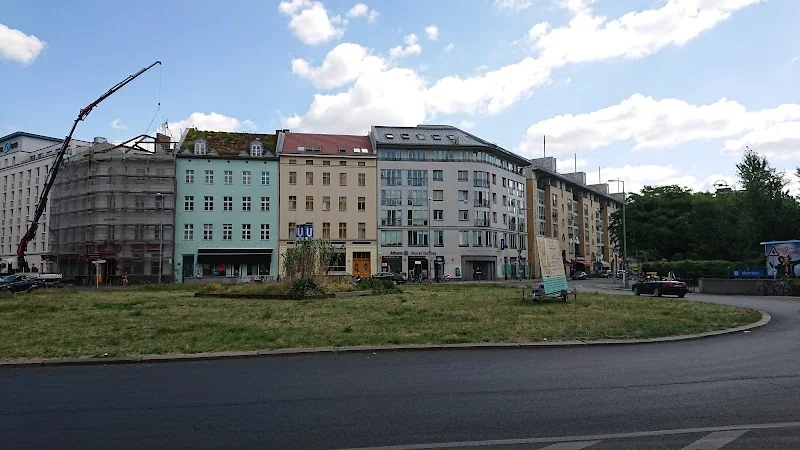
Moritzplatz in Berlin-Kreuzberg is much more than a transportation hub. Those searching for Moritzplatz Berlin, Moritzplatz Route, or Moritzplatz Maps arrive at a place where the subway, history, creative use, and urban development closely intertwine. The square is located in the district of Friedrichshain-Kreuzberg, specifically in the Southern Friedrichstadt, and is connected to the Berlin network via the U8 and several bus routes. At the same time, the location recalls the early significance of Kreuzberg as a shopping and entertainment destination, while today projects like Modulor, the Aufbau Haus, and the Open Garden Moritzplatz shape the site. This very mix of a dynamic past, urban present, and practical accessibility makes Moritzplatz so exciting for visitors, residents, and Berlin enthusiasts. The following sections compile the most important facts about access, history, surroundings, green spaces, and visitor tips. ([bvg.de](https://www.bvg.de/en/connections/station-overview/u-moritzplatz))
Access to Moritzplatz: U8, Bus, and Map View
Those entering Moritzplatz Berlin Route or Moritzplatz Maps are usually looking for the fastest connection to the U-Bahn station U Moritzplatz or want to better locate the place in the city. The BVG lists Moritzplatz as a station of the U8 in the Berlin fare zone A. Additionally, the bus lines M29 and N8 serve the square, making it easily accessible from various directions. This is particularly practical for a visit to the Kreuzberg neighborhood, as the location is not just a stop but a small hub in everyday traffic. Those coming from Mitte, southern Kreuzberg, or other parts of the city can use the U8 as a direct main route and get off at Moritzplatz. For quick orientation, the official station overview from the BVG is recommended, which designates the stop as U Moritzplatz with transfer options. This is also a reason why searches for Moritzplatz U or Moritzplatz U-Bahn often lead to the same destination: The square is very well connected to public transport and functions in everyday life as a natural meeting and distribution point in the neighborhood. ([bvg.de](https://www.bvg.de/en/connections/station-overview/u-moritzplatz))
The specific routing around the square is also important because Moritzplatz does not function as a closed-off tourist attraction but as part of a developed urban fabric. The address Moritzpl., 10969 Berlin-Kreuzberg is located at the edge of a lively section of Oranienstraße, and many destinations in the vicinity can best be combined on foot. Those using map apps should therefore consider not only the square itself but also Aufbau Haus, Prinzenstraße, and Oranienstraße. This helps with orientation between the subway, retail, culture, and green space. Particularly practical is that the BVG classifies the location as a classic public transport site with subway and bus and not as a pure car location. For visitors, this means that the search for route or maps at Moritzplatz is primarily a search for the best transfer, not for a large park-and-ride or exhibition area. This keeps the square pleasantly urban, compact, and easy to read. ([bvg.de](https://www.bvg.de/en/connections/station-overview/u-moritzplatz))
Why Moritzplatz is Historically Special
Moritzplatz was once one of the major shopping and entertainment venues of citywide significance. The Berlin planning documents describe the square as an area that was heavily influenced by trade and urban life before the war, but after the destruction took on the character of an urban wasteland. This development explains why Moritzplatz still appears as a place with two faces today: on one hand, it bears the traces of a dense Berlin city history, while on the other, it stands for upheaval, gaps, and new uses. VisitBerlin also describes the location as a former popular walking and shopping destination at the end of Oranienstraße, which lost its attractiveness due to war and later redesign. It is precisely these breaks that make the square historically interesting, as it clearly shows how strongly Berlin continually reinvents itself. ([berlin.de](https://www.berlin.de/ba-friedrichshain-kreuzberg/politik-und-verwaltung/aemter/stadtentwicklungsamt/stadtplanung/gruppe-bauleitplanung/aktuelles/2-10__auszug_zentrenkonzept_f-k-stz-kottb-tor_oranienstrasse.pdf))
Particularly impressive is the U-Bahn station Moritzplatz itself. The Berlin Monument Database explains that the station was built from 1926 to 1928 and is attributed to the well-known architect and designer Peter Behrens. It is the only station of the former GN line designed by Behrens. The construction is related to the Wertheim company's desire to connect its department store directly to the subway. According to the monument description, the route was even altered to ensure the square received a suitable connection. Architecturally noteworthy is that Behrens originally planned a junction station with two levels, but primarily the upper hall was realized with a 130-meter-long central platform; a roughly 40-meter-long part of the lower hall remained inaccessible to the public and served as a shelter during World War II. This mix of urban planning vision, department store history, and technical idea makes the station one of the most interesting subway buildings in the city. ([denkmaldatenbank.berlin.de](https://denkmaldatenbank.berlin.de/daobj.php?obj_dok_nr=09031210))
Today, those visiting Moritzplatz see not just a station but an entire urban narrative. The square represents the connection of the department store era, war destruction, post-war emptiness, and new densification. The district's planning documents also mention the establishment of the Aufbau Haus at the southwest corner of the square as an important component that has already improved the urban landscape. This also shows that Moritzplatz has never just been a backdrop but has always remained a place of change. For those interested in Berlin, this means that they do not get a smooth postcard view here, but a very real piece of the city with visible layers. This is particularly helpful for search queries like Moritzplatz Berlin Maps or Moritzplatz Berlin Route: one is not just looking for a point but a place with a history that is still readable in the urban space. ([berlin.de](https://www.berlin.de/ba-friedrichshain-kreuzberg/politik-und-verwaltung/aemter/stadtentwicklungsamt/stadtplanung/gruppe-bauleitplanung/aktuelles/2-10__auszug_zentrenkonzept_f-k-stz-kottb-tor_oranienstrasse.pdf))
Modulor at Moritzplatz: the Creative Department Store in the Kreuzberg Neighborhood
A central attraction at Moritzplatz is Modulor. The company describes its store as a creative department store in the heart of Berlin-Kreuzberg and states that it has existed since 1989 and has been present at the Moritzplatz location since 2011. The store combines materials, DIY, artist supplies, gifts, picture frames, furniture, and other product worlds. According to the official site, around 3,000 square meters are available on two floors, as well as more than 38,000 items. Therefore, those shopping there experience not a small specialty store but a large assortment designed for creative work. In addition, services such as framing, cutting of wood and plastic sheets, cutting of metal sheets, paper, cardboard, and carton, rods and pipes, as well as further processing are offered. This combination of assortment and workshop character explains why Modulor often appears at the top of searches for Moritzplatz Modulor. ([modulor.de](https://www.modulor.de/filiale-berlin/))
It is also practical for visitors that Modulor not only offers products but also clear visitor information. The store states opening hours from Monday to Saturday from 10 AM to 8 PM and a cutting service on the same days from 10 AM to 4:30 PM. Important for mobility: The store is barrier-free, but according to Modulor, the U-Bahn station Moritzplatz is only accessible via stairs. Additionally, there are no dedicated customer parking spaces; however, parking spaces for people with disabilities are provided at the building. Such information makes the location interesting for real everyday routes, as they not only show the creative image but also the practical usability. Those traveling by car, stroller, or with limited mobility should therefore plan ahead and consider arriving via the U8 rather than by car. Thus, the search for Moritzplatz Route becomes not just a navigation question but also a question of comfort and accessibility. ([modulor.de](https://www.modulor.de/filiale-berlin/))
Modulor significantly contributes to Moritzplatz's perception today as a creative location. The store not only offers goods but also a vision of Berlin as a city of making, sketching, building, and testing. This is precisely why the place fits so well into the Kreuzberg environment: here, workshop, shopping, design, and urban everyday life intersect. The fact that the store has been established in the area for years enhances the perception of the square as a vibrant location and not just a transit space. For SEO questions like Moritzplatz Berlin, Moritzplatz U-Bahn, or Moritzplatz Maps, this is important because people are not just looking for a station but often a specific point of contact with real quality of stay. Modulor provides the perfect combination of orientation, shopping, and creative inspiration. ([modulor.de](https://www.modulor.de/filiale-berlin/))
Aufbau Haus, Oranienstraße, and the Creative Surroundings
Moritzplatz is closely connected to Oranienstraße. VisitBerlin describes the place at the end of this well-known street as a former popular walking area that lost its attractiveness due to war and redesign but is now perceived as a new center of creativity. Notably mentioned are the Aufbau Haus, the Prinzessinnengärten, and numerous clubs and bars. This mix of culture, nightlife, and urban space explains why Moritzplatz is interesting far beyond its function as a subway stop. Its location at the end of Oranienstraße makes the square a natural starting or endpoint for explorations in the Kreuzberg neighborhood. Therefore, when thinking of Moritzplatz, one simultaneously thinks of Oranienstraße, urban strolling, and an environment that combines classic city use with subcultural and creative offerings. ([visitberlin.de](https://www.visitberlin.de/en/moritzplatz))
Particularly significant is the Aufbau Haus. VisitBerlin writes that the Berliner Aufbau Verlage moved into the upper floors of the building at Moritzplatz in 2011 and that the building previously housed the C. Bechstein Piano Factory. Various artistic, cultural, and social institutions are gathered on the approximately 17,000 square meter site. These include the Theater Aufbau Kreuzberg, the Kai Dikhas Gallery, and other formats dealing with literature, performance, and cultural production. VisitBerlin also mentions a possible daily visitor count of up to 2,000 people and describes the house as a home for various creative and social uses. Additionally, the site mentions the Betahaus right next to the Prinzessinnengärten, which has been providing workspaces for people in the creative and digital industries since 2009. These facts show: Moritzplatz is not just a place for commuting but a location where working, exhibiting, performing, and networking take place in immediate proximity. ([visitberlin.de](https://www.visitberlin.de/en/moritzplatz))
For search terms like Moritzplatz bookstore or Moritzplatz post office, this environment is important, even though the focus here is not on a single postal or bookstore location. The square stands rather for a dense mix of culture, services, gastronomy, and creative industries. Those moving around here can experience an entire urban ensemble rather than just a single store. This is what makes the location appealing: Moritzplatz is not the smooth shopping street in Berlin but a developed place with various functions, where book culture, theater, design, coworking, and community lie closely together. This also explains why the square often appears as an entry point into the neighborhood in search engines. People are not just looking for the address but for an attitude of the place, and this attitude is particularly strongly felt at Moritzplatz. ([visitberlin.de](https://www.visitberlin.de/en/moritzplatz))
Prinzessinnengarten and Open Garden Moritzplatz: Green in the Neighborhood
One of the most exciting stories surrounding Moritzplatz is the development of the Prinzessinnengärten. Berlin.de describes the project as a mobile urban garden that started in 2009 on a nearly 6,000 square meter wasteland at Moritzplatz. There were raised beds, beehives, a garden café, and even a learning kitchen, as well as workshops and meetings on sustainable, participatory urban living. After ten years in Kreuzberg, the project moved to Neukölln, but the connection to Moritzplatz remained in the city's memory. This is precisely why Moritzplatz is also an example of how an urban gap can become a social and ecological place. This is very important for the perception of the square because the wasteland was not simply undeveloped but became a testing ground for urban agriculture and community gardening. ([berlin.de](https://www.berlin.de/en/urban-gardening/community-gardens/9227217-9521509-prinzessinnengarten.en.html))
Today, Berlin.de lists the Open Garden Moritzplatz as an inclusive community garden on the former site of the Prinzessinnengärten. Visitors can walk, picnic, play, grow vegetables, or discover plants and animals there. The garden may be closed in the rain, and on Sundays, an open plenary session takes place where interested parties can participate. Berlin.de lists the address as Prinzenstraße 35 to 38 in 10969 Berlin-Kreuzberg. This makes the location not only a green island in the neighborhood but also a place of participation and everyday encounters. Especially in the vicinity of Moritzplatz, which is otherwise heavily influenced by traffic, retail, and culture, this garden creates an important counterpoint. Therefore, those visiting the square experience not only asphalt and architecture but also a form of community that emphasizes participation and openness. ([berlin.de](https://www.berlin.de/en/urban-gardening/community-gardens/9559618-9521509-offener-garten-moritzplatz.en.html))
These green spaces are part of the identity of the place just like the subway and architecture. They show that Moritzplatz in Berlin-Kreuzberg does not merely function as an interface between paths but also as a place where new forms of the city are being tested. This explains why the square has repeatedly been associated with terms like urban gardening, creativity, and neighborhood development in recent years. For visitors, it is therefore worthwhile to look not only at the transport connections but also at the social and ecological use of the surroundings. Moritzplatz is in this respect a rare example of how a historically burdened and long-fallow urban space becomes visible again as a public meeting point. Therefore, those who really want to understand the place should take the garden areas as seriously as the subway. ([berlin.de](https://www.berlin.de/en/urban-gardening/community-gardens/9227217-9521509-prinzessinnengarten.en.html))
Parking, Accessibility, and Practical Tips for Visiting
Practically, Moritzplatz is most conveniently reached by public transport. The BVG lists the stop U Moritzplatz in fare zone Berlin A and indicates the U8 as well as the bus lines M29 and N8. Those arriving by subway should note that access is not described as barrier-free via an elevator, but according to Modulor, it is only possible via stairs. This is an important point for people with limited mobility, as the idea of a quick transfer should be reconciled with real accessibility. At the same time, the location shows how strongly Berlin relies on public transport in this area: Moritzplatz is a good place for anyone who wants to get around without a car and continue their routes on foot in the neighborhood. ([bvg.de](https://www.bvg.de/en/connections/station-overview/u-moritzplatz))
Parking is possible around Moritzplatz but is not established as a core offering of the place. Modulor explicitly states that there are no dedicated customer parking spaces but indicates parking options at the building for people with disabilities. Visitors can therefore conclude that arriving by U-Bahn or bus is usually the less stressful solution. Those who do come by car should carefully check the location in inner-city Kreuzberg and enter the destination address accurately, as the square is embedded in a dense street network. For the daily schedule, it is also sensible to plan the visit as a neighborhood walk: first the square itself, then Modulor or Aufbau Haus, followed by a detour to Oranienstraße or the Open Garden Moritzplatz. This turns a purely station-based concept into a complete city visit with a clear sequence and short routing. ([modulor.de](https://www.modulor.de/filiale-berlin/))
Those searching for Moritzplatz pharmacy, Moritzplatz bookstore, or Moritzplatz post office usually already have the right district in mind and want to utilize the infrastructure of the Kreuzberg environment. The most important tip remains: Moritzplatz is primarily a place of connection. The square connects subway and bus, historical layers and current urban development, creative use and everyday accessibility. This is precisely why it is interesting for visitors to Berlin who are looking for more than just a mere address. With the right route, a look at the map view, and some time for the surroundings, Moritzplatz quickly becomes a very readable and surprisingly versatile entry point into Berlin-Kreuzberg. ([bvg.de](https://www.bvg.de/en/connections/station-overview/u-moritzplatz))
Sources:
Show moreShow less
Moritzplatz | U-Bahn & Route
Moritzplatz in Berlin-Kreuzberg is much more than a transportation hub. Those searching for Moritzplatz Berlin, Moritzplatz Route, or Moritzplatz Maps arrive at a place where the subway, history, creative use, and urban development closely intertwine. The square is located in the district of Friedrichshain-Kreuzberg, specifically in the Southern Friedrichstadt, and is connected to the Berlin network via the U8 and several bus routes. At the same time, the location recalls the early significance of Kreuzberg as a shopping and entertainment destination, while today projects like Modulor, the Aufbau Haus, and the Open Garden Moritzplatz shape the site. This very mix of a dynamic past, urban present, and practical accessibility makes Moritzplatz so exciting for visitors, residents, and Berlin enthusiasts. The following sections compile the most important facts about access, history, surroundings, green spaces, and visitor tips. ([bvg.de](https://www.bvg.de/en/connections/station-overview/u-moritzplatz))
Access to Moritzplatz: U8, Bus, and Map View
Those entering Moritzplatz Berlin Route or Moritzplatz Maps are usually looking for the fastest connection to the U-Bahn station U Moritzplatz or want to better locate the place in the city. The BVG lists Moritzplatz as a station of the U8 in the Berlin fare zone A. Additionally, the bus lines M29 and N8 serve the square, making it easily accessible from various directions. This is particularly practical for a visit to the Kreuzberg neighborhood, as the location is not just a stop but a small hub in everyday traffic. Those coming from Mitte, southern Kreuzberg, or other parts of the city can use the U8 as a direct main route and get off at Moritzplatz. For quick orientation, the official station overview from the BVG is recommended, which designates the stop as U Moritzplatz with transfer options. This is also a reason why searches for Moritzplatz U or Moritzplatz U-Bahn often lead to the same destination: The square is very well connected to public transport and functions in everyday life as a natural meeting and distribution point in the neighborhood. ([bvg.de](https://www.bvg.de/en/connections/station-overview/u-moritzplatz))
The specific routing around the square is also important because Moritzplatz does not function as a closed-off tourist attraction but as part of a developed urban fabric. The address Moritzpl., 10969 Berlin-Kreuzberg is located at the edge of a lively section of Oranienstraße, and many destinations in the vicinity can best be combined on foot. Those using map apps should therefore consider not only the square itself but also Aufbau Haus, Prinzenstraße, and Oranienstraße. This helps with orientation between the subway, retail, culture, and green space. Particularly practical is that the BVG classifies the location as a classic public transport site with subway and bus and not as a pure car location. For visitors, this means that the search for route or maps at Moritzplatz is primarily a search for the best transfer, not for a large park-and-ride or exhibition area. This keeps the square pleasantly urban, compact, and easy to read. ([bvg.de](https://www.bvg.de/en/connections/station-overview/u-moritzplatz))
Why Moritzplatz is Historically Special
Moritzplatz was once one of the major shopping and entertainment venues of citywide significance. The Berlin planning documents describe the square as an area that was heavily influenced by trade and urban life before the war, but after the destruction took on the character of an urban wasteland. This development explains why Moritzplatz still appears as a place with two faces today: on one hand, it bears the traces of a dense Berlin city history, while on the other, it stands for upheaval, gaps, and new uses. VisitBerlin also describes the location as a former popular walking and shopping destination at the end of Oranienstraße, which lost its attractiveness due to war and later redesign. It is precisely these breaks that make the square historically interesting, as it clearly shows how strongly Berlin continually reinvents itself. ([berlin.de](https://www.berlin.de/ba-friedrichshain-kreuzberg/politik-und-verwaltung/aemter/stadtentwicklungsamt/stadtplanung/gruppe-bauleitplanung/aktuelles/2-10__auszug_zentrenkonzept_f-k-stz-kottb-tor_oranienstrasse.pdf))
Particularly impressive is the U-Bahn station Moritzplatz itself. The Berlin Monument Database explains that the station was built from 1926 to 1928 and is attributed to the well-known architect and designer Peter Behrens. It is the only station of the former GN line designed by Behrens. The construction is related to the Wertheim company's desire to connect its department store directly to the subway. According to the monument description, the route was even altered to ensure the square received a suitable connection. Architecturally noteworthy is that Behrens originally planned a junction station with two levels, but primarily the upper hall was realized with a 130-meter-long central platform; a roughly 40-meter-long part of the lower hall remained inaccessible to the public and served as a shelter during World War II. This mix of urban planning vision, department store history, and technical idea makes the station one of the most interesting subway buildings in the city. ([denkmaldatenbank.berlin.de](https://denkmaldatenbank.berlin.de/daobj.php?obj_dok_nr=09031210))
Today, those visiting Moritzplatz see not just a station but an entire urban narrative. The square represents the connection of the department store era, war destruction, post-war emptiness, and new densification. The district's planning documents also mention the establishment of the Aufbau Haus at the southwest corner of the square as an important component that has already improved the urban landscape. This also shows that Moritzplatz has never just been a backdrop but has always remained a place of change. For those interested in Berlin, this means that they do not get a smooth postcard view here, but a very real piece of the city with visible layers. This is particularly helpful for search queries like Moritzplatz Berlin Maps or Moritzplatz Berlin Route: one is not just looking for a point but a place with a history that is still readable in the urban space. ([berlin.de](https://www.berlin.de/ba-friedrichshain-kreuzberg/politik-und-verwaltung/aemter/stadtentwicklungsamt/stadtplanung/gruppe-bauleitplanung/aktuelles/2-10__auszug_zentrenkonzept_f-k-stz-kottb-tor_oranienstrasse.pdf))
Modulor at Moritzplatz: the Creative Department Store in the Kreuzberg Neighborhood
A central attraction at Moritzplatz is Modulor. The company describes its store as a creative department store in the heart of Berlin-Kreuzberg and states that it has existed since 1989 and has been present at the Moritzplatz location since 2011. The store combines materials, DIY, artist supplies, gifts, picture frames, furniture, and other product worlds. According to the official site, around 3,000 square meters are available on two floors, as well as more than 38,000 items. Therefore, those shopping there experience not a small specialty store but a large assortment designed for creative work. In addition, services such as framing, cutting of wood and plastic sheets, cutting of metal sheets, paper, cardboard, and carton, rods and pipes, as well as further processing are offered. This combination of assortment and workshop character explains why Modulor often appears at the top of searches for Moritzplatz Modulor. ([modulor.de](https://www.modulor.de/filiale-berlin/))
It is also practical for visitors that Modulor not only offers products but also clear visitor information. The store states opening hours from Monday to Saturday from 10 AM to 8 PM and a cutting service on the same days from 10 AM to 4:30 PM. Important for mobility: The store is barrier-free, but according to Modulor, the U-Bahn station Moritzplatz is only accessible via stairs. Additionally, there are no dedicated customer parking spaces; however, parking spaces for people with disabilities are provided at the building. Such information makes the location interesting for real everyday routes, as they not only show the creative image but also the practical usability. Those traveling by car, stroller, or with limited mobility should therefore plan ahead and consider arriving via the U8 rather than by car. Thus, the search for Moritzplatz Route becomes not just a navigation question but also a question of comfort and accessibility. ([modulor.de](https://www.modulor.de/filiale-berlin/))
Modulor significantly contributes to Moritzplatz's perception today as a creative location. The store not only offers goods but also a vision of Berlin as a city of making, sketching, building, and testing. This is precisely why the place fits so well into the Kreuzberg environment: here, workshop, shopping, design, and urban everyday life intersect. The fact that the store has been established in the area for years enhances the perception of the square as a vibrant location and not just a transit space. For SEO questions like Moritzplatz Berlin, Moritzplatz U-Bahn, or Moritzplatz Maps, this is important because people are not just looking for a station but often a specific point of contact with real quality of stay. Modulor provides the perfect combination of orientation, shopping, and creative inspiration. ([modulor.de](https://www.modulor.de/filiale-berlin/))
Aufbau Haus, Oranienstraße, and the Creative Surroundings
Moritzplatz is closely connected to Oranienstraße. VisitBerlin describes the place at the end of this well-known street as a former popular walking area that lost its attractiveness due to war and redesign but is now perceived as a new center of creativity. Notably mentioned are the Aufbau Haus, the Prinzessinnengärten, and numerous clubs and bars. This mix of culture, nightlife, and urban space explains why Moritzplatz is interesting far beyond its function as a subway stop. Its location at the end of Oranienstraße makes the square a natural starting or endpoint for explorations in the Kreuzberg neighborhood. Therefore, when thinking of Moritzplatz, one simultaneously thinks of Oranienstraße, urban strolling, and an environment that combines classic city use with subcultural and creative offerings. ([visitberlin.de](https://www.visitberlin.de/en/moritzplatz))
Particularly significant is the Aufbau Haus. VisitBerlin writes that the Berliner Aufbau Verlage moved into the upper floors of the building at Moritzplatz in 2011 and that the building previously housed the C. Bechstein Piano Factory. Various artistic, cultural, and social institutions are gathered on the approximately 17,000 square meter site. These include the Theater Aufbau Kreuzberg, the Kai Dikhas Gallery, and other formats dealing with literature, performance, and cultural production. VisitBerlin also mentions a possible daily visitor count of up to 2,000 people and describes the house as a home for various creative and social uses. Additionally, the site mentions the Betahaus right next to the Prinzessinnengärten, which has been providing workspaces for people in the creative and digital industries since 2009. These facts show: Moritzplatz is not just a place for commuting but a location where working, exhibiting, performing, and networking take place in immediate proximity. ([visitberlin.de](https://www.visitberlin.de/en/moritzplatz))
For search terms like Moritzplatz bookstore or Moritzplatz post office, this environment is important, even though the focus here is not on a single postal or bookstore location. The square stands rather for a dense mix of culture, services, gastronomy, and creative industries. Those moving around here can experience an entire urban ensemble rather than just a single store. This is what makes the location appealing: Moritzplatz is not the smooth shopping street in Berlin but a developed place with various functions, where book culture, theater, design, coworking, and community lie closely together. This also explains why the square often appears as an entry point into the neighborhood in search engines. People are not just looking for the address but for an attitude of the place, and this attitude is particularly strongly felt at Moritzplatz. ([visitberlin.de](https://www.visitberlin.de/en/moritzplatz))
Prinzessinnengarten and Open Garden Moritzplatz: Green in the Neighborhood
One of the most exciting stories surrounding Moritzplatz is the development of the Prinzessinnengärten. Berlin.de describes the project as a mobile urban garden that started in 2009 on a nearly 6,000 square meter wasteland at Moritzplatz. There were raised beds, beehives, a garden café, and even a learning kitchen, as well as workshops and meetings on sustainable, participatory urban living. After ten years in Kreuzberg, the project moved to Neukölln, but the connection to Moritzplatz remained in the city's memory. This is precisely why Moritzplatz is also an example of how an urban gap can become a social and ecological place. This is very important for the perception of the square because the wasteland was not simply undeveloped but became a testing ground for urban agriculture and community gardening. ([berlin.de](https://www.berlin.de/en/urban-gardening/community-gardens/9227217-9521509-prinzessinnengarten.en.html))
Today, Berlin.de lists the Open Garden Moritzplatz as an inclusive community garden on the former site of the Prinzessinnengärten. Visitors can walk, picnic, play, grow vegetables, or discover plants and animals there. The garden may be closed in the rain, and on Sundays, an open plenary session takes place where interested parties can participate. Berlin.de lists the address as Prinzenstraße 35 to 38 in 10969 Berlin-Kreuzberg. This makes the location not only a green island in the neighborhood but also a place of participation and everyday encounters. Especially in the vicinity of Moritzplatz, which is otherwise heavily influenced by traffic, retail, and culture, this garden creates an important counterpoint. Therefore, those visiting the square experience not only asphalt and architecture but also a form of community that emphasizes participation and openness. ([berlin.de](https://www.berlin.de/en/urban-gardening/community-gardens/9559618-9521509-offener-garten-moritzplatz.en.html))
These green spaces are part of the identity of the place just like the subway and architecture. They show that Moritzplatz in Berlin-Kreuzberg does not merely function as an interface between paths but also as a place where new forms of the city are being tested. This explains why the square has repeatedly been associated with terms like urban gardening, creativity, and neighborhood development in recent years. For visitors, it is therefore worthwhile to look not only at the transport connections but also at the social and ecological use of the surroundings. Moritzplatz is in this respect a rare example of how a historically burdened and long-fallow urban space becomes visible again as a public meeting point. Therefore, those who really want to understand the place should take the garden areas as seriously as the subway. ([berlin.de](https://www.berlin.de/en/urban-gardening/community-gardens/9227217-9521509-prinzessinnengarten.en.html))
Parking, Accessibility, and Practical Tips for Visiting
Practically, Moritzplatz is most conveniently reached by public transport. The BVG lists the stop U Moritzplatz in fare zone Berlin A and indicates the U8 as well as the bus lines M29 and N8. Those arriving by subway should note that access is not described as barrier-free via an elevator, but according to Modulor, it is only possible via stairs. This is an important point for people with limited mobility, as the idea of a quick transfer should be reconciled with real accessibility. At the same time, the location shows how strongly Berlin relies on public transport in this area: Moritzplatz is a good place for anyone who wants to get around without a car and continue their routes on foot in the neighborhood. ([bvg.de](https://www.bvg.de/en/connections/station-overview/u-moritzplatz))
Parking is possible around Moritzplatz but is not established as a core offering of the place. Modulor explicitly states that there are no dedicated customer parking spaces but indicates parking options at the building for people with disabilities. Visitors can therefore conclude that arriving by U-Bahn or bus is usually the less stressful solution. Those who do come by car should carefully check the location in inner-city Kreuzberg and enter the destination address accurately, as the square is embedded in a dense street network. For the daily schedule, it is also sensible to plan the visit as a neighborhood walk: first the square itself, then Modulor or Aufbau Haus, followed by a detour to Oranienstraße or the Open Garden Moritzplatz. This turns a purely station-based concept into a complete city visit with a clear sequence and short routing. ([modulor.de](https://www.modulor.de/filiale-berlin/))
Those searching for Moritzplatz pharmacy, Moritzplatz bookstore, or Moritzplatz post office usually already have the right district in mind and want to utilize the infrastructure of the Kreuzberg environment. The most important tip remains: Moritzplatz is primarily a place of connection. The square connects subway and bus, historical layers and current urban development, creative use and everyday accessibility. This is precisely why it is interesting for visitors to Berlin who are looking for more than just a mere address. With the right route, a look at the map view, and some time for the surroundings, Moritzplatz quickly becomes a very readable and surprisingly versatile entry point into Berlin-Kreuzberg. ([bvg.de](https://www.bvg.de/en/connections/station-overview/u-moritzplatz))
Sources:
Moritzplatz | U-Bahn & Route
Moritzplatz in Berlin-Kreuzberg is much more than a transportation hub. Those searching for Moritzplatz Berlin, Moritzplatz Route, or Moritzplatz Maps arrive at a place where the subway, history, creative use, and urban development closely intertwine. The square is located in the district of Friedrichshain-Kreuzberg, specifically in the Southern Friedrichstadt, and is connected to the Berlin network via the U8 and several bus routes. At the same time, the location recalls the early significance of Kreuzberg as a shopping and entertainment destination, while today projects like Modulor, the Aufbau Haus, and the Open Garden Moritzplatz shape the site. This very mix of a dynamic past, urban present, and practical accessibility makes Moritzplatz so exciting for visitors, residents, and Berlin enthusiasts. The following sections compile the most important facts about access, history, surroundings, green spaces, and visitor tips. ([bvg.de](https://www.bvg.de/en/connections/station-overview/u-moritzplatz))
Access to Moritzplatz: U8, Bus, and Map View
Those entering Moritzplatz Berlin Route or Moritzplatz Maps are usually looking for the fastest connection to the U-Bahn station U Moritzplatz or want to better locate the place in the city. The BVG lists Moritzplatz as a station of the U8 in the Berlin fare zone A. Additionally, the bus lines M29 and N8 serve the square, making it easily accessible from various directions. This is particularly practical for a visit to the Kreuzberg neighborhood, as the location is not just a stop but a small hub in everyday traffic. Those coming from Mitte, southern Kreuzberg, or other parts of the city can use the U8 as a direct main route and get off at Moritzplatz. For quick orientation, the official station overview from the BVG is recommended, which designates the stop as U Moritzplatz with transfer options. This is also a reason why searches for Moritzplatz U or Moritzplatz U-Bahn often lead to the same destination: The square is very well connected to public transport and functions in everyday life as a natural meeting and distribution point in the neighborhood. ([bvg.de](https://www.bvg.de/en/connections/station-overview/u-moritzplatz))
The specific routing around the square is also important because Moritzplatz does not function as a closed-off tourist attraction but as part of a developed urban fabric. The address Moritzpl., 10969 Berlin-Kreuzberg is located at the edge of a lively section of Oranienstraße, and many destinations in the vicinity can best be combined on foot. Those using map apps should therefore consider not only the square itself but also Aufbau Haus, Prinzenstraße, and Oranienstraße. This helps with orientation between the subway, retail, culture, and green space. Particularly practical is that the BVG classifies the location as a classic public transport site with subway and bus and not as a pure car location. For visitors, this means that the search for route or maps at Moritzplatz is primarily a search for the best transfer, not for a large park-and-ride or exhibition area. This keeps the square pleasantly urban, compact, and easy to read. ([bvg.de](https://www.bvg.de/en/connections/station-overview/u-moritzplatz))
Why Moritzplatz is Historically Special
Moritzplatz was once one of the major shopping and entertainment venues of citywide significance. The Berlin planning documents describe the square as an area that was heavily influenced by trade and urban life before the war, but after the destruction took on the character of an urban wasteland. This development explains why Moritzplatz still appears as a place with two faces today: on one hand, it bears the traces of a dense Berlin city history, while on the other, it stands for upheaval, gaps, and new uses. VisitBerlin also describes the location as a former popular walking and shopping destination at the end of Oranienstraße, which lost its attractiveness due to war and later redesign. It is precisely these breaks that make the square historically interesting, as it clearly shows how strongly Berlin continually reinvents itself. ([berlin.de](https://www.berlin.de/ba-friedrichshain-kreuzberg/politik-und-verwaltung/aemter/stadtentwicklungsamt/stadtplanung/gruppe-bauleitplanung/aktuelles/2-10__auszug_zentrenkonzept_f-k-stz-kottb-tor_oranienstrasse.pdf))
Particularly impressive is the U-Bahn station Moritzplatz itself. The Berlin Monument Database explains that the station was built from 1926 to 1928 and is attributed to the well-known architect and designer Peter Behrens. It is the only station of the former GN line designed by Behrens. The construction is related to the Wertheim company's desire to connect its department store directly to the subway. According to the monument description, the route was even altered to ensure the square received a suitable connection. Architecturally noteworthy is that Behrens originally planned a junction station with two levels, but primarily the upper hall was realized with a 130-meter-long central platform; a roughly 40-meter-long part of the lower hall remained inaccessible to the public and served as a shelter during World War II. This mix of urban planning vision, department store history, and technical idea makes the station one of the most interesting subway buildings in the city. ([denkmaldatenbank.berlin.de](https://denkmaldatenbank.berlin.de/daobj.php?obj_dok_nr=09031210))
Today, those visiting Moritzplatz see not just a station but an entire urban narrative. The square represents the connection of the department store era, war destruction, post-war emptiness, and new densification. The district's planning documents also mention the establishment of the Aufbau Haus at the southwest corner of the square as an important component that has already improved the urban landscape. This also shows that Moritzplatz has never just been a backdrop but has always remained a place of change. For those interested in Berlin, this means that they do not get a smooth postcard view here, but a very real piece of the city with visible layers. This is particularly helpful for search queries like Moritzplatz Berlin Maps or Moritzplatz Berlin Route: one is not just looking for a point but a place with a history that is still readable in the urban space. ([berlin.de](https://www.berlin.de/ba-friedrichshain-kreuzberg/politik-und-verwaltung/aemter/stadtentwicklungsamt/stadtplanung/gruppe-bauleitplanung/aktuelles/2-10__auszug_zentrenkonzept_f-k-stz-kottb-tor_oranienstrasse.pdf))
Modulor at Moritzplatz: the Creative Department Store in the Kreuzberg Neighborhood
A central attraction at Moritzplatz is Modulor. The company describes its store as a creative department store in the heart of Berlin-Kreuzberg and states that it has existed since 1989 and has been present at the Moritzplatz location since 2011. The store combines materials, DIY, artist supplies, gifts, picture frames, furniture, and other product worlds. According to the official site, around 3,000 square meters are available on two floors, as well as more than 38,000 items. Therefore, those shopping there experience not a small specialty store but a large assortment designed for creative work. In addition, services such as framing, cutting of wood and plastic sheets, cutting of metal sheets, paper, cardboard, and carton, rods and pipes, as well as further processing are offered. This combination of assortment and workshop character explains why Modulor often appears at the top of searches for Moritzplatz Modulor. ([modulor.de](https://www.modulor.de/filiale-berlin/))
It is also practical for visitors that Modulor not only offers products but also clear visitor information. The store states opening hours from Monday to Saturday from 10 AM to 8 PM and a cutting service on the same days from 10 AM to 4:30 PM. Important for mobility: The store is barrier-free, but according to Modulor, the U-Bahn station Moritzplatz is only accessible via stairs. Additionally, there are no dedicated customer parking spaces; however, parking spaces for people with disabilities are provided at the building. Such information makes the location interesting for real everyday routes, as they not only show the creative image but also the practical usability. Those traveling by car, stroller, or with limited mobility should therefore plan ahead and consider arriving via the U8 rather than by car. Thus, the search for Moritzplatz Route becomes not just a navigation question but also a question of comfort and accessibility. ([modulor.de](https://www.modulor.de/filiale-berlin/))
Modulor significantly contributes to Moritzplatz's perception today as a creative location. The store not only offers goods but also a vision of Berlin as a city of making, sketching, building, and testing. This is precisely why the place fits so well into the Kreuzberg environment: here, workshop, shopping, design, and urban everyday life intersect. The fact that the store has been established in the area for years enhances the perception of the square as a vibrant location and not just a transit space. For SEO questions like Moritzplatz Berlin, Moritzplatz U-Bahn, or Moritzplatz Maps, this is important because people are not just looking for a station but often a specific point of contact with real quality of stay. Modulor provides the perfect combination of orientation, shopping, and creative inspiration. ([modulor.de](https://www.modulor.de/filiale-berlin/))
Aufbau Haus, Oranienstraße, and the Creative Surroundings
Moritzplatz is closely connected to Oranienstraße. VisitBerlin describes the place at the end of this well-known street as a former popular walking area that lost its attractiveness due to war and redesign but is now perceived as a new center of creativity. Notably mentioned are the Aufbau Haus, the Prinzessinnengärten, and numerous clubs and bars. This mix of culture, nightlife, and urban space explains why Moritzplatz is interesting far beyond its function as a subway stop. Its location at the end of Oranienstraße makes the square a natural starting or endpoint for explorations in the Kreuzberg neighborhood. Therefore, when thinking of Moritzplatz, one simultaneously thinks of Oranienstraße, urban strolling, and an environment that combines classic city use with subcultural and creative offerings. ([visitberlin.de](https://www.visitberlin.de/en/moritzplatz))
Particularly significant is the Aufbau Haus. VisitBerlin writes that the Berliner Aufbau Verlage moved into the upper floors of the building at Moritzplatz in 2011 and that the building previously housed the C. Bechstein Piano Factory. Various artistic, cultural, and social institutions are gathered on the approximately 17,000 square meter site. These include the Theater Aufbau Kreuzberg, the Kai Dikhas Gallery, and other formats dealing with literature, performance, and cultural production. VisitBerlin also mentions a possible daily visitor count of up to 2,000 people and describes the house as a home for various creative and social uses. Additionally, the site mentions the Betahaus right next to the Prinzessinnengärten, which has been providing workspaces for people in the creative and digital industries since 2009. These facts show: Moritzplatz is not just a place for commuting but a location where working, exhibiting, performing, and networking take place in immediate proximity. ([visitberlin.de](https://www.visitberlin.de/en/moritzplatz))
For search terms like Moritzplatz bookstore or Moritzplatz post office, this environment is important, even though the focus here is not on a single postal or bookstore location. The square stands rather for a dense mix of culture, services, gastronomy, and creative industries. Those moving around here can experience an entire urban ensemble rather than just a single store. This is what makes the location appealing: Moritzplatz is not the smooth shopping street in Berlin but a developed place with various functions, where book culture, theater, design, coworking, and community lie closely together. This also explains why the square often appears as an entry point into the neighborhood in search engines. People are not just looking for the address but for an attitude of the place, and this attitude is particularly strongly felt at Moritzplatz. ([visitberlin.de](https://www.visitberlin.de/en/moritzplatz))
Prinzessinnengarten and Open Garden Moritzplatz: Green in the Neighborhood
One of the most exciting stories surrounding Moritzplatz is the development of the Prinzessinnengärten. Berlin.de describes the project as a mobile urban garden that started in 2009 on a nearly 6,000 square meter wasteland at Moritzplatz. There were raised beds, beehives, a garden café, and even a learning kitchen, as well as workshops and meetings on sustainable, participatory urban living. After ten years in Kreuzberg, the project moved to Neukölln, but the connection to Moritzplatz remained in the city's memory. This is precisely why Moritzplatz is also an example of how an urban gap can become a social and ecological place. This is very important for the perception of the square because the wasteland was not simply undeveloped but became a testing ground for urban agriculture and community gardening. ([berlin.de](https://www.berlin.de/en/urban-gardening/community-gardens/9227217-9521509-prinzessinnengarten.en.html))
Today, Berlin.de lists the Open Garden Moritzplatz as an inclusive community garden on the former site of the Prinzessinnengärten. Visitors can walk, picnic, play, grow vegetables, or discover plants and animals there. The garden may be closed in the rain, and on Sundays, an open plenary session takes place where interested parties can participate. Berlin.de lists the address as Prinzenstraße 35 to 38 in 10969 Berlin-Kreuzberg. This makes the location not only a green island in the neighborhood but also a place of participation and everyday encounters. Especially in the vicinity of Moritzplatz, which is otherwise heavily influenced by traffic, retail, and culture, this garden creates an important counterpoint. Therefore, those visiting the square experience not only asphalt and architecture but also a form of community that emphasizes participation and openness. ([berlin.de](https://www.berlin.de/en/urban-gardening/community-gardens/9559618-9521509-offener-garten-moritzplatz.en.html))
These green spaces are part of the identity of the place just like the subway and architecture. They show that Moritzplatz in Berlin-Kreuzberg does not merely function as an interface between paths but also as a place where new forms of the city are being tested. This explains why the square has repeatedly been associated with terms like urban gardening, creativity, and neighborhood development in recent years. For visitors, it is therefore worthwhile to look not only at the transport connections but also at the social and ecological use of the surroundings. Moritzplatz is in this respect a rare example of how a historically burdened and long-fallow urban space becomes visible again as a public meeting point. Therefore, those who really want to understand the place should take the garden areas as seriously as the subway. ([berlin.de](https://www.berlin.de/en/urban-gardening/community-gardens/9227217-9521509-prinzessinnengarten.en.html))
Parking, Accessibility, and Practical Tips for Visiting
Practically, Moritzplatz is most conveniently reached by public transport. The BVG lists the stop U Moritzplatz in fare zone Berlin A and indicates the U8 as well as the bus lines M29 and N8. Those arriving by subway should note that access is not described as barrier-free via an elevator, but according to Modulor, it is only possible via stairs. This is an important point for people with limited mobility, as the idea of a quick transfer should be reconciled with real accessibility. At the same time, the location shows how strongly Berlin relies on public transport in this area: Moritzplatz is a good place for anyone who wants to get around without a car and continue their routes on foot in the neighborhood. ([bvg.de](https://www.bvg.de/en/connections/station-overview/u-moritzplatz))
Parking is possible around Moritzplatz but is not established as a core offering of the place. Modulor explicitly states that there are no dedicated customer parking spaces but indicates parking options at the building for people with disabilities. Visitors can therefore conclude that arriving by U-Bahn or bus is usually the less stressful solution. Those who do come by car should carefully check the location in inner-city Kreuzberg and enter the destination address accurately, as the square is embedded in a dense street network. For the daily schedule, it is also sensible to plan the visit as a neighborhood walk: first the square itself, then Modulor or Aufbau Haus, followed by a detour to Oranienstraße or the Open Garden Moritzplatz. This turns a purely station-based concept into a complete city visit with a clear sequence and short routing. ([modulor.de](https://www.modulor.de/filiale-berlin/))
Those searching for Moritzplatz pharmacy, Moritzplatz bookstore, or Moritzplatz post office usually already have the right district in mind and want to utilize the infrastructure of the Kreuzberg environment. The most important tip remains: Moritzplatz is primarily a place of connection. The square connects subway and bus, historical layers and current urban development, creative use and everyday accessibility. This is precisely why it is interesting for visitors to Berlin who are looking for more than just a mere address. With the right route, a look at the map view, and some time for the surroundings, Moritzplatz quickly becomes a very readable and surprisingly versatile entry point into Berlin-Kreuzberg. ([bvg.de](https://www.bvg.de/en/connections/station-overview/u-moritzplatz))
Sources:
Frequently Asked Questions
Reviews
No reviews found