
Ernst-Reuter-Platz 1, Augsburg
Ernst-Reuter-Platz 1, 86150 Augsburg, Germany
Library | library deutsch & library near me
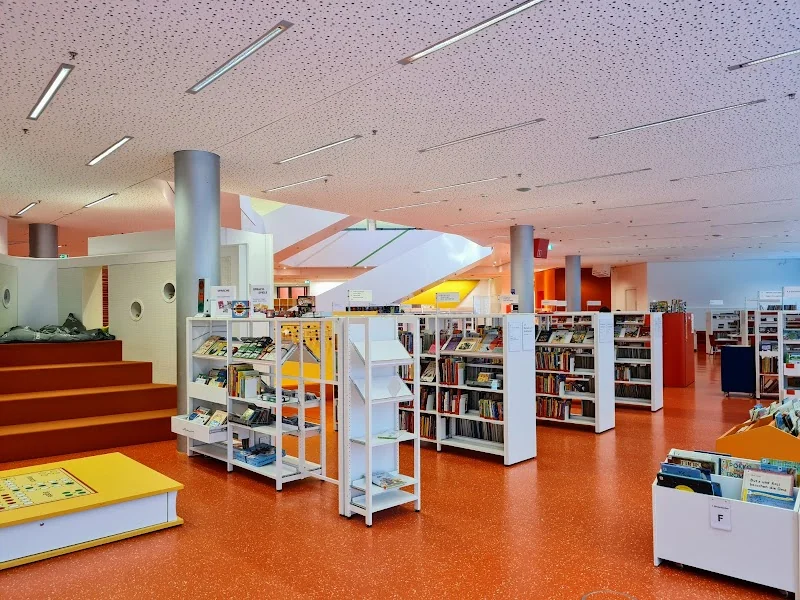
In the heart of Augsburg's city center, at Ernst-Reuter-Platz 1, is the central public library of the city: a light-filled house for knowledge seekers, reading fans, families, and learners. The central library was opened in 2009 and creates space for inspiring encounters with literature, music, and digital media over approximately 5,000 square meters. Today, it is the largest public library in Augsburg with around 170,000 media holdings and combines modern architecture with a wide range of services from analog lending to digital borrowing. Thanks to 24-hour return, central location, and good accessibility, it is a reliable place for the community – from quick media swaps during lunch breaks to focused studying in the evening. ([augsburg.de](https://www.augsburg.de/bildung-wirtschaft/bildung/bibliotheken-und-archive/stadtbuecherei-1/standorte-oeffnungszeiten/stadtbuecherei-am-ernst-reuter-platz))
Library near me: Directions, Parking, and Routes through the City Center
Those looking for the Library in Augsburg will find it in the city center at Ernst-Reuter-Platz, directly adjacent to the city market and just a few minutes from the major pedestrian axes. For those arriving by car, the Ernst-Reuter-Platz parking garage is recommended (Address: Ernst-Reuter-Platz 2). It is located right next to the city market and is usually open from Monday to Saturday from 6:30 AM to 12:00 AM; it is closed on holidays. From the garage, the path leads through the city center to the entrance of the library. This combination of central parking and short walking distances makes the visit particularly uncomplicated, especially when carrying media baskets or strollers. ([erp-parken.de](https://www.erp-parken.de/einblicke/))
Those who prefer public transport benefit from short distances between the hubs Königsplatz and Moritzplatz in Augsburg's city center. Within the so-called city zone, rides on buses and trams in the city center area are free, making spontaneous library visits easier. A short walk from the stops near the State Theater leads to the city library; for certain event formats, this routing is even explicitly recommended. Thus, the library can be comfortably reached not only by car and bike but also by public transport. Please note that specific line and stop names may vary depending on construction and operational status; in case of doubt, the city utilities' information can help. ([neue-szene.de](https://www.neue-szene.de/magazin/news/gratis-mit-bus-und-tram-durch-die-innenstadt?utm_source=openai))
The central location in the city center also offers orientation points: The city market is directly adjacent, and Maximilianstraße and other central squares are within walking distance. For those arriving by bicycle, there are parking facilities available in the pedestrian zone; those who prefer to park outside can also use the city zone connection. This way, the Library combines the advantages of an urban cultural address with very good accessibility for different target groups. ([erp-parken.de](https://www.erp-parken.de/einblicke/))
Library deutsch: Registration, Library Card, Fee Structure, and Who Can Use the Library
The entry into usage is deliberately designed to be low-threshold. With a library card, you have access to central services at all locations of the city library: you can borrow and return media, use internet and workspaces, copy and print, and reserve rooms for learning, working, or even making music. Registration is open to individuals residing in the fare zones of the Augsburg Transport Association (AVV) as well as anyone working, studying, or going to school in Augsburg; usually, an official ID is sufficient as proof. This regulation makes the library an openly accessible place for the entire region. ([augsburg.de](https://www.augsburg.de/bildung-wirtschaft/bildung/bibliotheken-und-archive/stadtbuecherei/so-gehts?utm_source=openai))
For children and families, it is particularly attractive that there is a free children's card. This allows young readers to independently borrow media, participate in events in the children's and youth library, and learn to handle books and digital offerings safely from an early age. Information on any fees, loan periods, or special regulations is governed by the city's regulations for the city library and is updated from time to time. New users receive a brief introduction on-site or can use the compact guide in simple language, which explains the most important steps from registration to return. ([augsburg.de](https://www.augsburg.de/fileadmin/user_upload/bildung_wirtschaft/bildung/bilbliotheken_archive/neue_stadtbuecherei/220315-Kinderbuecherei-Flyer-2022_v03.pdf?utm_source=openai))
Practically in everyday life: The central library at Ernst-Reuter-Platz has two return machines that are accessible around the clock. This allows loan periods to be reliably adhered to even outside regular opening hours. Notices about possible changes to opening hours – for example, on holidays – are communicated on the city's website. If you have questions, you can reach the service desk and information points by phone or through the respective contact forms. ([augsburg.de](https://www.augsburg.de/bildung-wirtschaft/bildung/bibliotheken-und-archive/stadtbuecherei-1/standorte-oeffnungszeiten/stadtbuecherei-am-ernst-reuter-platz))
Online Catalog and Digital Lending: Research, Reserve, Borrow Digitally
The Library offers a central online catalog for searching books, films, music, and other media. Users can search for media, check availability, place reservations, and extend loan periods. In addition to traditional lending, digital lending has established itself as a digital pillar: with a valid library card, eBooks, ePapers, eAudios, eMusic, and eVideos are available – conveniently over the internet and independent of opening hours. This is a significant convenience for commuters, students, or frequent travelers, as digital lending can be seamlessly integrated into daily life. ([onleihe.de](https://www.onleihe.de/augsburg?utm_source=openai))
Even those who prefer to read analog benefit from the transparent organization on-site: the collections are sorted by areas of interest, and the building is designed to facilitate both quick visits with targeted research and longer work sessions. Workspaces, learning zones, and quiet corners provide the right framework for every need. Since part of the sheet music and music book collections, as well as the entire record collection of the music library, are stored in the magazine, it is worth making a short inquiry with the team for special requests – many materials are available on short notice or can be specifically provided. ([augsburg.de](https://www.augsburg.de/bildung-wirtschaft/bildung/bibliotheken-und-archive/stadtbuecherei/so-gehts?utm_source=openai))
If you want to get an overview of new event formats or special collections, it is worth taking a look at the regularly updated information pages and event brochures. There you will also find compact information on using the catalog, reservations, loan periods, and industry-specific services such as interlibrary loans or media education offerings. The interplay of online catalog, digital lending, and personal consultation on-site makes the Library a contemporary educational and cultural place for all generations. ([augsburg.de](https://www.augsburg.de/bildung-wirtschaft/bildung/bibliotheken-und-archive/stadtbuecherei-1/standorte-oeffnungszeiten/stadtbuecherei-am-ernst-reuter-platz))
Children's and Youth Library, Music Library, and Special Collections
The central library at Ernst-Reuter-Platz combines several specialized areas under one roof. For the youngest, there is the children's and youth library relax with age-appropriate media, playful formats, and reading promotion offerings. Families also benefit from easily understandable informational materials and regular activities that playfully introduce reading, listening, and stories. For teenagers, the relax zone offers not only suitable media but also space for relaxed browsing and exchanging ideas with peers. ([augsburg.de](https://www.augsburg.de/bildung-wirtschaft/bildung/bibliotheken-und-archive/stadtbuecherei-1/standorte-oeffnungszeiten/stadtbuecherei-am-ernst-reuter-platz))
Music enthusiasts will find sheet music, specialist literature, and sound carriers in the music library. A special cultural-historical treasure is the music collection from the library of the patron James Loeb, which is preserved in Augsburg. This collection is not available for regular lending for conservation reasons, but it underscores the significance of the music tradition in the city and the care with which outstanding sources are maintained. For research on this collection, the library staff is the first point of contact; many details about the history of the collection are documented. ([jamesloeb.de](https://www.jamesloeb.de/de/james-loeb/james-loeb-und-die-musik?utm_source=openai))
Moreover, practice shows that the place is not just a lending station but a vibrant meeting point: reading recommendations, thematic book islands, and changing presentations structure the visit and facilitate orientation in the collections. This creates a house that meets everyday needs while also enabling cultural discoveries – from picture books to current novels to sophisticated non-fiction and music. ([augsburg.de](https://www.augsburg.de/bildung-wirtschaft/bildung/bibliotheken-und-archive/stadtbuecherei-1/standorte-oeffnungszeiten/stadtbuecherei-am-ernst-reuter-platz))
Program and Events: From Picture Book Cinema to Readings
The Library continuously publishes program brochures that are freely accessible as PDFs. These calendars cover readings, workshops, media literacy offerings, exhibitions, and formats for children and young people. Families can find dates for picture book cinemas, reading hours, or creative workshops; adults discover author talks, themed evenings, and informational offerings on digital reading. The thematic range spans from literature to environmental and consumer education to local history and music. ([augsburg.de](https://www.augsburg.de/bildung-wirtschaft/bildung/bibliotheken-und-archive/stadtbuecherei-1/standorte-oeffnungszeiten/stadtbuecherei-am-ernst-reuter-platz))
The fact that the house is anchored as an event venue in the community is also demonstrated by collaborations with local partners – from cultural initiatives to consumer education to municipal programs. In certain years or half-year programs, thematic focuses are set, which are developed in collaboration with initiatives, associations, or municipal offices. This openness to partnerships strengthens the character of the library as a place of encounter. For planning, it is worthwhile to take a look at the current calendars for the ongoing and upcoming half-year. ([augsburg.de](https://www.augsburg.de/bildung-wirtschaft/bildung/bibliotheken-und-archive/stadtbuecherei/aktuelles?utm_source=openai))
The municipal event calendar also features recurring actions and individual highlights taking place at the central library. Thus, city-wide formats such as science evenings, festivals, or reading nights are regularly complemented by library spaces in Augsburg. For visitors, this offers short distances and good networking with other cultural venues in the city. Those who want to combine a scheduled visit with a city stroll benefit from the central location between the city market, pedestrian zone, and Maxstraße. ([uni-augsburg.de](https://www.uni-augsburg.de/de/vkal/lange-nacht-der-wissenschaft?utm_source=openai))
Service, Accessibility, Opening Hours, and the Building
The central library is designed as an open house with clearly recognizable, colorful facade design. The building was opened in 2009 and is considered a striking attraction in Augsburg's city center with its lighting and color concept. In the publicly accessible areas, information desks, internet stations, and learning rooms are available; additionally, there are reservation options for work and music rooms. For barrier-free orientation, municipal information offerings are available, including materials in easy language. Those needing advice can reach the teams of information, children's and youth library, as well as the music library by phone or online. ([augsburg.de](https://www.augsburg.de/bildung-wirtschaft/bildung/bibliotheken-und-archive/stadtbuecherei-1/standorte-oeffnungszeiten/stadtbuecherei-am-ernst-reuter-platz))
Particularly user-friendly are the two return machines that are open around the clock. This allows media to be returned safely at any time, even if opening hours change at short notice. Notices about special closing days – for example, around holidays – are announced on the website. Furthermore, digital lending via the Onleihe is accessible at any time, allowing media use independent of daily rhythms. If you have questions on-site regarding registration, fees, or usage, you can receive quick assistance at the service desk; the legal framework conditions are documented in the city's fee and usage regulations. ([augsburg.de](https://www.augsburg.de/bildung-wirtschaft/bildung/bibliotheken-und-archive/stadtbuecherei-1/standorte-oeffnungszeiten/stadtbuecherei-am-ernst-reuter-platz))
As an urban cultural and educational venue, the Library benefits from its surroundings: city market, squares, and cultural sites are in immediate proximity. Access is possible on foot, by bike, via city zone with bus and tram, or through the parking garage at Ernst-Reuter-Platz. This networking also facilitates family visits, where shopping, market visits, and library stops can be combined. Those who want to experience the city center in an environmentally friendly way can take advantage of the public transport benefits in the city zone and the walkable paths between Königsplatz, Moritzplatz, and the city library. ([erp-parken.de](https://www.erp-parken.de/einblicke/))
Sources:
- City of Augsburg – City Library at Ernst-Reuter-Platz
- Onleihe Augsburg – Digital Lending
- Ernst-Reuter-Platz Parking Garages – Directions
- Ernst-Reuter-Platz Parking Garages – Information
- City of Augsburg – City Library How It Works
- Augsburger Allgemeine – City Library Loan Figures
- Neue Szene Augsburg – City Zone Public Transport
- Brechtfestival – Accessibility and Routes to the City Library
- James Loeb – Music Materials in the City Library Augsburg
- City of Augsburg – City Library News
Show moreShow less
Library | library deutsch & library near me
In the heart of Augsburg's city center, at Ernst-Reuter-Platz 1, is the central public library of the city: a light-filled house for knowledge seekers, reading fans, families, and learners. The central library was opened in 2009 and creates space for inspiring encounters with literature, music, and digital media over approximately 5,000 square meters. Today, it is the largest public library in Augsburg with around 170,000 media holdings and combines modern architecture with a wide range of services from analog lending to digital borrowing. Thanks to 24-hour return, central location, and good accessibility, it is a reliable place for the community – from quick media swaps during lunch breaks to focused studying in the evening. ([augsburg.de](https://www.augsburg.de/bildung-wirtschaft/bildung/bibliotheken-und-archive/stadtbuecherei-1/standorte-oeffnungszeiten/stadtbuecherei-am-ernst-reuter-platz))
Library near me: Directions, Parking, and Routes through the City Center
Those looking for the Library in Augsburg will find it in the city center at Ernst-Reuter-Platz, directly adjacent to the city market and just a few minutes from the major pedestrian axes. For those arriving by car, the Ernst-Reuter-Platz parking garage is recommended (Address: Ernst-Reuter-Platz 2). It is located right next to the city market and is usually open from Monday to Saturday from 6:30 AM to 12:00 AM; it is closed on holidays. From the garage, the path leads through the city center to the entrance of the library. This combination of central parking and short walking distances makes the visit particularly uncomplicated, especially when carrying media baskets or strollers. ([erp-parken.de](https://www.erp-parken.de/einblicke/))
Those who prefer public transport benefit from short distances between the hubs Königsplatz and Moritzplatz in Augsburg's city center. Within the so-called city zone, rides on buses and trams in the city center area are free, making spontaneous library visits easier. A short walk from the stops near the State Theater leads to the city library; for certain event formats, this routing is even explicitly recommended. Thus, the library can be comfortably reached not only by car and bike but also by public transport. Please note that specific line and stop names may vary depending on construction and operational status; in case of doubt, the city utilities' information can help. ([neue-szene.de](https://www.neue-szene.de/magazin/news/gratis-mit-bus-und-tram-durch-die-innenstadt?utm_source=openai))
The central location in the city center also offers orientation points: The city market is directly adjacent, and Maximilianstraße and other central squares are within walking distance. For those arriving by bicycle, there are parking facilities available in the pedestrian zone; those who prefer to park outside can also use the city zone connection. This way, the Library combines the advantages of an urban cultural address with very good accessibility for different target groups. ([erp-parken.de](https://www.erp-parken.de/einblicke/))
Library deutsch: Registration, Library Card, Fee Structure, and Who Can Use the Library
The entry into usage is deliberately designed to be low-threshold. With a library card, you have access to central services at all locations of the city library: you can borrow and return media, use internet and workspaces, copy and print, and reserve rooms for learning, working, or even making music. Registration is open to individuals residing in the fare zones of the Augsburg Transport Association (AVV) as well as anyone working, studying, or going to school in Augsburg; usually, an official ID is sufficient as proof. This regulation makes the library an openly accessible place for the entire region. ([augsburg.de](https://www.augsburg.de/bildung-wirtschaft/bildung/bibliotheken-und-archive/stadtbuecherei/so-gehts?utm_source=openai))
For children and families, it is particularly attractive that there is a free children's card. This allows young readers to independently borrow media, participate in events in the children's and youth library, and learn to handle books and digital offerings safely from an early age. Information on any fees, loan periods, or special regulations is governed by the city's regulations for the city library and is updated from time to time. New users receive a brief introduction on-site or can use the compact guide in simple language, which explains the most important steps from registration to return. ([augsburg.de](https://www.augsburg.de/fileadmin/user_upload/bildung_wirtschaft/bildung/bilbliotheken_archive/neue_stadtbuecherei/220315-Kinderbuecherei-Flyer-2022_v03.pdf?utm_source=openai))
Practically in everyday life: The central library at Ernst-Reuter-Platz has two return machines that are accessible around the clock. This allows loan periods to be reliably adhered to even outside regular opening hours. Notices about possible changes to opening hours – for example, on holidays – are communicated on the city's website. If you have questions, you can reach the service desk and information points by phone or through the respective contact forms. ([augsburg.de](https://www.augsburg.de/bildung-wirtschaft/bildung/bibliotheken-und-archive/stadtbuecherei-1/standorte-oeffnungszeiten/stadtbuecherei-am-ernst-reuter-platz))
Online Catalog and Digital Lending: Research, Reserve, Borrow Digitally
The Library offers a central online catalog for searching books, films, music, and other media. Users can search for media, check availability, place reservations, and extend loan periods. In addition to traditional lending, digital lending has established itself as a digital pillar: with a valid library card, eBooks, ePapers, eAudios, eMusic, and eVideos are available – conveniently over the internet and independent of opening hours. This is a significant convenience for commuters, students, or frequent travelers, as digital lending can be seamlessly integrated into daily life. ([onleihe.de](https://www.onleihe.de/augsburg?utm_source=openai))
Even those who prefer to read analog benefit from the transparent organization on-site: the collections are sorted by areas of interest, and the building is designed to facilitate both quick visits with targeted research and longer work sessions. Workspaces, learning zones, and quiet corners provide the right framework for every need. Since part of the sheet music and music book collections, as well as the entire record collection of the music library, are stored in the magazine, it is worth making a short inquiry with the team for special requests – many materials are available on short notice or can be specifically provided. ([augsburg.de](https://www.augsburg.de/bildung-wirtschaft/bildung/bibliotheken-und-archive/stadtbuecherei/so-gehts?utm_source=openai))
If you want to get an overview of new event formats or special collections, it is worth taking a look at the regularly updated information pages and event brochures. There you will also find compact information on using the catalog, reservations, loan periods, and industry-specific services such as interlibrary loans or media education offerings. The interplay of online catalog, digital lending, and personal consultation on-site makes the Library a contemporary educational and cultural place for all generations. ([augsburg.de](https://www.augsburg.de/bildung-wirtschaft/bildung/bibliotheken-und-archive/stadtbuecherei-1/standorte-oeffnungszeiten/stadtbuecherei-am-ernst-reuter-platz))
Children's and Youth Library, Music Library, and Special Collections
The central library at Ernst-Reuter-Platz combines several specialized areas under one roof. For the youngest, there is the children's and youth library relax with age-appropriate media, playful formats, and reading promotion offerings. Families also benefit from easily understandable informational materials and regular activities that playfully introduce reading, listening, and stories. For teenagers, the relax zone offers not only suitable media but also space for relaxed browsing and exchanging ideas with peers. ([augsburg.de](https://www.augsburg.de/bildung-wirtschaft/bildung/bibliotheken-und-archive/stadtbuecherei-1/standorte-oeffnungszeiten/stadtbuecherei-am-ernst-reuter-platz))
Music enthusiasts will find sheet music, specialist literature, and sound carriers in the music library. A special cultural-historical treasure is the music collection from the library of the patron James Loeb, which is preserved in Augsburg. This collection is not available for regular lending for conservation reasons, but it underscores the significance of the music tradition in the city and the care with which outstanding sources are maintained. For research on this collection, the library staff is the first point of contact; many details about the history of the collection are documented. ([jamesloeb.de](https://www.jamesloeb.de/de/james-loeb/james-loeb-und-die-musik?utm_source=openai))
Moreover, practice shows that the place is not just a lending station but a vibrant meeting point: reading recommendations, thematic book islands, and changing presentations structure the visit and facilitate orientation in the collections. This creates a house that meets everyday needs while also enabling cultural discoveries – from picture books to current novels to sophisticated non-fiction and music. ([augsburg.de](https://www.augsburg.de/bildung-wirtschaft/bildung/bibliotheken-und-archive/stadtbuecherei-1/standorte-oeffnungszeiten/stadtbuecherei-am-ernst-reuter-platz))
Program and Events: From Picture Book Cinema to Readings
The Library continuously publishes program brochures that are freely accessible as PDFs. These calendars cover readings, workshops, media literacy offerings, exhibitions, and formats for children and young people. Families can find dates for picture book cinemas, reading hours, or creative workshops; adults discover author talks, themed evenings, and informational offerings on digital reading. The thematic range spans from literature to environmental and consumer education to local history and music. ([augsburg.de](https://www.augsburg.de/bildung-wirtschaft/bildung/bibliotheken-und-archive/stadtbuecherei-1/standorte-oeffnungszeiten/stadtbuecherei-am-ernst-reuter-platz))
The fact that the house is anchored as an event venue in the community is also demonstrated by collaborations with local partners – from cultural initiatives to consumer education to municipal programs. In certain years or half-year programs, thematic focuses are set, which are developed in collaboration with initiatives, associations, or municipal offices. This openness to partnerships strengthens the character of the library as a place of encounter. For planning, it is worthwhile to take a look at the current calendars for the ongoing and upcoming half-year. ([augsburg.de](https://www.augsburg.de/bildung-wirtschaft/bildung/bibliotheken-und-archive/stadtbuecherei/aktuelles?utm_source=openai))
The municipal event calendar also features recurring actions and individual highlights taking place at the central library. Thus, city-wide formats such as science evenings, festivals, or reading nights are regularly complemented by library spaces in Augsburg. For visitors, this offers short distances and good networking with other cultural venues in the city. Those who want to combine a scheduled visit with a city stroll benefit from the central location between the city market, pedestrian zone, and Maxstraße. ([uni-augsburg.de](https://www.uni-augsburg.de/de/vkal/lange-nacht-der-wissenschaft?utm_source=openai))
Service, Accessibility, Opening Hours, and the Building
The central library is designed as an open house with clearly recognizable, colorful facade design. The building was opened in 2009 and is considered a striking attraction in Augsburg's city center with its lighting and color concept. In the publicly accessible areas, information desks, internet stations, and learning rooms are available; additionally, there are reservation options for work and music rooms. For barrier-free orientation, municipal information offerings are available, including materials in easy language. Those needing advice can reach the teams of information, children's and youth library, as well as the music library by phone or online. ([augsburg.de](https://www.augsburg.de/bildung-wirtschaft/bildung/bibliotheken-und-archive/stadtbuecherei-1/standorte-oeffnungszeiten/stadtbuecherei-am-ernst-reuter-platz))
Particularly user-friendly are the two return machines that are open around the clock. This allows media to be returned safely at any time, even if opening hours change at short notice. Notices about special closing days – for example, around holidays – are announced on the website. Furthermore, digital lending via the Onleihe is accessible at any time, allowing media use independent of daily rhythms. If you have questions on-site regarding registration, fees, or usage, you can receive quick assistance at the service desk; the legal framework conditions are documented in the city's fee and usage regulations. ([augsburg.de](https://www.augsburg.de/bildung-wirtschaft/bildung/bibliotheken-und-archive/stadtbuecherei-1/standorte-oeffnungszeiten/stadtbuecherei-am-ernst-reuter-platz))
As an urban cultural and educational venue, the Library benefits from its surroundings: city market, squares, and cultural sites are in immediate proximity. Access is possible on foot, by bike, via city zone with bus and tram, or through the parking garage at Ernst-Reuter-Platz. This networking also facilitates family visits, where shopping, market visits, and library stops can be combined. Those who want to experience the city center in an environmentally friendly way can take advantage of the public transport benefits in the city zone and the walkable paths between Königsplatz, Moritzplatz, and the city library. ([erp-parken.de](https://www.erp-parken.de/einblicke/))
Sources:
- City of Augsburg – City Library at Ernst-Reuter-Platz
- Onleihe Augsburg – Digital Lending
- Ernst-Reuter-Platz Parking Garages – Directions
- Ernst-Reuter-Platz Parking Garages – Information
- City of Augsburg – City Library How It Works
- Augsburger Allgemeine – City Library Loan Figures
- Neue Szene Augsburg – City Zone Public Transport
- Brechtfestival – Accessibility and Routes to the City Library
- James Loeb – Music Materials in the City Library Augsburg
- City of Augsburg – City Library News
Library | library deutsch & library near me
In the heart of Augsburg's city center, at Ernst-Reuter-Platz 1, is the central public library of the city: a light-filled house for knowledge seekers, reading fans, families, and learners. The central library was opened in 2009 and creates space for inspiring encounters with literature, music, and digital media over approximately 5,000 square meters. Today, it is the largest public library in Augsburg with around 170,000 media holdings and combines modern architecture with a wide range of services from analog lending to digital borrowing. Thanks to 24-hour return, central location, and good accessibility, it is a reliable place for the community – from quick media swaps during lunch breaks to focused studying in the evening. ([augsburg.de](https://www.augsburg.de/bildung-wirtschaft/bildung/bibliotheken-und-archive/stadtbuecherei-1/standorte-oeffnungszeiten/stadtbuecherei-am-ernst-reuter-platz))
Library near me: Directions, Parking, and Routes through the City Center
Those looking for the Library in Augsburg will find it in the city center at Ernst-Reuter-Platz, directly adjacent to the city market and just a few minutes from the major pedestrian axes. For those arriving by car, the Ernst-Reuter-Platz parking garage is recommended (Address: Ernst-Reuter-Platz 2). It is located right next to the city market and is usually open from Monday to Saturday from 6:30 AM to 12:00 AM; it is closed on holidays. From the garage, the path leads through the city center to the entrance of the library. This combination of central parking and short walking distances makes the visit particularly uncomplicated, especially when carrying media baskets or strollers. ([erp-parken.de](https://www.erp-parken.de/einblicke/))
Those who prefer public transport benefit from short distances between the hubs Königsplatz and Moritzplatz in Augsburg's city center. Within the so-called city zone, rides on buses and trams in the city center area are free, making spontaneous library visits easier. A short walk from the stops near the State Theater leads to the city library; for certain event formats, this routing is even explicitly recommended. Thus, the library can be comfortably reached not only by car and bike but also by public transport. Please note that specific line and stop names may vary depending on construction and operational status; in case of doubt, the city utilities' information can help. ([neue-szene.de](https://www.neue-szene.de/magazin/news/gratis-mit-bus-und-tram-durch-die-innenstadt?utm_source=openai))
The central location in the city center also offers orientation points: The city market is directly adjacent, and Maximilianstraße and other central squares are within walking distance. For those arriving by bicycle, there are parking facilities available in the pedestrian zone; those who prefer to park outside can also use the city zone connection. This way, the Library combines the advantages of an urban cultural address with very good accessibility for different target groups. ([erp-parken.de](https://www.erp-parken.de/einblicke/))
Library deutsch: Registration, Library Card, Fee Structure, and Who Can Use the Library
The entry into usage is deliberately designed to be low-threshold. With a library card, you have access to central services at all locations of the city library: you can borrow and return media, use internet and workspaces, copy and print, and reserve rooms for learning, working, or even making music. Registration is open to individuals residing in the fare zones of the Augsburg Transport Association (AVV) as well as anyone working, studying, or going to school in Augsburg; usually, an official ID is sufficient as proof. This regulation makes the library an openly accessible place for the entire region. ([augsburg.de](https://www.augsburg.de/bildung-wirtschaft/bildung/bibliotheken-und-archive/stadtbuecherei/so-gehts?utm_source=openai))
For children and families, it is particularly attractive that there is a free children's card. This allows young readers to independently borrow media, participate in events in the children's and youth library, and learn to handle books and digital offerings safely from an early age. Information on any fees, loan periods, or special regulations is governed by the city's regulations for the city library and is updated from time to time. New users receive a brief introduction on-site or can use the compact guide in simple language, which explains the most important steps from registration to return. ([augsburg.de](https://www.augsburg.de/fileadmin/user_upload/bildung_wirtschaft/bildung/bilbliotheken_archive/neue_stadtbuecherei/220315-Kinderbuecherei-Flyer-2022_v03.pdf?utm_source=openai))
Practically in everyday life: The central library at Ernst-Reuter-Platz has two return machines that are accessible around the clock. This allows loan periods to be reliably adhered to even outside regular opening hours. Notices about possible changes to opening hours – for example, on holidays – are communicated on the city's website. If you have questions, you can reach the service desk and information points by phone or through the respective contact forms. ([augsburg.de](https://www.augsburg.de/bildung-wirtschaft/bildung/bibliotheken-und-archive/stadtbuecherei-1/standorte-oeffnungszeiten/stadtbuecherei-am-ernst-reuter-platz))
Online Catalog and Digital Lending: Research, Reserve, Borrow Digitally
The Library offers a central online catalog for searching books, films, music, and other media. Users can search for media, check availability, place reservations, and extend loan periods. In addition to traditional lending, digital lending has established itself as a digital pillar: with a valid library card, eBooks, ePapers, eAudios, eMusic, and eVideos are available – conveniently over the internet and independent of opening hours. This is a significant convenience for commuters, students, or frequent travelers, as digital lending can be seamlessly integrated into daily life. ([onleihe.de](https://www.onleihe.de/augsburg?utm_source=openai))
Even those who prefer to read analog benefit from the transparent organization on-site: the collections are sorted by areas of interest, and the building is designed to facilitate both quick visits with targeted research and longer work sessions. Workspaces, learning zones, and quiet corners provide the right framework for every need. Since part of the sheet music and music book collections, as well as the entire record collection of the music library, are stored in the magazine, it is worth making a short inquiry with the team for special requests – many materials are available on short notice or can be specifically provided. ([augsburg.de](https://www.augsburg.de/bildung-wirtschaft/bildung/bibliotheken-und-archive/stadtbuecherei/so-gehts?utm_source=openai))
If you want to get an overview of new event formats or special collections, it is worth taking a look at the regularly updated information pages and event brochures. There you will also find compact information on using the catalog, reservations, loan periods, and industry-specific services such as interlibrary loans or media education offerings. The interplay of online catalog, digital lending, and personal consultation on-site makes the Library a contemporary educational and cultural place for all generations. ([augsburg.de](https://www.augsburg.de/bildung-wirtschaft/bildung/bibliotheken-und-archive/stadtbuecherei-1/standorte-oeffnungszeiten/stadtbuecherei-am-ernst-reuter-platz))
Children's and Youth Library, Music Library, and Special Collections
The central library at Ernst-Reuter-Platz combines several specialized areas under one roof. For the youngest, there is the children's and youth library relax with age-appropriate media, playful formats, and reading promotion offerings. Families also benefit from easily understandable informational materials and regular activities that playfully introduce reading, listening, and stories. For teenagers, the relax zone offers not only suitable media but also space for relaxed browsing and exchanging ideas with peers. ([augsburg.de](https://www.augsburg.de/bildung-wirtschaft/bildung/bibliotheken-und-archive/stadtbuecherei-1/standorte-oeffnungszeiten/stadtbuecherei-am-ernst-reuter-platz))
Music enthusiasts will find sheet music, specialist literature, and sound carriers in the music library. A special cultural-historical treasure is the music collection from the library of the patron James Loeb, which is preserved in Augsburg. This collection is not available for regular lending for conservation reasons, but it underscores the significance of the music tradition in the city and the care with which outstanding sources are maintained. For research on this collection, the library staff is the first point of contact; many details about the history of the collection are documented. ([jamesloeb.de](https://www.jamesloeb.de/de/james-loeb/james-loeb-und-die-musik?utm_source=openai))
Moreover, practice shows that the place is not just a lending station but a vibrant meeting point: reading recommendations, thematic book islands, and changing presentations structure the visit and facilitate orientation in the collections. This creates a house that meets everyday needs while also enabling cultural discoveries – from picture books to current novels to sophisticated non-fiction and music. ([augsburg.de](https://www.augsburg.de/bildung-wirtschaft/bildung/bibliotheken-und-archive/stadtbuecherei-1/standorte-oeffnungszeiten/stadtbuecherei-am-ernst-reuter-platz))
Program and Events: From Picture Book Cinema to Readings
The Library continuously publishes program brochures that are freely accessible as PDFs. These calendars cover readings, workshops, media literacy offerings, exhibitions, and formats for children and young people. Families can find dates for picture book cinemas, reading hours, or creative workshops; adults discover author talks, themed evenings, and informational offerings on digital reading. The thematic range spans from literature to environmental and consumer education to local history and music. ([augsburg.de](https://www.augsburg.de/bildung-wirtschaft/bildung/bibliotheken-und-archive/stadtbuecherei-1/standorte-oeffnungszeiten/stadtbuecherei-am-ernst-reuter-platz))
The fact that the house is anchored as an event venue in the community is also demonstrated by collaborations with local partners – from cultural initiatives to consumer education to municipal programs. In certain years or half-year programs, thematic focuses are set, which are developed in collaboration with initiatives, associations, or municipal offices. This openness to partnerships strengthens the character of the library as a place of encounter. For planning, it is worthwhile to take a look at the current calendars for the ongoing and upcoming half-year. ([augsburg.de](https://www.augsburg.de/bildung-wirtschaft/bildung/bibliotheken-und-archive/stadtbuecherei/aktuelles?utm_source=openai))
The municipal event calendar also features recurring actions and individual highlights taking place at the central library. Thus, city-wide formats such as science evenings, festivals, or reading nights are regularly complemented by library spaces in Augsburg. For visitors, this offers short distances and good networking with other cultural venues in the city. Those who want to combine a scheduled visit with a city stroll benefit from the central location between the city market, pedestrian zone, and Maxstraße. ([uni-augsburg.de](https://www.uni-augsburg.de/de/vkal/lange-nacht-der-wissenschaft?utm_source=openai))
Service, Accessibility, Opening Hours, and the Building
The central library is designed as an open house with clearly recognizable, colorful facade design. The building was opened in 2009 and is considered a striking attraction in Augsburg's city center with its lighting and color concept. In the publicly accessible areas, information desks, internet stations, and learning rooms are available; additionally, there are reservation options for work and music rooms. For barrier-free orientation, municipal information offerings are available, including materials in easy language. Those needing advice can reach the teams of information, children's and youth library, as well as the music library by phone or online. ([augsburg.de](https://www.augsburg.de/bildung-wirtschaft/bildung/bibliotheken-und-archive/stadtbuecherei-1/standorte-oeffnungszeiten/stadtbuecherei-am-ernst-reuter-platz))
Particularly user-friendly are the two return machines that are open around the clock. This allows media to be returned safely at any time, even if opening hours change at short notice. Notices about special closing days – for example, around holidays – are announced on the website. Furthermore, digital lending via the Onleihe is accessible at any time, allowing media use independent of daily rhythms. If you have questions on-site regarding registration, fees, or usage, you can receive quick assistance at the service desk; the legal framework conditions are documented in the city's fee and usage regulations. ([augsburg.de](https://www.augsburg.de/bildung-wirtschaft/bildung/bibliotheken-und-archive/stadtbuecherei-1/standorte-oeffnungszeiten/stadtbuecherei-am-ernst-reuter-platz))
As an urban cultural and educational venue, the Library benefits from its surroundings: city market, squares, and cultural sites are in immediate proximity. Access is possible on foot, by bike, via city zone with bus and tram, or through the parking garage at Ernst-Reuter-Platz. This networking also facilitates family visits, where shopping, market visits, and library stops can be combined. Those who want to experience the city center in an environmentally friendly way can take advantage of the public transport benefits in the city zone and the walkable paths between Königsplatz, Moritzplatz, and the city library. ([erp-parken.de](https://www.erp-parken.de/einblicke/))
Sources:
- City of Augsburg – City Library at Ernst-Reuter-Platz
- Onleihe Augsburg – Digital Lending
- Ernst-Reuter-Platz Parking Garages – Directions
- Ernst-Reuter-Platz Parking Garages – Information
- City of Augsburg – City Library How It Works
- Augsburger Allgemeine – City Library Loan Figures
- Neue Szene Augsburg – City Zone Public Transport
- Brechtfestival – Accessibility and Routes to the City Library
- James Loeb – Music Materials in the City Library Augsburg
- City of Augsburg – City Library News
Upcoming Events
Digital Day: Digital Security. Understand. Communicate. Trust
Visit the Digital Day in Augsburg and explore exciting topics related to digital security. Free admission!
together digital: Smartphone made easy
Learn about your smartphone or tablet at a free consultation on July 3, 2026, in the city library of Augsburg.
Frequently Asked Questions
Reviews
Julian S.
3. March 2017
Awesome public library with a wide selection of books, music, films, games for kids and lots more. Materials are available in many languages. Also an excellent place to simply read and relax. The card for one year is very inexpensive as well.
Ntege
22. March 2025
It is a great library, just, you need the library card to enjoy it to its fullest. And it is worth it.
kamel shihabi
17. April 2016
It's the best library I've ever been in. Open for all. Decent Internet. Not really expensive I recommend it.
Robin Schmidt
6. June 2017
Nice place. There you can read so many books or just chill with friends.
Kristijan Kuš
30. May 2019
...The fastest internet that I have used in one library...