
Augsburg
Branderstraße 60, 86154 Augsburg, Deutschland
Helmut-Haller-Platz | Events & Parking
The Helmut-Haller-Platz is located in front of the Oberhausen train station in Augsburg and is much more than just a transfer area. The city describes the place as a central public space in the Oberhausen district, which serves as a traffic area, a place to stay, and a meeting point at the same time. This mix makes the address interesting for people looking for maps, reviews, parking, events, or renovations: It is not about a classic event hall, but about an urban square with a train station, tram, bus, regional train connections, and a clear urban planning vision for the future. The Helmut-Haller-Platz is thus an example of a place where mobility, urban life, and neighborhood development meet directly. The city aims to enhance the forecourt of the Oberhausen train station, create more green space, and strengthen the square as a meeting point for everyday life and special occasions. At the same time, it remains a highly frequented hub in the north of the city, connecting regional and local routes. ([augsburg.de](https://www.augsburg.de/buergerservice-rathaus/stadtplanung/projekte/helmut-haller-platz))
Those searching for the Helmut-Haller-Platz are usually looking for more than just a geographical location, but a specific utility: How do I get there, where do I transfer, what is happening there, and how will the square change in the coming years? The current planning of the city of Augsburg responds exactly to this. The project page makes it clear that the square is to provide more space for festivals and other events in the future, but also for quiet relaxation in everyday life. This is an important urban planning distinction: The place is not conceived as a closed event venue, but as an open space with changing functions. This is attractive for visitors because it creates a mix of arriving, waiting, meeting, passing through, and experiencing. For Oberhausen, it is a place that shapes identity, which should enhance the train station forecourt not only functionally but also atmospherically. ([augsburg.de](https://www.augsburg.de/buergerservice-rathaus/stadtplanung/projekte/helmut-haller-platz))
The name itself also contributes to the perception. Helmut Haller was an internationally renowned footballer from Augsburg, who was born in the city and grew up in Oberhausen. Naming the square connects mobility and neighborhood history with a personality that is an emotional reference point for many people in Augsburg. Therefore, when searching for Helmut-Haller-Platz, Helmut Haller Platz Oberhausen, or Helmut-Haller-Platz Augsburg, people often mean the square, the train station, and the local memory project surrounding the former football star. This makes the search intention very multifaceted: It is about the real place, its development, and its history. That is why a good classification is important. The Helmut-Haller-Platz is a train station forecourt of public significance, a meeting point in the neighborhood, and a place in transition that is intended to appear significantly greener, more open, and better structured in the future. ([augsburg.de](https://www.augsburg.de/kultur/beruehmte-persoenlichkeiten/helmut-haller?utm_source=openai))
Events and Use of the Helmut-Haller-Platz
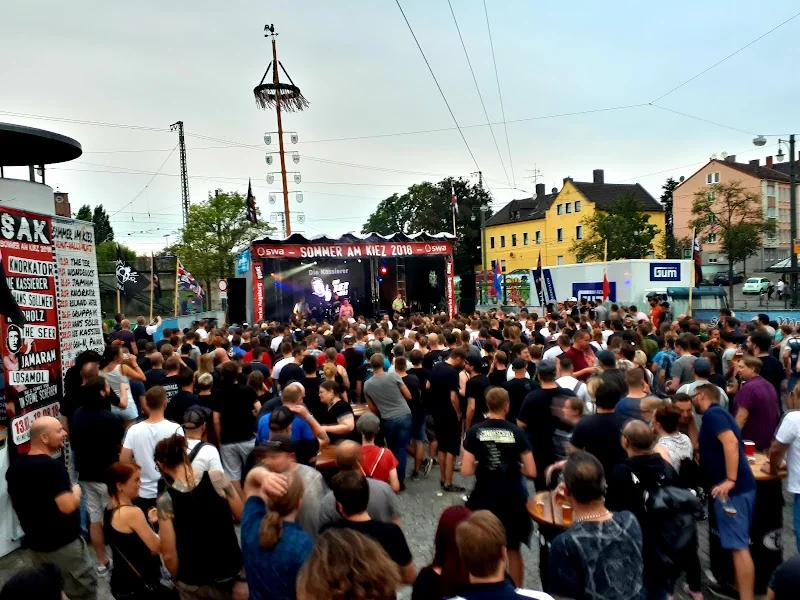
The city of Augsburg explicitly plans the Helmut-Haller-Platz as a place where not only traffic occurs but also everyday life and encounters. The official project page states that there will be space for festivals and other events. Particularly important is the future center of the square, which is intended as a flexible event venue. Specifically mentioned are music festivals, weekly markets, and peace tables. This makes it clear that the area is not to receive a rigid single-purpose use, but can function differently depending on the occasion. This is crucial for search intentions around Helmut-Haller-Platz events, festivals, or concerts: It is not meant to be a ticket live club, but a public space prepared for larger and smaller encounters. Such places are valuable from an urban planning perspective because they provide calm in everyday life and become a stage for the neighborhood during special events. ([augsburg.de](https://www.augsburg.de/buergerservice-rathaus/stadtplanung/projekte/helmut-haller-platz))
The versatility of the square is also reflected in the public description of the city society. The prevention group Links der Wertach points out that the Helmut-Haller-Platz is a popular event location where concerts and beer gardens, peace tables, Christmas markets, and cherry blossom festivals take place. This mix makes the location relevant for different target groups: families, commuters, neighborhood initiatives, culture enthusiasts, and people simply looking for an open urban space. This is an important distinction from a closed event location. The Helmut-Haller-Platz thrives on being open, visible, and flexible. For SEO search queries, this is valuable because many users search for current events, even though they essentially mean a public square. Therefore, the representation should always make it clear: This is about an urban meeting place with event potential, not a classic hall or theater building. ([augsburg.de](https://www.augsburg.de/buergerservice-rathaus/kommunale-praevention/oeffentlicher-raum/praeventionsgruppe-links-der-wertach?utm_source=openai))
The planned use is closely linked to the quality of stay. The city wants to open the square not only for large occasions but also for daily breaks, waiting, meetings, and short stays. New green areas, trees, shaded areas, and a pergola with a green roof are intended to ensure that the place remains attractive even outside of events. For visitors, this means: The Helmut-Haller-Platz is to function even more strongly as an urban meeting point in the future, where one not only arrives but also enjoys staying. This dual function is important for content planning because it puts the search terms events, photos, maps, and reviews into a meaningful context. Those who evaluate the square are thus not only assessing a traffic area but a piece of urban life that mediates between mobility hub and place to stay. This tension makes the square interesting and explains why it is so strongly discussed in Augsburg. ([augsburg.de](https://www.augsburg.de/buergerservice-rathaus/stadtplanung/projekte/helmut-haller-platz))
In practice, this means: Those interested in Helmut-Haller-Platz concert or Helmut-Haller-Platz festival should keep an eye on the open spaces and the urban usage ideas. The city describes the square as a place for encounters and culture. This should not be read as a rigid program announcement, but as a planning statement: The area is designed to accommodate cultural and social formats. Especially in the Oberhausen district, which is characterized by many paths and uses, such a square can be identity-forming. It makes the neighborhood more visible, provides opportunities for shared use, and creates an address that plays a role in everyday life as well as on special occasions. This openness is the core of the new concept and thus also the core of what most searchers expect under events at Helmut-Haller-Platz. ([augsburg.de](https://www.augsburg.de/buergerservice-rathaus/stadtplanung/projekte/helmut-haller-platz))
Access by Train, Tram, and Bus
Access is one of the most important reasons why people search for the Helmut-Haller-Platz. The official AVV entry for the Oberhausen Bf/Helmut-Haller-Platz stop clearly shows how strongly the location is integrated into local and regional transport. Regional trains stop there on several tracks, as well as tram line 2, city bus line 35, night bus line 91, and several regional bus lines. Thus, the square is not just a street space, but a real transfer point between the city and the region. For visitors, this means: Those who want to go to Helmut-Haller-Platz can travel very well by public transport. The combination of train station, tram, and bus makes the place functionally strong. For search queries like Helmut-Haller-Platz maps or Helmut-Haller-Platz augsburg maps, the official stop overview of the AVV is particularly relevant because it makes the routes and lines most clearly visible. ([avv-augsburg.de](https://www.avv-augsburg.de/verbindungen/wichtige-haltestellen?utm_source=openai))
Particularly important is line 2, which connects the Oberhausen train station or Helmut-Haller-Platz with the city center and other districts. The city bus line 35, which stops at the location in both directions and connects the square with Pfersee and Bergstraße, is also relevant. The night bus line 91 complements the offer and makes the location usable in the evening and at night. In addition, the regional train connections show the Oberhausen train station as part of a larger network. This is important for travelers and commuters because the square is not only interesting for local routes but also as an entry point into regional transport. So, when searching for Helmut-Haller-Platz 86154 Augsburg, one usually means a place with very good accessibility, not a remote address. The quality of mobility is part of the identity of the place here. ([avv-augsburg.de](https://www.avv-augsburg.de/verbindungen/wichtige-haltestellen?utm_source=openai))
The city itself also emphasizes the mobility role of the square. In the redesign, there is an explicit mention of a previously narrow and confusing situation in front of the train station that is to be restructured. A modern forecourt for taxis, kiss and ride, and rail replacement transport will be created in the south. In addition, a mobility hub will be established on Grafstraße with bike and car sharing as well as new bicycle parking spaces. Therefore, those planning their arrival practically should understand the square not only as a destination but as a traffic hub. This is particularly important for people traveling with luggage, children, or multiple transfers. The Helmut-Haller-Platz is thus a classic case for an urban hub, where routes should be short and transfers should function as barrier-free as possible. This logic shapes the current planning. ([augsburg.de](https://www.augsburg.de/buergerservice-rathaus/stadtplanung/projekte/helmut-haller-platz))
For visitors who are specifically looking for the location on the map, it is also helpful that the city links a location in the city map on its project page. This supports search queries for maps, addresses, and orientation. At the same time, the most important practical message remains: The Helmut-Haller-Platz is very well accessible via the Oberhausen train station in the AVV network. Those arriving by train or tram land directly at the square or in the immediate vicinity. Those traveling by bus also have a central stop. And those traveling at night benefit from the additional night bus connection. In combination, this results in one of the most convenient accesses in the northern part of Augsburg. Therefore, the square is an important mobility location not only from an urban planning perspective but also from a user perspective. ([augsburg.de](https://www.augsburg.de/buergerservice-rathaus/stadtplanung/projekte/helmut-haller-platz))
Parking, Mobility Hub, and Kiss & Ride
When it comes to parking, one should properly classify the Helmut-Haller-Platz: It is not a classic event parking lot, but a train station forecourt with a mobility function. The official project page of the city does not mention a large parking area directly at the square, but focuses on a mobility hub with bike and car sharing, new bicycle parking spaces, and a clearly structured forecourt with taxi, kiss and ride, and rail replacement transport areas. This is important for the search intention Helmut Haller Platz Augsburg parking because visitors should not be looking for a parking garage in the classic sense, but for an urban transfer solution. The city's decision is clear: The area is to accommodate traffic but not primarily function as a car parking lot. ([augsburg.de](https://www.augsburg.de/buergerservice-rathaus/stadtplanung/projekte/helmut-haller-platz))
For drivers, the general parking infrastructure of the city of Augsburg remains relevant. The city refers to its parking and P+R offers, which can be useful depending on the destination and duration of stay. Especially if one only wants to go briefly to the train station forecourt, kiss and ride or the stopping options at the forecourt are more important from a planning perspective than long-term parking directly at the square. Those who want to stay longer are more likely to orient themselves towards the city's parking options in the vicinity or P+R solutions. This fits with the overall idea of the location, as the Helmut-Haller-Platz should not be dominated by cars but function as a well-accessible public space. The focus is clearly on transfer, movement, and quality of stay. Therefore, the keyword parking here should always be read in connection with local transport, footpaths, and neighborhood logic. ([augsburg.de](https://www.augsburg.de/buergerservice-rathaus/verkehr/parken/?utm_source=openai))
Particularly practical is the planned south side of the square. According to the city, a modern forecourt with areas for taxis, kiss and ride, and rail replacement transport is being created there. This structure makes the square more flexible because passengers, pick-up persons, and replacement transports can be organized separately and clearly. At the same time, this reduces the congestion in front of the train station, which has often been described as confusing in the past. For visitors, this means: Those who do not arrive by tram or train will still find a clear traffic logic. This is important for families, older people, or those with a lot of luggage because short stopping distances and organized processes make the visit much more pleasant. The word parking is thus only a part of the larger mobility picture at Helmut-Haller-Platz. The crucial point is the combination of stopping, transferring, and continuing. ([augsburg.de](https://www.augsburg.de/buergerservice-rathaus/stadtplanung/projekte/helmut-haller-platz))
Those searching for parking at Helmut-Haller-Platz should also consider that the square is located in an urbanistically sensitive environment. The planning aims to create more green space, better paths, and a new center for the square. These goals can only be achieved if the area is not used as a mere parking reserve. Therefore, the city's statement is so clear: Mobility yes, but in a modern, shared, and pedestrian-friendly form. Exactly from this arise new qualities that are often more attractive to visitors than a large asphalt area. The Helmut-Haller-Platz thus becomes an example of contemporary urban development, where accessibility, environmental friendliness, and quality of stay are considered together. This makes the parking issue important, but not dominant. ([augsburg.de](https://www.augsburg.de/buergerservice-rathaus/stadtplanung/projekte/helmut-haller-platz))
Renovation, Green Planning, and Barrier-Free Access
The current redesign is the heart of the official information about Helmut-Haller-Platz. The city focuses on sustainability, preserving healthy trees, new green spaces, and a steel pergola with a green roof. In addition, green islands along Grafstraße, additional trees, and shady resting areas will be created. A flexible event venue is to be established in the center of the square, which can be used differently depending on the occasion. A modern water feature with bubbling nozzles is also planned and is intended to provide cooling in summer. These elements make it clear that the square is to become not only more functional but also more climatically and socially pleasant. From a rather hard traffic forecourt, it is to become a place that appears visibly greener, more inviting, and livelier. ([augsburg.de](https://www.augsburg.de/buergerservice-rathaus/stadtplanung/projekte/helmut-haller-platz))
For urban development, it is particularly important that the redesign strengthens the primary function of the square as the train station forecourt of Oberhausen. This means: The square remains a hub of mobility but receives a better spatial framing and clearer edges. The city describes the previous situation as spatially not really defined and characterized by different uses. Exactly here, the planning sets in. With more trees, green islands, and a covered pergola, the square is to become not just a passage but also a place to stay. For visitors, this is a noticeable gain because one will be able to wait, meet, or take a short break better in the future. In everyday life, such details are often underestimated, but they determine whether a place is perceived as pleasant or purely functional. The Helmut-Haller-Platz is to be clearly developed towards a pleasant urban space. ([augsburg.de](https://www.augsburg.de/buergerservice-rathaus/stadtplanung/staedtebauliche-projekte/soziale-stadt-oberhausen-mitte/massnahmen/neugestaltung-helmut-haller-platz?utm_source=openai))
Another central aspect is accessibility. The city explicitly states that access to the listed train station building will be renovated to be barrier-free. This is relevant not only for people with mobility impairments but also for parents with strollers, travelers with luggage, and older people. In a modern train station environment, accessibility is not an additional option but a basic requirement. Together with the new forecourt, bicycle parking spaces, and the mobility hub, a place is created where different modes of transport are organized cleanly. For the external perception, this means a lot: The Helmut-Haller-Platz will no longer be perceived as a difficult leftover area but as a consciously designed entrance area to the train station. Such signals shape how a neighborhood is experienced. ([augsburg.de](https://www.augsburg.de/buergerservice-rathaus/stadtplanung/projekte/helmut-haller-platz))
The climate aspect also plays a significant role. The city speaks of a climate-friendly feel-good place, of preserving and supplementing existing plants, and of new trees that are to provide shade and quality of stay. For users, this means more protection in summer, more structure in everyday life, and overall a friendlier environment. The water feature complements this idea because it combines quality of stay with play and cooling. Such measures are particularly sensible at highly frequented locations because they complement the pure transit function with lively offers for staying. In this sense, the renovation of Helmut-Haller-Platz is not a cosmetic measure but a genuine reorganization of public space. This is also important for later perception because search queries related to renovation, photos, and reviews will then make the transformation of the square visible. ([augsburg.de](https://www.augsburg.de/buergerservice-rathaus/stadtplanung/projekte/helmut-haller-platz))
Helmut Haller, Oberhausen, and the History of the Name
The name Helmut-Haller-Platz is closely linked to the football history of Augsburg. Helmut Haller was born in Augsburg and grew up in Oberhausen. The city describes him as one of the great football personalities in its history, having played 33 international matches and participated in three World Cups. For many people, he remains a symbol of Augsburg's sports identity and local connection. That a central train station forecourt was named after him is therefore more than just a formal dedication. It is an urban commitment to local memory culture. Therefore, when searching for Helmut Haller Platz Oberhausen, one is not only looking for a place but also a story that is deeply rooted in the neighborhood. ([augsburg.de](https://www.augsburg.de/kultur/beruehmte-persoenlichkeiten/helmut-haller?utm_source=openai))
The city of Augsburg emphasizes on its personality page that Haller was among the most popular footballers in Germany in the 1950s and 1960s and also made a name for himself in Italy. There he became champion with Bologna and Juventus. Such biographical facts explain why the name of the square generates so much recognition in the Oberhausen district. A square located in front of the train station does not become anonymous through this naming but is personally charged. This is important for residents because a public space with a local reference is often accepted and perceived more strongly. The Helmut-Haller-Platz thus also becomes a place of identification where sports history, neighborhood awareness, and daily mobility come together. ([augsburg.de](https://www.augsburg.de/kultur/beruehmte-persoenlichkeiten/helmut-haller?utm_source=openai))
It is particularly interesting that there was already a project at the train station forecourt to commemorate Haller. For the 80th birthday of the Oberhausen football professional, an exhibition about his life and work was created, and the city later referred to a multimedia neighborhood project around his name. This shows: The square is not only named after Haller but has also been actively linked to his life. For search queries like Helmut-Haller-Platz photos or Helmut-Haller-Platz reviews, this means that many impressions from the public space also have a historical dimension. The place is therefore never just a backdrop but always part of a narrative about Oberhausen and Augsburg. This connection makes it so strong for local content and so valuable for SEO. ([augsburg.de](https://www.augsburg.de/umwelt-soziales/soziales/stadtteilentwicklung/quartiersmanagement-und-stadtteilkoordination/quartiersmanagement-oberhausen/bring-den-haller-auf-den-platz?utm_source=openai))
Those who experience the square today quickly realize that the naming is not only retrospective. Helmut Haller stands for dynamism, audience, identification, and a strong connection to the city. Exactly these qualities the redesign of the square aims to transfer to the public space. The train station forecourt should be a place where movement, encounters, and openness become visible. This fits very well with a personality that has generated attention in Augsburg and beyond. For a location page, this background is important because it emotionally charges the place without artificially elevating it. The history of the name thus provides not only context but also a bridge between the past and the present. ([augsburg.de](https://www.augsburg.de/kultur/beruehmte-persoenlichkeiten/helmut-haller?utm_source=openai))
Neighborhood Context, Prevention, and Quality of Stay
The Helmut-Haller-Platz has been a particular focus of the city society for years. The city of Augsburg describes it as a central public space with very different usage interests. It is a traffic area, a place to stay, and a meeting point, but also a place where people with addiction issues and need for help can find support. This complexity has repeatedly led to tensions, which is why long-term, cooperative processing has become necessary. For a serious classification, this is important: The square is not a neutral empty space but a place with social challenges and at the same time great potential. Those searching for reviews often also look for impressions of the quality of stay. This quality here depends not only on design but also on social order and support. ([augsburg.de](https://www.augsburg.de/buergerservice-rathaus/kommunale-praevention/oeffentlicher-raum/praeventionsgruppe-links-der-wertach?utm_source=openai))
To address these issues, the prevention group Links der Wertach was established. According to the city, three overall concepts for the Helmut-Haller-Platz have been developed since its founding, in the years 2017, 2020, and 2023. The group brings together city administration, police, social agencies, addiction support, civil society initiatives, and residents. This shows that the square is not viewed in isolation but as part of a larger neighborhood process. For visitors, this means: The place is in transition, and this development is organizationally secured. For the city, in turn, the square is a test case for how public space can be designed in a growing, diverse city. This perspective is essential to any informed description of Helmut-Haller-Platz. ([augsburg.de](https://www.augsburg.de/buergerservice-rathaus/kommunale-praevention/oeffentlicher-raum/praeventionsgruppe-links-der-wertach?utm_source=openai))
The city's perspective on order and security is also clearly documented. The regulatory service explicitly names the Helmut-Haller-Platz as one of the main deployment sites in public space. This does not mean that the square is defined only by problems, but that it is one of the places where the city is visibly present and takes responsibility. Such information is important for classification because it explains why the square appears in many debates and why its redesign is being closely monitored. A lively train station forecourt requires clear rules, good paths, social cooperation, and a design that allows for stays without exacerbating conflicts. Exactly this balance is to be established by the new square. For later perception by visitors, this is crucial because the quality of stay always consists of space, use, and social framework. ([augsburg.de](https://www.augsburg.de/buergerservice-rathaus/buergerservice/verkehrsueberwachungs-ordnungsdienst/ordnungsdienst/?utm_source=openai))
In the end, the Helmut-Haller-Platz can be understood as a place with multiple layers. It is a mobility hub, a public square, a neighborhood address, a place of remembrance, and a planning project at the same time. Those searching for parking, maps, access, events, or renovations therefore encounter very different informational needs. The current development aims to better integrate these layers: more green, better orientation, barrier-free access, clear mobility offers, and space for social and cultural use. This is exactly where the special opportunity of the square lies. If the planning succeeds, a heavily burdened forecourt will become a friendly, easily readable urban space with identity. This is the real story of Helmut-Haller-Platz: a place in transition that retains its function but is intended to visibly enhance its quality. ([augsburg.de](https://www.augsburg.de/buergerservice-rathaus/stadtplanung/projekte/helmut-haller-platz))
Sources:
Mehr anzeigenWeniger anzeigen
Helmut-Haller-Platz | Events & Parking
The Helmut-Haller-Platz is located in front of the Oberhausen train station in Augsburg and is much more than just a transfer area. The city describes the place as a central public space in the Oberhausen district, which serves as a traffic area, a place to stay, and a meeting point at the same time. This mix makes the address interesting for people looking for maps, reviews, parking, events, or renovations: It is not about a classic event hall, but about an urban square with a train station, tram, bus, regional train connections, and a clear urban planning vision for the future. The Helmut-Haller-Platz is thus an example of a place where mobility, urban life, and neighborhood development meet directly. The city aims to enhance the forecourt of the Oberhausen train station, create more green space, and strengthen the square as a meeting point for everyday life and special occasions. At the same time, it remains a highly frequented hub in the north of the city, connecting regional and local routes. ([augsburg.de](https://www.augsburg.de/buergerservice-rathaus/stadtplanung/projekte/helmut-haller-platz))
Those searching for the Helmut-Haller-Platz are usually looking for more than just a geographical location, but a specific utility: How do I get there, where do I transfer, what is happening there, and how will the square change in the coming years? The current planning of the city of Augsburg responds exactly to this. The project page makes it clear that the square is to provide more space for festivals and other events in the future, but also for quiet relaxation in everyday life. This is an important urban planning distinction: The place is not conceived as a closed event venue, but as an open space with changing functions. This is attractive for visitors because it creates a mix of arriving, waiting, meeting, passing through, and experiencing. For Oberhausen, it is a place that shapes identity, which should enhance the train station forecourt not only functionally but also atmospherically. ([augsburg.de](https://www.augsburg.de/buergerservice-rathaus/stadtplanung/projekte/helmut-haller-platz))
The name itself also contributes to the perception. Helmut Haller was an internationally renowned footballer from Augsburg, who was born in the city and grew up in Oberhausen. Naming the square connects mobility and neighborhood history with a personality that is an emotional reference point for many people in Augsburg. Therefore, when searching for Helmut-Haller-Platz, Helmut Haller Platz Oberhausen, or Helmut-Haller-Platz Augsburg, people often mean the square, the train station, and the local memory project surrounding the former football star. This makes the search intention very multifaceted: It is about the real place, its development, and its history. That is why a good classification is important. The Helmut-Haller-Platz is a train station forecourt of public significance, a meeting point in the neighborhood, and a place in transition that is intended to appear significantly greener, more open, and better structured in the future. ([augsburg.de](https://www.augsburg.de/kultur/beruehmte-persoenlichkeiten/helmut-haller?utm_source=openai))
Events and Use of the Helmut-Haller-Platz
The city of Augsburg explicitly plans the Helmut-Haller-Platz as a place where not only traffic occurs but also everyday life and encounters. The official project page states that there will be space for festivals and other events. Particularly important is the future center of the square, which is intended as a flexible event venue. Specifically mentioned are music festivals, weekly markets, and peace tables. This makes it clear that the area is not to receive a rigid single-purpose use, but can function differently depending on the occasion. This is crucial for search intentions around Helmut-Haller-Platz events, festivals, or concerts: It is not meant to be a ticket live club, but a public space prepared for larger and smaller encounters. Such places are valuable from an urban planning perspective because they provide calm in everyday life and become a stage for the neighborhood during special events. ([augsburg.de](https://www.augsburg.de/buergerservice-rathaus/stadtplanung/projekte/helmut-haller-platz))
The versatility of the square is also reflected in the public description of the city society. The prevention group Links der Wertach points out that the Helmut-Haller-Platz is a popular event location where concerts and beer gardens, peace tables, Christmas markets, and cherry blossom festivals take place. This mix makes the location relevant for different target groups: families, commuters, neighborhood initiatives, culture enthusiasts, and people simply looking for an open urban space. This is an important distinction from a closed event location. The Helmut-Haller-Platz thrives on being open, visible, and flexible. For SEO search queries, this is valuable because many users search for current events, even though they essentially mean a public square. Therefore, the representation should always make it clear: This is about an urban meeting place with event potential, not a classic hall or theater building. ([augsburg.de](https://www.augsburg.de/buergerservice-rathaus/kommunale-praevention/oeffentlicher-raum/praeventionsgruppe-links-der-wertach?utm_source=openai))
The planned use is closely linked to the quality of stay. The city wants to open the square not only for large occasions but also for daily breaks, waiting, meetings, and short stays. New green areas, trees, shaded areas, and a pergola with a green roof are intended to ensure that the place remains attractive even outside of events. For visitors, this means: The Helmut-Haller-Platz is to function even more strongly as an urban meeting point in the future, where one not only arrives but also enjoys staying. This dual function is important for content planning because it puts the search terms events, photos, maps, and reviews into a meaningful context. Those who evaluate the square are thus not only assessing a traffic area but a piece of urban life that mediates between mobility hub and place to stay. This tension makes the square interesting and explains why it is so strongly discussed in Augsburg. ([augsburg.de](https://www.augsburg.de/buergerservice-rathaus/stadtplanung/projekte/helmut-haller-platz))
In practice, this means: Those interested in Helmut-Haller-Platz concert or Helmut-Haller-Platz festival should keep an eye on the open spaces and the urban usage ideas. The city describes the square as a place for encounters and culture. This should not be read as a rigid program announcement, but as a planning statement: The area is designed to accommodate cultural and social formats. Especially in the Oberhausen district, which is characterized by many paths and uses, such a square can be identity-forming. It makes the neighborhood more visible, provides opportunities for shared use, and creates an address that plays a role in everyday life as well as on special occasions. This openness is the core of the new concept and thus also the core of what most searchers expect under events at Helmut-Haller-Platz. ([augsburg.de](https://www.augsburg.de/buergerservice-rathaus/stadtplanung/projekte/helmut-haller-platz))
Access by Train, Tram, and Bus
Access is one of the most important reasons why people search for the Helmut-Haller-Platz. The official AVV entry for the Oberhausen Bf/Helmut-Haller-Platz stop clearly shows how strongly the location is integrated into local and regional transport. Regional trains stop there on several tracks, as well as tram line 2, city bus line 35, night bus line 91, and several regional bus lines. Thus, the square is not just a street space, but a real transfer point between the city and the region. For visitors, this means: Those who want to go to Helmut-Haller-Platz can travel very well by public transport. The combination of train station, tram, and bus makes the place functionally strong. For search queries like Helmut-Haller-Platz maps or Helmut-Haller-Platz augsburg maps, the official stop overview of the AVV is particularly relevant because it makes the routes and lines most clearly visible. ([avv-augsburg.de](https://www.avv-augsburg.de/verbindungen/wichtige-haltestellen?utm_source=openai))
Particularly important is line 2, which connects the Oberhausen train station or Helmut-Haller-Platz with the city center and other districts. The city bus line 35, which stops at the location in both directions and connects the square with Pfersee and Bergstraße, is also relevant. The night bus line 91 complements the offer and makes the location usable in the evening and at night. In addition, the regional train connections show the Oberhausen train station as part of a larger network. This is important for travelers and commuters because the square is not only interesting for local routes but also as an entry point into regional transport. So, when searching for Helmut-Haller-Platz 86154 Augsburg, one usually means a place with very good accessibility, not a remote address. The quality of mobility is part of the identity of the place here. ([avv-augsburg.de](https://www.avv-augsburg.de/verbindungen/wichtige-haltestellen?utm_source=openai))
The city itself also emphasizes the mobility role of the square. In the redesign, there is an explicit mention of a previously narrow and confusing situation in front of the train station that is to be restructured. A modern forecourt for taxis, kiss and ride, and rail replacement transport will be created in the south. In addition, a mobility hub will be established on Grafstraße with bike and car sharing as well as new bicycle parking spaces. Therefore, those planning their arrival practically should understand the square not only as a destination but as a traffic hub. This is particularly important for people traveling with luggage, children, or multiple transfers. The Helmut-Haller-Platz is thus a classic case for an urban hub, where routes should be short and transfers should function as barrier-free as possible. This logic shapes the current planning. ([augsburg.de](https://www.augsburg.de/buergerservice-rathaus/stadtplanung/projekte/helmut-haller-platz))
For visitors who are specifically looking for the location on the map, it is also helpful that the city links a location in the city map on its project page. This supports search queries for maps, addresses, and orientation. At the same time, the most important practical message remains: The Helmut-Haller-Platz is very well accessible via the Oberhausen train station in the AVV network. Those arriving by train or tram land directly at the square or in the immediate vicinity. Those traveling by bus also have a central stop. And those traveling at night benefit from the additional night bus connection. In combination, this results in one of the most convenient accesses in the northern part of Augsburg. Therefore, the square is an important mobility location not only from an urban planning perspective but also from a user perspective. ([augsburg.de](https://www.augsburg.de/buergerservice-rathaus/stadtplanung/projekte/helmut-haller-platz))
Parking, Mobility Hub, and Kiss & Ride
When it comes to parking, one should properly classify the Helmut-Haller-Platz: It is not a classic event parking lot, but a train station forecourt with a mobility function. The official project page of the city does not mention a large parking area directly at the square, but focuses on a mobility hub with bike and car sharing, new bicycle parking spaces, and a clearly structured forecourt with taxi, kiss and ride, and rail replacement transport areas. This is important for the search intention Helmut Haller Platz Augsburg parking because visitors should not be looking for a parking garage in the classic sense, but for an urban transfer solution. The city's decision is clear: The area is to accommodate traffic but not primarily function as a car parking lot. ([augsburg.de](https://www.augsburg.de/buergerservice-rathaus/stadtplanung/projekte/helmut-haller-platz))
For drivers, the general parking infrastructure of the city of Augsburg remains relevant. The city refers to its parking and P+R offers, which can be useful depending on the destination and duration of stay. Especially if one only wants to go briefly to the train station forecourt, kiss and ride or the stopping options at the forecourt are more important from a planning perspective than long-term parking directly at the square. Those who want to stay longer are more likely to orient themselves towards the city's parking options in the vicinity or P+R solutions. This fits with the overall idea of the location, as the Helmut-Haller-Platz should not be dominated by cars but function as a well-accessible public space. The focus is clearly on transfer, movement, and quality of stay. Therefore, the keyword parking here should always be read in connection with local transport, footpaths, and neighborhood logic. ([augsburg.de](https://www.augsburg.de/buergerservice-rathaus/verkehr/parken/?utm_source=openai))
Particularly practical is the planned south side of the square. According to the city, a modern forecourt with areas for taxis, kiss and ride, and rail replacement transport is being created there. This structure makes the square more flexible because passengers, pick-up persons, and replacement transports can be organized separately and clearly. At the same time, this reduces the congestion in front of the train station, which has often been described as confusing in the past. For visitors, this means: Those who do not arrive by tram or train will still find a clear traffic logic. This is important for families, older people, or those with a lot of luggage because short stopping distances and organized processes make the visit much more pleasant. The word parking is thus only a part of the larger mobility picture at Helmut-Haller-Platz. The crucial point is the combination of stopping, transferring, and continuing. ([augsburg.de](https://www.augsburg.de/buergerservice-rathaus/stadtplanung/projekte/helmut-haller-platz))
Those searching for parking at Helmut-Haller-Platz should also consider that the square is located in an urbanistically sensitive environment. The planning aims to create more green space, better paths, and a new center for the square. These goals can only be achieved if the area is not used as a mere parking reserve. Therefore, the city's statement is so clear: Mobility yes, but in a modern, shared, and pedestrian-friendly form. Exactly from this arise new qualities that are often more attractive to visitors than a large asphalt area. The Helmut-Haller-Platz thus becomes an example of contemporary urban development, where accessibility, environmental friendliness, and quality of stay are considered together. This makes the parking issue important, but not dominant. ([augsburg.de](https://www.augsburg.de/buergerservice-rathaus/stadtplanung/projekte/helmut-haller-platz))
Renovation, Green Planning, and Barrier-Free Access
The current redesign is the heart of the official information about Helmut-Haller-Platz. The city focuses on sustainability, preserving healthy trees, new green spaces, and a steel pergola with a green roof. In addition, green islands along Grafstraße, additional trees, and shady resting areas will be created. A flexible event venue is to be established in the center of the square, which can be used differently depending on the occasion. A modern water feature with bubbling nozzles is also planned and is intended to provide cooling in summer. These elements make it clear that the square is to become not only more functional but also more climatically and socially pleasant. From a rather hard traffic forecourt, it is to become a place that appears visibly greener, more inviting, and livelier. ([augsburg.de](https://www.augsburg.de/buergerservice-rathaus/stadtplanung/projekte/helmut-haller-platz))
For urban development, it is particularly important that the redesign strengthens the primary function of the square as the train station forecourt of Oberhausen. This means: The square remains a hub of mobility but receives a better spatial framing and clearer edges. The city describes the previous situation as spatially not really defined and characterized by different uses. Exactly here, the planning sets in. With more trees, green islands, and a covered pergola, the square is to become not just a passage but also a place to stay. For visitors, this is a noticeable gain because one will be able to wait, meet, or take a short break better in the future. In everyday life, such details are often underestimated, but they determine whether a place is perceived as pleasant or purely functional. The Helmut-Haller-Platz is to be clearly developed towards a pleasant urban space. ([augsburg.de](https://www.augsburg.de/buergerservice-rathaus/stadtplanung/staedtebauliche-projekte/soziale-stadt-oberhausen-mitte/massnahmen/neugestaltung-helmut-haller-platz?utm_source=openai))
Another central aspect is accessibility. The city explicitly states that access to the listed train station building will be renovated to be barrier-free. This is relevant not only for people with mobility impairments but also for parents with strollers, travelers with luggage, and older people. In a modern train station environment, accessibility is not an additional option but a basic requirement. Together with the new forecourt, bicycle parking spaces, and the mobility hub, a place is created where different modes of transport are organized cleanly. For the external perception, this means a lot: The Helmut-Haller-Platz will no longer be perceived as a difficult leftover area but as a consciously designed entrance area to the train station. Such signals shape how a neighborhood is experienced. ([augsburg.de](https://www.augsburg.de/buergerservice-rathaus/stadtplanung/projekte/helmut-haller-platz))
The climate aspect also plays a significant role. The city speaks of a climate-friendly feel-good place, of preserving and supplementing existing plants, and of new trees that are to provide shade and quality of stay. For users, this means more protection in summer, more structure in everyday life, and overall a friendlier environment. The water feature complements this idea because it combines quality of stay with play and cooling. Such measures are particularly sensible at highly frequented locations because they complement the pure transit function with lively offers for staying. In this sense, the renovation of Helmut-Haller-Platz is not a cosmetic measure but a genuine reorganization of public space. This is also important for later perception because search queries related to renovation, photos, and reviews will then make the transformation of the square visible. ([augsburg.de](https://www.augsburg.de/buergerservice-rathaus/stadtplanung/projekte/helmut-haller-platz))
Helmut Haller, Oberhausen, and the History of the Name
The name Helmut-Haller-Platz is closely linked to the football history of Augsburg. Helmut Haller was born in Augsburg and grew up in Oberhausen. The city describes him as one of the great football personalities in its history, having played 33 international matches and participated in three World Cups. For many people, he remains a symbol of Augsburg's sports identity and local connection. That a central train station forecourt was named after him is therefore more than just a formal dedication. It is an urban commitment to local memory culture. Therefore, when searching for Helmut Haller Platz Oberhausen, one is not only looking for a place but also a story that is deeply rooted in the neighborhood. ([augsburg.de](https://www.augsburg.de/kultur/beruehmte-persoenlichkeiten/helmut-haller?utm_source=openai))
The city of Augsburg emphasizes on its personality page that Haller was among the most popular footballers in Germany in the 1950s and 1960s and also made a name for himself in Italy. There he became champion with Bologna and Juventus. Such biographical facts explain why the name of the square generates so much recognition in the Oberhausen district. A square located in front of the train station does not become anonymous through this naming but is personally charged. This is important for residents because a public space with a local reference is often accepted and perceived more strongly. The Helmut-Haller-Platz thus also becomes a place of identification where sports history, neighborhood awareness, and daily mobility come together. ([augsburg.de](https://www.augsburg.de/kultur/beruehmte-persoenlichkeiten/helmut-haller?utm_source=openai))
It is particularly interesting that there was already a project at the train station forecourt to commemorate Haller. For the 80th birthday of the Oberhausen football professional, an exhibition about his life and work was created, and the city later referred to a multimedia neighborhood project around his name. This shows: The square is not only named after Haller but has also been actively linked to his life. For search queries like Helmut-Haller-Platz photos or Helmut-Haller-Platz reviews, this means that many impressions from the public space also have a historical dimension. The place is therefore never just a backdrop but always part of a narrative about Oberhausen and Augsburg. This connection makes it so strong for local content and so valuable for SEO. ([augsburg.de](https://www.augsburg.de/umwelt-soziales/soziales/stadtteilentwicklung/quartiersmanagement-und-stadtteilkoordination/quartiersmanagement-oberhausen/bring-den-haller-auf-den-platz?utm_source=openai))
Those who experience the square today quickly realize that the naming is not only retrospective. Helmut Haller stands for dynamism, audience, identification, and a strong connection to the city. Exactly these qualities the redesign of the square aims to transfer to the public space. The train station forecourt should be a place where movement, encounters, and openness become visible. This fits very well with a personality that has generated attention in Augsburg and beyond. For a location page, this background is important because it emotionally charges the place without artificially elevating it. The history of the name thus provides not only context but also a bridge between the past and the present. ([augsburg.de](https://www.augsburg.de/kultur/beruehmte-persoenlichkeiten/helmut-haller?utm_source=openai))
Neighborhood Context, Prevention, and Quality of Stay
The Helmut-Haller-Platz has been a particular focus of the city society for years. The city of Augsburg describes it as a central public space with very different usage interests. It is a traffic area, a place to stay, and a meeting point, but also a place where people with addiction issues and need for help can find support. This complexity has repeatedly led to tensions, which is why long-term, cooperative processing has become necessary. For a serious classification, this is important: The square is not a neutral empty space but a place with social challenges and at the same time great potential. Those searching for reviews often also look for impressions of the quality of stay. This quality here depends not only on design but also on social order and support. ([augsburg.de](https://www.augsburg.de/buergerservice-rathaus/kommunale-praevention/oeffentlicher-raum/praeventionsgruppe-links-der-wertach?utm_source=openai))
To address these issues, the prevention group Links der Wertach was established. According to the city, three overall concepts for the Helmut-Haller-Platz have been developed since its founding, in the years 2017, 2020, and 2023. The group brings together city administration, police, social agencies, addiction support, civil society initiatives, and residents. This shows that the square is not viewed in isolation but as part of a larger neighborhood process. For visitors, this means: The place is in transition, and this development is organizationally secured. For the city, in turn, the square is a test case for how public space can be designed in a growing, diverse city. This perspective is essential to any informed description of Helmut-Haller-Platz. ([augsburg.de](https://www.augsburg.de/buergerservice-rathaus/kommunale-praevention/oeffentlicher-raum/praeventionsgruppe-links-der-wertach?utm_source=openai))
The city's perspective on order and security is also clearly documented. The regulatory service explicitly names the Helmut-Haller-Platz as one of the main deployment sites in public space. This does not mean that the square is defined only by problems, but that it is one of the places where the city is visibly present and takes responsibility. Such information is important for classification because it explains why the square appears in many debates and why its redesign is being closely monitored. A lively train station forecourt requires clear rules, good paths, social cooperation, and a design that allows for stays without exacerbating conflicts. Exactly this balance is to be established by the new square. For later perception by visitors, this is crucial because the quality of stay always consists of space, use, and social framework. ([augsburg.de](https://www.augsburg.de/buergerservice-rathaus/buergerservice/verkehrsueberwachungs-ordnungsdienst/ordnungsdienst/?utm_source=openai))
In the end, the Helmut-Haller-Platz can be understood as a place with multiple layers. It is a mobility hub, a public square, a neighborhood address, a place of remembrance, and a planning project at the same time. Those searching for parking, maps, access, events, or renovations therefore encounter very different informational needs. The current development aims to better integrate these layers: more green, better orientation, barrier-free access, clear mobility offers, and space for social and cultural use. This is exactly where the special opportunity of the square lies. If the planning succeeds, a heavily burdened forecourt will become a friendly, easily readable urban space with identity. This is the real story of Helmut-Haller-Platz: a place in transition that retains its function but is intended to visibly enhance its quality. ([augsburg.de](https://www.augsburg.de/buergerservice-rathaus/stadtplanung/projekte/helmut-haller-platz))
Sources:
Helmut-Haller-Platz | Events & Parking
The Helmut-Haller-Platz is located in front of the Oberhausen train station in Augsburg and is much more than just a transfer area. The city describes the place as a central public space in the Oberhausen district, which serves as a traffic area, a place to stay, and a meeting point at the same time. This mix makes the address interesting for people looking for maps, reviews, parking, events, or renovations: It is not about a classic event hall, but about an urban square with a train station, tram, bus, regional train connections, and a clear urban planning vision for the future. The Helmut-Haller-Platz is thus an example of a place where mobility, urban life, and neighborhood development meet directly. The city aims to enhance the forecourt of the Oberhausen train station, create more green space, and strengthen the square as a meeting point for everyday life and special occasions. At the same time, it remains a highly frequented hub in the north of the city, connecting regional and local routes. ([augsburg.de](https://www.augsburg.de/buergerservice-rathaus/stadtplanung/projekte/helmut-haller-platz))
Those searching for the Helmut-Haller-Platz are usually looking for more than just a geographical location, but a specific utility: How do I get there, where do I transfer, what is happening there, and how will the square change in the coming years? The current planning of the city of Augsburg responds exactly to this. The project page makes it clear that the square is to provide more space for festivals and other events in the future, but also for quiet relaxation in everyday life. This is an important urban planning distinction: The place is not conceived as a closed event venue, but as an open space with changing functions. This is attractive for visitors because it creates a mix of arriving, waiting, meeting, passing through, and experiencing. For Oberhausen, it is a place that shapes identity, which should enhance the train station forecourt not only functionally but also atmospherically. ([augsburg.de](https://www.augsburg.de/buergerservice-rathaus/stadtplanung/projekte/helmut-haller-platz))
The name itself also contributes to the perception. Helmut Haller was an internationally renowned footballer from Augsburg, who was born in the city and grew up in Oberhausen. Naming the square connects mobility and neighborhood history with a personality that is an emotional reference point for many people in Augsburg. Therefore, when searching for Helmut-Haller-Platz, Helmut Haller Platz Oberhausen, or Helmut-Haller-Platz Augsburg, people often mean the square, the train station, and the local memory project surrounding the former football star. This makes the search intention very multifaceted: It is about the real place, its development, and its history. That is why a good classification is important. The Helmut-Haller-Platz is a train station forecourt of public significance, a meeting point in the neighborhood, and a place in transition that is intended to appear significantly greener, more open, and better structured in the future. ([augsburg.de](https://www.augsburg.de/kultur/beruehmte-persoenlichkeiten/helmut-haller?utm_source=openai))
Events and Use of the Helmut-Haller-Platz
The city of Augsburg explicitly plans the Helmut-Haller-Platz as a place where not only traffic occurs but also everyday life and encounters. The official project page states that there will be space for festivals and other events. Particularly important is the future center of the square, which is intended as a flexible event venue. Specifically mentioned are music festivals, weekly markets, and peace tables. This makes it clear that the area is not to receive a rigid single-purpose use, but can function differently depending on the occasion. This is crucial for search intentions around Helmut-Haller-Platz events, festivals, or concerts: It is not meant to be a ticket live club, but a public space prepared for larger and smaller encounters. Such places are valuable from an urban planning perspective because they provide calm in everyday life and become a stage for the neighborhood during special events. ([augsburg.de](https://www.augsburg.de/buergerservice-rathaus/stadtplanung/projekte/helmut-haller-platz))
The versatility of the square is also reflected in the public description of the city society. The prevention group Links der Wertach points out that the Helmut-Haller-Platz is a popular event location where concerts and beer gardens, peace tables, Christmas markets, and cherry blossom festivals take place. This mix makes the location relevant for different target groups: families, commuters, neighborhood initiatives, culture enthusiasts, and people simply looking for an open urban space. This is an important distinction from a closed event location. The Helmut-Haller-Platz thrives on being open, visible, and flexible. For SEO search queries, this is valuable because many users search for current events, even though they essentially mean a public square. Therefore, the representation should always make it clear: This is about an urban meeting place with event potential, not a classic hall or theater building. ([augsburg.de](https://www.augsburg.de/buergerservice-rathaus/kommunale-praevention/oeffentlicher-raum/praeventionsgruppe-links-der-wertach?utm_source=openai))
The planned use is closely linked to the quality of stay. The city wants to open the square not only for large occasions but also for daily breaks, waiting, meetings, and short stays. New green areas, trees, shaded areas, and a pergola with a green roof are intended to ensure that the place remains attractive even outside of events. For visitors, this means: The Helmut-Haller-Platz is to function even more strongly as an urban meeting point in the future, where one not only arrives but also enjoys staying. This dual function is important for content planning because it puts the search terms events, photos, maps, and reviews into a meaningful context. Those who evaluate the square are thus not only assessing a traffic area but a piece of urban life that mediates between mobility hub and place to stay. This tension makes the square interesting and explains why it is so strongly discussed in Augsburg. ([augsburg.de](https://www.augsburg.de/buergerservice-rathaus/stadtplanung/projekte/helmut-haller-platz))
In practice, this means: Those interested in Helmut-Haller-Platz concert or Helmut-Haller-Platz festival should keep an eye on the open spaces and the urban usage ideas. The city describes the square as a place for encounters and culture. This should not be read as a rigid program announcement, but as a planning statement: The area is designed to accommodate cultural and social formats. Especially in the Oberhausen district, which is characterized by many paths and uses, such a square can be identity-forming. It makes the neighborhood more visible, provides opportunities for shared use, and creates an address that plays a role in everyday life as well as on special occasions. This openness is the core of the new concept and thus also the core of what most searchers expect under events at Helmut-Haller-Platz. ([augsburg.de](https://www.augsburg.de/buergerservice-rathaus/stadtplanung/projekte/helmut-haller-platz))
Access by Train, Tram, and Bus
Access is one of the most important reasons why people search for the Helmut-Haller-Platz. The official AVV entry for the Oberhausen Bf/Helmut-Haller-Platz stop clearly shows how strongly the location is integrated into local and regional transport. Regional trains stop there on several tracks, as well as tram line 2, city bus line 35, night bus line 91, and several regional bus lines. Thus, the square is not just a street space, but a real transfer point between the city and the region. For visitors, this means: Those who want to go to Helmut-Haller-Platz can travel very well by public transport. The combination of train station, tram, and bus makes the place functionally strong. For search queries like Helmut-Haller-Platz maps or Helmut-Haller-Platz augsburg maps, the official stop overview of the AVV is particularly relevant because it makes the routes and lines most clearly visible. ([avv-augsburg.de](https://www.avv-augsburg.de/verbindungen/wichtige-haltestellen?utm_source=openai))
Particularly important is line 2, which connects the Oberhausen train station or Helmut-Haller-Platz with the city center and other districts. The city bus line 35, which stops at the location in both directions and connects the square with Pfersee and Bergstraße, is also relevant. The night bus line 91 complements the offer and makes the location usable in the evening and at night. In addition, the regional train connections show the Oberhausen train station as part of a larger network. This is important for travelers and commuters because the square is not only interesting for local routes but also as an entry point into regional transport. So, when searching for Helmut-Haller-Platz 86154 Augsburg, one usually means a place with very good accessibility, not a remote address. The quality of mobility is part of the identity of the place here. ([avv-augsburg.de](https://www.avv-augsburg.de/verbindungen/wichtige-haltestellen?utm_source=openai))
The city itself also emphasizes the mobility role of the square. In the redesign, there is an explicit mention of a previously narrow and confusing situation in front of the train station that is to be restructured. A modern forecourt for taxis, kiss and ride, and rail replacement transport will be created in the south. In addition, a mobility hub will be established on Grafstraße with bike and car sharing as well as new bicycle parking spaces. Therefore, those planning their arrival practically should understand the square not only as a destination but as a traffic hub. This is particularly important for people traveling with luggage, children, or multiple transfers. The Helmut-Haller-Platz is thus a classic case for an urban hub, where routes should be short and transfers should function as barrier-free as possible. This logic shapes the current planning. ([augsburg.de](https://www.augsburg.de/buergerservice-rathaus/stadtplanung/projekte/helmut-haller-platz))
For visitors who are specifically looking for the location on the map, it is also helpful that the city links a location in the city map on its project page. This supports search queries for maps, addresses, and orientation. At the same time, the most important practical message remains: The Helmut-Haller-Platz is very well accessible via the Oberhausen train station in the AVV network. Those arriving by train or tram land directly at the square or in the immediate vicinity. Those traveling by bus also have a central stop. And those traveling at night benefit from the additional night bus connection. In combination, this results in one of the most convenient accesses in the northern part of Augsburg. Therefore, the square is an important mobility location not only from an urban planning perspective but also from a user perspective. ([augsburg.de](https://www.augsburg.de/buergerservice-rathaus/stadtplanung/projekte/helmut-haller-platz))
Parking, Mobility Hub, and Kiss & Ride
When it comes to parking, one should properly classify the Helmut-Haller-Platz: It is not a classic event parking lot, but a train station forecourt with a mobility function. The official project page of the city does not mention a large parking area directly at the square, but focuses on a mobility hub with bike and car sharing, new bicycle parking spaces, and a clearly structured forecourt with taxi, kiss and ride, and rail replacement transport areas. This is important for the search intention Helmut Haller Platz Augsburg parking because visitors should not be looking for a parking garage in the classic sense, but for an urban transfer solution. The city's decision is clear: The area is to accommodate traffic but not primarily function as a car parking lot. ([augsburg.de](https://www.augsburg.de/buergerservice-rathaus/stadtplanung/projekte/helmut-haller-platz))
For drivers, the general parking infrastructure of the city of Augsburg remains relevant. The city refers to its parking and P+R offers, which can be useful depending on the destination and duration of stay. Especially if one only wants to go briefly to the train station forecourt, kiss and ride or the stopping options at the forecourt are more important from a planning perspective than long-term parking directly at the square. Those who want to stay longer are more likely to orient themselves towards the city's parking options in the vicinity or P+R solutions. This fits with the overall idea of the location, as the Helmut-Haller-Platz should not be dominated by cars but function as a well-accessible public space. The focus is clearly on transfer, movement, and quality of stay. Therefore, the keyword parking here should always be read in connection with local transport, footpaths, and neighborhood logic. ([augsburg.de](https://www.augsburg.de/buergerservice-rathaus/verkehr/parken/?utm_source=openai))
Particularly practical is the planned south side of the square. According to the city, a modern forecourt with areas for taxis, kiss and ride, and rail replacement transport is being created there. This structure makes the square more flexible because passengers, pick-up persons, and replacement transports can be organized separately and clearly. At the same time, this reduces the congestion in front of the train station, which has often been described as confusing in the past. For visitors, this means: Those who do not arrive by tram or train will still find a clear traffic logic. This is important for families, older people, or those with a lot of luggage because short stopping distances and organized processes make the visit much more pleasant. The word parking is thus only a part of the larger mobility picture at Helmut-Haller-Platz. The crucial point is the combination of stopping, transferring, and continuing. ([augsburg.de](https://www.augsburg.de/buergerservice-rathaus/stadtplanung/projekte/helmut-haller-platz))
Those searching for parking at Helmut-Haller-Platz should also consider that the square is located in an urbanistically sensitive environment. The planning aims to create more green space, better paths, and a new center for the square. These goals can only be achieved if the area is not used as a mere parking reserve. Therefore, the city's statement is so clear: Mobility yes, but in a modern, shared, and pedestrian-friendly form. Exactly from this arise new qualities that are often more attractive to visitors than a large asphalt area. The Helmut-Haller-Platz thus becomes an example of contemporary urban development, where accessibility, environmental friendliness, and quality of stay are considered together. This makes the parking issue important, but not dominant. ([augsburg.de](https://www.augsburg.de/buergerservice-rathaus/stadtplanung/projekte/helmut-haller-platz))
Renovation, Green Planning, and Barrier-Free Access
The current redesign is the heart of the official information about Helmut-Haller-Platz. The city focuses on sustainability, preserving healthy trees, new green spaces, and a steel pergola with a green roof. In addition, green islands along Grafstraße, additional trees, and shady resting areas will be created. A flexible event venue is to be established in the center of the square, which can be used differently depending on the occasion. A modern water feature with bubbling nozzles is also planned and is intended to provide cooling in summer. These elements make it clear that the square is to become not only more functional but also more climatically and socially pleasant. From a rather hard traffic forecourt, it is to become a place that appears visibly greener, more inviting, and livelier. ([augsburg.de](https://www.augsburg.de/buergerservice-rathaus/stadtplanung/projekte/helmut-haller-platz))
For urban development, it is particularly important that the redesign strengthens the primary function of the square as the train station forecourt of Oberhausen. This means: The square remains a hub of mobility but receives a better spatial framing and clearer edges. The city describes the previous situation as spatially not really defined and characterized by different uses. Exactly here, the planning sets in. With more trees, green islands, and a covered pergola, the square is to become not just a passage but also a place to stay. For visitors, this is a noticeable gain because one will be able to wait, meet, or take a short break better in the future. In everyday life, such details are often underestimated, but they determine whether a place is perceived as pleasant or purely functional. The Helmut-Haller-Platz is to be clearly developed towards a pleasant urban space. ([augsburg.de](https://www.augsburg.de/buergerservice-rathaus/stadtplanung/staedtebauliche-projekte/soziale-stadt-oberhausen-mitte/massnahmen/neugestaltung-helmut-haller-platz?utm_source=openai))
Another central aspect is accessibility. The city explicitly states that access to the listed train station building will be renovated to be barrier-free. This is relevant not only for people with mobility impairments but also for parents with strollers, travelers with luggage, and older people. In a modern train station environment, accessibility is not an additional option but a basic requirement. Together with the new forecourt, bicycle parking spaces, and the mobility hub, a place is created where different modes of transport are organized cleanly. For the external perception, this means a lot: The Helmut-Haller-Platz will no longer be perceived as a difficult leftover area but as a consciously designed entrance area to the train station. Such signals shape how a neighborhood is experienced. ([augsburg.de](https://www.augsburg.de/buergerservice-rathaus/stadtplanung/projekte/helmut-haller-platz))
The climate aspect also plays a significant role. The city speaks of a climate-friendly feel-good place, of preserving and supplementing existing plants, and of new trees that are to provide shade and quality of stay. For users, this means more protection in summer, more structure in everyday life, and overall a friendlier environment. The water feature complements this idea because it combines quality of stay with play and cooling. Such measures are particularly sensible at highly frequented locations because they complement the pure transit function with lively offers for staying. In this sense, the renovation of Helmut-Haller-Platz is not a cosmetic measure but a genuine reorganization of public space. This is also important for later perception because search queries related to renovation, photos, and reviews will then make the transformation of the square visible. ([augsburg.de](https://www.augsburg.de/buergerservice-rathaus/stadtplanung/projekte/helmut-haller-platz))
Helmut Haller, Oberhausen, and the History of the Name
The name Helmut-Haller-Platz is closely linked to the football history of Augsburg. Helmut Haller was born in Augsburg and grew up in Oberhausen. The city describes him as one of the great football personalities in its history, having played 33 international matches and participated in three World Cups. For many people, he remains a symbol of Augsburg's sports identity and local connection. That a central train station forecourt was named after him is therefore more than just a formal dedication. It is an urban commitment to local memory culture. Therefore, when searching for Helmut Haller Platz Oberhausen, one is not only looking for a place but also a story that is deeply rooted in the neighborhood. ([augsburg.de](https://www.augsburg.de/kultur/beruehmte-persoenlichkeiten/helmut-haller?utm_source=openai))
The city of Augsburg emphasizes on its personality page that Haller was among the most popular footballers in Germany in the 1950s and 1960s and also made a name for himself in Italy. There he became champion with Bologna and Juventus. Such biographical facts explain why the name of the square generates so much recognition in the Oberhausen district. A square located in front of the train station does not become anonymous through this naming but is personally charged. This is important for residents because a public space with a local reference is often accepted and perceived more strongly. The Helmut-Haller-Platz thus also becomes a place of identification where sports history, neighborhood awareness, and daily mobility come together. ([augsburg.de](https://www.augsburg.de/kultur/beruehmte-persoenlichkeiten/helmut-haller?utm_source=openai))
It is particularly interesting that there was already a project at the train station forecourt to commemorate Haller. For the 80th birthday of the Oberhausen football professional, an exhibition about his life and work was created, and the city later referred to a multimedia neighborhood project around his name. This shows: The square is not only named after Haller but has also been actively linked to his life. For search queries like Helmut-Haller-Platz photos or Helmut-Haller-Platz reviews, this means that many impressions from the public space also have a historical dimension. The place is therefore never just a backdrop but always part of a narrative about Oberhausen and Augsburg. This connection makes it so strong for local content and so valuable for SEO. ([augsburg.de](https://www.augsburg.de/umwelt-soziales/soziales/stadtteilentwicklung/quartiersmanagement-und-stadtteilkoordination/quartiersmanagement-oberhausen/bring-den-haller-auf-den-platz?utm_source=openai))
Those who experience the square today quickly realize that the naming is not only retrospective. Helmut Haller stands for dynamism, audience, identification, and a strong connection to the city. Exactly these qualities the redesign of the square aims to transfer to the public space. The train station forecourt should be a place where movement, encounters, and openness become visible. This fits very well with a personality that has generated attention in Augsburg and beyond. For a location page, this background is important because it emotionally charges the place without artificially elevating it. The history of the name thus provides not only context but also a bridge between the past and the present. ([augsburg.de](https://www.augsburg.de/kultur/beruehmte-persoenlichkeiten/helmut-haller?utm_source=openai))
Neighborhood Context, Prevention, and Quality of Stay
The Helmut-Haller-Platz has been a particular focus of the city society for years. The city of Augsburg describes it as a central public space with very different usage interests. It is a traffic area, a place to stay, and a meeting point, but also a place where people with addiction issues and need for help can find support. This complexity has repeatedly led to tensions, which is why long-term, cooperative processing has become necessary. For a serious classification, this is important: The square is not a neutral empty space but a place with social challenges and at the same time great potential. Those searching for reviews often also look for impressions of the quality of stay. This quality here depends not only on design but also on social order and support. ([augsburg.de](https://www.augsburg.de/buergerservice-rathaus/kommunale-praevention/oeffentlicher-raum/praeventionsgruppe-links-der-wertach?utm_source=openai))
To address these issues, the prevention group Links der Wertach was established. According to the city, three overall concepts for the Helmut-Haller-Platz have been developed since its founding, in the years 2017, 2020, and 2023. The group brings together city administration, police, social agencies, addiction support, civil society initiatives, and residents. This shows that the square is not viewed in isolation but as part of a larger neighborhood process. For visitors, this means: The place is in transition, and this development is organizationally secured. For the city, in turn, the square is a test case for how public space can be designed in a growing, diverse city. This perspective is essential to any informed description of Helmut-Haller-Platz. ([augsburg.de](https://www.augsburg.de/buergerservice-rathaus/kommunale-praevention/oeffentlicher-raum/praeventionsgruppe-links-der-wertach?utm_source=openai))
The city's perspective on order and security is also clearly documented. The regulatory service explicitly names the Helmut-Haller-Platz as one of the main deployment sites in public space. This does not mean that the square is defined only by problems, but that it is one of the places where the city is visibly present and takes responsibility. Such information is important for classification because it explains why the square appears in many debates and why its redesign is being closely monitored. A lively train station forecourt requires clear rules, good paths, social cooperation, and a design that allows for stays without exacerbating conflicts. Exactly this balance is to be established by the new square. For later perception by visitors, this is crucial because the quality of stay always consists of space, use, and social framework. ([augsburg.de](https://www.augsburg.de/buergerservice-rathaus/buergerservice/verkehrsueberwachungs-ordnungsdienst/ordnungsdienst/?utm_source=openai))
In the end, the Helmut-Haller-Platz can be understood as a place with multiple layers. It is a mobility hub, a public square, a neighborhood address, a place of remembrance, and a planning project at the same time. Those searching for parking, maps, access, events, or renovations therefore encounter very different informational needs. The current development aims to better integrate these layers: more green, better orientation, barrier-free access, clear mobility offers, and space for social and cultural use. This is exactly where the special opportunity of the square lies. If the planning succeeds, a heavily burdened forecourt will become a friendly, easily readable urban space with identity. This is the real story of Helmut-Haller-Platz: a place in transition that retains its function but is intended to visibly enhance its quality. ([augsburg.de](https://www.augsburg.de/buergerservice-rathaus/stadtplanung/projekte/helmut-haller-platz))
Sources:
Upcoming Events
No events found
Frequently Asked Questions
Reviews
Svavar Trausti Stefánsson
28. November 2023
One of the worst areas in the city. Crimes and harassment are almost just part of your visit there. Needles and junkies lying all over the place. Those who know those shoes hanging from the electronic wires above the square are the only ones who have some reason to go there....
Diana
2. August 2017
Too many homeless people hanging around
JÖRG Donnerbauer
4. August 2022
Cool location....👍...💯
Mohamad Zakaria
2. September 2017
Love it
Walter Dirr
4. July 2018
Ok