
Augsburg
Am Alten Gaswerk 1, 86156 Augsburg, Deutschland
Gaswerk Augsburg | Events & Parking 2026
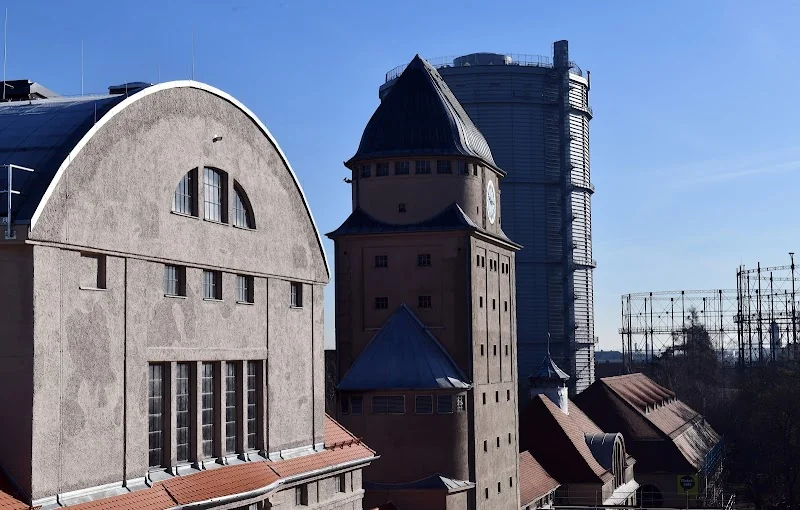
The Gaswerk Augsburg is today much more than a former supply facility: The area in Oberhausen has developed into a cultural, creative, and event location with a special atmosphere. Since its decommissioning as part of the Augsburg energy supply in 2001, the site has been undergoing a long-term transformation process, which has visibly gained momentum since 2016 or 2017. Between listed industrial architecture, green spaces, and new uses, a place is emerging where events, theater, art, tours, and gastronomy are closely connected. Those searching for Gaswerk Augsburg events, Gaswerk Augsburg today, or Gaswerk Augsburg maps will find here not just a location, but a multifaceted district with history, present, and future. Particularly striking is the mix of historic halls, the distinctive gas holder, the brechtbühne in the oven house, and the various areas for culture and events. This versatility makes the Gaswerk interesting for visitors, organizers, artists, and culture enthusiasts alike. ([gaswerkaugsburg.de](https://www.gaswerkaugsburg.de/das-gaswerk/geschichte-des-gaswerks))
Events Today, Program, and Concerts 2026
Those looking for Gaswerk Augsburg events today, Gaswerk Augsburg concert, or Gaswerk Augsburg concerts 2026 should first check the official event calendar. There, the dates with time, location, and organizer are clearly listed. The calendar currently shows both theater dates of the brechtbühne as well as tours, open Gaswerk formats, ascents to the gas holder, and other program points. For the user intention behind the keywords, this is important because the Gaswerk does not function as a single hall, but as a site with multiple venues and formats. Thus, at one location, performances in the oven house, offers for culture enthusiasts, guided tours, and seasonal events can coexist. This makes the search for the current daily program easier and much richer than a classic schedule of a single stage would be. ([gaswerkaugsburg.de](https://www.gaswerkaugsburg.de/erleben/veranstaltungen/?utm_source=openai))
The current profile of the area also shows how broad the spectrum of events is. The official website lists for the Gaswerk, among other things, openings, corporate parties, food festivals, pop-up stores, boutique concerts, and large events. Additionally, there are regularly open Gaswerk days, tours like History or Art & Sound, and special formats around the industrial monument. Especially for visitors looking for Gaswerk Augsburg today, this diversity is crucial: The site is not a place with only one use, but an open cultural space that offers very different experiences depending on the date. For 2026, the calendar already shows several fixed program blocks, presenting the Gaswerk as a lively event location with continuously updated programming. Therefore, anyone wanting to experience events, theater evenings, or special cultural formats in Augsburg should always use the calendar as the first point of contact. ([gaswerkaugsburg.de](https://www.gaswerkaugsburg.de/erleben/veranstaltungen/?utm_source=openai))
Parking at Gaswerk Augsburg: Access, Shuttle, and Public Transport
For the search interest around Gaswerk Augsburg parking and Gaswerk Augsburg parking garage, access plays a central role because the site is well accessible, but parking capacities are limited. The official access page lists several public transport connections: Regional trains 4, 6, and 11 to Oberhausen Bhf, tram line 2 or bus line 35 to Oberhausen Bhf/Helmut-Haller-Platz, tram line 4 to Bärenwirt/DRvS, bus 21 to Gaswerk stop, bus 27, 500, and 502 to Auerstraße, as well as a special line 4E for large events. Additionally, the area is not only accessible by car but also very well connected by public transport. This information is particularly important for visitors attending a concert, theater performance, or festival, as the Gaswerk is connected with several stops and walkways from different directions. ([gaswerkaugsburg.de](https://www.gaswerkaugsburg.de/service/anfahrt/))
For car access, there is a parking garage directly opposite the brechtbühne in the oven house. According to the official site, 350 parking spaces are available, and there are also four e-charging stations. The parking garage is open continuously and offers different rates depending on the time. For theater visitors, there is also a free swa taxi shuttle from Oberhausen station to the brechtbühne, which runs about every ten minutes on performance days and starts at platform E. For large events, the website explicitly points out that access routes may vary and that due to the limited capacity of the parking garage, public transport is the better choice. This is precisely why the keywords Gaswerk Augsburg parking garage and Gaswerk Augsburg parking are so strongly ranked: The question of parking space is always part of visitor planning here. ([gaswerkaugsburg.de](https://www.gaswerkaugsburg.de/service/anfahrt/))
Theater, brechtbühne, and Restaurant in the Oven House
A central unique feature of the Gaswerk is the connection of theater and gastronomy in the historic oven house. The building has housed the brechtbühne of the Augsburg State Theater since January 2019; at the same time, offices and workshops of the theater are located there. The official building description states that the oven house originally contained four high ovens in which gas was produced. Today it has been restored and integrated as a new venue into the modern cultural life of the city. For the search for Gaswerk Augsburg theater, this development is particularly relevant because the theater location is not in the center but in a repurposed industrial building. This creates an exciting contrast between historical substance and contemporary stage work. ([gaswerkaugsburg.de](https://www.gaswerkaugsburg.de/das-gaswerk/staatstheater-augsburg?utm_source=openai))
This fits perfectly with the restaurant & bar in the oven house, which, according to the official description, connects restaurant, bistro, bar, terrace, and theater. The location works with an industrial ambiance that is consciously combined with classic bar culture and contemporary gastronomy concepts. For visitors looking for Gaswerk Augsburg restaurant, this is important because a theater evening or an event day can be well combined with food and drinks there. The location can also be rented for closed events, including catering. This way, the oven house fulfills several roles: cultural stage, gastronomic meeting point, and place for special evenings. This clear added value is particularly evident in SEO search queries around concerts, theater, and restaurants, as the Gaswerk offers not just an event address but a complete experience environment. ([gaswerkaugsburg.de](https://www.gaswerkaugsburg.de/das-gaswerk/restaurant-bar-ofenhaus/?utm_source=openai))
Renting Event Spaces: Indoor and Outdoor Areas at Gaswerk
For the keyword Gaswerk Augsburg rent, the variety of bookable spaces is crucial. The official organizer page describes several indoor and outdoor areas. Indoor spaces include the large gas holder with 1,200 square meters and space for up to 1,000 people, the small gas holder with 200 square meters and up to 100 people, and the apparatus house with 900 square meters and up to 200 people. Outdoor spaces include, among others, the cultural courtyard with 2,600 square meters for up to 1,000 people, the fruit meadow behind the garage, the meadow between the festival area and transformer station, the area between the telescopic gas holders, the multifunctional area in front of the oven house, and the festival area in front of the large gas holder. These data show that the Gaswerk is suitable not only for cultural individual events but also for corporate parties, presentations, pop-up formats, and larger audience events. ([gaswerkaugsburg.de](https://www.gaswerkaugsburg.de/service/mieter-interessenten/fuer-veranstalter))
Particularly impressive is the large festival area in front of the gas holder. It has already hosted festivals such as the Gaswerk Summer and the Modular Festival and offers 4,500 square meters of space for up to 8,200 spectators. Regio Augsburg Tourismus even states a capacity of up to 8,500 people for the entire area, which identifies the location as an extremely flexible event venue. Additionally, around 5,000 square meters of subsidized space for rehearsal rooms and artist studios are available on the site, and since the opening of the music box in July 2022, over 100 rehearsal rooms and studios have existed. For event planners, cultural creators, and agencies, this is a strong argument: Here, events can not only take place but be embedded in a creative environment that continuously evolves. ([gaswerkaugsburg.de](https://www.gaswerkaugsburg.de/service/mieter-interessenten/fuer-veranstalter))
History, Gas Holder, Museum, and Tours
The history of the Gaswerk Augsburg is closely linked to the energy supply of the city. In 1907, the city of Augsburg took over the previously privately operated gas supply with two old gas works. Because these were no longer sufficient, a new, larger gas works was planned outside the city starting in 1910; it began operations in 1915. Town gas was produced from hard coal, and from the 1950s, it was even transported to Kaufbeuren via long-distance gas lines. In 1962, the first natural gas arrived in Augsburg, and the conversion of the entire network lasted until 1978. The plant was finally shut down in 2001. This development explains why the Gaswerk is not simply perceived as an event location today, but as a historically charged space with genuine industrial origins. ([gaswerkaugsburg.de](https://www.gaswerkaugsburg.de/das-gaswerk/geschichte-des-gaswerks))
The most striking structure is the gas holder, which is over 80 meters high. An official contribution describes it as an approximately 84-meter-high facility and as the third-highest accessible building in Augsburg; nearly 400 steps must be climbed to reach the top. In the museum in the former electrical central, the Gaswerk friends of Augsburg inform about the history of the site. There, among other things, a 700 HP MAN oil engine from 1918, a 16-cylinder diesel engine from 1958, old gas lanterns, gas household appliances, and over 600 books, brochures, and chronicles can be seen. The offer is complemented by tours and the audio guide, which explains the site at twelve stations. For people searching for Gaswerk Augsburg photos or Gaswerk Augsburg maps, this historical depth provides an additional incentive: The site is not only worth seeing but also narratively rich and extraordinary in its details. ([gaswerkaugsburg.de](https://www.gaswerkaugsburg.de/news/detail/swa-historisch-die-gasbehaelter-ein-industriedenkmal))
Photos, Site Plan, and Special Impressions on the Site
Also, in the search queries Gaswerk Augsburg photos and Gaswerk Augsburg maps, the staging of the site plays a significant role. The official website offers a site plan that serves as orientation because the area is continuing to grow and some buildings are still under construction. In the interactive site plan, it can be traced which areas are already in operation, which are still in planning, and how the site is spatially composed. This is particularly helpful for visitors because the Gaswerk consists of several historically and functionally different buildings that are not always easy to assign at first glance. At the same time, the site plan emphasizes the character of the place as a district in transition. This perfectly fits with the self-description as a location that is to develop into a central place for the creative economy and culture in southern Germany. ([gaswerkaugsburg.de](https://www.gaswerkaugsburg.de/das-gaswerk/auf-einen-blick-lageplan))
For photos and special impressions, the Gaswerk is interesting due to its mix of industrial monument, open spaces, art, and gastronomy. The organizer page explicitly points out that the listed area can also be rented as a backdrop for photo shoots or video shoots. Additionally, the audio guide, tours, and open studios offer different perspectives on the place: from historical energy production to today's art scene to special tours like History or Art & Sound. Those who want to not only visit the Gaswerk but truly understand it will find several ways through the site. This multi-layered nature makes the district so attractive for social media, image searches, and tourist planning: The Gaswerk is a place where architecture, history, culture, and current use visibly overlap. ([gaswerkaugsburg.de](https://www.gaswerkaugsburg.de/service/mieter-interessenten/fuer-veranstalter))
Sources:
- Gaswerk Augsburg - Official Website ([gaswerkaugsburg.de](https://www.gaswerkaugsburg.de/))
- Gaswerk Augsburg - Event Calendar ([gaswerkaugsburg.de](https://www.gaswerkaugsburg.de/erleben/veranstaltungen/?utm_source=openai))
- Gaswerk Augsburg - Access ([gaswerkaugsburg.de](https://www.gaswerkaugsburg.de/service/anfahrt/))
- Gaswerk Augsburg - Event Spaces ([gaswerkaugsburg.de](https://www.gaswerkaugsburg.de/service/mieter-interessenten/fuer-veranstalter))
- Gaswerk Augsburg - History of the Gasworks ([gaswerkaugsburg.de](https://www.gaswerkaugsburg.de/das-gaswerk/geschichte-des-gaswerks))
- Regio Augsburg Tourism - Gaswerk Augsburg ([augsburg-tourismus.de](https://www.augsburg-tourismus.de/de/veranstaltungsraum/Gaswerk-augsburg))
Show moreShow less
Gaswerk Augsburg | Events & Parking 2026
The Gaswerk Augsburg is today much more than a former supply facility: The area in Oberhausen has developed into a cultural, creative, and event location with a special atmosphere. Since its decommissioning as part of the Augsburg energy supply in 2001, the site has been undergoing a long-term transformation process, which has visibly gained momentum since 2016 or 2017. Between listed industrial architecture, green spaces, and new uses, a place is emerging where events, theater, art, tours, and gastronomy are closely connected. Those searching for Gaswerk Augsburg events, Gaswerk Augsburg today, or Gaswerk Augsburg maps will find here not just a location, but a multifaceted district with history, present, and future. Particularly striking is the mix of historic halls, the distinctive gas holder, the brechtbühne in the oven house, and the various areas for culture and events. This versatility makes the Gaswerk interesting for visitors, organizers, artists, and culture enthusiasts alike. ([gaswerkaugsburg.de](https://www.gaswerkaugsburg.de/das-gaswerk/geschichte-des-gaswerks))
Events Today, Program, and Concerts 2026
Those looking for Gaswerk Augsburg events today, Gaswerk Augsburg concert, or Gaswerk Augsburg concerts 2026 should first check the official event calendar. There, the dates with time, location, and organizer are clearly listed. The calendar currently shows both theater dates of the brechtbühne as well as tours, open Gaswerk formats, ascents to the gas holder, and other program points. For the user intention behind the keywords, this is important because the Gaswerk does not function as a single hall, but as a site with multiple venues and formats. Thus, at one location, performances in the oven house, offers for culture enthusiasts, guided tours, and seasonal events can coexist. This makes the search for the current daily program easier and much richer than a classic schedule of a single stage would be. ([gaswerkaugsburg.de](https://www.gaswerkaugsburg.de/erleben/veranstaltungen/?utm_source=openai))
The current profile of the area also shows how broad the spectrum of events is. The official website lists for the Gaswerk, among other things, openings, corporate parties, food festivals, pop-up stores, boutique concerts, and large events. Additionally, there are regularly open Gaswerk days, tours like History or Art & Sound, and special formats around the industrial monument. Especially for visitors looking for Gaswerk Augsburg today, this diversity is crucial: The site is not a place with only one use, but an open cultural space that offers very different experiences depending on the date. For 2026, the calendar already shows several fixed program blocks, presenting the Gaswerk as a lively event location with continuously updated programming. Therefore, anyone wanting to experience events, theater evenings, or special cultural formats in Augsburg should always use the calendar as the first point of contact. ([gaswerkaugsburg.de](https://www.gaswerkaugsburg.de/erleben/veranstaltungen/?utm_source=openai))
Parking at Gaswerk Augsburg: Access, Shuttle, and Public Transport
For the search interest around Gaswerk Augsburg parking and Gaswerk Augsburg parking garage, access plays a central role because the site is well accessible, but parking capacities are limited. The official access page lists several public transport connections: Regional trains 4, 6, and 11 to Oberhausen Bhf, tram line 2 or bus line 35 to Oberhausen Bhf/Helmut-Haller-Platz, tram line 4 to Bärenwirt/DRvS, bus 21 to Gaswerk stop, bus 27, 500, and 502 to Auerstraße, as well as a special line 4E for large events. Additionally, the area is not only accessible by car but also very well connected by public transport. This information is particularly important for visitors attending a concert, theater performance, or festival, as the Gaswerk is connected with several stops and walkways from different directions. ([gaswerkaugsburg.de](https://www.gaswerkaugsburg.de/service/anfahrt/))
For car access, there is a parking garage directly opposite the brechtbühne in the oven house. According to the official site, 350 parking spaces are available, and there are also four e-charging stations. The parking garage is open continuously and offers different rates depending on the time. For theater visitors, there is also a free swa taxi shuttle from Oberhausen station to the brechtbühne, which runs about every ten minutes on performance days and starts at platform E. For large events, the website explicitly points out that access routes may vary and that due to the limited capacity of the parking garage, public transport is the better choice. This is precisely why the keywords Gaswerk Augsburg parking garage and Gaswerk Augsburg parking are so strongly ranked: The question of parking space is always part of visitor planning here. ([gaswerkaugsburg.de](https://www.gaswerkaugsburg.de/service/anfahrt/))
Theater, brechtbühne, and Restaurant in the Oven House
A central unique feature of the Gaswerk is the connection of theater and gastronomy in the historic oven house. The building has housed the brechtbühne of the Augsburg State Theater since January 2019; at the same time, offices and workshops of the theater are located there. The official building description states that the oven house originally contained four high ovens in which gas was produced. Today it has been restored and integrated as a new venue into the modern cultural life of the city. For the search for Gaswerk Augsburg theater, this development is particularly relevant because the theater location is not in the center but in a repurposed industrial building. This creates an exciting contrast between historical substance and contemporary stage work. ([gaswerkaugsburg.de](https://www.gaswerkaugsburg.de/das-gaswerk/staatstheater-augsburg?utm_source=openai))
This fits perfectly with the restaurant & bar in the oven house, which, according to the official description, connects restaurant, bistro, bar, terrace, and theater. The location works with an industrial ambiance that is consciously combined with classic bar culture and contemporary gastronomy concepts. For visitors looking for Gaswerk Augsburg restaurant, this is important because a theater evening or an event day can be well combined with food and drinks there. The location can also be rented for closed events, including catering. This way, the oven house fulfills several roles: cultural stage, gastronomic meeting point, and place for special evenings. This clear added value is particularly evident in SEO search queries around concerts, theater, and restaurants, as the Gaswerk offers not just an event address but a complete experience environment. ([gaswerkaugsburg.de](https://www.gaswerkaugsburg.de/das-gaswerk/restaurant-bar-ofenhaus/?utm_source=openai))
Renting Event Spaces: Indoor and Outdoor Areas at Gaswerk
For the keyword Gaswerk Augsburg rent, the variety of bookable spaces is crucial. The official organizer page describes several indoor and outdoor areas. Indoor spaces include the large gas holder with 1,200 square meters and space for up to 1,000 people, the small gas holder with 200 square meters and up to 100 people, and the apparatus house with 900 square meters and up to 200 people. Outdoor spaces include, among others, the cultural courtyard with 2,600 square meters for up to 1,000 people, the fruit meadow behind the garage, the meadow between the festival area and transformer station, the area between the telescopic gas holders, the multifunctional area in front of the oven house, and the festival area in front of the large gas holder. These data show that the Gaswerk is suitable not only for cultural individual events but also for corporate parties, presentations, pop-up formats, and larger audience events. ([gaswerkaugsburg.de](https://www.gaswerkaugsburg.de/service/mieter-interessenten/fuer-veranstalter))
Particularly impressive is the large festival area in front of the gas holder. It has already hosted festivals such as the Gaswerk Summer and the Modular Festival and offers 4,500 square meters of space for up to 8,200 spectators. Regio Augsburg Tourismus even states a capacity of up to 8,500 people for the entire area, which identifies the location as an extremely flexible event venue. Additionally, around 5,000 square meters of subsidized space for rehearsal rooms and artist studios are available on the site, and since the opening of the music box in July 2022, over 100 rehearsal rooms and studios have existed. For event planners, cultural creators, and agencies, this is a strong argument: Here, events can not only take place but be embedded in a creative environment that continuously evolves. ([gaswerkaugsburg.de](https://www.gaswerkaugsburg.de/service/mieter-interessenten/fuer-veranstalter))
History, Gas Holder, Museum, and Tours
The history of the Gaswerk Augsburg is closely linked to the energy supply of the city. In 1907, the city of Augsburg took over the previously privately operated gas supply with two old gas works. Because these were no longer sufficient, a new, larger gas works was planned outside the city starting in 1910; it began operations in 1915. Town gas was produced from hard coal, and from the 1950s, it was even transported to Kaufbeuren via long-distance gas lines. In 1962, the first natural gas arrived in Augsburg, and the conversion of the entire network lasted until 1978. The plant was finally shut down in 2001. This development explains why the Gaswerk is not simply perceived as an event location today, but as a historically charged space with genuine industrial origins. ([gaswerkaugsburg.de](https://www.gaswerkaugsburg.de/das-gaswerk/geschichte-des-gaswerks))
The most striking structure is the gas holder, which is over 80 meters high. An official contribution describes it as an approximately 84-meter-high facility and as the third-highest accessible building in Augsburg; nearly 400 steps must be climbed to reach the top. In the museum in the former electrical central, the Gaswerk friends of Augsburg inform about the history of the site. There, among other things, a 700 HP MAN oil engine from 1918, a 16-cylinder diesel engine from 1958, old gas lanterns, gas household appliances, and over 600 books, brochures, and chronicles can be seen. The offer is complemented by tours and the audio guide, which explains the site at twelve stations. For people searching for Gaswerk Augsburg photos or Gaswerk Augsburg maps, this historical depth provides an additional incentive: The site is not only worth seeing but also narratively rich and extraordinary in its details. ([gaswerkaugsburg.de](https://www.gaswerkaugsburg.de/news/detail/swa-historisch-die-gasbehaelter-ein-industriedenkmal))
Photos, Site Plan, and Special Impressions on the Site
Also, in the search queries Gaswerk Augsburg photos and Gaswerk Augsburg maps, the staging of the site plays a significant role. The official website offers a site plan that serves as orientation because the area is continuing to grow and some buildings are still under construction. In the interactive site plan, it can be traced which areas are already in operation, which are still in planning, and how the site is spatially composed. This is particularly helpful for visitors because the Gaswerk consists of several historically and functionally different buildings that are not always easy to assign at first glance. At the same time, the site plan emphasizes the character of the place as a district in transition. This perfectly fits with the self-description as a location that is to develop into a central place for the creative economy and culture in southern Germany. ([gaswerkaugsburg.de](https://www.gaswerkaugsburg.de/das-gaswerk/auf-einen-blick-lageplan))
For photos and special impressions, the Gaswerk is interesting due to its mix of industrial monument, open spaces, art, and gastronomy. The organizer page explicitly points out that the listed area can also be rented as a backdrop for photo shoots or video shoots. Additionally, the audio guide, tours, and open studios offer different perspectives on the place: from historical energy production to today's art scene to special tours like History or Art & Sound. Those who want to not only visit the Gaswerk but truly understand it will find several ways through the site. This multi-layered nature makes the district so attractive for social media, image searches, and tourist planning: The Gaswerk is a place where architecture, history, culture, and current use visibly overlap. ([gaswerkaugsburg.de](https://www.gaswerkaugsburg.de/service/mieter-interessenten/fuer-veranstalter))
Sources:
- Gaswerk Augsburg - Official Website ([gaswerkaugsburg.de](https://www.gaswerkaugsburg.de/))
- Gaswerk Augsburg - Event Calendar ([gaswerkaugsburg.de](https://www.gaswerkaugsburg.de/erleben/veranstaltungen/?utm_source=openai))
- Gaswerk Augsburg - Access ([gaswerkaugsburg.de](https://www.gaswerkaugsburg.de/service/anfahrt/))
- Gaswerk Augsburg - Event Spaces ([gaswerkaugsburg.de](https://www.gaswerkaugsburg.de/service/mieter-interessenten/fuer-veranstalter))
- Gaswerk Augsburg - History of the Gasworks ([gaswerkaugsburg.de](https://www.gaswerkaugsburg.de/das-gaswerk/geschichte-des-gaswerks))
- Regio Augsburg Tourism - Gaswerk Augsburg ([augsburg-tourismus.de](https://www.augsburg-tourismus.de/de/veranstaltungsraum/Gaswerk-augsburg))
Gaswerk Augsburg | Events & Parking 2026
The Gaswerk Augsburg is today much more than a former supply facility: The area in Oberhausen has developed into a cultural, creative, and event location with a special atmosphere. Since its decommissioning as part of the Augsburg energy supply in 2001, the site has been undergoing a long-term transformation process, which has visibly gained momentum since 2016 or 2017. Between listed industrial architecture, green spaces, and new uses, a place is emerging where events, theater, art, tours, and gastronomy are closely connected. Those searching for Gaswerk Augsburg events, Gaswerk Augsburg today, or Gaswerk Augsburg maps will find here not just a location, but a multifaceted district with history, present, and future. Particularly striking is the mix of historic halls, the distinctive gas holder, the brechtbühne in the oven house, and the various areas for culture and events. This versatility makes the Gaswerk interesting for visitors, organizers, artists, and culture enthusiasts alike. ([gaswerkaugsburg.de](https://www.gaswerkaugsburg.de/das-gaswerk/geschichte-des-gaswerks))
Events Today, Program, and Concerts 2026
Those looking for Gaswerk Augsburg events today, Gaswerk Augsburg concert, or Gaswerk Augsburg concerts 2026 should first check the official event calendar. There, the dates with time, location, and organizer are clearly listed. The calendar currently shows both theater dates of the brechtbühne as well as tours, open Gaswerk formats, ascents to the gas holder, and other program points. For the user intention behind the keywords, this is important because the Gaswerk does not function as a single hall, but as a site with multiple venues and formats. Thus, at one location, performances in the oven house, offers for culture enthusiasts, guided tours, and seasonal events can coexist. This makes the search for the current daily program easier and much richer than a classic schedule of a single stage would be. ([gaswerkaugsburg.de](https://www.gaswerkaugsburg.de/erleben/veranstaltungen/?utm_source=openai))
The current profile of the area also shows how broad the spectrum of events is. The official website lists for the Gaswerk, among other things, openings, corporate parties, food festivals, pop-up stores, boutique concerts, and large events. Additionally, there are regularly open Gaswerk days, tours like History or Art & Sound, and special formats around the industrial monument. Especially for visitors looking for Gaswerk Augsburg today, this diversity is crucial: The site is not a place with only one use, but an open cultural space that offers very different experiences depending on the date. For 2026, the calendar already shows several fixed program blocks, presenting the Gaswerk as a lively event location with continuously updated programming. Therefore, anyone wanting to experience events, theater evenings, or special cultural formats in Augsburg should always use the calendar as the first point of contact. ([gaswerkaugsburg.de](https://www.gaswerkaugsburg.de/erleben/veranstaltungen/?utm_source=openai))
Parking at Gaswerk Augsburg: Access, Shuttle, and Public Transport
For the search interest around Gaswerk Augsburg parking and Gaswerk Augsburg parking garage, access plays a central role because the site is well accessible, but parking capacities are limited. The official access page lists several public transport connections: Regional trains 4, 6, and 11 to Oberhausen Bhf, tram line 2 or bus line 35 to Oberhausen Bhf/Helmut-Haller-Platz, tram line 4 to Bärenwirt/DRvS, bus 21 to Gaswerk stop, bus 27, 500, and 502 to Auerstraße, as well as a special line 4E for large events. Additionally, the area is not only accessible by car but also very well connected by public transport. This information is particularly important for visitors attending a concert, theater performance, or festival, as the Gaswerk is connected with several stops and walkways from different directions. ([gaswerkaugsburg.de](https://www.gaswerkaugsburg.de/service/anfahrt/))
For car access, there is a parking garage directly opposite the brechtbühne in the oven house. According to the official site, 350 parking spaces are available, and there are also four e-charging stations. The parking garage is open continuously and offers different rates depending on the time. For theater visitors, there is also a free swa taxi shuttle from Oberhausen station to the brechtbühne, which runs about every ten minutes on performance days and starts at platform E. For large events, the website explicitly points out that access routes may vary and that due to the limited capacity of the parking garage, public transport is the better choice. This is precisely why the keywords Gaswerk Augsburg parking garage and Gaswerk Augsburg parking are so strongly ranked: The question of parking space is always part of visitor planning here. ([gaswerkaugsburg.de](https://www.gaswerkaugsburg.de/service/anfahrt/))
Theater, brechtbühne, and Restaurant in the Oven House
A central unique feature of the Gaswerk is the connection of theater and gastronomy in the historic oven house. The building has housed the brechtbühne of the Augsburg State Theater since January 2019; at the same time, offices and workshops of the theater are located there. The official building description states that the oven house originally contained four high ovens in which gas was produced. Today it has been restored and integrated as a new venue into the modern cultural life of the city. For the search for Gaswerk Augsburg theater, this development is particularly relevant because the theater location is not in the center but in a repurposed industrial building. This creates an exciting contrast between historical substance and contemporary stage work. ([gaswerkaugsburg.de](https://www.gaswerkaugsburg.de/das-gaswerk/staatstheater-augsburg?utm_source=openai))
This fits perfectly with the restaurant & bar in the oven house, which, according to the official description, connects restaurant, bistro, bar, terrace, and theater. The location works with an industrial ambiance that is consciously combined with classic bar culture and contemporary gastronomy concepts. For visitors looking for Gaswerk Augsburg restaurant, this is important because a theater evening or an event day can be well combined with food and drinks there. The location can also be rented for closed events, including catering. This way, the oven house fulfills several roles: cultural stage, gastronomic meeting point, and place for special evenings. This clear added value is particularly evident in SEO search queries around concerts, theater, and restaurants, as the Gaswerk offers not just an event address but a complete experience environment. ([gaswerkaugsburg.de](https://www.gaswerkaugsburg.de/das-gaswerk/restaurant-bar-ofenhaus/?utm_source=openai))
Renting Event Spaces: Indoor and Outdoor Areas at Gaswerk
For the keyword Gaswerk Augsburg rent, the variety of bookable spaces is crucial. The official organizer page describes several indoor and outdoor areas. Indoor spaces include the large gas holder with 1,200 square meters and space for up to 1,000 people, the small gas holder with 200 square meters and up to 100 people, and the apparatus house with 900 square meters and up to 200 people. Outdoor spaces include, among others, the cultural courtyard with 2,600 square meters for up to 1,000 people, the fruit meadow behind the garage, the meadow between the festival area and transformer station, the area between the telescopic gas holders, the multifunctional area in front of the oven house, and the festival area in front of the large gas holder. These data show that the Gaswerk is suitable not only for cultural individual events but also for corporate parties, presentations, pop-up formats, and larger audience events. ([gaswerkaugsburg.de](https://www.gaswerkaugsburg.de/service/mieter-interessenten/fuer-veranstalter))
Particularly impressive is the large festival area in front of the gas holder. It has already hosted festivals such as the Gaswerk Summer and the Modular Festival and offers 4,500 square meters of space for up to 8,200 spectators. Regio Augsburg Tourismus even states a capacity of up to 8,500 people for the entire area, which identifies the location as an extremely flexible event venue. Additionally, around 5,000 square meters of subsidized space for rehearsal rooms and artist studios are available on the site, and since the opening of the music box in July 2022, over 100 rehearsal rooms and studios have existed. For event planners, cultural creators, and agencies, this is a strong argument: Here, events can not only take place but be embedded in a creative environment that continuously evolves. ([gaswerkaugsburg.de](https://www.gaswerkaugsburg.de/service/mieter-interessenten/fuer-veranstalter))
History, Gas Holder, Museum, and Tours
The history of the Gaswerk Augsburg is closely linked to the energy supply of the city. In 1907, the city of Augsburg took over the previously privately operated gas supply with two old gas works. Because these were no longer sufficient, a new, larger gas works was planned outside the city starting in 1910; it began operations in 1915. Town gas was produced from hard coal, and from the 1950s, it was even transported to Kaufbeuren via long-distance gas lines. In 1962, the first natural gas arrived in Augsburg, and the conversion of the entire network lasted until 1978. The plant was finally shut down in 2001. This development explains why the Gaswerk is not simply perceived as an event location today, but as a historically charged space with genuine industrial origins. ([gaswerkaugsburg.de](https://www.gaswerkaugsburg.de/das-gaswerk/geschichte-des-gaswerks))
The most striking structure is the gas holder, which is over 80 meters high. An official contribution describes it as an approximately 84-meter-high facility and as the third-highest accessible building in Augsburg; nearly 400 steps must be climbed to reach the top. In the museum in the former electrical central, the Gaswerk friends of Augsburg inform about the history of the site. There, among other things, a 700 HP MAN oil engine from 1918, a 16-cylinder diesel engine from 1958, old gas lanterns, gas household appliances, and over 600 books, brochures, and chronicles can be seen. The offer is complemented by tours and the audio guide, which explains the site at twelve stations. For people searching for Gaswerk Augsburg photos or Gaswerk Augsburg maps, this historical depth provides an additional incentive: The site is not only worth seeing but also narratively rich and extraordinary in its details. ([gaswerkaugsburg.de](https://www.gaswerkaugsburg.de/news/detail/swa-historisch-die-gasbehaelter-ein-industriedenkmal))
Photos, Site Plan, and Special Impressions on the Site
Also, in the search queries Gaswerk Augsburg photos and Gaswerk Augsburg maps, the staging of the site plays a significant role. The official website offers a site plan that serves as orientation because the area is continuing to grow and some buildings are still under construction. In the interactive site plan, it can be traced which areas are already in operation, which are still in planning, and how the site is spatially composed. This is particularly helpful for visitors because the Gaswerk consists of several historically and functionally different buildings that are not always easy to assign at first glance. At the same time, the site plan emphasizes the character of the place as a district in transition. This perfectly fits with the self-description as a location that is to develop into a central place for the creative economy and culture in southern Germany. ([gaswerkaugsburg.de](https://www.gaswerkaugsburg.de/das-gaswerk/auf-einen-blick-lageplan))
For photos and special impressions, the Gaswerk is interesting due to its mix of industrial monument, open spaces, art, and gastronomy. The organizer page explicitly points out that the listed area can also be rented as a backdrop for photo shoots or video shoots. Additionally, the audio guide, tours, and open studios offer different perspectives on the place: from historical energy production to today's art scene to special tours like History or Art & Sound. Those who want to not only visit the Gaswerk but truly understand it will find several ways through the site. This multi-layered nature makes the district so attractive for social media, image searches, and tourist planning: The Gaswerk is a place where architecture, history, culture, and current use visibly overlap. ([gaswerkaugsburg.de](https://www.gaswerkaugsburg.de/service/mieter-interessenten/fuer-veranstalter))
Sources:
- Gaswerk Augsburg - Official Website ([gaswerkaugsburg.de](https://www.gaswerkaugsburg.de/))
- Gaswerk Augsburg - Event Calendar ([gaswerkaugsburg.de](https://www.gaswerkaugsburg.de/erleben/veranstaltungen/?utm_source=openai))
- Gaswerk Augsburg - Access ([gaswerkaugsburg.de](https://www.gaswerkaugsburg.de/service/anfahrt/))
- Gaswerk Augsburg - Event Spaces ([gaswerkaugsburg.de](https://www.gaswerkaugsburg.de/service/mieter-interessenten/fuer-veranstalter))
- Gaswerk Augsburg - History of the Gasworks ([gaswerkaugsburg.de](https://www.gaswerkaugsburg.de/das-gaswerk/geschichte-des-gaswerks))
- Regio Augsburg Tourism - Gaswerk Augsburg ([augsburg-tourismus.de](https://www.augsburg-tourismus.de/de/veranstaltungsraum/Gaswerk-augsburg))
Upcoming Events

Frequently Asked Questions
Reviews
arongforce (Jinx)
12. July 2025
UETOPIA all the way
Ali Moujel
2. August 2022
Good
Martin Cryptosilver
5. April 2026
Super
Robert Gassenhofer
24. May 2025
The Gaswerk is a good location overall. In the parking garage next to the theater, we paid 4.50 euros from 6 to 11 AM. That's really good. We attended the event Kiez im Sommer, with WIZO and others. In front of the stage, there’s just a gravel desert (we were totally dusty afterward) and no wave breaker; normally, I'm not a fan of wave areas, but it was really wild and someone was constantly falling. Usually, you can get out of a mosh pit easily, but here it was hard. The beer and AFG drinks were expensive (5.50 euros) - and at some point, the beer was also gone. The toilet situation was not good either. There weren't enough, or most people didn't find them all. It was a nice festival day and the people were very chill. I would go again, but the beautiful surroundings don't make up for the shortcomings.
Norbert F.
7. September 2025
Great location for events, historical interest, tours, or just industrial photography.