
Beim Glaspalast 1, Augsburg
Beim Glaspalast 1, 86153 Augsburg, Germany
Center for Contemporary Art in the Glass Palace | Tickets & Infos
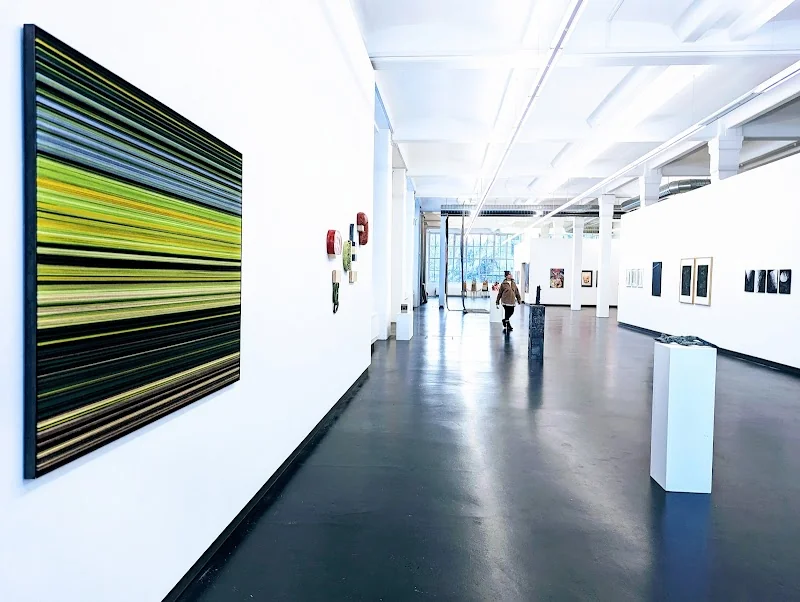
The Center for Contemporary Art in the Glass Palace stands in Augsburg for modern and contemporary art in a unique industrial monument. On-site, the institution is now known as Kunsthalle Augsburg in the Glass Palace and is operated by the Art Collections & Museums Augsburg. On the ground floor of the Glass Palace, two large halls host a diverse program: H1 for changing special exhibitions and H2 for collection presentations. In total, the Kunsthalle offers around 2,700 square meters of exhibition space in a light-flooded building, whose industrial architecture impressively supports the presentation of contemporary art. The location at Beim Glaspalast 1, 86153 Augsburg is well connected to public transport, and parking options are available directly on the premises in limited numbers. This overview summarizes the program, tickets, opening hours, access, rooms, as well as history and services, gathering all important information for an inspiring visit to Augsburg's renowned art location.
Exhibitions and Program in the Kunsthalle Augsburg H1 and H2
The Kunsthalle Augsburg in the Glass Palace develops its profile from the interplay of the two exhibition halls. H1 is designed for special exhibitions with around 1,100 square meters. Here, immersively curated formats on central themes of contemporary art emerge, often featuring international positions that productively reflect the regional scene. Artistic media range from painting and sculpture to photography and video, as well as installation, performance, and digital works. H2 encompasses approximately 1,600 square meters, providing a more extensive area where the municipal collection of 20th and 21st-century art is presented in changing constellations. Thematic settings and new acquisitions ensure that collection and special exhibition areas respond to each other in content, allowing visitors to discover new perspectives repeatedly. The exhibition program is complemented by regular public tours, artist talks, readings, panel discussions, and occasional concert and sound formats that make meaningful use of the spatial character of the Glass Palace. This accompanying program supports a deeper discourse on the art of our time and opens the museum to diverse target groups, from families to school classes to professional audiences. Curatorially, the Kunsthalle is oriented both towards international developments and the city's strong tradition in the arts, involving artists with connections to Augsburg. This creates a lively place where local, national, and international positions engage in dialogue. Through the clear zoning in H1 and H2, visitors have intuitive orientation: those specifically looking for current, temporary projects start in H1; those wanting to see the diversity of the municipal collections begin in H2. This logic creates planning security and makes it easy to shape a visit according to personal interests – whether as a short, focused tour or as an extended art day that connects both halls.
Tickets and Opening Hours – Prices, Free Sunday, and U27
The Kunsthalle Augsburg is open from Tuesday to Sunday from 10 AM to 5 PM, and closed on Mondays. For special exhibitions in H1 or H2, a regular admission fee of 9.00 euros and a reduced admission fee of 7.00 euros apply per hall. Those who want to experience both halls in one day can use the combination ticket at the regular price of 12.00 euros or reduced for 9.00 euros; groups of ten or more pay 7.00 euros per person and receive the combination ticket for H1 and H2. Museum Sunday offers free admission to the permanent exhibitions of the municipal houses; free tickets are issued at the box office. For young people, access is particularly low-threshold: those under 27 receive free admission to the municipal permanent exhibitions, making visits attractive for students and trainees. Additionally, there is a combined ticket: if one visits another house of the Art Collections & Museums Augsburg within two opening days, they receive a 50 percent discount on the second admission upon presentation of a regular ticket. Annual passes are worthwhile for frequent visitors and are valid in all museums of the Art Collections & Museums Augsburg, as well as additionally in the Walter Art Museum and in the Noah Gallery in the Glass Palace; they are available at the museum ticket counters. In addition to cashless payment, on-site advice on the visit process is possible, such as the optimal sequence between H1 and H2, participation in public tours, or booking group offers and educational formats. School classes benefit from discounted conditions and tailored programs. Since changing exhibitions utilize different materials and spatial architectures, it is advisable to take a look at the exhibition information in advance; there, details about the duration, possible accompanying events, and special notes such as photography regulations or performance dates can be found. With the clearly regulated opening hours and transparent pricing structure, the visit can be reliably planned – whether as a spontaneous art walk in the afternoon or as a culturally rich weekend appointment.
Directions and Parking at the Glass Palace Augsburg
Getting to the Kunsthalle in the Glass Palace is uncomplicated thanks to its central location and good integration into the city traffic. Within the Augsburg city zone, the tram ride from the main train station to the city center is free, making the transfer particularly convenient. From the junction Königsplatz or Jakober Tor, one can reach the Glass Palace by bus to the stop Glaspalast. For visitors coming from the surrounding area, it is advisable to take the A8 highway, exit Augsburg Ost; from there, follow the signage for art museums in the Glass Palace. Those choosing to ride a bicycle will find parking options in the vicinity; e-scooters expand flexible access within the city zone. Parking spaces directly on the premises are available but limited – especially on heavily frequented weekends, it is advisable to use public transport or to switch to larger parking garages within walking distance. Particularly practical is the parking garage of the City Gallery with numerous parking spaces; from there, it is about a ten-minute walk to the Glass Palace. For navigation systems, the destination address is Beim Glaspalast 1, 86153 Augsburg. Those traveling by public transport have another advantage: the route from the center is well signposted, and due to the scheduling of tram lines in the city center, one can quickly reach the appropriate transfers. Visitor groups can coordinate their arrival in advance, for example, by defining meeting points in the outdoor area at the Glass Palace. Separate access rules apply to delivery and service traffic on the premises; private deliveries are generally not provided. Those arriving barrier-free benefit from the ground-level access and short paths from the forecourt to the exhibition halls. Information on temporary traffic situations, such as during major events in the city, is communicated by the municipal transport association; for a relaxed museum visit, a quick look at current traffic information is worthwhile. Overall, the combination of city zone, bus connection to the stop Glaspalast, and walking distance to parking garages ensures high planning security – regardless of whether one is traveling alone, with family, or as a group.
Rooms, Areas, and Hall Plan: H1 and H2 at a Glance
The exhibition halls of the Kunsthalle Augsburg deliberately do not offer classic seating arrangements but instead provide spacious, adaptable areas. H1 has around 1,100 square meters and is thus ideal for temporary, experimental formats that play with space, light, and material. H2 provides the expansive stage for collection presentations with approximately 1,600 square meters; in changing constellations and thematic focuses, works from all genres of art are shown there. Together, the two halls offer about 2,700 square meters of exhibition space. Thus, a formal seating plan is omitted – visitors move freely through the spaces and choose their own viewing rhythms. This openness is supported by the architecture of the Glass Palace: the early steel frame construction with its large-format window axes follows the principle of the daylight factory. Wide sightlines, variable cabinets, and temporary partitions allow curators to reconfigure the spaces according to the work group and dramaturgy. Clear signage, wall texts, hall plans at the entrances of the exhibitions, and accompanying media provide orientation. Those who want to compare exhibitions specifically often start in H1 to then explore the collection presentation in H2 at leisure; others begin with H2 and relate the new impressions to the temporary setting of H1 afterward. Both variants work well because the routing between the halls is short and intuitive. For events such as artist talks or readings, mobile seating is used without sacrificing the open character of the spaces. Barrier-free pathways and wheelchair-accessible access are consistently taken into account. This creates a contemporary, user-friendly exhibition space that accommodates both focused individual visits and lively group formats and educational offerings – without the constraints of fixed seating.
History and Features of the Glass Palace
The Glass Palace is one of the significant industrial monuments in Augsburg. The building was constructed in 1910 as Werk IV of the Mechanical Cotton Spinning and Weaving Augsburg according to designs by the Stuttgart architect Philipp Jakob Manz, a pioneer of functional building. The construction as an early German steel frame building with large window bands follows the daylight principle, allowing the deep halls to be evenly lit. After the end of textile production, the area underwent various ownership changes; in 1999, the construction entrepreneur Ignaz Walter acquired the complex and initiated a new use that brought together cultural institutions and creative companies. In 2006, the municipal center for contemporary art was opened on the ground floor, which became known as H2 – Center for Contemporary Art and laid the foundation for today's Kunsthalle Augsburg. In a conceptual step, the renaming to Kunsthalle Augsburg took place to make the unity of H1 and H2 as a common exhibition platform clearer and to sharpen the profile of the house. The location is embedded in a creative ecosystem: the Glass Palace also houses the private Walter Art Museum and the Noah Gallery, which expand the cultural offerings on site. Architecturally, the strictly structured facade, the five floors, and the asymmetrically placed stair towers characterize the building; inside, the large spans are suitable for different curatorial setups. The industrial patina, combined with a precise museum infrastructure, creates an atmosphere that accommodates works of classical modernity as well as current positions. Thus, the Glass Palace exemplarily links industrial tradition and contemporary culture – a reason why the place holds a special significance in the urban cultural landscape and is perceived beyond the region.
Service, Accessibility, and On-Site Offers
The Kunsthalle Augsburg is accessible for people with disabilities. Entry is at ground level; a ramp connects to the exhibition areas, and a barrier-free toilet is available. Those who need assistance can receive help from the supervisory staff on-site; loan aids can also be provided as part of guided formats upon request. The visitor service advises on tours, group bookings, tickets, and combination options with other houses of the Art Collections & Museums Augsburg. For in-depth research, a scientific library is available as a reference library, focusing on exhibition catalogs, reference works, and periodicals on the art of classical modernity to the present. A special offer is the art lending library of the Society for Contemporary Art: art enthusiasts can borrow more than 140 works on paper by renowned regional, national, and international artists for two months for a small fee – a low-threshold way to bring contemporary art into one's own environment. Educational formats and public tours take place regularly and are a good choice to learn about thematic focuses of the current exhibitions or to gain insights into techniques and work groups. In addition, readings, discussions with artists, and panels expand the spectrum. Families benefit from texts that are clearly prepared and offers for younger visitors, while school classes can rely on tailored programs and favorable conditions. Those wishing to visit multiple museums in the city over a weekend can use the combined ticket with a 50 percent discount on the second museum visit within two opening days. Annual passes offer frequent visitors a planned, cost-effective access and are additionally valid in the Walter Art Museum and in the Noah Gallery in the Glass Palace. Practical café and shop offers are also available within the network of municipal museums. Overall, a comfortable environment is created that makes the stay pleasant – from barrier-free accessibility to well-visible routing to services that deepen the museum visit individually.
Sources:
- Art Collections & Museums Augsburg – Kunsthalle Augsburg in the Glass Palace
- Art Collections & Museums Augsburg – Your visit: Opening hours and tickets
- Art Collections & Museums Augsburg – Getting there
- Art Collections & Museums Augsburg – Accessibility
- Wikipedia – Kunsthalle Augsburg in the Glass Palace: Areas H1/H2 and Profile
- Wikipedia – Glass Palace Augsburg: Year of construction, Architect, Industrial monument
- City of Augsburg – Renaming Center for Contemporary Art to Kunsthalle Augsburg
- Glass Palace Augsburg – Directions and public transport information
- City Gallery Augsburg – Parking garage and parking information
- Wikipedia – Walter Art Museum in the Glass Palace
Show moreShow less
Center for Contemporary Art in the Glass Palace | Tickets & Infos
The Center for Contemporary Art in the Glass Palace stands in Augsburg for modern and contemporary art in a unique industrial monument. On-site, the institution is now known as Kunsthalle Augsburg in the Glass Palace and is operated by the Art Collections & Museums Augsburg. On the ground floor of the Glass Palace, two large halls host a diverse program: H1 for changing special exhibitions and H2 for collection presentations. In total, the Kunsthalle offers around 2,700 square meters of exhibition space in a light-flooded building, whose industrial architecture impressively supports the presentation of contemporary art. The location at Beim Glaspalast 1, 86153 Augsburg is well connected to public transport, and parking options are available directly on the premises in limited numbers. This overview summarizes the program, tickets, opening hours, access, rooms, as well as history and services, gathering all important information for an inspiring visit to Augsburg's renowned art location.
Exhibitions and Program in the Kunsthalle Augsburg H1 and H2
The Kunsthalle Augsburg in the Glass Palace develops its profile from the interplay of the two exhibition halls. H1 is designed for special exhibitions with around 1,100 square meters. Here, immersively curated formats on central themes of contemporary art emerge, often featuring international positions that productively reflect the regional scene. Artistic media range from painting and sculpture to photography and video, as well as installation, performance, and digital works. H2 encompasses approximately 1,600 square meters, providing a more extensive area where the municipal collection of 20th and 21st-century art is presented in changing constellations. Thematic settings and new acquisitions ensure that collection and special exhibition areas respond to each other in content, allowing visitors to discover new perspectives repeatedly. The exhibition program is complemented by regular public tours, artist talks, readings, panel discussions, and occasional concert and sound formats that make meaningful use of the spatial character of the Glass Palace. This accompanying program supports a deeper discourse on the art of our time and opens the museum to diverse target groups, from families to school classes to professional audiences. Curatorially, the Kunsthalle is oriented both towards international developments and the city's strong tradition in the arts, involving artists with connections to Augsburg. This creates a lively place where local, national, and international positions engage in dialogue. Through the clear zoning in H1 and H2, visitors have intuitive orientation: those specifically looking for current, temporary projects start in H1; those wanting to see the diversity of the municipal collections begin in H2. This logic creates planning security and makes it easy to shape a visit according to personal interests – whether as a short, focused tour or as an extended art day that connects both halls.
Tickets and Opening Hours – Prices, Free Sunday, and U27
The Kunsthalle Augsburg is open from Tuesday to Sunday from 10 AM to 5 PM, and closed on Mondays. For special exhibitions in H1 or H2, a regular admission fee of 9.00 euros and a reduced admission fee of 7.00 euros apply per hall. Those who want to experience both halls in one day can use the combination ticket at the regular price of 12.00 euros or reduced for 9.00 euros; groups of ten or more pay 7.00 euros per person and receive the combination ticket for H1 and H2. Museum Sunday offers free admission to the permanent exhibitions of the municipal houses; free tickets are issued at the box office. For young people, access is particularly low-threshold: those under 27 receive free admission to the municipal permanent exhibitions, making visits attractive for students and trainees. Additionally, there is a combined ticket: if one visits another house of the Art Collections & Museums Augsburg within two opening days, they receive a 50 percent discount on the second admission upon presentation of a regular ticket. Annual passes are worthwhile for frequent visitors and are valid in all museums of the Art Collections & Museums Augsburg, as well as additionally in the Walter Art Museum and in the Noah Gallery in the Glass Palace; they are available at the museum ticket counters. In addition to cashless payment, on-site advice on the visit process is possible, such as the optimal sequence between H1 and H2, participation in public tours, or booking group offers and educational formats. School classes benefit from discounted conditions and tailored programs. Since changing exhibitions utilize different materials and spatial architectures, it is advisable to take a look at the exhibition information in advance; there, details about the duration, possible accompanying events, and special notes such as photography regulations or performance dates can be found. With the clearly regulated opening hours and transparent pricing structure, the visit can be reliably planned – whether as a spontaneous art walk in the afternoon or as a culturally rich weekend appointment.
Directions and Parking at the Glass Palace Augsburg
Getting to the Kunsthalle in the Glass Palace is uncomplicated thanks to its central location and good integration into the city traffic. Within the Augsburg city zone, the tram ride from the main train station to the city center is free, making the transfer particularly convenient. From the junction Königsplatz or Jakober Tor, one can reach the Glass Palace by bus to the stop Glaspalast. For visitors coming from the surrounding area, it is advisable to take the A8 highway, exit Augsburg Ost; from there, follow the signage for art museums in the Glass Palace. Those choosing to ride a bicycle will find parking options in the vicinity; e-scooters expand flexible access within the city zone. Parking spaces directly on the premises are available but limited – especially on heavily frequented weekends, it is advisable to use public transport or to switch to larger parking garages within walking distance. Particularly practical is the parking garage of the City Gallery with numerous parking spaces; from there, it is about a ten-minute walk to the Glass Palace. For navigation systems, the destination address is Beim Glaspalast 1, 86153 Augsburg. Those traveling by public transport have another advantage: the route from the center is well signposted, and due to the scheduling of tram lines in the city center, one can quickly reach the appropriate transfers. Visitor groups can coordinate their arrival in advance, for example, by defining meeting points in the outdoor area at the Glass Palace. Separate access rules apply to delivery and service traffic on the premises; private deliveries are generally not provided. Those arriving barrier-free benefit from the ground-level access and short paths from the forecourt to the exhibition halls. Information on temporary traffic situations, such as during major events in the city, is communicated by the municipal transport association; for a relaxed museum visit, a quick look at current traffic information is worthwhile. Overall, the combination of city zone, bus connection to the stop Glaspalast, and walking distance to parking garages ensures high planning security – regardless of whether one is traveling alone, with family, or as a group.
Rooms, Areas, and Hall Plan: H1 and H2 at a Glance
The exhibition halls of the Kunsthalle Augsburg deliberately do not offer classic seating arrangements but instead provide spacious, adaptable areas. H1 has around 1,100 square meters and is thus ideal for temporary, experimental formats that play with space, light, and material. H2 provides the expansive stage for collection presentations with approximately 1,600 square meters; in changing constellations and thematic focuses, works from all genres of art are shown there. Together, the two halls offer about 2,700 square meters of exhibition space. Thus, a formal seating plan is omitted – visitors move freely through the spaces and choose their own viewing rhythms. This openness is supported by the architecture of the Glass Palace: the early steel frame construction with its large-format window axes follows the principle of the daylight factory. Wide sightlines, variable cabinets, and temporary partitions allow curators to reconfigure the spaces according to the work group and dramaturgy. Clear signage, wall texts, hall plans at the entrances of the exhibitions, and accompanying media provide orientation. Those who want to compare exhibitions specifically often start in H1 to then explore the collection presentation in H2 at leisure; others begin with H2 and relate the new impressions to the temporary setting of H1 afterward. Both variants work well because the routing between the halls is short and intuitive. For events such as artist talks or readings, mobile seating is used without sacrificing the open character of the spaces. Barrier-free pathways and wheelchair-accessible access are consistently taken into account. This creates a contemporary, user-friendly exhibition space that accommodates both focused individual visits and lively group formats and educational offerings – without the constraints of fixed seating.
History and Features of the Glass Palace
The Glass Palace is one of the significant industrial monuments in Augsburg. The building was constructed in 1910 as Werk IV of the Mechanical Cotton Spinning and Weaving Augsburg according to designs by the Stuttgart architect Philipp Jakob Manz, a pioneer of functional building. The construction as an early German steel frame building with large window bands follows the daylight principle, allowing the deep halls to be evenly lit. After the end of textile production, the area underwent various ownership changes; in 1999, the construction entrepreneur Ignaz Walter acquired the complex and initiated a new use that brought together cultural institutions and creative companies. In 2006, the municipal center for contemporary art was opened on the ground floor, which became known as H2 – Center for Contemporary Art and laid the foundation for today's Kunsthalle Augsburg. In a conceptual step, the renaming to Kunsthalle Augsburg took place to make the unity of H1 and H2 as a common exhibition platform clearer and to sharpen the profile of the house. The location is embedded in a creative ecosystem: the Glass Palace also houses the private Walter Art Museum and the Noah Gallery, which expand the cultural offerings on site. Architecturally, the strictly structured facade, the five floors, and the asymmetrically placed stair towers characterize the building; inside, the large spans are suitable for different curatorial setups. The industrial patina, combined with a precise museum infrastructure, creates an atmosphere that accommodates works of classical modernity as well as current positions. Thus, the Glass Palace exemplarily links industrial tradition and contemporary culture – a reason why the place holds a special significance in the urban cultural landscape and is perceived beyond the region.
Service, Accessibility, and On-Site Offers
The Kunsthalle Augsburg is accessible for people with disabilities. Entry is at ground level; a ramp connects to the exhibition areas, and a barrier-free toilet is available. Those who need assistance can receive help from the supervisory staff on-site; loan aids can also be provided as part of guided formats upon request. The visitor service advises on tours, group bookings, tickets, and combination options with other houses of the Art Collections & Museums Augsburg. For in-depth research, a scientific library is available as a reference library, focusing on exhibition catalogs, reference works, and periodicals on the art of classical modernity to the present. A special offer is the art lending library of the Society for Contemporary Art: art enthusiasts can borrow more than 140 works on paper by renowned regional, national, and international artists for two months for a small fee – a low-threshold way to bring contemporary art into one's own environment. Educational formats and public tours take place regularly and are a good choice to learn about thematic focuses of the current exhibitions or to gain insights into techniques and work groups. In addition, readings, discussions with artists, and panels expand the spectrum. Families benefit from texts that are clearly prepared and offers for younger visitors, while school classes can rely on tailored programs and favorable conditions. Those wishing to visit multiple museums in the city over a weekend can use the combined ticket with a 50 percent discount on the second museum visit within two opening days. Annual passes offer frequent visitors a planned, cost-effective access and are additionally valid in the Walter Art Museum and in the Noah Gallery in the Glass Palace. Practical café and shop offers are also available within the network of municipal museums. Overall, a comfortable environment is created that makes the stay pleasant – from barrier-free accessibility to well-visible routing to services that deepen the museum visit individually.
Sources:
- Art Collections & Museums Augsburg – Kunsthalle Augsburg in the Glass Palace
- Art Collections & Museums Augsburg – Your visit: Opening hours and tickets
- Art Collections & Museums Augsburg – Getting there
- Art Collections & Museums Augsburg – Accessibility
- Wikipedia – Kunsthalle Augsburg in the Glass Palace: Areas H1/H2 and Profile
- Wikipedia – Glass Palace Augsburg: Year of construction, Architect, Industrial monument
- City of Augsburg – Renaming Center for Contemporary Art to Kunsthalle Augsburg
- Glass Palace Augsburg – Directions and public transport information
- City Gallery Augsburg – Parking garage and parking information
- Wikipedia – Walter Art Museum in the Glass Palace
Center for Contemporary Art in the Glass Palace | Tickets & Infos
The Center for Contemporary Art in the Glass Palace stands in Augsburg for modern and contemporary art in a unique industrial monument. On-site, the institution is now known as Kunsthalle Augsburg in the Glass Palace and is operated by the Art Collections & Museums Augsburg. On the ground floor of the Glass Palace, two large halls host a diverse program: H1 for changing special exhibitions and H2 for collection presentations. In total, the Kunsthalle offers around 2,700 square meters of exhibition space in a light-flooded building, whose industrial architecture impressively supports the presentation of contemporary art. The location at Beim Glaspalast 1, 86153 Augsburg is well connected to public transport, and parking options are available directly on the premises in limited numbers. This overview summarizes the program, tickets, opening hours, access, rooms, as well as history and services, gathering all important information for an inspiring visit to Augsburg's renowned art location.
Exhibitions and Program in the Kunsthalle Augsburg H1 and H2
The Kunsthalle Augsburg in the Glass Palace develops its profile from the interplay of the two exhibition halls. H1 is designed for special exhibitions with around 1,100 square meters. Here, immersively curated formats on central themes of contemporary art emerge, often featuring international positions that productively reflect the regional scene. Artistic media range from painting and sculpture to photography and video, as well as installation, performance, and digital works. H2 encompasses approximately 1,600 square meters, providing a more extensive area where the municipal collection of 20th and 21st-century art is presented in changing constellations. Thematic settings and new acquisitions ensure that collection and special exhibition areas respond to each other in content, allowing visitors to discover new perspectives repeatedly. The exhibition program is complemented by regular public tours, artist talks, readings, panel discussions, and occasional concert and sound formats that make meaningful use of the spatial character of the Glass Palace. This accompanying program supports a deeper discourse on the art of our time and opens the museum to diverse target groups, from families to school classes to professional audiences. Curatorially, the Kunsthalle is oriented both towards international developments and the city's strong tradition in the arts, involving artists with connections to Augsburg. This creates a lively place where local, national, and international positions engage in dialogue. Through the clear zoning in H1 and H2, visitors have intuitive orientation: those specifically looking for current, temporary projects start in H1; those wanting to see the diversity of the municipal collections begin in H2. This logic creates planning security and makes it easy to shape a visit according to personal interests – whether as a short, focused tour or as an extended art day that connects both halls.
Tickets and Opening Hours – Prices, Free Sunday, and U27
The Kunsthalle Augsburg is open from Tuesday to Sunday from 10 AM to 5 PM, and closed on Mondays. For special exhibitions in H1 or H2, a regular admission fee of 9.00 euros and a reduced admission fee of 7.00 euros apply per hall. Those who want to experience both halls in one day can use the combination ticket at the regular price of 12.00 euros or reduced for 9.00 euros; groups of ten or more pay 7.00 euros per person and receive the combination ticket for H1 and H2. Museum Sunday offers free admission to the permanent exhibitions of the municipal houses; free tickets are issued at the box office. For young people, access is particularly low-threshold: those under 27 receive free admission to the municipal permanent exhibitions, making visits attractive for students and trainees. Additionally, there is a combined ticket: if one visits another house of the Art Collections & Museums Augsburg within two opening days, they receive a 50 percent discount on the second admission upon presentation of a regular ticket. Annual passes are worthwhile for frequent visitors and are valid in all museums of the Art Collections & Museums Augsburg, as well as additionally in the Walter Art Museum and in the Noah Gallery in the Glass Palace; they are available at the museum ticket counters. In addition to cashless payment, on-site advice on the visit process is possible, such as the optimal sequence between H1 and H2, participation in public tours, or booking group offers and educational formats. School classes benefit from discounted conditions and tailored programs. Since changing exhibitions utilize different materials and spatial architectures, it is advisable to take a look at the exhibition information in advance; there, details about the duration, possible accompanying events, and special notes such as photography regulations or performance dates can be found. With the clearly regulated opening hours and transparent pricing structure, the visit can be reliably planned – whether as a spontaneous art walk in the afternoon or as a culturally rich weekend appointment.
Directions and Parking at the Glass Palace Augsburg
Getting to the Kunsthalle in the Glass Palace is uncomplicated thanks to its central location and good integration into the city traffic. Within the Augsburg city zone, the tram ride from the main train station to the city center is free, making the transfer particularly convenient. From the junction Königsplatz or Jakober Tor, one can reach the Glass Palace by bus to the stop Glaspalast. For visitors coming from the surrounding area, it is advisable to take the A8 highway, exit Augsburg Ost; from there, follow the signage for art museums in the Glass Palace. Those choosing to ride a bicycle will find parking options in the vicinity; e-scooters expand flexible access within the city zone. Parking spaces directly on the premises are available but limited – especially on heavily frequented weekends, it is advisable to use public transport or to switch to larger parking garages within walking distance. Particularly practical is the parking garage of the City Gallery with numerous parking spaces; from there, it is about a ten-minute walk to the Glass Palace. For navigation systems, the destination address is Beim Glaspalast 1, 86153 Augsburg. Those traveling by public transport have another advantage: the route from the center is well signposted, and due to the scheduling of tram lines in the city center, one can quickly reach the appropriate transfers. Visitor groups can coordinate their arrival in advance, for example, by defining meeting points in the outdoor area at the Glass Palace. Separate access rules apply to delivery and service traffic on the premises; private deliveries are generally not provided. Those arriving barrier-free benefit from the ground-level access and short paths from the forecourt to the exhibition halls. Information on temporary traffic situations, such as during major events in the city, is communicated by the municipal transport association; for a relaxed museum visit, a quick look at current traffic information is worthwhile. Overall, the combination of city zone, bus connection to the stop Glaspalast, and walking distance to parking garages ensures high planning security – regardless of whether one is traveling alone, with family, or as a group.
Rooms, Areas, and Hall Plan: H1 and H2 at a Glance
The exhibition halls of the Kunsthalle Augsburg deliberately do not offer classic seating arrangements but instead provide spacious, adaptable areas. H1 has around 1,100 square meters and is thus ideal for temporary, experimental formats that play with space, light, and material. H2 provides the expansive stage for collection presentations with approximately 1,600 square meters; in changing constellations and thematic focuses, works from all genres of art are shown there. Together, the two halls offer about 2,700 square meters of exhibition space. Thus, a formal seating plan is omitted – visitors move freely through the spaces and choose their own viewing rhythms. This openness is supported by the architecture of the Glass Palace: the early steel frame construction with its large-format window axes follows the principle of the daylight factory. Wide sightlines, variable cabinets, and temporary partitions allow curators to reconfigure the spaces according to the work group and dramaturgy. Clear signage, wall texts, hall plans at the entrances of the exhibitions, and accompanying media provide orientation. Those who want to compare exhibitions specifically often start in H1 to then explore the collection presentation in H2 at leisure; others begin with H2 and relate the new impressions to the temporary setting of H1 afterward. Both variants work well because the routing between the halls is short and intuitive. For events such as artist talks or readings, mobile seating is used without sacrificing the open character of the spaces. Barrier-free pathways and wheelchair-accessible access are consistently taken into account. This creates a contemporary, user-friendly exhibition space that accommodates both focused individual visits and lively group formats and educational offerings – without the constraints of fixed seating.
History and Features of the Glass Palace
The Glass Palace is one of the significant industrial monuments in Augsburg. The building was constructed in 1910 as Werk IV of the Mechanical Cotton Spinning and Weaving Augsburg according to designs by the Stuttgart architect Philipp Jakob Manz, a pioneer of functional building. The construction as an early German steel frame building with large window bands follows the daylight principle, allowing the deep halls to be evenly lit. After the end of textile production, the area underwent various ownership changes; in 1999, the construction entrepreneur Ignaz Walter acquired the complex and initiated a new use that brought together cultural institutions and creative companies. In 2006, the municipal center for contemporary art was opened on the ground floor, which became known as H2 – Center for Contemporary Art and laid the foundation for today's Kunsthalle Augsburg. In a conceptual step, the renaming to Kunsthalle Augsburg took place to make the unity of H1 and H2 as a common exhibition platform clearer and to sharpen the profile of the house. The location is embedded in a creative ecosystem: the Glass Palace also houses the private Walter Art Museum and the Noah Gallery, which expand the cultural offerings on site. Architecturally, the strictly structured facade, the five floors, and the asymmetrically placed stair towers characterize the building; inside, the large spans are suitable for different curatorial setups. The industrial patina, combined with a precise museum infrastructure, creates an atmosphere that accommodates works of classical modernity as well as current positions. Thus, the Glass Palace exemplarily links industrial tradition and contemporary culture – a reason why the place holds a special significance in the urban cultural landscape and is perceived beyond the region.
Service, Accessibility, and On-Site Offers
The Kunsthalle Augsburg is accessible for people with disabilities. Entry is at ground level; a ramp connects to the exhibition areas, and a barrier-free toilet is available. Those who need assistance can receive help from the supervisory staff on-site; loan aids can also be provided as part of guided formats upon request. The visitor service advises on tours, group bookings, tickets, and combination options with other houses of the Art Collections & Museums Augsburg. For in-depth research, a scientific library is available as a reference library, focusing on exhibition catalogs, reference works, and periodicals on the art of classical modernity to the present. A special offer is the art lending library of the Society for Contemporary Art: art enthusiasts can borrow more than 140 works on paper by renowned regional, national, and international artists for two months for a small fee – a low-threshold way to bring contemporary art into one's own environment. Educational formats and public tours take place regularly and are a good choice to learn about thematic focuses of the current exhibitions or to gain insights into techniques and work groups. In addition, readings, discussions with artists, and panels expand the spectrum. Families benefit from texts that are clearly prepared and offers for younger visitors, while school classes can rely on tailored programs and favorable conditions. Those wishing to visit multiple museums in the city over a weekend can use the combined ticket with a 50 percent discount on the second museum visit within two opening days. Annual passes offer frequent visitors a planned, cost-effective access and are additionally valid in the Walter Art Museum and in the Noah Gallery in the Glass Palace. Practical café and shop offers are also available within the network of municipal museums. Overall, a comfortable environment is created that makes the stay pleasant – from barrier-free accessibility to well-visible routing to services that deepen the museum visit individually.
Sources:
- Art Collections & Museums Augsburg – Kunsthalle Augsburg in the Glass Palace
- Art Collections & Museums Augsburg – Your visit: Opening hours and tickets
- Art Collections & Museums Augsburg – Getting there
- Art Collections & Museums Augsburg – Accessibility
- Wikipedia – Kunsthalle Augsburg in the Glass Palace: Areas H1/H2 and Profile
- Wikipedia – Glass Palace Augsburg: Year of construction, Architect, Industrial monument
- City of Augsburg – Renaming Center for Contemporary Art to Kunsthalle Augsburg
- Glass Palace Augsburg – Directions and public transport information
- City Gallery Augsburg – Parking garage and parking information
- Wikipedia – Walter Art Museum in the Glass Palace
Upcoming Events
No events found
Frequently Asked Questions
Reviews
Marques
11. September 2022
Nice modern art gallery in a historic building. Well worth a visit whilst in Augsburg.
Timothy Yeo
15. July 2018
All sorts of cultural events are taking place here. Art exhibitions and concerts as well as performances. Very large space and easy access.
dr. dominik eberl
12. June 2018
Sometimes good - sometimes not so good - seems Augsburg is getting waste from mother-museum in Munich...
Maryna Kazymirets
20. July 2025
The Center for Contemporary Representational Art hosts various temporary exhibitions. Today's one, called "New Connections," featured objects from three museums: paintings, carpets, photographs, etc. On Sundays, admission to the center is free. I liked the exhibition, and I think it's worth visiting anyway, but it looks a bit pale against the backdrop of the Walter Museum one floor above.
Ernst Wiegand
14. October 2025
On October 14, 2025, I visited the exhibition really? featuring works by the artist Guelbin Uenlue. Her impressions, created on gauze, burlap, and even velvet, are impressive. The high, spacious rooms on the ground floor of the Glass Palace—a former textile factory—offer the artist optimal space to present herself to an art-loving public. A museum that art lovers should definitely prioritize during a stay in Augsburg. My recommendation.