
Dr.-Ziegenspeck-Weg 10, Augsburg-Spickel-Herrenbach
Dr.-Ziegenspeck-Weg 10, 86161 Augsburg, Germany
Augsburg Botanical Garden | Tickets & Prices
The Augsburg Botanical Garden is more than just a classic excursion destination: it is a green oasis of tranquility, a place of learning, a garden of the seasons, and for many visitors, a place they return to time and again. With over 3000 plant species, an area of 10 hectares, and a long development history, the garden has evolved from an urban teaching and school garden to one of the most popular nature destinations in Augsburg. Those looking for tickets, prices, opening hours, photos, reviews, or the Japanese Garden will find not only practical information here but also real reasons to visit. The submitted reviews show an average of 4.7 stars and more than 5,700 reviews, indicating that the garden is particularly well-received by guests. This fits its character: calm, diverse, family-friendly, and seasonally experienced in different ways. ([augsburg.de](https://www.augsburg.de/freizeit/ausflugsziele/botanischer-garten/ueber-uns))
Tickets, Prices, and Admission to the Augsburg Botanical Garden
Those wishing to visit the Augsburg Botanical Garden can pay the admission fee directly at the ticket counter. The regular day price for adults is 4.00 euros. Additionally, there is a group ticket for 8.00 euros, reduced day tickets for 3.50 euros, special groups for 1.00 euro per person, dogs for 1.00 euro, and special events with an additional admission fee of 2.00 euros. The annual tickets are clearly structured: the group annual ticket costs 49.00 euros, the individual annual ticket 32.00 euros, the reduced individual annual ticket 23.00 euros, the individual annual combination ticket with zoo 60.00 euros, and the reduced combination ticket 50.00 euros. Admission is free for holders of the Bavarian Volunteer Card. This clear pricing structure makes the visit transparent and uncomplicated, especially for families, regular guests, and anyone who wants to experience the garden more than once a year. ([augsburg.de](https://www.augsburg.de/freizeit/ausflugsziele/botanischer-garten/ihr-besuch))
Even payment is organized in a practical manner: cashless payment is preferred, and small amounts can also be paid by card. This is convenient for spontaneous visits or if one does not want to search for cash after a walk. It is also practical that day tickets are only valid for a one-time entry and lose their validity upon leaving the premises. So, if you plan a relaxed afternoon, you should combine your walk, a break in the greenery, and a visit to the greenhouses well. For annual guests, it is interesting that vouchers are available at both the ticket counter of the Botanical Garden and at the citizen information center at Rathausplatz. This is particularly beneficial for returning visitors, families, or people who wish to attend several events throughout the year, as an annual ticket is often the most sensible choice. ([augsburg.de](https://www.augsburg.de/freizeit/ausflugsziele/botanischer-garten/ihr-besuch))
The pricing structure fits the profile of the garden as a versatile recreational facility: it is not only a place for flowers but also for concerts, exhibitions, guided tours, and seasonal special events. This creates a mix of uses that ranges from a brief nature visit to a full-day excursion. This is particularly interesting for guests searching for tickets or price-related terms: the admission is deliberately set low compared to many recreational offerings, while there are clear regulations for special events and an attractive combination annual ticket with the zoo. Those planning only a spontaneous visit will find the day ticket sufficient. However, those who want to experience spring, summer, and autumn will benefit much more from the annual ticket. ([augsburg.de](https://www.augsburg.de/freizeit/ausflugsziele/botanischer-garten/ihr-besuch))
Opening Hours, Directions, and Parking at the Augsburg Botanical Garden
The opening hours of the Augsburg Botanical Garden are seasonally adjusted and follow the natural rhythm of the year. In winter, the garden opens at 9:00 AM and closes at 5:00 PM. In March, it is open until 6:00 PM, in April until 7:00 PM, and from early May to mid-August even until 9:00 PM. After that, the hours gradually shorten again until the garden closes at 5:00 PM again in late autumn and winter. Important for planning: the ticket and entry closing time is 60 minutes before garden closing, and the greenhouses close 30 minutes earlier. This allows enough time for a relaxed walk, but not for a last-minute visit. This staggering is sensible because light, temperature, and plant development vary greatly throughout the year. ([augsburg.de](https://www.augsburg.de/freizeit/ausflugsziele/botanischer-garten/ihr-besuch))
The journey is uncomplicated, but it is not always easiest by car. The Botanical Garden is located at Dr.-Ziegenspeck-Weg 10 in Augsburg. Those traveling by public transport can take bus line 32 to Zoo/Botanischer Garten or tram line 2 to Berufsschule and then walk about 15 minutes through Siebentischpark. Bicycle parking is available directly at the entrance. This mix of bus, tram, walking, and cycling makes the visit pleasant and environmentally friendly even without a car. Especially on nice days, the walk through the park is almost part of the experience, as it prepares the tranquil atmosphere of the garden. ([augsburg.de](https://www.augsburg.de/freizeit/ausflugsziele/botanischer-garten/ihr-besuch))
By car, attention is important when searching for parking, as there are only limited parking spaces available around the Botanical Garden and the zoo. On holidays and in good weather, these fill up quickly. The city explicitly recommends parking only in designated areas and not on green strips. If you cannot find a space directly at the entrance, you can use the park-and-ride lot at Spickelbad in Siebentischstraße 4, which is only a few minutes' walk away. During the Easter weekend, there is also a free shuttle service from the Aldi parking lot on Hofrat-Röhrer-Straße. This is particularly helpful for families, older guests, and groups who want to arrive stress-free. Those who think ahead about parking and arrival save time and start their visit more relaxed. ([augsburg.de](https://www.augsburg.de/freizeit/ausflugsziele/botanischer-garten/ihr-besuch))
The visitor regulations also show that the garden is intentionally designed as a place of relaxation. Smoking is prohibited, music is only allowed with headphones, and dogs must be kept on a leash. At the same time, the rules are not strict for their own sake but protect plants, animals, and the special tranquility of the place. This creates a pleasant environment for families, photographers, and walkers. Those visiting the garden in spring or during events should also plan a bit more time, as there may be more visitors then. But that is also what makes it appealing: the Botanical Garden is a quiet place that remains lively. ([augsburg.de](https://www.augsburg.de/freizeit/ausflugsziele/botanischer-garten/ihr-besuch))
Japanese Garden, Themed Gardens, and Plant World Under Glass
The heart of the Augsburg Botanical Garden lies in its diversity. The city officially describes the garden as a natural idyll and oasis of tranquility with over 3000 plant species spread across various themed gardens. These include the Roman, farmer, pharmacist, and water gardens. In addition, there are extensive plant collections of native and exotic trees, roses, perennials, bulb, vegetable, and medicinal plants. This mix makes the garden not only beautiful but also educational. One can walk through landscapes that deliberately showcase different garden ideas and plant themes. Therefore, those searching for Japanese botanical garden, flowers, photos, or garden highlights will quickly land at a place that is not only visually striking but also botanically exciting. ([augsburg.de](https://www.augsburg.de/freizeit/ausflugsziele/botanischer-garten/ueber-uns))
Particularly well-known is the Japanese Garden. It was created in connection with the close ties to the Japanese partner cities of Amagasaki and Nagahama and is one of the most distinctive areas of the site. The garden is not merely decorative but part of a larger urban and cultural history. This symbolism makes it a highlight of the tour for many visitors. The garden offers not only a different form of design but also a conscious contrast to the open meadows, the rose garden, and the greenhouses. Those who photograph here get calm image axes, clear lines, and an impression of Far Eastern garden aesthetics right in the middle of Augsburg. That this area is also particularly popular is reflected in the feedback from guests who regularly name the Japanese Garden as a highlight. ([augsburg.de](https://www.augsburg.de/freizeit/ausflugsziele/botanischer-garten/chronik))
Another strong attraction is the plant world under glass. It replaces the former palm house and has been in place since 2003 for a more modern presentation of tropical and showcase plants. Historically, the old Victoria-Regia house was remodeled and repurposed as the Butterfly Pavilion. This makes the area interesting throughout the year, as plants can be experienced here even when winter's quiet prevails outside. At the same time, seasonal exhibitions and thematic presentations complement the visit. Thus, the garden becomes a varied experience space not only in the open air but also under a roof. For visitors, this is ideal because it makes shorter stays worthwhile: one can combine a walk through the outdoor areas with a focused look at tropical and exotic plants. ([augsburg.de](https://www.augsburg.de/freizeit/ausflugsziele/botanischer-garten/chronik))
All of this is complemented by the rose garden, the large pond, the sunken garden, and other designed areas that were shaped or renovated during the state garden show in 1985. The combination of open meadows, water areas, sight axes, and dense planting creates a very balanced overall picture. Those seeking tranquility will find benches and quiet corners; those seeking variety will discover many different plant groups in a small space. This also explains why the garden is attractive to families, older visitors, plant enthusiasts, and photography fans alike. It is small enough to be explored at leisure and large enough to discover new things for several hours. ([augsburg.de](https://www.augsburg.de/freizeit/ausflugsziele/botanischer-garten/chronik))
History from Teaching Garden to Visitor Magnet
The history of the Augsburg Botanical Garden began in 1936 when the city opened its teaching and school garden on the edge of the Siebentischwald. At that time, the area was only about 1.7 hectares in size. The focus was on education, cultivation, and the sensible use of urban green spaces. Even this early phase shows that the garden was never intended merely as an ornamental area but as a place where plant knowledge was to be conveyed and urban greenery made tangible. Over the decades, this developed into an ever-larger garden space with a clear public mission. Today, this origin is still palpable, as the garden naturally combines relaxation and knowledge. ([augsburg.de](https://www.augsburg.de/freizeit/ausflugsziele/botanischer-garten/chronik))
The war years brought significant damage, and the garden had to be closed for a time. In the post-war period, reconstruction began, initially focusing on supply and cultivation, later increasingly on design and visitor experience. In the 1970s, the show garden was expanded to about 5 hectares. This created distinctive areas such as the sunken garden and the large pond by the current rose garden; at the same time, a spice and medicinal herb garden laid the foundation for today's pharmacy garden. This development is important because it explains why today's themed gardens appear so organic: they are not randomly placed next to each other but have grown historically and been refined over decades. ([augsburg.de](https://www.augsburg.de/freizeit/ausflugsziele/botanischer-garten/chronik))
A decisive turning point was the state garden show in 1985, which Augsburg hosted in the year of the city's anniversary, 2000 years of Augsburg. The city decided to redesign the Botanical Garden partially and expand the area to about ten hectares. With the garden show, lasting values were added: many themed gardens were created, the planning idea was preserved, and visitor numbers rose permanently to a high level. According to the chronicle, about 250,000 people visit the garden each year since then. Today's program with guided tours, concerts, lectures, exhibitions, and family activities is also in this tradition. The site thus transformed from a teaching garden to a visitor magnet without losing its scientific and educational identity. ([augsburg.de](https://www.augsburg.de/freizeit/ausflugsziele/botanischer-garten/chronik))
In the 2000s, development continued. In 2003, the new plant world under glass was created after the old palm house was demolished. The traditional Victoria-Regia house was reimagined as the Butterfly Pavilion, and the water garden was renovated and redesigned in its original form. Between 2007 and today, further renovations have been added, such as at the wintering house, the event buildings, and the rose pavilion with a new copper roof. These continuous modernizations show that the Augsburg Botanical Garden is not a static monument but a living place that continuously adapts to new requirements and visitor habits. This is what keeps it current and attractive even in 2026. ([augsburg.de](https://www.augsburg.de/freizeit/ausflugsziele/botanischer-garten/chronik))
Events, Tours, and Seasonal Highlights 2026
The Augsburg Botanical Garden is not only a place for walking but also an event venue with a fixed annual program. The city describes the offer as a mix of guided tours, concerts, exhibitions, garden practice seminars, and family activities. The annual program for 2026 is available at the ticket counter, at the citizen information center or tourist info, and online. This combination is particularly important for search queries related to tickets, events, and programs, as many guests like to combine their visit with a specific occasion. So, those who want not just to see plants but also to have an experience with a supporting program will find numerous opportunities throughout the year. ([augsburg.de](https://www.augsburg.de/freizeit/ausflugsziele/botanischer-garten/ueber-uns))
Particularly atmospheric are the lighting evenings in summer. On selected Saturdays, the garden is open until midnight, and a small extra fee applies, while annual ticket holders do not have to pay an additional charge. The lighting changes the entire character of the area: paths, trees, shrubs, and flowers appear in a different light, and the rose pavilion becomes one of the highlights of the evening. Additionally, almost all dates feature a musical program. For guests seeking a special atmosphere, these evenings are ideal as they elegantly combine nature, light, and culture. The garden thus becomes an experience space not only during the day but also in the evening. ([augsburg.de](https://www.augsburg.de/aktuelles-aus-der-stadt/detail/wieder-lichterzauber-im-botanischen-garten?utm_source=openai))
Another focus is exhibitions in the plant world under glass and thematic actions throughout the year. The program for 2026 includes the exhibition Houseplants - Fashions and Trends of the Last Decades, as well as other events with natural science or gardening references. Additionally, there are literary walks, garden practice seminars, and family offerings. This diversity is important because it keeps the Augsburg Botanical Garden interesting year-round. Those who come in spring experience early bloomers and color-intensive beds. Those who come in summer experience light evenings and long opening hours. Those who come in autumn or winter discover tranquility, structure, and the special effect of the glass areas. The program is thus not an accessory but part of the identity of the place. ([augsburg.de](https://www.augsburg.de/aktuelles-aus-der-stadt/detail/jahresprogramm-des-botanischen-gartens-fuer-2026?utm_source=openai))
A highlight in the anniversary year 2026 is June 14, when the Botanical Garden celebrates its 90th anniversary with a festival. The city announces music, dance, exhibitions, tours, lectures, and children's activities for this occasion. Such dates are not only culturally appealing but also a good reason for a family outing or a day trip to Augsburg. Those who want to plan their trip around events should check the annual program, especially if the visit is to coincide with special dates or holidays. Because especially on popular dates, there are sometimes different admission regulations, such as for the Japanese Spring Festival on May 10, 2026. For this, there are only special tickets available in advance; without a special ticket, entry is not possible until 5:00 PM. ([augsburg.de](https://www.augsburg.de/aktuelles-aus-der-stadt/detail/jahresprogramm-des-botanischen-gartens-fuer-2026?utm_source=openai))
Guided tours also play a significant role in the Augsburg Botanical Garden. The tour offerings include general garden tours, tours on Japanese garden art, and experience tours for children. This shows that the garden is not only for leisurely walks but also for targeted knowledge transfer. Those who want to delve deeper will receive background information on the history of individual areas, symbolism, plant peculiarities, and garden maintenance. This makes the Botanical Garden an excellent fit for guests who not only want to take photos but also want to understand why individual areas are designed as they are. ([augsburg.de](https://www.augsburg.de/freizeit/ausflugsziele/botanischer-garten/rundgang?utm_source=openai))
Photos, Reviews, and Practical Visiting Tips
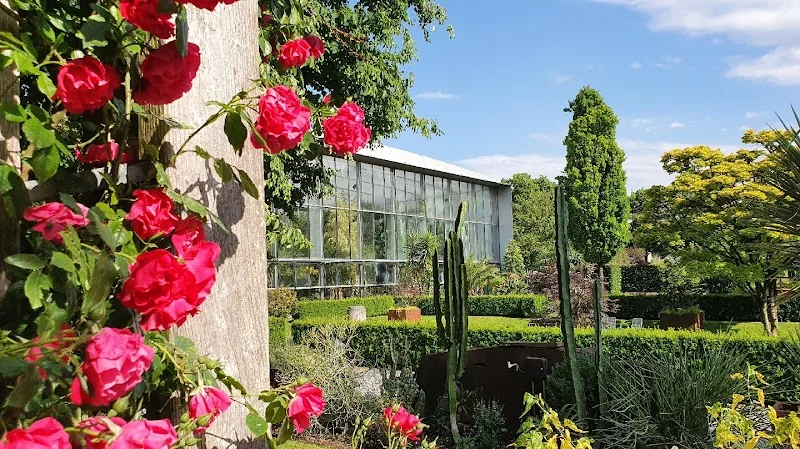
Those searching for photos, reviews, or practical visiting tips should visit the Augsburg Botanical Garden with enough time. The provided reviews show a very positive picture: many guests appreciate the calm atmosphere, the well-maintained facilities, the Japanese Garden, the seating areas, and the opportunity to linger in the greenery. The garden is particularly generous for photos, as it offers many different motifs in a small space: flower beds, water areas, wide meadows, glass architecture, shaded areas, detail shots, and clear lines in the Japanese Garden. Especially in spring and early summer, many things appear particularly colorful, while in summer, the long opening hours and evening atmosphere create additional opportunities. Thus, a place emerges where nature observation and image searching can be very well combined. ([augsburg.de](https://www.augsburg.de/freizeit/ausflugsziele/botanischer-garten/ueber-uns))
For the practical side, it is important that private photos are allowed, but commercial uses require written permission from the garden management. This is a fair regulation that protects the private memory value while also organizing professional uses. Also sensible is the smoking ban, which preserves the character of the garden as a recreational space. Music should only be listened to with headphones, dogs must remain on a leash, and plants may not be removed. Picnicking is allowed on the meadows by the playground and the rose garden, but not in the Japanese Garden. These rules are not strict for principle's sake but ensure that the garden remains a pleasant place for everyone. Those who respect the rules will experience a quiet, clean, and relaxed stay. ([augsburg.de](https://www.augsburg.de/freizeit/ausflugsziele/botanischer-garten/ihr-besuch))
The Augsburg Botanical Garden is also well-equipped in terms of accessibility. Wheelchair users have access to almost all essential areas, and non-barrier-free paths are marked on the site plan. For older or mobility-impaired visitors, there is even a free electric scooter offer that can be borrowed for up to four hours; prior telephone reservation is required. This shows that the garden is not only beautiful but also inclusively designed. Those coming with children benefit from the open structure of the grounds, the changing themed areas, and the many opportunities to shape the visit at their own pace. Thus, a simple garden walk becomes a very flexible outing for different needs and age groups. ([augsburg.de](https://www.augsburg.de/freizeit/ausflugsziele/botanischer-garten/ihr-besuch))
If you want to plan your visit optimally, three things are particularly helpful: First, it is worth looking at the opening hours, as they vary significantly throughout the year. Second, you should plan enough buffer time for arrival and parking, especially on sunny days or during events. Third, it is sensible to connect the visit with a specific focus: tickets and prices, Japanese Garden, plant world under glass, tours, or photos. This is exactly what makes the Augsburg Botanical Garden so versatile. It is not just a destination for a short stop but a place where one can actually spend several hours without getting bored. This is perhaps the most important reason why the garden scores so well in reviews and why it is predestined for repeated visits. ([augsburg.de](https://www.augsburg.de/freizeit/ausflugsziele/botanischer-garten/ihr-besuch))
Sources:
Show moreShow less
Augsburg Botanical Garden | Tickets & Prices
The Augsburg Botanical Garden is more than just a classic excursion destination: it is a green oasis of tranquility, a place of learning, a garden of the seasons, and for many visitors, a place they return to time and again. With over 3000 plant species, an area of 10 hectares, and a long development history, the garden has evolved from an urban teaching and school garden to one of the most popular nature destinations in Augsburg. Those looking for tickets, prices, opening hours, photos, reviews, or the Japanese Garden will find not only practical information here but also real reasons to visit. The submitted reviews show an average of 4.7 stars and more than 5,700 reviews, indicating that the garden is particularly well-received by guests. This fits its character: calm, diverse, family-friendly, and seasonally experienced in different ways. ([augsburg.de](https://www.augsburg.de/freizeit/ausflugsziele/botanischer-garten/ueber-uns))
Tickets, Prices, and Admission to the Augsburg Botanical Garden
Those wishing to visit the Augsburg Botanical Garden can pay the admission fee directly at the ticket counter. The regular day price for adults is 4.00 euros. Additionally, there is a group ticket for 8.00 euros, reduced day tickets for 3.50 euros, special groups for 1.00 euro per person, dogs for 1.00 euro, and special events with an additional admission fee of 2.00 euros. The annual tickets are clearly structured: the group annual ticket costs 49.00 euros, the individual annual ticket 32.00 euros, the reduced individual annual ticket 23.00 euros, the individual annual combination ticket with zoo 60.00 euros, and the reduced combination ticket 50.00 euros. Admission is free for holders of the Bavarian Volunteer Card. This clear pricing structure makes the visit transparent and uncomplicated, especially for families, regular guests, and anyone who wants to experience the garden more than once a year. ([augsburg.de](https://www.augsburg.de/freizeit/ausflugsziele/botanischer-garten/ihr-besuch))
Even payment is organized in a practical manner: cashless payment is preferred, and small amounts can also be paid by card. This is convenient for spontaneous visits or if one does not want to search for cash after a walk. It is also practical that day tickets are only valid for a one-time entry and lose their validity upon leaving the premises. So, if you plan a relaxed afternoon, you should combine your walk, a break in the greenery, and a visit to the greenhouses well. For annual guests, it is interesting that vouchers are available at both the ticket counter of the Botanical Garden and at the citizen information center at Rathausplatz. This is particularly beneficial for returning visitors, families, or people who wish to attend several events throughout the year, as an annual ticket is often the most sensible choice. ([augsburg.de](https://www.augsburg.de/freizeit/ausflugsziele/botanischer-garten/ihr-besuch))
The pricing structure fits the profile of the garden as a versatile recreational facility: it is not only a place for flowers but also for concerts, exhibitions, guided tours, and seasonal special events. This creates a mix of uses that ranges from a brief nature visit to a full-day excursion. This is particularly interesting for guests searching for tickets or price-related terms: the admission is deliberately set low compared to many recreational offerings, while there are clear regulations for special events and an attractive combination annual ticket with the zoo. Those planning only a spontaneous visit will find the day ticket sufficient. However, those who want to experience spring, summer, and autumn will benefit much more from the annual ticket. ([augsburg.de](https://www.augsburg.de/freizeit/ausflugsziele/botanischer-garten/ihr-besuch))
Opening Hours, Directions, and Parking at the Augsburg Botanical Garden
The opening hours of the Augsburg Botanical Garden are seasonally adjusted and follow the natural rhythm of the year. In winter, the garden opens at 9:00 AM and closes at 5:00 PM. In March, it is open until 6:00 PM, in April until 7:00 PM, and from early May to mid-August even until 9:00 PM. After that, the hours gradually shorten again until the garden closes at 5:00 PM again in late autumn and winter. Important for planning: the ticket and entry closing time is 60 minutes before garden closing, and the greenhouses close 30 minutes earlier. This allows enough time for a relaxed walk, but not for a last-minute visit. This staggering is sensible because light, temperature, and plant development vary greatly throughout the year. ([augsburg.de](https://www.augsburg.de/freizeit/ausflugsziele/botanischer-garten/ihr-besuch))
The journey is uncomplicated, but it is not always easiest by car. The Botanical Garden is located at Dr.-Ziegenspeck-Weg 10 in Augsburg. Those traveling by public transport can take bus line 32 to Zoo/Botanischer Garten or tram line 2 to Berufsschule and then walk about 15 minutes through Siebentischpark. Bicycle parking is available directly at the entrance. This mix of bus, tram, walking, and cycling makes the visit pleasant and environmentally friendly even without a car. Especially on nice days, the walk through the park is almost part of the experience, as it prepares the tranquil atmosphere of the garden. ([augsburg.de](https://www.augsburg.de/freizeit/ausflugsziele/botanischer-garten/ihr-besuch))
By car, attention is important when searching for parking, as there are only limited parking spaces available around the Botanical Garden and the zoo. On holidays and in good weather, these fill up quickly. The city explicitly recommends parking only in designated areas and not on green strips. If you cannot find a space directly at the entrance, you can use the park-and-ride lot at Spickelbad in Siebentischstraße 4, which is only a few minutes' walk away. During the Easter weekend, there is also a free shuttle service from the Aldi parking lot on Hofrat-Röhrer-Straße. This is particularly helpful for families, older guests, and groups who want to arrive stress-free. Those who think ahead about parking and arrival save time and start their visit more relaxed. ([augsburg.de](https://www.augsburg.de/freizeit/ausflugsziele/botanischer-garten/ihr-besuch))
The visitor regulations also show that the garden is intentionally designed as a place of relaxation. Smoking is prohibited, music is only allowed with headphones, and dogs must be kept on a leash. At the same time, the rules are not strict for their own sake but protect plants, animals, and the special tranquility of the place. This creates a pleasant environment for families, photographers, and walkers. Those visiting the garden in spring or during events should also plan a bit more time, as there may be more visitors then. But that is also what makes it appealing: the Botanical Garden is a quiet place that remains lively. ([augsburg.de](https://www.augsburg.de/freizeit/ausflugsziele/botanischer-garten/ihr-besuch))
Japanese Garden, Themed Gardens, and Plant World Under Glass
The heart of the Augsburg Botanical Garden lies in its diversity. The city officially describes the garden as a natural idyll and oasis of tranquility with over 3000 plant species spread across various themed gardens. These include the Roman, farmer, pharmacist, and water gardens. In addition, there are extensive plant collections of native and exotic trees, roses, perennials, bulb, vegetable, and medicinal plants. This mix makes the garden not only beautiful but also educational. One can walk through landscapes that deliberately showcase different garden ideas and plant themes. Therefore, those searching for Japanese botanical garden, flowers, photos, or garden highlights will quickly land at a place that is not only visually striking but also botanically exciting. ([augsburg.de](https://www.augsburg.de/freizeit/ausflugsziele/botanischer-garten/ueber-uns))
Particularly well-known is the Japanese Garden. It was created in connection with the close ties to the Japanese partner cities of Amagasaki and Nagahama and is one of the most distinctive areas of the site. The garden is not merely decorative but part of a larger urban and cultural history. This symbolism makes it a highlight of the tour for many visitors. The garden offers not only a different form of design but also a conscious contrast to the open meadows, the rose garden, and the greenhouses. Those who photograph here get calm image axes, clear lines, and an impression of Far Eastern garden aesthetics right in the middle of Augsburg. That this area is also particularly popular is reflected in the feedback from guests who regularly name the Japanese Garden as a highlight. ([augsburg.de](https://www.augsburg.de/freizeit/ausflugsziele/botanischer-garten/chronik))
Another strong attraction is the plant world under glass. It replaces the former palm house and has been in place since 2003 for a more modern presentation of tropical and showcase plants. Historically, the old Victoria-Regia house was remodeled and repurposed as the Butterfly Pavilion. This makes the area interesting throughout the year, as plants can be experienced here even when winter's quiet prevails outside. At the same time, seasonal exhibitions and thematic presentations complement the visit. Thus, the garden becomes a varied experience space not only in the open air but also under a roof. For visitors, this is ideal because it makes shorter stays worthwhile: one can combine a walk through the outdoor areas with a focused look at tropical and exotic plants. ([augsburg.de](https://www.augsburg.de/freizeit/ausflugsziele/botanischer-garten/chronik))
All of this is complemented by the rose garden, the large pond, the sunken garden, and other designed areas that were shaped or renovated during the state garden show in 1985. The combination of open meadows, water areas, sight axes, and dense planting creates a very balanced overall picture. Those seeking tranquility will find benches and quiet corners; those seeking variety will discover many different plant groups in a small space. This also explains why the garden is attractive to families, older visitors, plant enthusiasts, and photography fans alike. It is small enough to be explored at leisure and large enough to discover new things for several hours. ([augsburg.de](https://www.augsburg.de/freizeit/ausflugsziele/botanischer-garten/chronik))
History from Teaching Garden to Visitor Magnet
The history of the Augsburg Botanical Garden began in 1936 when the city opened its teaching and school garden on the edge of the Siebentischwald. At that time, the area was only about 1.7 hectares in size. The focus was on education, cultivation, and the sensible use of urban green spaces. Even this early phase shows that the garden was never intended merely as an ornamental area but as a place where plant knowledge was to be conveyed and urban greenery made tangible. Over the decades, this developed into an ever-larger garden space with a clear public mission. Today, this origin is still palpable, as the garden naturally combines relaxation and knowledge. ([augsburg.de](https://www.augsburg.de/freizeit/ausflugsziele/botanischer-garten/chronik))
The war years brought significant damage, and the garden had to be closed for a time. In the post-war period, reconstruction began, initially focusing on supply and cultivation, later increasingly on design and visitor experience. In the 1970s, the show garden was expanded to about 5 hectares. This created distinctive areas such as the sunken garden and the large pond by the current rose garden; at the same time, a spice and medicinal herb garden laid the foundation for today's pharmacy garden. This development is important because it explains why today's themed gardens appear so organic: they are not randomly placed next to each other but have grown historically and been refined over decades. ([augsburg.de](https://www.augsburg.de/freizeit/ausflugsziele/botanischer-garten/chronik))
A decisive turning point was the state garden show in 1985, which Augsburg hosted in the year of the city's anniversary, 2000 years of Augsburg. The city decided to redesign the Botanical Garden partially and expand the area to about ten hectares. With the garden show, lasting values were added: many themed gardens were created, the planning idea was preserved, and visitor numbers rose permanently to a high level. According to the chronicle, about 250,000 people visit the garden each year since then. Today's program with guided tours, concerts, lectures, exhibitions, and family activities is also in this tradition. The site thus transformed from a teaching garden to a visitor magnet without losing its scientific and educational identity. ([augsburg.de](https://www.augsburg.de/freizeit/ausflugsziele/botanischer-garten/chronik))
In the 2000s, development continued. In 2003, the new plant world under glass was created after the old palm house was demolished. The traditional Victoria-Regia house was reimagined as the Butterfly Pavilion, and the water garden was renovated and redesigned in its original form. Between 2007 and today, further renovations have been added, such as at the wintering house, the event buildings, and the rose pavilion with a new copper roof. These continuous modernizations show that the Augsburg Botanical Garden is not a static monument but a living place that continuously adapts to new requirements and visitor habits. This is what keeps it current and attractive even in 2026. ([augsburg.de](https://www.augsburg.de/freizeit/ausflugsziele/botanischer-garten/chronik))
Events, Tours, and Seasonal Highlights 2026
The Augsburg Botanical Garden is not only a place for walking but also an event venue with a fixed annual program. The city describes the offer as a mix of guided tours, concerts, exhibitions, garden practice seminars, and family activities. The annual program for 2026 is available at the ticket counter, at the citizen information center or tourist info, and online. This combination is particularly important for search queries related to tickets, events, and programs, as many guests like to combine their visit with a specific occasion. So, those who want not just to see plants but also to have an experience with a supporting program will find numerous opportunities throughout the year. ([augsburg.de](https://www.augsburg.de/freizeit/ausflugsziele/botanischer-garten/ueber-uns))
Particularly atmospheric are the lighting evenings in summer. On selected Saturdays, the garden is open until midnight, and a small extra fee applies, while annual ticket holders do not have to pay an additional charge. The lighting changes the entire character of the area: paths, trees, shrubs, and flowers appear in a different light, and the rose pavilion becomes one of the highlights of the evening. Additionally, almost all dates feature a musical program. For guests seeking a special atmosphere, these evenings are ideal as they elegantly combine nature, light, and culture. The garden thus becomes an experience space not only during the day but also in the evening. ([augsburg.de](https://www.augsburg.de/aktuelles-aus-der-stadt/detail/wieder-lichterzauber-im-botanischen-garten?utm_source=openai))
Another focus is exhibitions in the plant world under glass and thematic actions throughout the year. The program for 2026 includes the exhibition Houseplants - Fashions and Trends of the Last Decades, as well as other events with natural science or gardening references. Additionally, there are literary walks, garden practice seminars, and family offerings. This diversity is important because it keeps the Augsburg Botanical Garden interesting year-round. Those who come in spring experience early bloomers and color-intensive beds. Those who come in summer experience light evenings and long opening hours. Those who come in autumn or winter discover tranquility, structure, and the special effect of the glass areas. The program is thus not an accessory but part of the identity of the place. ([augsburg.de](https://www.augsburg.de/aktuelles-aus-der-stadt/detail/jahresprogramm-des-botanischen-gartens-fuer-2026?utm_source=openai))
A highlight in the anniversary year 2026 is June 14, when the Botanical Garden celebrates its 90th anniversary with a festival. The city announces music, dance, exhibitions, tours, lectures, and children's activities for this occasion. Such dates are not only culturally appealing but also a good reason for a family outing or a day trip to Augsburg. Those who want to plan their trip around events should check the annual program, especially if the visit is to coincide with special dates or holidays. Because especially on popular dates, there are sometimes different admission regulations, such as for the Japanese Spring Festival on May 10, 2026. For this, there are only special tickets available in advance; without a special ticket, entry is not possible until 5:00 PM. ([augsburg.de](https://www.augsburg.de/aktuelles-aus-der-stadt/detail/jahresprogramm-des-botanischen-gartens-fuer-2026?utm_source=openai))
Guided tours also play a significant role in the Augsburg Botanical Garden. The tour offerings include general garden tours, tours on Japanese garden art, and experience tours for children. This shows that the garden is not only for leisurely walks but also for targeted knowledge transfer. Those who want to delve deeper will receive background information on the history of individual areas, symbolism, plant peculiarities, and garden maintenance. This makes the Botanical Garden an excellent fit for guests who not only want to take photos but also want to understand why individual areas are designed as they are. ([augsburg.de](https://www.augsburg.de/freizeit/ausflugsziele/botanischer-garten/rundgang?utm_source=openai))
Photos, Reviews, and Practical Visiting Tips
Those searching for photos, reviews, or practical visiting tips should visit the Augsburg Botanical Garden with enough time. The provided reviews show a very positive picture: many guests appreciate the calm atmosphere, the well-maintained facilities, the Japanese Garden, the seating areas, and the opportunity to linger in the greenery. The garden is particularly generous for photos, as it offers many different motifs in a small space: flower beds, water areas, wide meadows, glass architecture, shaded areas, detail shots, and clear lines in the Japanese Garden. Especially in spring and early summer, many things appear particularly colorful, while in summer, the long opening hours and evening atmosphere create additional opportunities. Thus, a place emerges where nature observation and image searching can be very well combined. ([augsburg.de](https://www.augsburg.de/freizeit/ausflugsziele/botanischer-garten/ueber-uns))
For the practical side, it is important that private photos are allowed, but commercial uses require written permission from the garden management. This is a fair regulation that protects the private memory value while also organizing professional uses. Also sensible is the smoking ban, which preserves the character of the garden as a recreational space. Music should only be listened to with headphones, dogs must remain on a leash, and plants may not be removed. Picnicking is allowed on the meadows by the playground and the rose garden, but not in the Japanese Garden. These rules are not strict for principle's sake but ensure that the garden remains a pleasant place for everyone. Those who respect the rules will experience a quiet, clean, and relaxed stay. ([augsburg.de](https://www.augsburg.de/freizeit/ausflugsziele/botanischer-garten/ihr-besuch))
The Augsburg Botanical Garden is also well-equipped in terms of accessibility. Wheelchair users have access to almost all essential areas, and non-barrier-free paths are marked on the site plan. For older or mobility-impaired visitors, there is even a free electric scooter offer that can be borrowed for up to four hours; prior telephone reservation is required. This shows that the garden is not only beautiful but also inclusively designed. Those coming with children benefit from the open structure of the grounds, the changing themed areas, and the many opportunities to shape the visit at their own pace. Thus, a simple garden walk becomes a very flexible outing for different needs and age groups. ([augsburg.de](https://www.augsburg.de/freizeit/ausflugsziele/botanischer-garten/ihr-besuch))
If you want to plan your visit optimally, three things are particularly helpful: First, it is worth looking at the opening hours, as they vary significantly throughout the year. Second, you should plan enough buffer time for arrival and parking, especially on sunny days or during events. Third, it is sensible to connect the visit with a specific focus: tickets and prices, Japanese Garden, plant world under glass, tours, or photos. This is exactly what makes the Augsburg Botanical Garden so versatile. It is not just a destination for a short stop but a place where one can actually spend several hours without getting bored. This is perhaps the most important reason why the garden scores so well in reviews and why it is predestined for repeated visits. ([augsburg.de](https://www.augsburg.de/freizeit/ausflugsziele/botanischer-garten/ihr-besuch))
Sources:
Augsburg Botanical Garden | Tickets & Prices
The Augsburg Botanical Garden is more than just a classic excursion destination: it is a green oasis of tranquility, a place of learning, a garden of the seasons, and for many visitors, a place they return to time and again. With over 3000 plant species, an area of 10 hectares, and a long development history, the garden has evolved from an urban teaching and school garden to one of the most popular nature destinations in Augsburg. Those looking for tickets, prices, opening hours, photos, reviews, or the Japanese Garden will find not only practical information here but also real reasons to visit. The submitted reviews show an average of 4.7 stars and more than 5,700 reviews, indicating that the garden is particularly well-received by guests. This fits its character: calm, diverse, family-friendly, and seasonally experienced in different ways. ([augsburg.de](https://www.augsburg.de/freizeit/ausflugsziele/botanischer-garten/ueber-uns))
Tickets, Prices, and Admission to the Augsburg Botanical Garden
Those wishing to visit the Augsburg Botanical Garden can pay the admission fee directly at the ticket counter. The regular day price for adults is 4.00 euros. Additionally, there is a group ticket for 8.00 euros, reduced day tickets for 3.50 euros, special groups for 1.00 euro per person, dogs for 1.00 euro, and special events with an additional admission fee of 2.00 euros. The annual tickets are clearly structured: the group annual ticket costs 49.00 euros, the individual annual ticket 32.00 euros, the reduced individual annual ticket 23.00 euros, the individual annual combination ticket with zoo 60.00 euros, and the reduced combination ticket 50.00 euros. Admission is free for holders of the Bavarian Volunteer Card. This clear pricing structure makes the visit transparent and uncomplicated, especially for families, regular guests, and anyone who wants to experience the garden more than once a year. ([augsburg.de](https://www.augsburg.de/freizeit/ausflugsziele/botanischer-garten/ihr-besuch))
Even payment is organized in a practical manner: cashless payment is preferred, and small amounts can also be paid by card. This is convenient for spontaneous visits or if one does not want to search for cash after a walk. It is also practical that day tickets are only valid for a one-time entry and lose their validity upon leaving the premises. So, if you plan a relaxed afternoon, you should combine your walk, a break in the greenery, and a visit to the greenhouses well. For annual guests, it is interesting that vouchers are available at both the ticket counter of the Botanical Garden and at the citizen information center at Rathausplatz. This is particularly beneficial for returning visitors, families, or people who wish to attend several events throughout the year, as an annual ticket is often the most sensible choice. ([augsburg.de](https://www.augsburg.de/freizeit/ausflugsziele/botanischer-garten/ihr-besuch))
The pricing structure fits the profile of the garden as a versatile recreational facility: it is not only a place for flowers but also for concerts, exhibitions, guided tours, and seasonal special events. This creates a mix of uses that ranges from a brief nature visit to a full-day excursion. This is particularly interesting for guests searching for tickets or price-related terms: the admission is deliberately set low compared to many recreational offerings, while there are clear regulations for special events and an attractive combination annual ticket with the zoo. Those planning only a spontaneous visit will find the day ticket sufficient. However, those who want to experience spring, summer, and autumn will benefit much more from the annual ticket. ([augsburg.de](https://www.augsburg.de/freizeit/ausflugsziele/botanischer-garten/ihr-besuch))
Opening Hours, Directions, and Parking at the Augsburg Botanical Garden
The opening hours of the Augsburg Botanical Garden are seasonally adjusted and follow the natural rhythm of the year. In winter, the garden opens at 9:00 AM and closes at 5:00 PM. In March, it is open until 6:00 PM, in April until 7:00 PM, and from early May to mid-August even until 9:00 PM. After that, the hours gradually shorten again until the garden closes at 5:00 PM again in late autumn and winter. Important for planning: the ticket and entry closing time is 60 minutes before garden closing, and the greenhouses close 30 minutes earlier. This allows enough time for a relaxed walk, but not for a last-minute visit. This staggering is sensible because light, temperature, and plant development vary greatly throughout the year. ([augsburg.de](https://www.augsburg.de/freizeit/ausflugsziele/botanischer-garten/ihr-besuch))
The journey is uncomplicated, but it is not always easiest by car. The Botanical Garden is located at Dr.-Ziegenspeck-Weg 10 in Augsburg. Those traveling by public transport can take bus line 32 to Zoo/Botanischer Garten or tram line 2 to Berufsschule and then walk about 15 minutes through Siebentischpark. Bicycle parking is available directly at the entrance. This mix of bus, tram, walking, and cycling makes the visit pleasant and environmentally friendly even without a car. Especially on nice days, the walk through the park is almost part of the experience, as it prepares the tranquil atmosphere of the garden. ([augsburg.de](https://www.augsburg.de/freizeit/ausflugsziele/botanischer-garten/ihr-besuch))
By car, attention is important when searching for parking, as there are only limited parking spaces available around the Botanical Garden and the zoo. On holidays and in good weather, these fill up quickly. The city explicitly recommends parking only in designated areas and not on green strips. If you cannot find a space directly at the entrance, you can use the park-and-ride lot at Spickelbad in Siebentischstraße 4, which is only a few minutes' walk away. During the Easter weekend, there is also a free shuttle service from the Aldi parking lot on Hofrat-Röhrer-Straße. This is particularly helpful for families, older guests, and groups who want to arrive stress-free. Those who think ahead about parking and arrival save time and start their visit more relaxed. ([augsburg.de](https://www.augsburg.de/freizeit/ausflugsziele/botanischer-garten/ihr-besuch))
The visitor regulations also show that the garden is intentionally designed as a place of relaxation. Smoking is prohibited, music is only allowed with headphones, and dogs must be kept on a leash. At the same time, the rules are not strict for their own sake but protect plants, animals, and the special tranquility of the place. This creates a pleasant environment for families, photographers, and walkers. Those visiting the garden in spring or during events should also plan a bit more time, as there may be more visitors then. But that is also what makes it appealing: the Botanical Garden is a quiet place that remains lively. ([augsburg.de](https://www.augsburg.de/freizeit/ausflugsziele/botanischer-garten/ihr-besuch))
Japanese Garden, Themed Gardens, and Plant World Under Glass
The heart of the Augsburg Botanical Garden lies in its diversity. The city officially describes the garden as a natural idyll and oasis of tranquility with over 3000 plant species spread across various themed gardens. These include the Roman, farmer, pharmacist, and water gardens. In addition, there are extensive plant collections of native and exotic trees, roses, perennials, bulb, vegetable, and medicinal plants. This mix makes the garden not only beautiful but also educational. One can walk through landscapes that deliberately showcase different garden ideas and plant themes. Therefore, those searching for Japanese botanical garden, flowers, photos, or garden highlights will quickly land at a place that is not only visually striking but also botanically exciting. ([augsburg.de](https://www.augsburg.de/freizeit/ausflugsziele/botanischer-garten/ueber-uns))
Particularly well-known is the Japanese Garden. It was created in connection with the close ties to the Japanese partner cities of Amagasaki and Nagahama and is one of the most distinctive areas of the site. The garden is not merely decorative but part of a larger urban and cultural history. This symbolism makes it a highlight of the tour for many visitors. The garden offers not only a different form of design but also a conscious contrast to the open meadows, the rose garden, and the greenhouses. Those who photograph here get calm image axes, clear lines, and an impression of Far Eastern garden aesthetics right in the middle of Augsburg. That this area is also particularly popular is reflected in the feedback from guests who regularly name the Japanese Garden as a highlight. ([augsburg.de](https://www.augsburg.de/freizeit/ausflugsziele/botanischer-garten/chronik))
Another strong attraction is the plant world under glass. It replaces the former palm house and has been in place since 2003 for a more modern presentation of tropical and showcase plants. Historically, the old Victoria-Regia house was remodeled and repurposed as the Butterfly Pavilion. This makes the area interesting throughout the year, as plants can be experienced here even when winter's quiet prevails outside. At the same time, seasonal exhibitions and thematic presentations complement the visit. Thus, the garden becomes a varied experience space not only in the open air but also under a roof. For visitors, this is ideal because it makes shorter stays worthwhile: one can combine a walk through the outdoor areas with a focused look at tropical and exotic plants. ([augsburg.de](https://www.augsburg.de/freizeit/ausflugsziele/botanischer-garten/chronik))
All of this is complemented by the rose garden, the large pond, the sunken garden, and other designed areas that were shaped or renovated during the state garden show in 1985. The combination of open meadows, water areas, sight axes, and dense planting creates a very balanced overall picture. Those seeking tranquility will find benches and quiet corners; those seeking variety will discover many different plant groups in a small space. This also explains why the garden is attractive to families, older visitors, plant enthusiasts, and photography fans alike. It is small enough to be explored at leisure and large enough to discover new things for several hours. ([augsburg.de](https://www.augsburg.de/freizeit/ausflugsziele/botanischer-garten/chronik))
History from Teaching Garden to Visitor Magnet
The history of the Augsburg Botanical Garden began in 1936 when the city opened its teaching and school garden on the edge of the Siebentischwald. At that time, the area was only about 1.7 hectares in size. The focus was on education, cultivation, and the sensible use of urban green spaces. Even this early phase shows that the garden was never intended merely as an ornamental area but as a place where plant knowledge was to be conveyed and urban greenery made tangible. Over the decades, this developed into an ever-larger garden space with a clear public mission. Today, this origin is still palpable, as the garden naturally combines relaxation and knowledge. ([augsburg.de](https://www.augsburg.de/freizeit/ausflugsziele/botanischer-garten/chronik))
The war years brought significant damage, and the garden had to be closed for a time. In the post-war period, reconstruction began, initially focusing on supply and cultivation, later increasingly on design and visitor experience. In the 1970s, the show garden was expanded to about 5 hectares. This created distinctive areas such as the sunken garden and the large pond by the current rose garden; at the same time, a spice and medicinal herb garden laid the foundation for today's pharmacy garden. This development is important because it explains why today's themed gardens appear so organic: they are not randomly placed next to each other but have grown historically and been refined over decades. ([augsburg.de](https://www.augsburg.de/freizeit/ausflugsziele/botanischer-garten/chronik))
A decisive turning point was the state garden show in 1985, which Augsburg hosted in the year of the city's anniversary, 2000 years of Augsburg. The city decided to redesign the Botanical Garden partially and expand the area to about ten hectares. With the garden show, lasting values were added: many themed gardens were created, the planning idea was preserved, and visitor numbers rose permanently to a high level. According to the chronicle, about 250,000 people visit the garden each year since then. Today's program with guided tours, concerts, lectures, exhibitions, and family activities is also in this tradition. The site thus transformed from a teaching garden to a visitor magnet without losing its scientific and educational identity. ([augsburg.de](https://www.augsburg.de/freizeit/ausflugsziele/botanischer-garten/chronik))
In the 2000s, development continued. In 2003, the new plant world under glass was created after the old palm house was demolished. The traditional Victoria-Regia house was reimagined as the Butterfly Pavilion, and the water garden was renovated and redesigned in its original form. Between 2007 and today, further renovations have been added, such as at the wintering house, the event buildings, and the rose pavilion with a new copper roof. These continuous modernizations show that the Augsburg Botanical Garden is not a static monument but a living place that continuously adapts to new requirements and visitor habits. This is what keeps it current and attractive even in 2026. ([augsburg.de](https://www.augsburg.de/freizeit/ausflugsziele/botanischer-garten/chronik))
Events, Tours, and Seasonal Highlights 2026
The Augsburg Botanical Garden is not only a place for walking but also an event venue with a fixed annual program. The city describes the offer as a mix of guided tours, concerts, exhibitions, garden practice seminars, and family activities. The annual program for 2026 is available at the ticket counter, at the citizen information center or tourist info, and online. This combination is particularly important for search queries related to tickets, events, and programs, as many guests like to combine their visit with a specific occasion. So, those who want not just to see plants but also to have an experience with a supporting program will find numerous opportunities throughout the year. ([augsburg.de](https://www.augsburg.de/freizeit/ausflugsziele/botanischer-garten/ueber-uns))
Particularly atmospheric are the lighting evenings in summer. On selected Saturdays, the garden is open until midnight, and a small extra fee applies, while annual ticket holders do not have to pay an additional charge. The lighting changes the entire character of the area: paths, trees, shrubs, and flowers appear in a different light, and the rose pavilion becomes one of the highlights of the evening. Additionally, almost all dates feature a musical program. For guests seeking a special atmosphere, these evenings are ideal as they elegantly combine nature, light, and culture. The garden thus becomes an experience space not only during the day but also in the evening. ([augsburg.de](https://www.augsburg.de/aktuelles-aus-der-stadt/detail/wieder-lichterzauber-im-botanischen-garten?utm_source=openai))
Another focus is exhibitions in the plant world under glass and thematic actions throughout the year. The program for 2026 includes the exhibition Houseplants - Fashions and Trends of the Last Decades, as well as other events with natural science or gardening references. Additionally, there are literary walks, garden practice seminars, and family offerings. This diversity is important because it keeps the Augsburg Botanical Garden interesting year-round. Those who come in spring experience early bloomers and color-intensive beds. Those who come in summer experience light evenings and long opening hours. Those who come in autumn or winter discover tranquility, structure, and the special effect of the glass areas. The program is thus not an accessory but part of the identity of the place. ([augsburg.de](https://www.augsburg.de/aktuelles-aus-der-stadt/detail/jahresprogramm-des-botanischen-gartens-fuer-2026?utm_source=openai))
A highlight in the anniversary year 2026 is June 14, when the Botanical Garden celebrates its 90th anniversary with a festival. The city announces music, dance, exhibitions, tours, lectures, and children's activities for this occasion. Such dates are not only culturally appealing but also a good reason for a family outing or a day trip to Augsburg. Those who want to plan their trip around events should check the annual program, especially if the visit is to coincide with special dates or holidays. Because especially on popular dates, there are sometimes different admission regulations, such as for the Japanese Spring Festival on May 10, 2026. For this, there are only special tickets available in advance; without a special ticket, entry is not possible until 5:00 PM. ([augsburg.de](https://www.augsburg.de/aktuelles-aus-der-stadt/detail/jahresprogramm-des-botanischen-gartens-fuer-2026?utm_source=openai))
Guided tours also play a significant role in the Augsburg Botanical Garden. The tour offerings include general garden tours, tours on Japanese garden art, and experience tours for children. This shows that the garden is not only for leisurely walks but also for targeted knowledge transfer. Those who want to delve deeper will receive background information on the history of individual areas, symbolism, plant peculiarities, and garden maintenance. This makes the Botanical Garden an excellent fit for guests who not only want to take photos but also want to understand why individual areas are designed as they are. ([augsburg.de](https://www.augsburg.de/freizeit/ausflugsziele/botanischer-garten/rundgang?utm_source=openai))
Photos, Reviews, and Practical Visiting Tips
Those searching for photos, reviews, or practical visiting tips should visit the Augsburg Botanical Garden with enough time. The provided reviews show a very positive picture: many guests appreciate the calm atmosphere, the well-maintained facilities, the Japanese Garden, the seating areas, and the opportunity to linger in the greenery. The garden is particularly generous for photos, as it offers many different motifs in a small space: flower beds, water areas, wide meadows, glass architecture, shaded areas, detail shots, and clear lines in the Japanese Garden. Especially in spring and early summer, many things appear particularly colorful, while in summer, the long opening hours and evening atmosphere create additional opportunities. Thus, a place emerges where nature observation and image searching can be very well combined. ([augsburg.de](https://www.augsburg.de/freizeit/ausflugsziele/botanischer-garten/ueber-uns))
For the practical side, it is important that private photos are allowed, but commercial uses require written permission from the garden management. This is a fair regulation that protects the private memory value while also organizing professional uses. Also sensible is the smoking ban, which preserves the character of the garden as a recreational space. Music should only be listened to with headphones, dogs must remain on a leash, and plants may not be removed. Picnicking is allowed on the meadows by the playground and the rose garden, but not in the Japanese Garden. These rules are not strict for principle's sake but ensure that the garden remains a pleasant place for everyone. Those who respect the rules will experience a quiet, clean, and relaxed stay. ([augsburg.de](https://www.augsburg.de/freizeit/ausflugsziele/botanischer-garten/ihr-besuch))
The Augsburg Botanical Garden is also well-equipped in terms of accessibility. Wheelchair users have access to almost all essential areas, and non-barrier-free paths are marked on the site plan. For older or mobility-impaired visitors, there is even a free electric scooter offer that can be borrowed for up to four hours; prior telephone reservation is required. This shows that the garden is not only beautiful but also inclusively designed. Those coming with children benefit from the open structure of the grounds, the changing themed areas, and the many opportunities to shape the visit at their own pace. Thus, a simple garden walk becomes a very flexible outing for different needs and age groups. ([augsburg.de](https://www.augsburg.de/freizeit/ausflugsziele/botanischer-garten/ihr-besuch))
If you want to plan your visit optimally, three things are particularly helpful: First, it is worth looking at the opening hours, as they vary significantly throughout the year. Second, you should plan enough buffer time for arrival and parking, especially on sunny days or during events. Third, it is sensible to connect the visit with a specific focus: tickets and prices, Japanese Garden, plant world under glass, tours, or photos. This is exactly what makes the Augsburg Botanical Garden so versatile. It is not just a destination for a short stop but a place where one can actually spend several hours without getting bored. This is perhaps the most important reason why the garden scores so well in reviews and why it is predestined for repeated visits. ([augsburg.de](https://www.augsburg.de/freizeit/ausflugsziele/botanischer-garten/ihr-besuch))
Sources:

Frequently Asked Questions
Reviews
Stephan Nehler
29. December 2025
Very nice, they had some fairy tale areas during the Christmas time as well as a very beautiful Bethlehem scene in the tropical house.
Dmitriy Kipnis
8. July 2025
Beautiful Botanical Garden. Not small but not too big. There are some rest places with chairs and sometimes with tables, so people can rest, take some food with them, and eat in nature. Also, there are some cafes on the territory of the Garden, so people can eat something, drink beer or coffee, or have ice cream. Good place to visit with children. It only costs 4 EUR. I think the best time to visit is spring, when there will be a lot of flowers.
Marques
28. April 2025
Very nice place with a reasonable entry fee paid at the entrance. There are lockers located to the right just after the entrance if you need them. The Japanese Garden is a highlight, but also the large green area with furniture near the cafe and play areas is a lovely place to rest on a sunny afternoon.
Anthony Vander Meide
9. September 2025
This is a wonderful place to relax and see so many wonderful plants. I was very much inspired with ideas for my own garden.
Nguyễn Linh
23. January 2025
I can’t tell how much I love this place. The fresh air, lush green trees, and peaceful atmosphere make it perfect for a relaxing walk on a sunny day. The Japanese garden is a true work of art.