
Stella Nyanzi
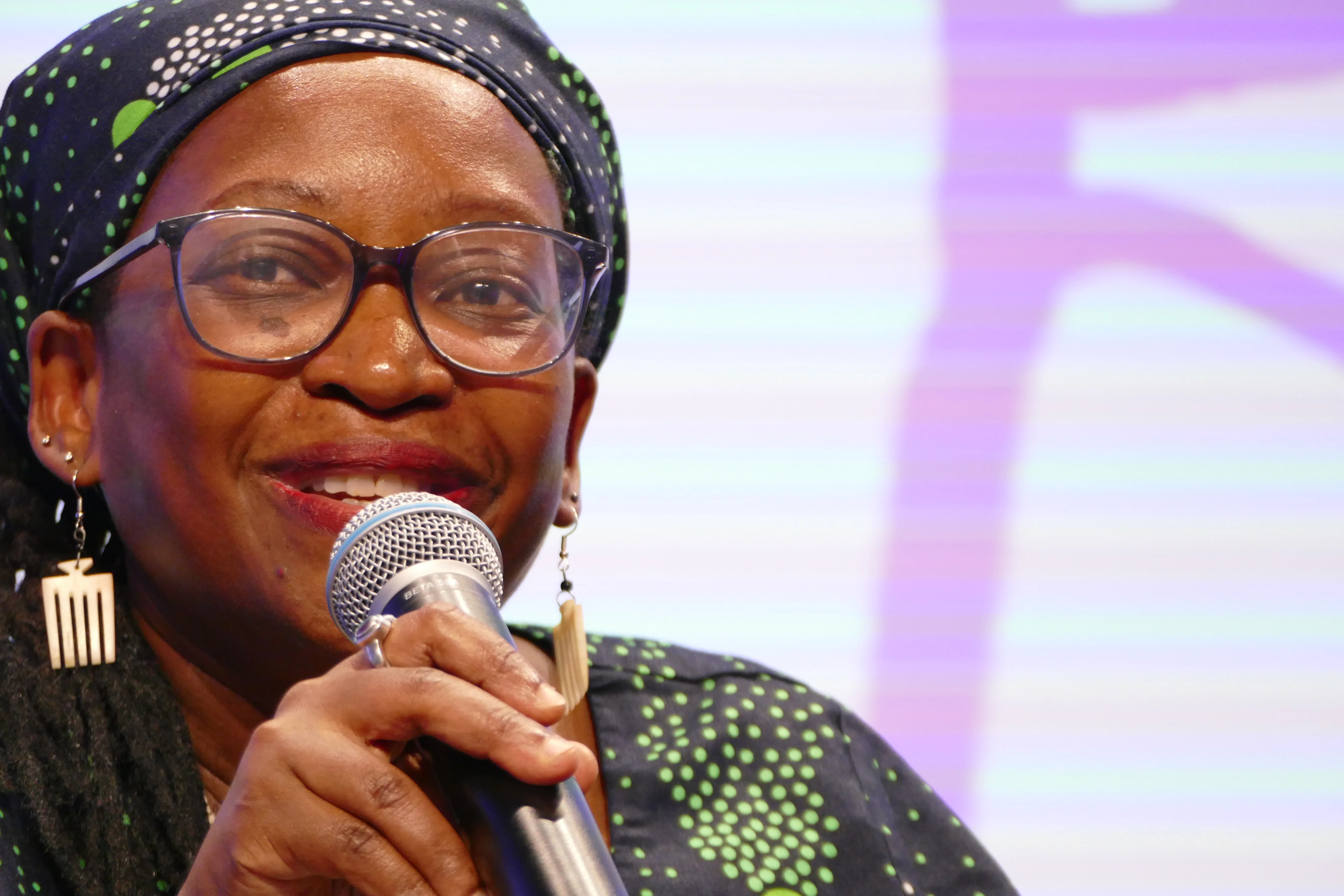
Image from Wikipedia
Image from Wikipedia
Stella Nyanzi: The Radical Voice Between Poetry, Protest, and Exile
A Ugandan author whose words became a political weapon
Stella Nyanzi is one of the most prominent literary and political voices in East Africa. Born on June 16, 1974, in Masaka or Jinja, Uganda, she evolved from an academically trained gender researcher and medical anthropologist into an internationally recognized activist and poet. Her work combines personal experience, social accusation, and a consciously provocative language, which she herself describes as a form of "radical rudeness." This is precisely where her extraordinary impact lies: Nyanzi writes not for polite distance but for maximum friction, for visibility, and for resistance. ([de.wikipedia.org](https://de.wikipedia.org/wiki/Stella_Nyanzi?utm_source=openai))
Biographical Roots and Academic Background
Nyanzi studied at Makerere University in Kampala from 1993 to 1996, graduating with a Bachelor of Arts in Journalism, Communication Studies, and Literature. She later obtained a Master of Science in Medical Anthropology from University College London, as well as a Master of Arts in Development Studies and Economics from Nkumba University. Her doctorate from the London School of Hygiene and Tropical Medicine connected issues of sexuality, gender politics, and social power in African contexts. This academic foundation continues to shape her writing style today: analytical, precise, and uncompromising. ([de.wikipedia.org](https://de.wikipedia.org/wiki/Stella_Nyanzi?utm_source=openai))
Her activism gained additional sharpness through personal experiences with state failure. The death of her father in 2014 due to a lack of medicine and the death of her mother in 2015, who waited in vain for medical help, are described by Nyanzi as crucial turning points. From biographical pain emerged political resistance, and from individual grief came a language against corruption, social injustice, and the failure of public institutions. This connection of life experience and political articulation is at the core of her public presence. ([de.wikipedia.org](https://de.wikipedia.org/wiki/Stella_Nyanzi?utm_source=openai))
The Breakthrough: Protest, Imprisonment, and International Attention
Stella Nyanzi gained international notoriety primarily through her confrontation with Ugandan President Yoweri Museveni. In 2017, she was imprisoned after insulting Museveni and his mother in a dispute over menstrual hygiene products for girls. The case sparked widespread debates about freedom of expression, political repression, and the boundaries of protest. Following her acquittal or the lifting of the verdict in February 2020, Nyanzi became a symbol of resistance against authoritarian power structures in Uganda. ([de.wikipedia.org](https://de.wikipedia.org/wiki/Stella_Nyanzi?utm_source=openai))
Her imprisonment made the author an even more visible public figure. In reports from major media and human rights organizations, she appears as an unwavering fighter who responds to repression not with silence, but by amplifying her voice. The Guardian described her return after imprisonment as a moment of strengthened, even bolder language, while Amnesty categorized her poetry as an attack on the regime's power logic. Thus, a profile emerged around Nyanzi that extends far beyond literature: she is simultaneously a writer, a political performer, and a symbol of a charged counter-public. ([theguardian.com](https://www.theguardian.com/books/2020/mar/19/prison-irrepressible-stella-nyanzi-uganda-poet?utm_source=openai))
Poetry as Intervention: The Aesthetics of "Radical Rudeness"
Nyanzi's poems do not function like classic lyrics in the sense of quiet introspection. They are an assault, diagnosis, and disturbance all in one. Her language employs drastic imagery, taboo breakage, and a conscious rejection of bourgeois politeness. In doing so, she symbolically undermines the authority of the regime and transforms literature into a form of political action. Within this stance lies her special authority: she uses not just words; she uses language as an intervention. ([de.wikipedia.org](https://de.wikipedia.org/wiki/Stella_Nyanzi?utm_source=openai))
The fourth poetry collection In Mouth Exile, released in 2025 in English and German by Das Wunderhorn and translated by Matthias Göritz, continues this line. The verses address everyday life in Uganda under Museveni's rule, corruption, homophobia, and torture. The title itself signals the tension between body, language, and displacement: exile is not just geographical but also linguistic and emotional. Nyanzi's writing remains highly relevant, literarily sharpened and politically unambiguous. ([de.wikipedia.org](https://de.wikipedia.org/wiki/Stella_Nyanzi?utm_source=openai))
Exile in Germany and the New Perspective on Her Work
Since January 2022, Stella Nyanzi has been living in exile in Germany. This phase is inseparably tied to her artistic development as it alters her perspective on home, language, and belonging. For her, exile does not mean retreat but rather a further intensification of tone. The distance from Uganda sharpens observation without severing the emotional connection to the political conflicts of her homeland. ([de.wikipedia.org](https://de.wikipedia.org/wiki/Stella_Nyanzi?utm_source=openai))
In performances and discussions, including at poetry events in Germany, it becomes clear that Nyanzi understands her literary practice as a continued engagement with repression, body politics, and power. Her work aligns with political poetry that does not aim to be decorative but attacks reality. This lends her a unique cultural reach as an intellectual who combines academic expertise, activism, and poetic concentration with rare consistency. ([hausfuerpoesie.org](https://www.hausfuerpoesie.org/en/program/poesiegespraech-mit-stella-nyanzi?utm_source=openai))
Cultural Influence and Public Resonance
Stella Nyanzi is long more than a national dissident. She has been recognized in international portraits, human rights contexts, and literary programs as a voice against patriarchal power and state repression. Her dedication to girls and women, particularly regarding menstrual hygiene, links social justice with linguistic directness. In doing so, she becomes a figure around whom debates about feminism, freedom of speech, and the role of literature in the political sphere coalesce. ([pen-deutschland.de](https://pen-deutschland.de/stipendien/stella-nyanzi/?utm_source=openai))
Her significance also lies in the consistency with which she does not respectfully circle authority but challenges it head-on. This stance has earned her admiration, solidarity, and fierce backlash. The polarization surrounding her highlights the cultural influence of her work: Nyanzi compels the public, press, and institutions to take a stand. In an environment of authoritarian control, her poetry becomes a document of lived resistance. ([theguardian.com](https://www.theguardian.com/books/2020/mar/19/prison-irrepressible-stella-nyanzi-uganda-poet?utm_source=openai))
Discography and Publications
In a strict music journalistic sense, Stella Nyanzi does not possess a classic discography with albums, singles, or chart placements. Her oeuvre consists of political poetry and literary publications, not a musical career. For SEO and cultural journalistic classification, this boundary position is interesting: Nyanzi works with rhythm, linguistic melody, and performative emphasis in a way that recalls spoken word and protest art. Her most important publications do not mark a pop career but a literary chronology of resistance. ([de.wikipedia.org](https://de.wikipedia.org/wiki/Stella_Nyanzi?utm_source=openai))
The central current title is In Mouth Exile from 2025. Before this, Nyanzi became known primarily for her politically charged texts and Facebook posts, which were received as literary and activist statements. This form of publication shapes her public perception: not the logic of the music market but the dynamics of protest literature, media resonance, and human rights debate. Those looking for a classic artist career instead find a radical author with international impact. ([de.wikipedia.org](https://de.wikipedia.org/wiki/Stella_Nyanzi?utm_source=openai))
Style, Language, and Artistic Development
Stella Nyanzi's style is characterized by directness, confrontation, and an uncompromising imagery. Her texts avoid diplomatic detours and focus on poetic condensation with political explosiveness. The academic training in literature, anthropology, and gender studies grants her works analytical depth, while the personal experience of surveillance, imprisonment, and exile gives them emotional weight. Thus, a rare connection of expertise, experience, and authority emerges. ([de.wikipedia.org](https://de.wikipedia.org/wiki/Stella_Nyanzi?utm_source=openai))
In her artistic development, a consistent intensification is recognizable: from scholarly engagement with sexuality and power to public activism and radical poetic language in exile. This development makes her one of the most fascinating figures in contemporary African literature. Her work stands for literary resilience, for a body that does not remain silent, and for a language that refuses to obey. ([de.wikipedia.org](https://de.wikipedia.org/wiki/Stella_Nyanzi?utm_source=openai))
Conclusion: Why Stella Nyanzi Remains Intriguing
Stella Nyanzi fascinates because she understands literature not as ornamentation but as resistance. Her biography, her imprisonment, her exile, and her poetry create the portrait of an author who challenges political power dynamics with each text. This is precisely where her cultural radiance lies: she combines intellectual precision with moral urgency and opens spaces for debates about freedom, body politics, and justice. Anyone wanting to understand contemporary African literature, feminist critique, and political poetry cannot overlook her. ([de.wikipedia.org](https://de.wikipedia.org/wiki/Stella_Nyanzi?utm_source=openai))
Anyone experiencing Stella Nyanzi live or reading her texts encounters not a comfortable voice but a relentless artist who perceives language as stance. This is precisely why she remains important: as an author, activist, and public intellectual, whose work burns, provokes, and resonates. Her presence is not background noise but a clear call for responsibility, courage, and resistance. ([theguardian.com](https://www.theguardian.com/books/2020/mar/19/prison-irrepressible-stella-nyanzi-uganda-poet?utm_source=openai))
Official Channels of Stella Nyanzi:
- Instagram: No official profile found
- Facebook: No official profile found
- YouTube: No official profile found
- Spotify: No official profile found
- TikTok: No official profile found
Sources:
- Wikipedia – Stella Nyanzi
- PEN Deutschland – Stella Nyanzi
- Amnesty Journal – Uganda: Poet Stella Nyanzi on Poetry and Repression
- The Guardian – After prison, I'm stronger, more vulgar!: the irrepressible Stella Nyanzi
- Deutsche Welle – Stella Nyanzi: Uganda's Most Radical Activist
- Haus für Poesie – Poetry Talk with Stella Nyanzi
- Wikipedia: Image and Text Source