
Red Hot Chilli Pipers
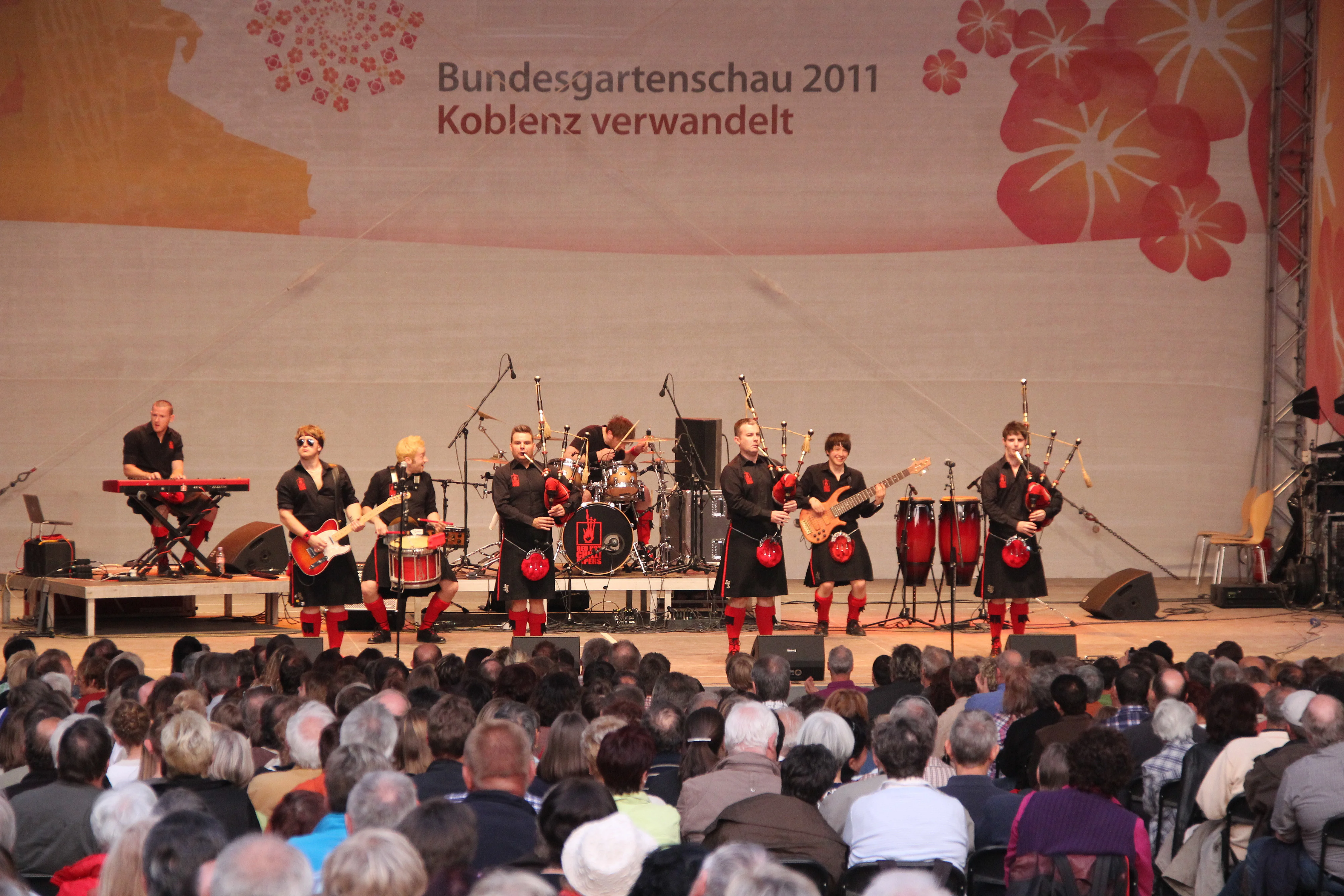
Image from Wikipedia
Image from Wikipedia
Red Hot Chilli Pipers: Scotland's Bagrock Pioneers Between Bagpipes, Rock Energy, and Live Mythos
A Band That Electrifies Rather Than Preserves Tradition
The Red Hot Chilli Pipers are among the most distinctive crossover formations from Scotland. Since their founding in 2002 in Glasgow, they have been blending bagpipes, guitars, keyboards, and drums into a style they and their surroundings refer to as “Bagrock”: traditional Scottish sound language infused with rock aesthetics, stage dynamics, and great pop appeal. This combination of folklore, showmanship, and a precise music career has opened up an international audience for the band. ([en.wikipedia.org](https://en.wikipedia.org/wiki/Red_Hot_Chilli_Pipers))
The band’s appeal lies not just in their unusual instrumentation, but in the naturalness with which they translate cultural heritage into a modern live format. The Red Hot Chilli Pipers are among the early formations to consistently link folk bagpipe music with rock 'n' roll, thus creating a recognizable brand. Their authority comes from treating tradition not as a museum piece, but as a stage. ([en.wikipedia.org](https://en.wikipedia.org/wiki/Red_Hot_Chilli_Pipers?utm_source=openai))
From Glasgow to the World: The Development of a Distinctive Sound
The band was formed in 2002 in Scotland and quickly established itself as a live act with a strong regional foundation and a growing international echo. Its core consists of three bagpipe players, a traditional marching snare, and an expanded band lineup that integrates additional musicians for vocals and performance depending on the occasion. This setup creates a powerful, rhythmically dense sound that shines just as brightly on stage as in the studio. ([en.wikipedia.org](https://en.wikipedia.org/wiki/Red_Hot_Chilli_Pipers))
Musically, the Red Hot Chilli Pipers mark the intersection of Celtic rock, folk rock, and an audience-friendly stadium feel. Their arrangements often build on familiar melodies and layer the harmonic and percussive energy of a rock ensemble over them. The result is a style that respects the tradition of pipe band music while embracing the drama of rock shows. ([en.wikipedia.org](https://en.wikipedia.org/wiki/Red_Hot_Chilli_Pipers))
The Breakthrough: TV Presence, Festival Stages, and a Broad Audience
The international breakthrough came in 2007 with the win of the BBC talent show “When Will I Be Famous?”. This TV success acted as a catalyst: the band reached a much larger audience and gained the profile of a formation that is not only culturally independent but also media-friendly and capable of mass appeal. Moments like these are crucial in the Pipers' music career as they visibly bridge the gap between niche status and mainstream success. ([en.wikipedia.org](https://en.wikipedia.org/wiki/Red_Hot_Chilli_Pipers))
Prior to that, they had attracted attention with appearances on large stages, including their Main Stage performance at T in the Park 2004 alongside The Darkness. This was followed by additional high-profile festival and TV appearances, such as at the Eurovision Dance Contest 2008 in Glasgow and Radio 1 performances in 2013 and 2014. In 2024, they performed on the Acoustic Stage at Glastonbury, in 2025 at the Fuji Rock Festival, and in January 2026, they will have a longer residency at the Global Village in Dubai. ([en.wikipedia.org](https://en.wikipedia.org/wiki/Red_Hot_Chilli_Pipers))
Discography: Between Studio Work, Live Impact, and Maturation Phase
The discography of the Red Hot Chilli Pipers shows a clear progression from their debut project to a mature, tour-tested band with a broad reach. Key releases include “The Red Hot Chilli Pipers” (2005), “Bagrock to the Masses” (2007), “Blast Live” (2008), “Music for the Kilted Generation” (2010), “Braveheart” (2012, live), “Breathe” (2013), “Live at the Lake 2014”, “Octane” (2016), “Fresh Air” (2019), and “Back to Roots” (2025). This sequence illustrates a band that does not repeat its concept but rather expands on it. ([en.wikipedia.org](https://en.wikipedia.org/wiki/Red_Hot_Chilli_Pipers))
Particularly successful was “Bagrock to the Masses,” which achieved platinum status in Scotland and silver status in the rest of the United Kingdom. “Blast Live” was even awarded triple platinum in Scotland, while “Music for the Kilted Generation” is described as the band’s strongest international release, climbing to number 2 on the US Amazon charts. Both “Fresh Air” and “Wake Me Up” left their mark on the official UK charts as well. ([en.wikipedia.org](https://en.wikipedia.org/wiki/Red_Hot_Chilli_Pipers))
Covers, Original Compositions, and the Craft of Arrangement
A central hallmark of the band is their cover versions. They have integrated classics like “We Will Rock You” by Queen, “Clocks” by Coldplay, “Smoke on the Water” by Deep Purple, “Chasing Cars” by Snow Patrol, and “Don’t Stop Believin’” by Journey into their repertoire. This selection is not arbitrary: it demonstrates a keen sense for songs with high recognizability, clear melodic lines, and significant stage impact. ([en.wikipedia.org](https://en.wikipedia.org/wiki/Red_Hot_Chilli_Pipers))
Alongside these covers, their original compositions and instrumental sets reveal the band’s core craftsmanship. Particularly in arrangements lies their strength: the bagpipes take on melodic functions while guitars and keys build harmonic tension, and the drums propel the shows with rock pressure. This creates not just a crossover experiment but an independent sound body with high recognizability. ([en.wikipedia.org](https://en.wikipedia.org/wiki/Red_Hot_Chilli_Pipers))
Current Projects: A Return to Roots Without Losing Sight of the Future
The band’s current chapter is titled “Back to Roots.” The official website describes the album as a new phase commemorating their 25th anniversary, bringing together the energy, pipes, and rock edge of the band while also emphasizing their origins. This phrasing reflects a conscious self-awareness: the Red Hot Chilli Pipers do not see themselves merely as a party act, but as an ensemble with history and contemporary relevance. ([redhotchillipipers.com](https://redhotchillipipers.com/))
They remain active in live performances as well, with multiple dates announced for 2026 on their website, including appearances in Berwick Upon Tweed, Inverurie, Hamilton, Nottingham, and other locations in the UK. Additionally, they offer albums and merchandise in their own shop, reinforcing the band’s professional structure and continued presence in the live and sales landscape. ([redhotchillipipers.com](https://redhotchillipipers.com/))
Critical Reception: Respect from Press and Scene
The public perception of the Red Hot Chilli Pipers is fueled by a mix of amazement, entertainment, and recognition for their stage presence. A quote from “Scotsman” journalist Sue Wilson is highlighted on the official website, describing the band as a powerful representative of precisely crafted popular Celtic show business. Such press reviews are important because they do not dismiss the performance as a mere gimmick but acknowledge it as a serious form of live entertainment. ([redhotchillipipers.com](https://redhotchillipipers.com/))
Other sources also emphasize the breadth of their impact. The band’s Wikipedia documentation mentions the awards for “Scottish Live Act of the Year” in 2007 and 2010, as well as the win of the BBC show in 2007. This combination of jury and audience success is particularly significant for a band of this type, as it attests to both professional recognition and broad resonance. ([en.wikipedia.org](https://en.wikipedia.org/wiki/Red_Hot_Chilli_Pipers))
Style, Identity, and Cultural Influence
The cultural influence of the Red Hot Chilli Pipers lies in their ability to place an often-perceived traditional instrumentarium within the context of modern pop and rock culture. They have opened bagpipe music to listening habits that are typically at home in rock anthems, festival refrains, and media-friendly live moments. Their stage presence does not merely generate nostalgia but creates an independent tension between origin and contemporary relevance. ([en.wikipedia.org](https://en.wikipedia.org/wiki/Red_Hot_Chilli_Pipers))
Particularly in the interplay of Scottish identity, energetic production, and audience-friendly dramaturgy lies the enduring quality of this band. They embody a form of music career where regional roots and global ambition are not in conflict. Those who wish to understand bagrock will find a reference model here: virtuoso, loud, visually impactful, and clearly designed for effect. ([en.wikipedia.org](https://en.wikipedia.org/wiki/Red_Hot_Chilli_Pipers))
Conclusion: A Live Band with Character, Tempo, and Distinctive Signature
The Red Hot Chilli Pipers are exciting because they have transformed an original idea into a sustainable artistic identity over the years. Their music unites tradition, rock energy, showmanship, and professionally strong arrangements into a format that works on recordings and only fully unleashes its power in live performances. Those who experience the band on stage immediately understand why a niche concept could become an international success. ([en.wikipedia.org](https://en.wikipedia.org/wiki/Red_Hot_Chilli_Pipers))
For this reason, attending a concert is worthwhile: the Red Hot Chilli Pipers are not a band for passive listening, but for physical resonance, collective euphoria, and musical surprise. Their journey from Glasgow to major festival stages shows how consistently, boldly, and audience-friendly cultural roots can be translated into contemporary entertainment. ([en.wikipedia.org](https://en.wikipedia.org/wiki/Red_Hot_Chilli_Pipers))
Official Channels of Red Hot Chilli Pipers:
- Instagram: https://www.instagram.com/redhotchillipipers/
- Facebook: https://www.facebook.com/redhotchillipipersofficial/
- YouTube: https://www.youtube.com/user/chillipiper
- Spotify: https://open.spotify.com/artist/7eFa5ZzDWxhQK2WKIBF6AF
- TikTok: No official profile found
Sources:
- Red Hot Chilli Pipers - Official Website
- Red Hot Chilli Pipers - Contact / Book the Band
- Red Hot Chilli Pipers - Gigs
- Red Hot Chilli Pipers - Media & PR
- Warner Records - Red Hot Chili Peppers Artist Page with Social Links
- Official Charts - Red Hot Chilli Pipers Chart History
- Wikipedia: Red Hot Chilli Pipers
- Spotify - Red Hot Chilli Pipers Artist Profile
- MusicBrainz - Red Hot Chilli Pipers
- Wikipedia: Image and text source
Upcoming Events
Red Hot Chilli Pipers - Back 2 Roots Tour 2026