
Max Raabe
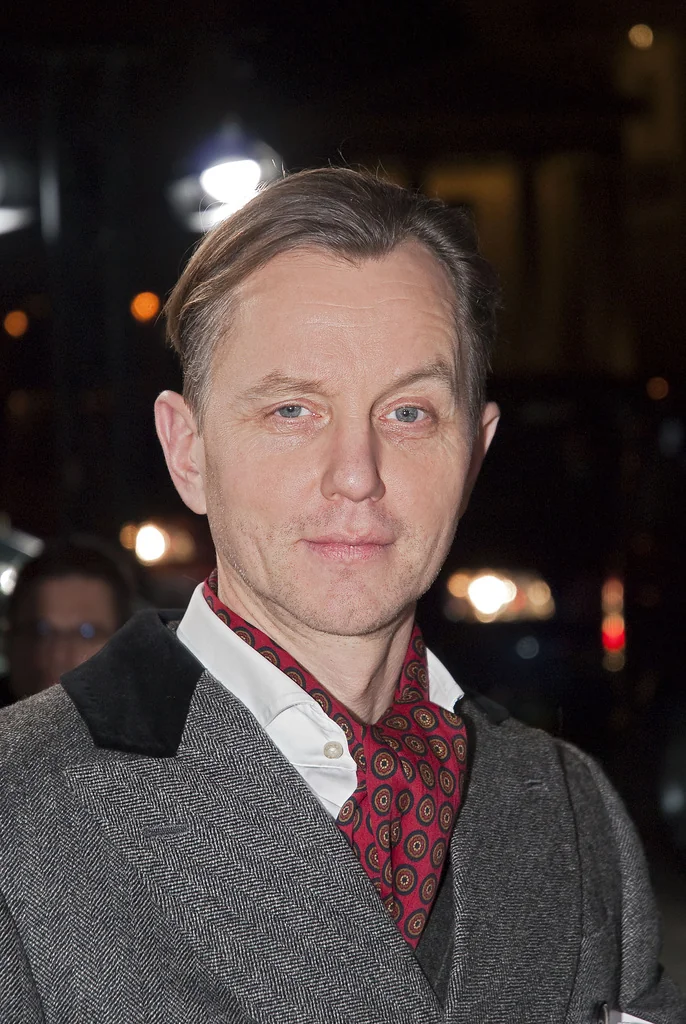
Image from Wikipedia
Image from Wikipedia
Max Raabe: The Elegant Baritone Between the Sound World of Weimar, Berlin Style, and Timeless Stage Magic
An Artist Who Transforms Historical Elegance into the Present
Max Raabe, whose real name is Matthias Otto, is one of the most distinctive voices in the German music landscape. Born on December 12, 1962, in Lünen, he evolved from a singer with classical training to the charismatic leader of the Palast Orchester in Berlin. His trademark is his baritone, but his true strength lies in the art of reviving historical entertainment music with precision, wit, and stylistic sovereignty. ([de.wikipedia.org](https://de.wikipedia.org/wiki/Max_Raabe))
Those who listen to Max Raabe experience not just nostalgia, but a carefully constructed artistic world. His musical career blends chanson, pop, big band sound, and the aesthetics of the 1920s and 1930s into a distinctive form of popular art. This is precisely what gives him his exceptional standing: he never comes across as merely a retro performer, but rather as a musician who translates stylistic history into living presence. ([de.wikipedia.org](https://de.wikipedia.org/wiki/Max_Raabe))
Biography: From Lünen to Berlin
Max Raabe gathered his early musical experiences in the children's church choir of his hometown and in the school choir. Later, he attended Clemens-Hofbauer-Kolleg and moved to West Berlin at the age of twenty, where he initially financed his singing lessons with odd jobs. From 1988, he studied singing at the University of the Arts Berlin and graduated in 1995 as a state-certified opera singer in the baritone field. This classical training continues to shape his control over tone, phrasing, and vocal direction. ([de.wikipedia.org](https://de.wikipedia.org/wiki/Max_Raabe))
As early as 1986, he founded the Palast Orchester with friends, even before completing his formal education. The ensemble dedicated itself from the start to chansons and songs in the style of the 1920s and 1930s and progressed from Berlin pub stages to large concert halls. This early on, Raabe laid the foundation for a career that does not rely on a single pop trend and appears to be particularly enduring because of it. ([de.wikipedia.org](https://de.wikipedia.org/wiki/Max_Raabe))
The Breakthrough: "No Pig Calls Me" and the Stage of a Larger Audience
The first major public breakthrough came in 1992 with the self-penned and composed number "Kein Schwein ruft mich an" ("No Pig Calls Me"). The song brought Raabe's humor, his knack for pointed language, and his love for stylized entertainment music to a broader audience, making him an unusual figure between cabaret, chanson, and pop. At the latest, with his performance in the film comedy Der bewegte Mann ("The Moving Man"), he became known beyond the music scene. ([de.wikipedia.org](https://de.wikipedia.org/wiki/Max_Raabe))
During this phase, he developed the stage presence that still characterizes him today: distinguished, ironic, controlled, and approachable at the same time. Raabe does not present himself as a loud entertainer but as an interpreting singer with poise. This unique blend of distance and charm has secured him a distinctive place in German pop and concert culture. ([de.wikipedia.org](https://de.wikipedia.org/wiki/Max_Raabe))
Repertoire and Artistic Signature
Max Raabe's repertoire primarily consists of German-language pop songs and chansons from the 1920s and 1930s. He made significant contributions to the renewed appreciation of entertainment music by Jewish composers, referencing names like Fritz Rotter, Walter Jurmann, Friedrich Hollaender, Werner Richard Heymann, and Robert Gilbert. This music-historical reference makes his work far more than a stylistic game; it is also a form of cultural memory. ([de.wikipedia.org](https://de.wikipedia.org/wiki/Max_Raabe))
At the same time, he sings cover versions of current hits and original titles, often in collaboration with Annette Humpe. The spectrum ranges from precisely crafted arrangements to reinterpretations that sound elegant and sometimes winkingly in the acoustic landscape of the Palast Orchester. The sophistication of his art lies precisely in this: the compositions remain accessible but possess a finely tuned balance of nostalgia, irony, and musical rigor. ([de.wikipedia.org](https://de.wikipedia.org/wiki/Max_Raabe))
Discography: Important Albums, Successes, and Chart Responses
Raabe's discography shows a continuous development from the early releases of the Palast Orchester to later, clearly visible chart successes. Important milestones include Übers Meer (2010), Küssen kann man nicht alleine (2011/2012), Für Frauen ist das kein Problem (2013), Der perfekte Moment … wird heut verpennt (2017), Wer hat hier schlechte Laune (2022), and Mir ist so nach dir – Klassiker der 20er und 30er (2023). Some of these releases achieved high positions in Germany, Austria, and Switzerland; Küssen kann man nicht alleine received platinum and Für Frauen ist das kein Problem gold. ([de.wikipedia.org](https://de.wikipedia.org/wiki/Max_Raabe))
Particularly noteworthy is the breadth of repertoire within the discography. Raabe navigates between original titles like "Ein Tag wie Gold" ("A Day Like Gold"), the cabaret-sharpened "Klonen kann sich lohnen" ("Cloning Can Pay Off"), and the pop-oriented moment of the album Wer hat hier schlechte Laune. The official album page emphasizes that some new pieces work more strongly with electronic rhythms while also leaning towards the aesthetics of the Weimar Republic. This connection between tradition and present is a core aspect of his artistic development. ([de.wikipedia.org](https://de.wikipedia.org/wiki/Max_Raabe))
International Career and Cultural Impact
Max Raabe has never been limited to the German-speaking world. Since completing his studies, he has celebrated international successes with the ensemble on concert tours through Europe, the USA, Asia, and Israel. The official biography and contemporary reports indicate that his music resonates in cities like Shanghai, Moscow, Tokyo, New York, and Tel Aviv. This international acceptance is based on the clear profile of his art and the universal comprehensibility of his stylized performance. ([universal-music.de](https://www.universal-music.de/maxraabe/biografie?utm_source=openai))
Particularly noteworthy was the reception in Israel, where his concerts in 2010 were enthusiastically received by German-speaking Israelis. The Carnegie Hall in New York and other international stages mark milestones of a career that transforms German entertainment music into a globally readable form of elegance. This is where his cultural influence lies: Raabe represents an image of Germany that combines historical depth, musical education, and stylistic humor. ([de.wikipedia.org](https://de.wikipedia.org/wiki/Max_Raabe))
Current Projects: New Show, New Single, New Energy
Currently, Max Raabe remains an active, productive artist. The official website of the Palast Orchester announced on July 26, 2024, the single "Hummel streicheln" ("Petting Bumblebees"), which is also the title of a new show in 2025. Also in 2024, new dates for Switzerland in 2025 were announced, underscoring the ensemble's ongoing concert activities. Raabe is thus working not as an archival figure but as a living stage artist with a clear contemporary presence. ([palast-orchester.de](https://www.palast-orchester.de/en/news/2024))
In 2022, the album Wer hat hier schlechte Laune was released, which is described on the official page as particularly finely crafted and highlights titles like "Der Sommer" ("The Summer"), "Das mit uns könnte was werden" ("Something Could Happen Between Us"), and "Es wird wieder gut" ("It Will Be Good Again"). For 2023, Mir ist so nach dir – Klassiker der 20er und 30er followed, through which Raabe consistently continued his historically grounded line. The current phase showcases an artist who does not dilute his profile but rather sharpens it. ([maxraabe.net](https://www.maxraabe.net/))
Style, Voice, and Significance in Music History
Max Raabe's style thrives on discipline, text clarity, and a vocal nobility that has become rare in today's pop. His baritone carries the songs with controlled warmth and a diction that makes every word appear as part of the arrangement. As a result, even humorous titles never seem trivial but are precisely constructed and dramaturgically thoughtful. ([de.wikipedia.org](https://de.wikipedia.org/wiki/Max_Raabe))
His significance also lies in the way he treats musical history not as a museum object but as malleable material. He combines pop music, chanson, big band, and theatrical aesthetics into a distinct culture of sobriety within pop. Critical voices appreciate this attitude; the Frankfurter Allgemeine Zeitung described his voice as extraordinary and atmospheric, while the Jüdische Allgemeine categorized him as "a kind of gold standard." ([de.wikipedia.org](https://de.wikipedia.org/wiki/Max_Raabe))
Conclusion: Why Max Raabe Remains Exciting
Max Raabe remains interesting because he embodies a rare mix of musical education, scenic elegance, and stylistic independence. His musical career shows how to create a contemporary art form from historical inspiration that is both sophisticated and popular. Those who experience him live encounter not just a singer but an entire culture of presentation, irony, and precision. ([de.wikipedia.org](https://de.wikipedia.org/wiki/Max_Raabe))
Especially on stage, his effect unfolds completely: the calm baritone, the supple arrangement of the Palast Orchester, the balance of a wink and seriousness. Max Raabe is not a retrospective but an ongoing narrative of German entertainment music. Anyone who appreciates stylish concert evenings with historical splendor and modern presence should experience him live. ([universal-music.de](https://www.universal-music.de/maxraabe/biografie?utm_source=openai))
Official Channels of Max Raabe:
- Instagram: https://www.instagram.com/maxraabeundpalastorchester
- Facebook: https://www.facebook.com/maxraabepalastorchester
- YouTube: https://www.youtube.com/channel/UCXh3cIvGrgFnYYDV4Bzru0Q
- Spotify: https://play.spotify.com
- TikTok: https://www.tiktok.com/@maxraabepalastorchester
Sources:
- Wikipedia – Max Raabe
- Wikipedia – Max Raabe/Diskografie
- Palast Orchester – Imprint
- Palast Orchester – News 2024
- Max Raabe – Official Album Page "Wer hat hier schlechte Laune"
- Universal Music – Biography
- Universal Music – News/Biography
- Munzinger – Biography Max Raabe
- Wikipedia: Image and Text Source
Upcoming Events
Max Raabe & Palast Orchester: Stroke the Bumblebee
Max Raabe & Palast Orchester - Petting Hummel
Max Raabe & Palast Orchester at KU'KO
MAX RAABE & PALAST ORCHESTER
MAX RAABE & PALAST ORCHESTER - Petting the Bumblebee
Max Raabe & Palast Orchester
Max Raabe & Palast Orchester – Petting the Bumblebee
Max Raabe & Palast Orchester – Hummel stroking Tour
Max Raabe and the Palast Orchestra