
Johann Evangelist Holzer
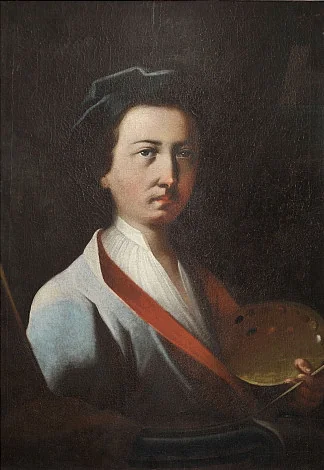
Image from Wikipedia
Image from Wikipedia
Johann Evangelist Holzer – the Painter of Light in Augsburg Rococo
A Master of Frescoes, Genre Scenes, and Baroque Illusion
Johann Evangelist Holzer was one of the most impressive fresco painters of the south German-Austrian Rococo. Born on December 24, 1709, in Burgeis in South Tyrol and passing away on July 21, 1740, in Clemenswerth, he developed a body of work of exceptional density in just three decades, which identifies him as a precise observer, a virtuoso composer of large ceiling paintings, and an outstanding designer of light and shadow. His art combines religious imagery with vibrant genre scenes and a keen sense of movement, space, and staging. (de.wikipedia.org)
Holzer is part of that generation of painters who shaped the transition from Late Baroque to Rococo in Bavaria and Austria. Sources describe him as an artist who worked in Augsburg and was regarded as the most significant fresco painter of his time there. His works represent a painting style that not only decorates but dramatically expands architectural spaces and draws the viewer into a theatrical pictorial world. (bavarikon.de)
From Monastery to Art: The Early Years of an Extraordinary Talent
Holzer was born as the son of a miller and was originally intended to pursue a religious path. He received a classical education at the Marienberg Monastery, but his desire to become a painter proved stronger than the planned career. A portrait he painted of the then abbot Johann Baptist Murr convinced his father to allow his son's artistic talent to flourish. This biographical twist is typical for artist careers of the 18th century, where talent, ecclesiastical support, and craft discipline were intricately intertwined. (deutsche-biographie.de)
The early educational experience at a monastery profoundly influenced Holzer's visual language. His later frescoes demonstrate a confident mastery of theological iconography, while also showing an attentive eye for everyday gestures, folk types, and narrative details. This combination of sacred themes and life-like observation makes his style particularly fascinating even today. (de.wikipedia.org)
Career in South German-Austrian Rococo
Holzer's artistic development led him to significant ecclesiastical and princely commissions of his time. In 1737, he was appointed court painter for the princely bishopric of Eichstätt by Bishop Johann Anton II. von Freyberg; during this time, he worked on frescoes for the summer residence in Eichstätt and other representative sacred spaces. Elector Clemens August of Cologne also commissioned him to paint the court church of Clemenswerth Palace, where Holzer worked shortly before his early death. (de.wikipedia.org)
His life path shows remarkable speed: within a few years, he advanced from a talented student to a sought-after master of large-scale ceiling and wall painting. Research highlights that many of his works have been lost or are only known through drafts, sketches, and secondary references. This makes the surviving frescoes and drawings even more significant, as they attest to the stature of an artist who not only adorned spaces but conceived them as a visual total artwork. (ernst-von-siemens-kunststiftung.de)
The Major Works: Frescoes, Altarpieces, and Designs
Among his major works are the dome frescoes of the pilgrimage church of St. Anton in Partenkirchen from 1736, which are highlighted in sources as particularly beautiful and significant. Equally important are the destroyed ceiling paintings of the Baroque Neumann Basilica of the Abbey of Münsterschwarzach, whose loss does not diminish Holzer's status but rather sharpens the focus on the quality of his surviving works. His pictorial ideas often continued in drawings, design sheets, and iconographic documents. (de.wikipedia.org)
Holzer also created altarpieces and portraits, although these appear less frequently in his oeuvre. Recorded are portraits of people from his environment as well as works connected to the ecclesiastical and court networks of his clients. The German Biography describes him as an artist who worked practically in fresco painting, panel painting, and various genres, developing a high level of technical skill. (deutsche-biographie.de)
Style and Visual Language: Light, Shadow, and the Art of Staging
Holzer's style is described by researchers as distinctive and vibrant. Especially striking is his masterful command of chiaroscuro effects, which he used to highlight figures plastically and create dramatic tension within the pictorial spaces. Although he initially took inspiration from Johann Georg Bergmüller, he quickly developed these influences further, combining them with natural observation, detailed perception, and an unusual vitality of the figures. (archiv.ub.uni-heidelberg.de)
Holzer's unique hand is particularly evident in his genre scenes. His figures do not appear schematic but rather individual, sometimes almost observed casually, as if the scene emerged directly from life. This brings a human closeness to his religious and mythological programs that is particularly characteristic of Rococo painting: light, decorative, dynamic, and yet precisely composed. (freieskunstforum.de)
Holzer between Augsburg, Eichstätt, and the Bavarian-Austrian Cultural Sphere
Holzer's art cannot be understood without the cultural landscape of south German Rococo. Augsburg, Eichstätt, Partenkirchen, Munich, and the monastic landscapes in Bavaria and Tyrol formed a dense network of commissions where ecclesiastical representation, courtly ambition, and regional piety intersected. Museum sources classify him as an important Baroque painter from Augsburg and demonstrate that his works contributed significantly to the transition from Early Baroque to Rococo. (museen-in-bayern.de)
In this environment, Holzer developed a visual language that did not rely solely on splendor but emphasized narrative clarity and visual dramaturgy. His frescoes transform ceilings into celestial spaces, architecture into stages, and liturgical sites into impressive pictorial presentations. That is precisely where his cultural value lies: he made the church space a medium of an emotional yet learned image culture. (ernst-von-siemens-kunststiftung.de)
Survival of Works and Art Historical Reception
The transmission of Holzer's oeuvre is fragmentary, which makes its art historical reception particularly exciting. Numerous works are lost, while others are only known through drafts, prints, or later attributions. This has continually prompted research to reorganize his work and investigate individual frescoes, altarpieces, or drawings in greater detail. (de.wikipedia.org)
Exhibitions and scholarly contributions have recently brought his name back into public consciousness. An exhibition by the Ernst von Siemens Art Foundation honored Holzer as the "Painter of Light" and emphasized the importance of his work for understanding Baroque ceiling painting. Such initiatives show that Holzer is not just a local master, but an artist of regional significance whose work shapes the art history of the 18th century. (ernst-von-siemens-kunststiftung.de)
A Short, Intensive Life Path with Great Impact
Holzer died in 1740 at the young age of 30 in Clemenswerth. The brevity of his life sharply contrasts with the quality and impact of his works. This very concentration makes his biography so fascinating: an artist who developed a distinctive style in just a few years, filled large spaces with pictorial power, and established himself in the dynamic between monastery, court, and church. (de.wikipedia.org)
His legacy lies in the combination of technical sovereignty, narrative instinct, and an almost modern sensitivity to the handling of light. Those who view Holzer's frescoes experience not just Rococo as ornamentation, but as art of effect, movement, and spiritual concentration. This is precisely why Johann Evangelist Holzer remains a name deserving recognition in art history. (archiv.ub.uni-heidelberg.de)
Conclusion: Why Johann Evangelist Holzer Still Inspires Today
Johann Evangelist Holzer represents the rare combination of craftsmanship, imagination, and intellectual precision that distinguishes great sacred art. His frescoes, altarpieces, and designs showcase a painter who not only filled space but also knew how to almost rhythmically understate it: with light, shadow, groups of figures, and dramatic movement. Anyone interested in Rococo, Baroque ceiling painting, and the art of the 18th century will find in Holzer one of the most captivating names of his era. (de.wikipedia.org)
A visit to his preserved or museum-presented works is definitely worthwhile, as they make the visual language of the south German Baroque directly experienceable. Holzer remains intriguing because his art is not only historically significant but also has an immediate effect: elegant, vibrant, theatrical, and profoundly virtuosic. (museen-in-bayern.de)
Official Channels of Johann Evangelist Holzer:
- Instagram: no official profile found
- Facebook: no official profile found
- YouTube: no official profile found
- Spotify: no official profile found
- TikTok: no official profile found
Sources:
- Wikipedia – Johann Evangelist Holzer
- Deutsche Biographie – Holzer, Johann Evangelist
- Wikisource – BLKÖ: Holzer, Johann Evangelist
- bavarikon – Holzer, Johann Evangelist
- Ernst von Siemens Kunststiftung – Johann Evangelist Holzer. Painter of Light
- Museen in Bayern – Deutsche Barockgalerie and Sammlung Haberstock at the Schaezlerpalais
- Diocese of Eichstätt – A Master of Great Stagings
- Freies Kunstforum – Johann Evangelist Holzer, Painter of Light