
Herlinde Koelbl
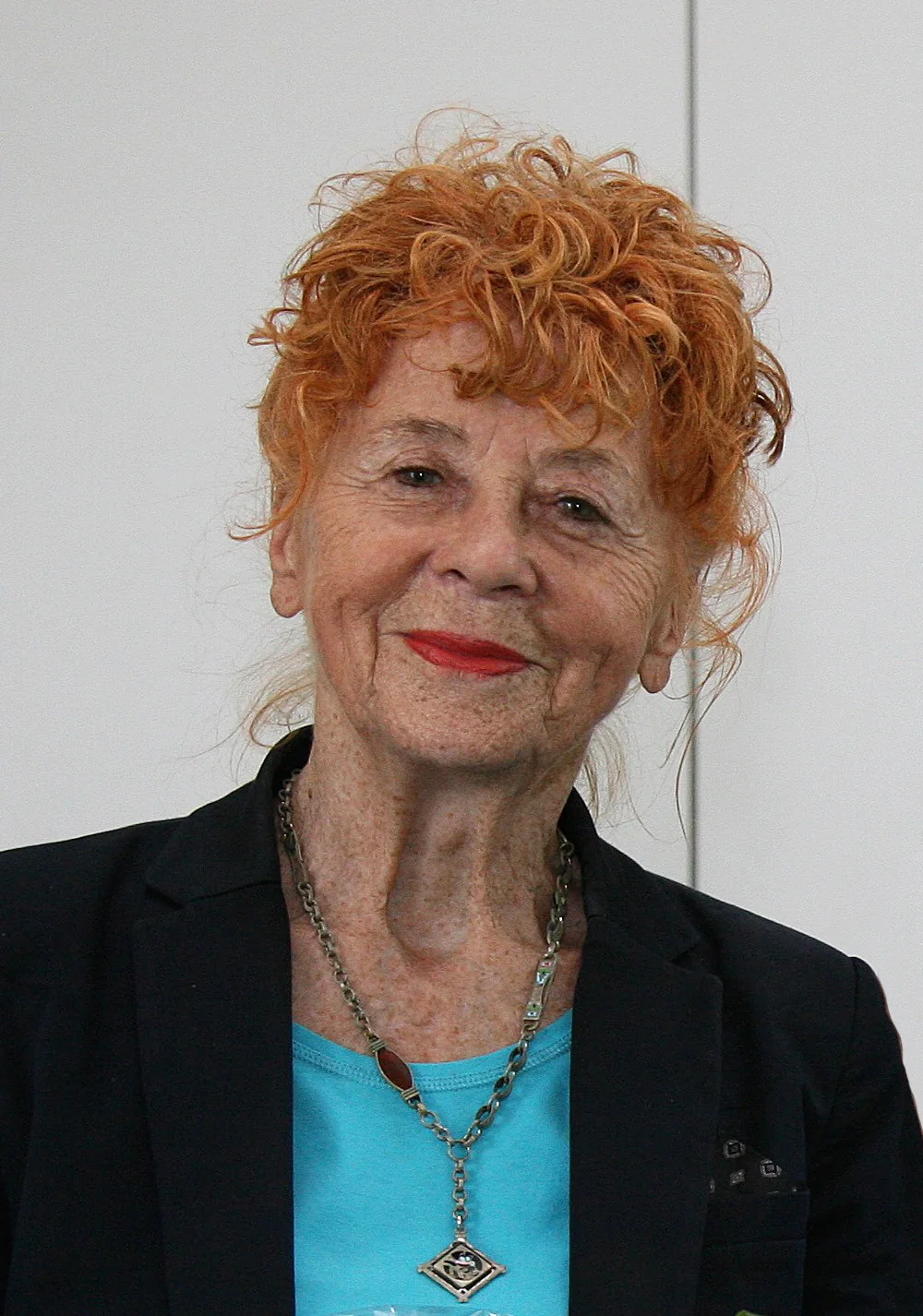
Image from Wikipedia
Image from Wikipedia
Herlinde Koelbl: The Great Chronicler of Faces, Power, and Transience
An Artist Who Not Only Depicts People But Decodes Them
Herlinde Koelbl, born on October 31, 1939, in Lindau on Lake Constance, is considered one of the most precise observers in German photography and documentary art. Her work has revolved around identity, societal roles, body language, and the impact of power on individuals for decades. The artist developed her distinctive position not through the traditional art world but through long-term projects, interviews, and a visual language that simultaneously creates closeness and analytical distance. ([de.wikipedia.org](https://de.wikipedia.org/wiki/Herlinde_Koelbl?utm_source=openai))
Biography: From Fashion to Independent Photography
Before Herlinde Koelbl found her way to photography, she began studying fashion in Munich in 1960 and initially worked in a different creative environment. According to biographical sources, she came to photography only in the mid-1970s, soon using the medium as a tool for social observation. Her path is notably independent: instead of following an academic career or a studio system, she developed into a freelance photographer pursuing major themes over extended periods. ([de.wikipedia.org](https://de.wikipedia.org/wiki/Herlinde_Koelbl?utm_source=openai))
A defining motif of her artistic development is the connection between image and word. Koelbl never merely photographed surfaces but supplemented many series with interviews, allowing the portrayed individuals to express themselves. This approach gives her work a documentary depth that goes beyond simple portrait photography, making her art readable as a cultural-historical chronicle. ([kulturrat.de](https://www.kulturrat.de/kulturportraet/herlinde-koelbl/?utm_source=openai))
The Artistic Breakthrough: Long-Term Projects with Social Impact
Among her most famous works are series such as The German Living Room, Fine People, Jewish Portraits, and especially Traces of Power – The Transformation of Humans Through Office. The latter project, which was created between 1991 and 1998 and published in 1999 as a photo book and documentary film, showed politicians such as Joschka Fischer, Gerhard Schröder, and Angela Merkel in a new light, shaped by office logic and body language. The series has been exhibited in major venues and won the Deutscher Kritikerpreis for the television film. ([de.wikipedia.org](https://de.wikipedia.org/wiki/Herlinde_Koelbl?utm_source=openai))
In Traces of Power, Koelbl's method becomes particularly evident: she examines not only the face but also facial expressions, posture, gestures, and the transformation of personality under political responsibility. This observational skill made her equally appealing to cultural editors, museums, and the arts section. Her images do not narrate power as an abstract system but focus on the visible effects that office has on individuals. ([faz.net](https://www.faz.net/aktuell/feuilleton/kunst-und-architektur/herlinde-koelbl-bekenntnisse-einer-alleinreisenden-1829284.html?utm_source=openai))
Style and Visual Language: Between Intimacy, Psychology, and Contemporary History
Herlinde Koelbl works with a visual language that emphasizes psychological precision. Her photographs are never merely decorative but are clearly composed statements about personality, environment, and societal self-representation. Critics and portraits of her work also emphasize that she provides a space for people to open up without losing photographic control. ([tagesspiegel.de](https://www.tagesspiegel.de/kultur/ausstellungen/herlinde-koelbl-ins-blitzlicht-geruckt-1773082.html?utm_source=openai))
Koelbl excels particularly where she makes transitions visible: between youth and age, private and public, self-image and external perception. Her long-term studies on hair, bedrooms, women, men, or science reveal how consistently she engages with the cultural codes of everyday life. The result is not a momentary fashion photography but an archive of social and mental states. ([herlindekoelbl.com](https://www.herlindekoelbl.com/films_videoinstallations.php?utm_source=openai))
Documentary Film and Exhibition: The Expanded Portrait
Koelbl did not limit herself to still images. Through Traces of Power, she also ventured into film, according to cultural journalistic and institutional sources, which added an additional narrative layer to her work. Her films and video installations range from political figures to works about hair, journalists, and other societal role models. In doing so, she combines photography, interviews, and moving images into a cross-media portrait format. ([kulturrat.de](https://www.kulturrat.de/kulturportraet/herlinde-koelbl/?utm_source=openai))
Exhibitions in Berlin, Munich, Bonn, and other institutions underscore the institutional recognition of her oeuvre. The retrospective showcases an artist who thinks not in individual images but in series narratives, developmental lines, and societal observations over decades. It is precisely this long-range approach that makes her work relevant to museums, curators, and a broad audience. ([de.wikipedia.org](https://de.wikipedia.org/wiki/Herlinde_Koelbl?utm_source=openai))
Awards and Authority in the Art World
Herlinde Koelbl has received numerous awards, including the Erich Salomon Prize, the Golden Camera, the Bavarian Order of Merit, the Bavarian Culture Prize, the Federal Cross of Merit on a Ribbon, and the Culture Prize of the City of Munich. These honors not only mark a successful career but also highlight the high status of her documentary approach in the German-speaking cultural sphere. ([herlindekoelbl.com](https://www.herlindekoelbl.com/awards.php?utm_source=openai))
The awards reflect an authority rooted in continuity, thematic strength, and formal consistency. Koelbl is not an artist of quick effects; she is a chronicler whose works endure through their precision. Her position in the discourse of art and culture is thus secured by both exhibitions and impactful long-term observations. ([herlindekoelbl.com](https://www.herlindekoelbl.com/awards.php?utm_source=openai))
Cultural Influence: Why Herlinde Koelbl Remains Significant
Koelbl's influence lies in her ability to translate biographical, political, and cultural changes into images of high clarity. She has demonstrated that photography not only documents but also makes social power relations visible. Her work on political portraits and issues such as body, living space, or science has set standards by bridging everyday culture and contemporary history. ([wissen-digital.de](https://www.wissen-digital.de/Herlinde_Koelbl?utm_source=openai))
For the history of German photography, she is one of the important voices because she combines observation with empathy. Her works remain relevant because they cannot be reduced to a single genre: she is a photographer, interviewer, documentary filmmaker, and archivist of social change processes all at once. This is precisely where the lasting relevance of her oeuvre lies. ([kulturrat.de](https://www.kulturrat.de/kulturportraet/herlinde-koelbl/?utm_source=openai))
Conclusion: An Artist Who Must Be Read as a Contemporary Witness
Herlinde Koelbl fascinates because she makes the private political and the political humanly legible. Her images possess depth, her series a rare intellectual density, and her work on power, identity, and transience remains of great relevance. Anyone interested in German photography, documentary art, and precise social observation finds a benchmark in her work. Her exhibitions and photo books invite one to sharpen their perceptions and not just to view the artist but to study her. ([kulturrat.de](https://www.kulturrat.de/kulturportraet/herlinde-koelbl/?utm_source=openai))
Official Channels of Herlinde Koelbl:
- Instagram: No official profile found
- Facebook: No official profile found
- YouTube: No official profile found
- Spotify: No official profile found
- TikTok: No official profile found
Sources:
- Herlinde Koelbl Photography - Official Website
- Herlinde Koelbl Photography - Awards
- Herlinde Koelbl Photography - Films & Video Installations
- Wikipedia - Herlinde Koelbl
- German Cultural Council - Herlinde Koelbl: The People Researcher
- ZEITmagazin - Herlinde Koelbl: I Came from Nowhere
- German Historical Museum - Press Kit