Public Transport in Augsburg: Free City-Zone & Tram to the Trade Fair
Public Transport in Augsburg: How to Comfortably Get to Any Event
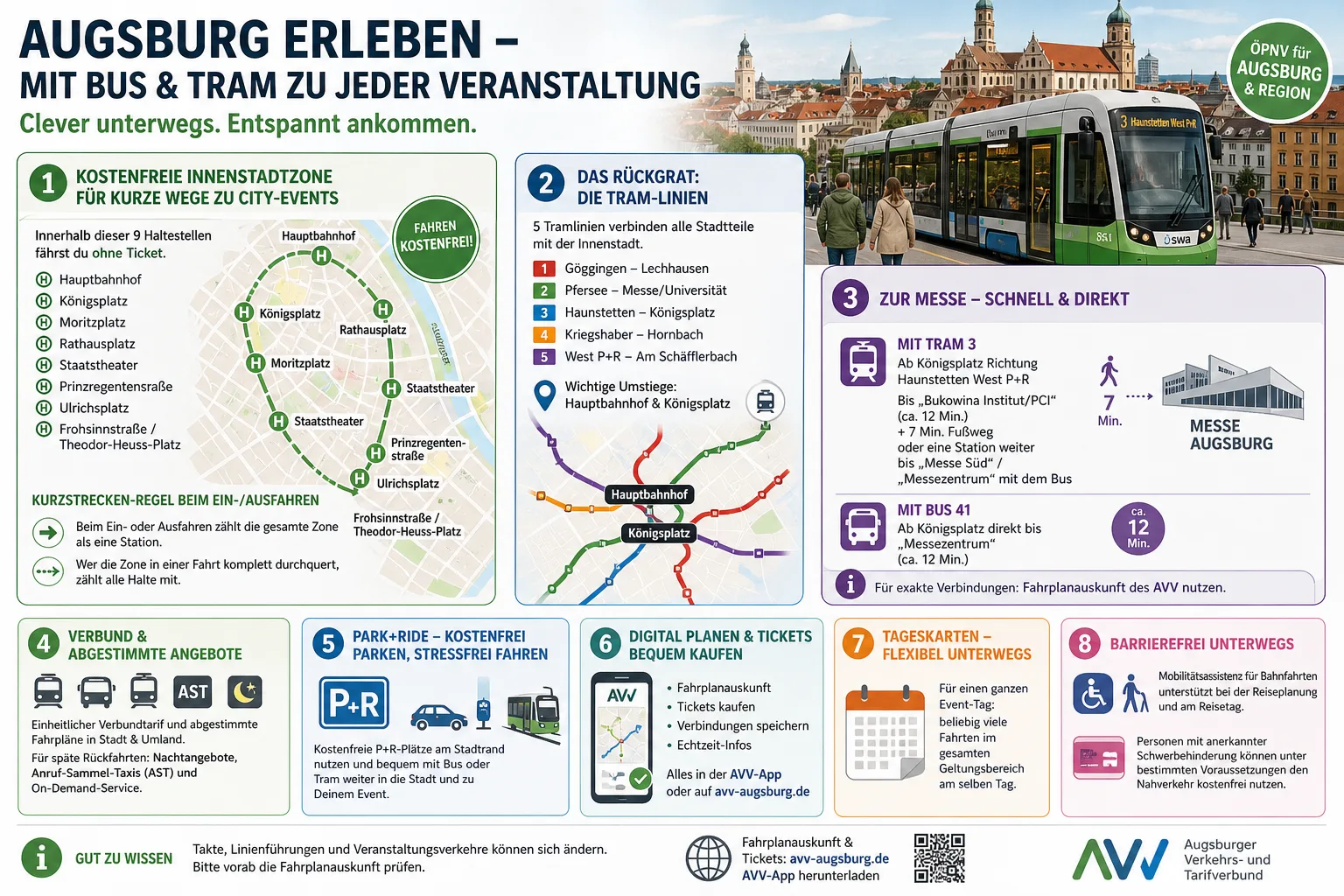
Whether it's a concert, theater, trade fair, or city festival: With tram and bus, you can reach many event locations in Augsburg stress-free – without searching for parking and often with short transfers. This guide explains the most important public transport components (City-Zone, network, tickets, P+R, accessibility) and shows you how to reliably plan for future event visits.
Tram & Bus: How the Network Works in Augsburg
In city traffic, the tram together with a dense bus network forms the backbone of mobility. For event visits, it's especially helpful that many connections are routed through central transfer points. This makes transfers often predictable and you can get to the city center, outskirts, and important destinations well even without a car.
How to Use the Network Efficiently (Even in the Evening)
- Plan with Buffer: Especially before events start, individual services are more crowded. An earlier service reduces stress.
- Choose Transfers Consciously: Major hubs offer alternatives if a connection fails or is delayed.
- Getting Home Late: For later return trips, night services and, if applicable, demand-oriented services are relevant. The official information for date and time shows you which options are available.
For the most reliable times (departures, platform/stop, disruptions, detours), the official timetable information is the best source – especially on days with major events or construction sites.
By Public Transport to Messe Augsburg
Messe Augsburg is an important destination for trade fairs, concerts, and special formats. For future events: There are usually several public transport options that take you from the city center or from central transfer points towards the exhibition grounds.
How to Find the Best Connection for Your Event Date
- Open the official timetable information (network/operator).
- Enter "Messe Augsburg" or the appropriate stop near the grounds as your destination.
- Select date and time to match the admission start (and for the return trip after the event ends).
- Check for notes on additional services, detours, or special services that may be offered for major events.
To arrive relaxed, it is recommended to allow a time buffer for the last section (e.g., walking distance between the stop and the entrance). Which stop is most suitable for your specific entrance depends on the event setup and is often also listed in the organizer's travel information.
Arrival from Surrounding Area & Region: Network Fare, Day Tickets, P+R
If you are arriving from the region, the network fare is crucial: In many cases, it allows you to combine different means of transport (e.g., regional and city transport) with a suitable ticket within the respective area of validity. Which ticket type is optimal depends on the starting point, destination, and number of trips.
Day Ticket: Practical for Event Days
For days with several trips (arrival, dining, location change, return), a day ticket is often convenient because you can cover multiple trips within the chosen area. Whether it is worthwhile compared to single trips is shown by the fare calculators and ticket information from the network.
Park+Ride (P+R): Car at the City Edge, Continue by Public Transport
If you prefer to drive part of the way, P+R can make sense: You park on the outskirts and switch to tram or bus. This reduces the risk of searching for parking for a long time near inner-city event locations. Whether a P+R spot is best for your event depends on your direction of arrival, time of day, and the frequency of the lines.
Tip: Plan your return trip right away. For later times, frequencies and routes may differ from the afternoon. The timetable information shows you the realistic connection for the time you are likely to leave the venue.
Digital Timetable Information, Tickets & Accessibility
For a smooth event visit, up-to-date information is more important than "rules of thumb." Therefore, use digital tools to check the situation shortly before departure.
Timetable Information: How to Plan Reliably
- Live info on departure times, delays, and detours (if available)
- Alternative routes if a line is disrupted
- Return trip planning included – even for later times
Buy Tickets Digitally
Many tickets can be purchased online or via app. This saves time at machines and is practical if you decide spontaneously to stay in the city after the event. Pay attention to the area of validity (zones/rings/routes) and the accompanying rules (if you are traveling with others).
Accessibility: What You Should Pay Attention To
If you need accessible routes (e.g., with a wheelchair, walker, stroller, or visual impairment), plan specifically:
- Check in the information/network info whether the stops you use are accessible or partially accessible.
- Use – if available – information on elevators, boarding aids, or disruptions to infrastructure.
- If you need assistance on rail transport, find out early about official assistance services and booking deadlines.
Short Checklist for Your Next Event Visit
- Set your destination: Know the event location and ideal admission/entrance.
- Check connection: Open timetable information with date/time (outbound and return).
- Choose ticket: Compare single trip vs. day ticket vs. suitable network options.
- Build in buffer: For major events, it's better to leave earlier.
- Secure return trip: Check the last reasonable connection or night options in advance.